Introduction
This page treats Acacia in its old, broad sense: A. confusa of Taiwan and the Philippines and A. acuminata of southern Australia, both of which contain DMT, and the acacias of ancient Egypt and Sinai, now placed in Vachellia. The Egyptian acacia is among the oldest named trees, used for coffins, statues and funeral garlands, and its wood made the Ark of the Hebrew Bible. No ancient account of acacia being taken for visions survives, and Shanon’s proposal of an Israelite entheogen is contested. The first clinical study of an Acacia-derived DMT–harmala formulation was reported in 2025.
All sections
| Botanical name | Acacia Mill., in its old, broad sense — here A. confusa Merr. and A. acuminata Benth., and the acacias of ancient Egypt and Sinai, now Vachellia nilotica, V. seyal and V. tortilis (GBIF.org, 2026c) |
|---|---|
| Taxa | Fabaceae · Fabales · Angiosperms |
| Traditional names | Shant (ancient Egyptian, A. nilotica) · ash (ancient Egyptian, A. seyal) · shittah, plural shittim (Hebrew) · Taiwan acacia · 台湾相思 · Jam (Loret, 1892, pp. 84–85; Exodus 25:10; Isaiah 41:19) |
| Regions | Egypt, Sinai and southern Israel (the acacias of the ancient record) (Loret, 1892; Shanon, 2008); Taiwan and the Philippines (A. confusa); southern Australia, centred on south-west Western Australia (A. acuminata) (Flora of China Editorial Committee, 2010; Western Australian Herbarium, 2026). |
| Ethnographic entheogenic use | Despite profound mythological and historical significance, the acacia does not have a documented ritual history. Many in the genus carry DMT. Contemporary use includes Australian ayahuasca practice in which Acacia supplies the tryptamine, and, in 2025, the first clinical study of an Acacia-derived formulation. |
01Ethnobotany of Acacia
Botanical Info
| Genus | Acacia — the wattles |
|---|---|
| Family / order | Fabaceae · Fabales |
Territories
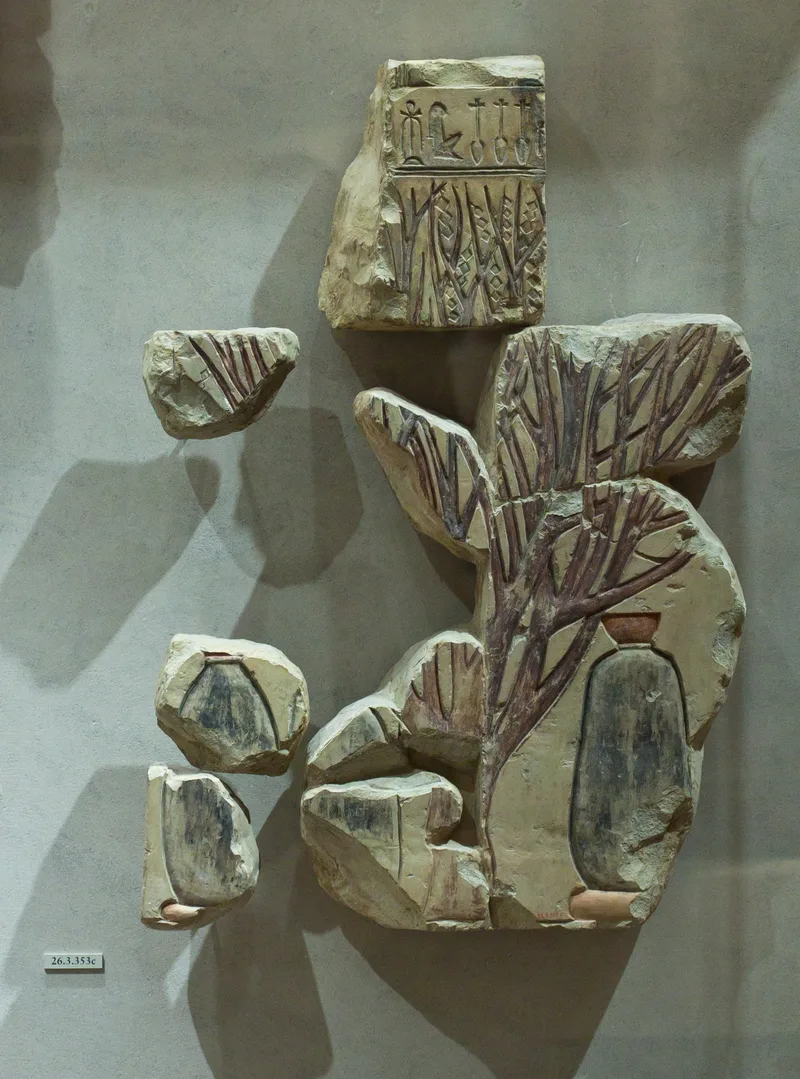
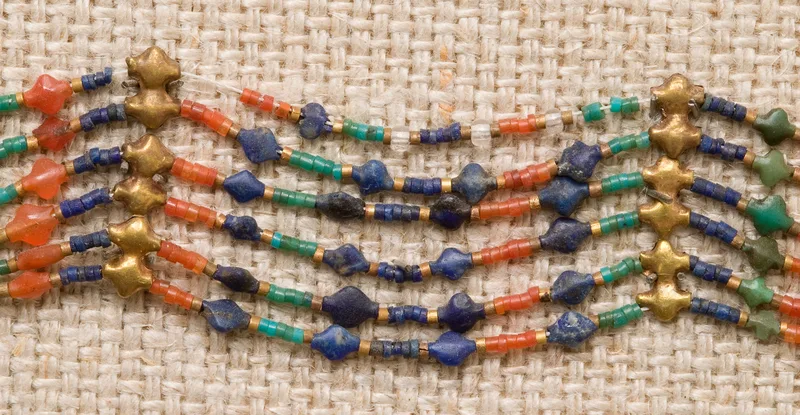
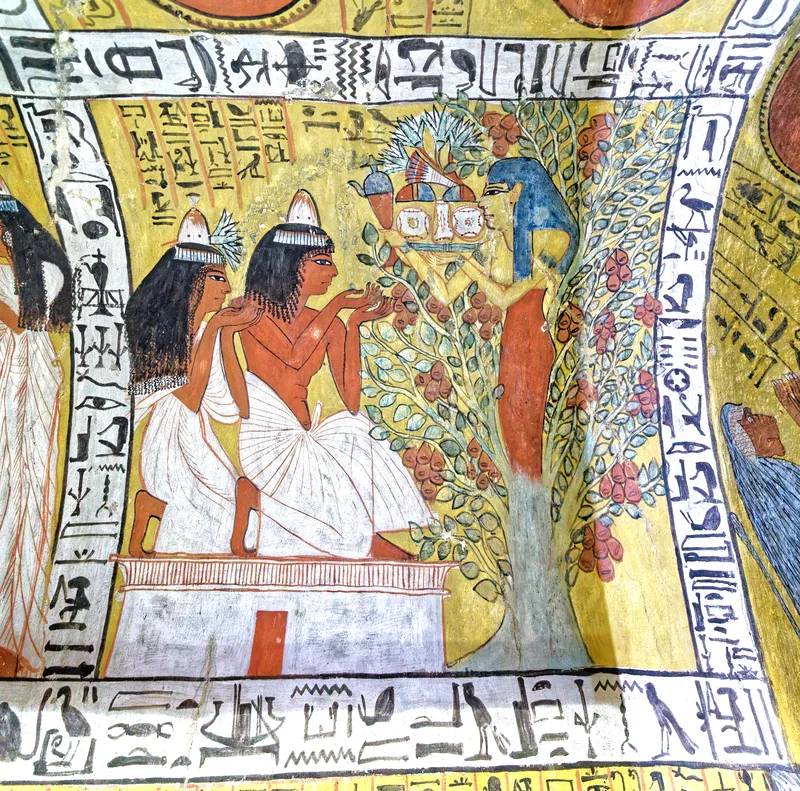
- 1Nile valley, Egypt · an acacia shading water jars in the tomb of Neferu at Deir el-Bahri (Metropolitan Museum of Art, 2026a); beads shaped as acacia seeds for the burial of Senebtisi at Lisht (Metropolitan Museum of Art, 2026b); the acacia among the sacred trees of Busiris (Budge, 1911)
- 2Sinai · the wood of the Ark, made in Sinai, identified as A. tortilis (Moldenke, 1954)
- 3Eridu · the kiškanû of the Eridu incantations (Thompson, 1903)
- 4Taiwan · A. confusa, native to Taiwan and the Philippines (Flora of China Editorial Committee, 2010)
- 5Wheatbelt, Western Australia · A. acuminata variants compared as hosts for sandalwood in the northern and eastern Wheatbelt (Brand, Robinson and Archibald, 2003; Brand, 2009)
Deep Time
- Pyramid ageThe acacia named in Egyptian texts contemporary with the pyramids.
- c. 2051–2030 BCEAn acacia shading water jars, carved and painted in the tomb of Neferu at Deir el-Bahri.
- c. 1859–1770 BCEBeads shaped as acacia seeds for the burial of Senebtisi at Lisht.
- Eighteenth DynastyGarlands of A. nilotica flowers on the mummies of Ahmose I and Amenhotep I.
- 1842A. acuminata described by Bentham.
- 1910A. confusa described by Merrill.
- 2008Shanon proposes Acacia and Peganum harmala as entheogens of ancient Israelite religion.
- 2025First clinical study of an Acacia-derived DMT–harmala formulation.
The old strip’s Pleistocene divergence of the A. acuminata lineages is not stated in the page’s text, so it is not dated here. No archaeological record of entheogenic use, and no Aboriginal or Taiwanese ritual use, is found in the sources read.
Two species
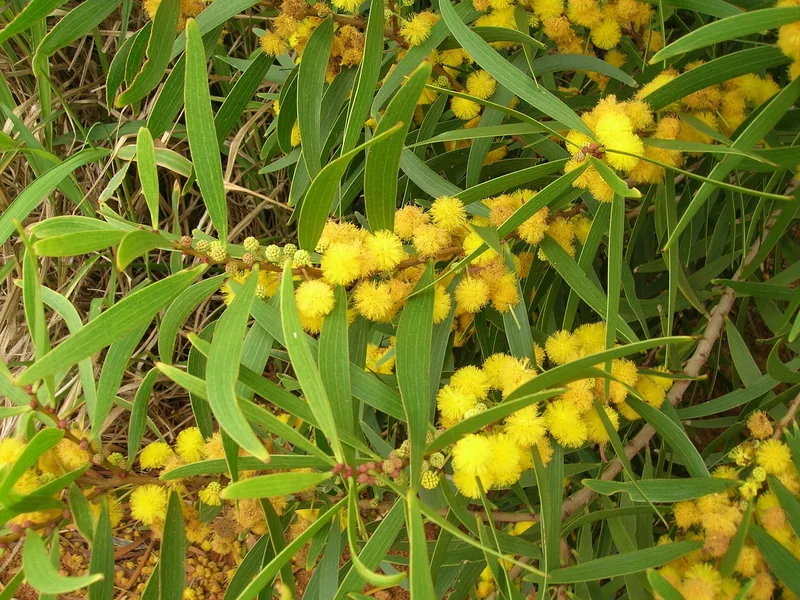
| Acacia confusa | Acacia confusa Merr., Philippine Journal of Science, C 5: 27 (1910). An evergreen, unarmed tree 6–15 m tall, bearing phyllodes in place of leaves on mature plants, with golden, fragrant, globose flower heads from March to October (Flora of China Editorial Committee, 2010; Lin, Chang and Chang, 2018). Names: Taiwan acacia · 台湾相思 tai wan xiang si. Range: Taiwan and the Philippines, by GBIF's records; Flora of China gives the Philippines, the Taiwanese review literature Taiwan alone. Tryptamines: N-methyltryptamine · DMT · DMT-N-oxide. |
|---|---|
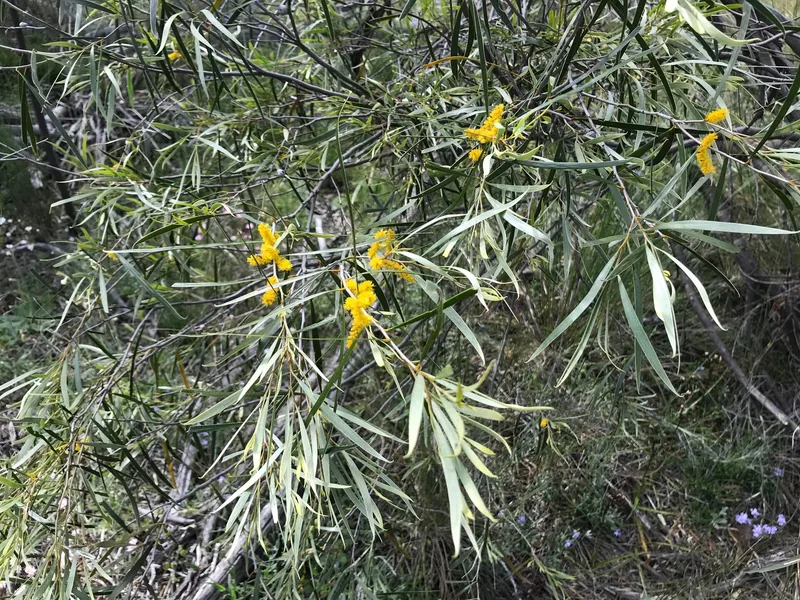
| Acacia acuminata | Acacia acuminata Benth., London Journal of Botany 1: 373 (1842); Acacia section Juliflorae. A shrub or tree 1–7 m tall, occasionally to 12 m, flowering yellow from July to October on a wide variety of soils; widespread across southern Australia with its centre of diversity in south-west Western Australia (Western Australian Herbarium, 2026; Byrne, MacDonald and Coates, 2002). Names: Jam. Infraspecific taxa: Subsp. acuminata; subsp. burkittii, formerly A. burkittii (Kodela and Tindale, 1998); informal variants. Tryptamines: DMT. |
A species complex
"Acacia acuminata" names a group more than a single plant: the complex includes its two subspecies, the separate A. oldfieldii, and several informal variants, and a study of chloroplast DNA from 25 Western Australian populations found that its lineages follow geography rather than these named divisions (Byrne, MacDonald and Coates, 2002).
The acacias of the ancient world
The acacias of the Egyptian and biblical record are not the two species above. Loret identified the Egyptian shant as Acacia nilotica and the ash as A. seyal (Loret, 1892, pp. 84–85), and Moldenke gave the wood of the Ark, made in Sinai, as A. tortilis (Moldenke, 1954, p. 162). Molecular study has since shown Acacia in its old sense to be polyphyletic. The name was conserved for the larger Australian group and retypified on A. penninervis, while the former subgenus Acacia became the genus Vachellia (Kyalangalilwa et al., 2013). The three ancient species are now accepted as Vachellia nilotica, V. seyal and V. tortilis (GBIF.org, 2026c), whereas the Australian species studied for DMT belong to Acacia in the strict sense (Bonomo et al., 2025). The tree of the ancient record and the tree of the modern analyses share a name and a family, but in current taxonomy they are different genera.
A changed landscape
The present landscape is a poor yardstick for the ancient one. Sediments of the Nile fan record the end of the African Humid Period, when the rain belt moved south and the Green Sahara disappeared, with rapid shifts of vegetation between about 8,700 and 6,000 years ago (Blanchet, Frank and Schouten, 2014). Charcoal from the north shore of the Fayum shows three woodland communities in the early and middle Holocene, with wood locally abundant (Marston, Holdaway and Wendrich, 2017). Even in historical times, when the desert's aridity is generally regarded as broadly comparable to today's, Bahariya Oasis remained relatively green until some point between the second and third centuries CE (Colin et al., 2019). Where acacias grew, how thickly, and which populations the Egyptians knew are questions that today's distribution cannot answer on its own.
02Chemistry
DMT


DMT-N-oxide
alkaloid
Phenolics and tannins
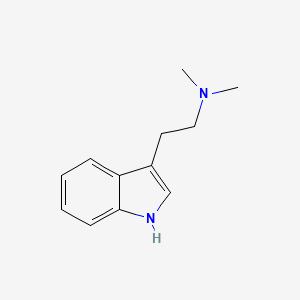
For A. confusa, an Australian natural-products group isolated N-methyltryptamine, DMT and DMT-N-oxide, together with a new chlorinated tryptamine that turned out to be an artefact of the isolation conditions (Buchanan et al., 2007); the bark also yields new bisindole and trimeric alkaloids, several active in laboratory assays of pain and inflammation (Wang et al., 2022). Most research on the tree concerns its fifty-five phenolic compounds (Lin, Chang and Chang, 2018); bark and heartwood extracts both scavenge free radicals strongly (Chang et al., 2001).
For A. acuminata, the only measurement read is from a clinical preparation: dried and milled phyllodes and thin stems, sourced commercially in Western Australia, yielded an extract of about 13% DMT; a second, undisclosed Australian species yielded about 5% (Bonomo et al., 2025). How content varies across the species complex is not established — and since its named subspecies and variants do not follow its genetic lineages (Byrne, MacDonald and Coates, 2002), a name on a label is a weak guide to what a given plant contains.
Pharmacological open questions
- Unresolved
The ancient acacias. Shanon's hypothesis rests on species of Acacia in Sinai and southern Israel containing the same psychoactive molecules as the plants of ayahuasca (Shanon, 2008). The only analysis from the Nile basin read for this record is a 1975 report of DMT from the leaves of certain acacias of northern Sudan (Wahba Khalil and Elkheir, 1975). In Sadgrove's reading it found traces in two gum acacias, about 0.004% in Senegalia polyacantha subsp. campylacantha and 0.003% in S. senegal, concentrations he considers too low to be accurate with the technology of the time. Claims of DMT in Vachellia nilotica, V. seyal and V. tortilis, he finds, arise from misreading a paper that concluded none was found (Sadgrove, 2022, Table 5).
The question is open rather than closed. Sadgrove judges that publications on alkaloids in the African Senegalia and Vachellia have not used acceptable methods of chemical analysis, so that knowledge of their compounds is tentative; he could not verify a chemical similarity to Australian Acacia, and encourages the analysis that would settle it. He also records β-carbolines — harman, norharman and their tetrahydro forms — in Acacia, Senegalia and Vachellia, though their occurrence together with tryptamines is still tentative; if confirmed, the two ingredients of ayahuasca would be present in a single plant (Sadgrove, 2022). Shanon's own pairing supplies the β-carbolines from a second plant, Peganum harmala, which grows across North Africa as harmel (Shanon, 2008). The DMT measured on this page comes from A. confusa and from Australian Acacia (Buchanan et al., 2007; Bonomo et al., 2025).
03Tradition, ritual & cultural use
Shant: the acacia in Egypt
The acacia is among the oldest named trees of Egypt. Loret, cataloguing the plants of the hieroglyphic record, identified shant as Acacia nilotica, a tree of great age on the banks of the Nile whose name appears in texts contemporary with the pyramids. Its wood made coffins, furniture and statues, and some of the garlands on the mummies of Ahmose I and Amenhotep I, kings of the Eighteenth Dynasty, were made of its flowers. The ash, which he took for A. seyal, is named on monuments from the first dynasties and gave wood for coffins, statues, doors and boats (Loret, 1892, pp. 84–85).
The tree had a sacred life as well as a working one. Among the sacred trees of Busiris, the city where the backbone of Osiris was preserved, Budge lists the acacia, the persea and the sycamore-fig, all associated with the god (Budge, 1911, p. 37). In the legend of Horus of Behutet as Budge retells it, when the god had defeated his enemies close to Dendera he was made god of the region, and the acacia and the sycamore were sacred to him; the boat of Ra was built with its fore part of acacia wood and its after part of sycamore, "and both kinds of wood were, henceforth, holy" (Budge, 1904, pp. 479, 481).
The tree of Isis's search in the best-known telling of the myth is not the acacia. In Plutarch's account, as Budge relates it, the chest holding Osiris's body was cast ashore at Byblos, where a large erica tree sprang up and enclosed it; the king of Byblos had the trunk made into a pillar for his palace, and when the news reached Isis she set out at once (Budge, 1911, pp. 4–5).
Inhabited trees: the ished, the sycamore and the soul in the branches
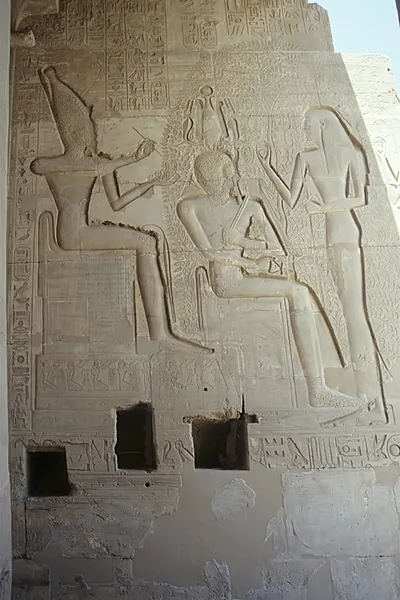
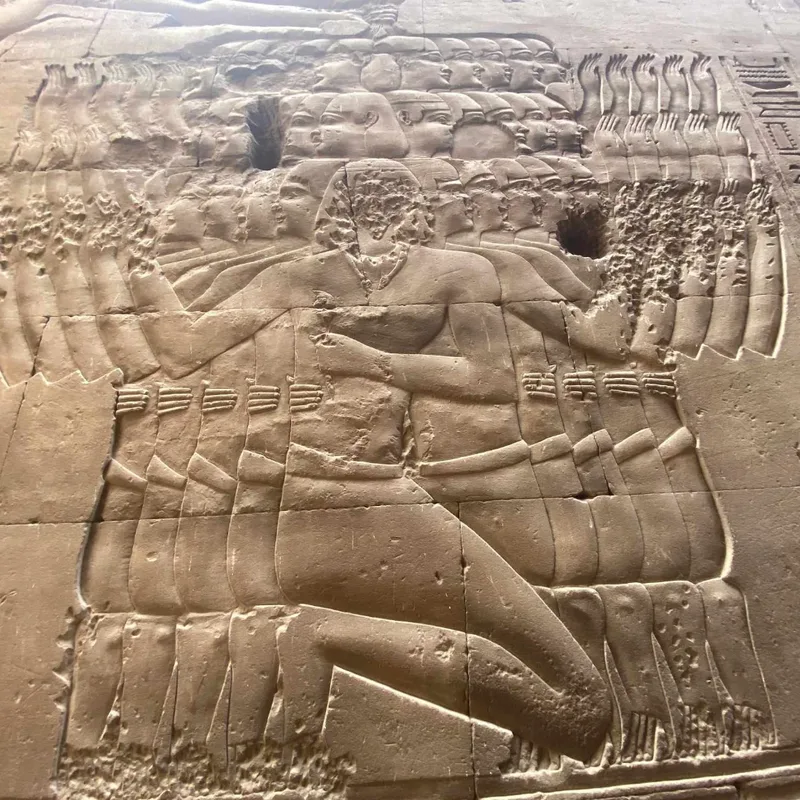
The acacia shared Egypt's sacred landscape with other trees that were treated as dwellings of gods and souls. The most famous is the persea, or ished, of Heliopolis. Seshat, goddess of writing, appears with Thoth and Atum writing a king's name on a tree, and is sometimes shown in the sacred persea itself; by the New Kingdom she records the king's regnal years and jubilees on the leaves of the ished tree (Külahlı, 2025, pp. 145–147). The Bennu, the soul of Ra, was thought to shine upon the world from the top of the persea "wherein he renewed himself", and among the Osiris scenes at Dendera the persea grows at the head of the god's bier with a soul, a man-headed hawk, standing in its upper branches (Budge, 1904b, pp. 97, 136). Budge took Osiris's connection with the persea and the erica as evidence that the god had once been a tree-spirit (Budge, 1911, p. 19).
The tree could also be a goddess. In a vignette of the Book of the Dead, Nut stands in her sycamore, reaching a table of bread and food to the dead man with one hand and pouring water over him from a libation vase with the other; the sycamore of Nut stood at Heliopolis, and Apep was slain at its foot by the Great Cat of Ra (Budge, 1904b, p. 107). Budge tied a Coptic legend of the Virgin hiding in the trunk of the Heliopolis sycamore to the myth, recorded by Plutarch, in which Isis hid the body of Osiris in a tree trunk (Budge, 1904b, p. 108). None of these trees is the acacia. They show, rather, the world the acacia belonged to: one in which trees were written on by gods, inhabited by souls and embodied by goddesses.
Shittim: the wood of the Ark
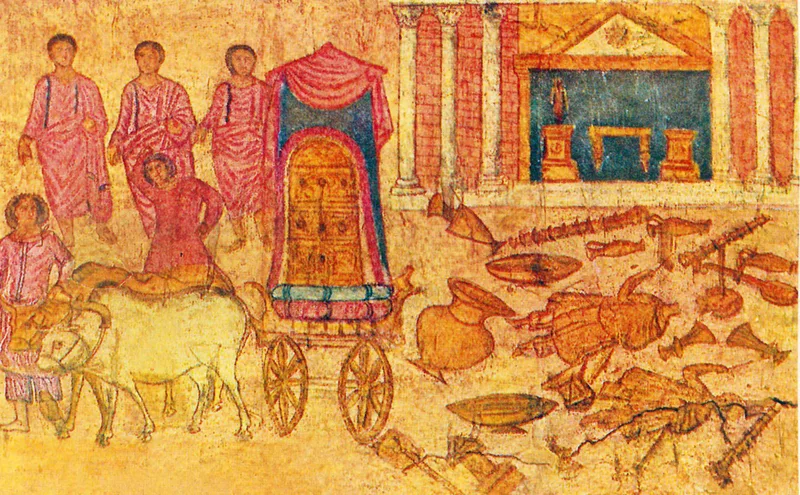
In the Hebrew Bible the acacia is shittah, plural shittim. Exodus prescribes it for the furniture of the wilderness sanctuary: "And they shall make an ark of shittim wood" (Exodus 25:10). The same wood makes the boards of the tabernacle and the altar on which incense is burned (Exodus 26:15; 30:1), and Isaiah names "the shittah tree" among the trees to be planted in the wilderness (Isaiah 41:19). Loret derived the Hebrew word from the Egyptian shant (Loret, 1892, p. 84), and Moldenke identified the wood of the Ark, made in Sinai, as A. tortilis (Moldenke, 1954, p. 162). The species is disputed, but, as Nemu puts it, shittim was the most exalted wood used to construct the Ark of the Covenant (Nemu, 2019).
The bush on the mountain: Shanon's hypothesis
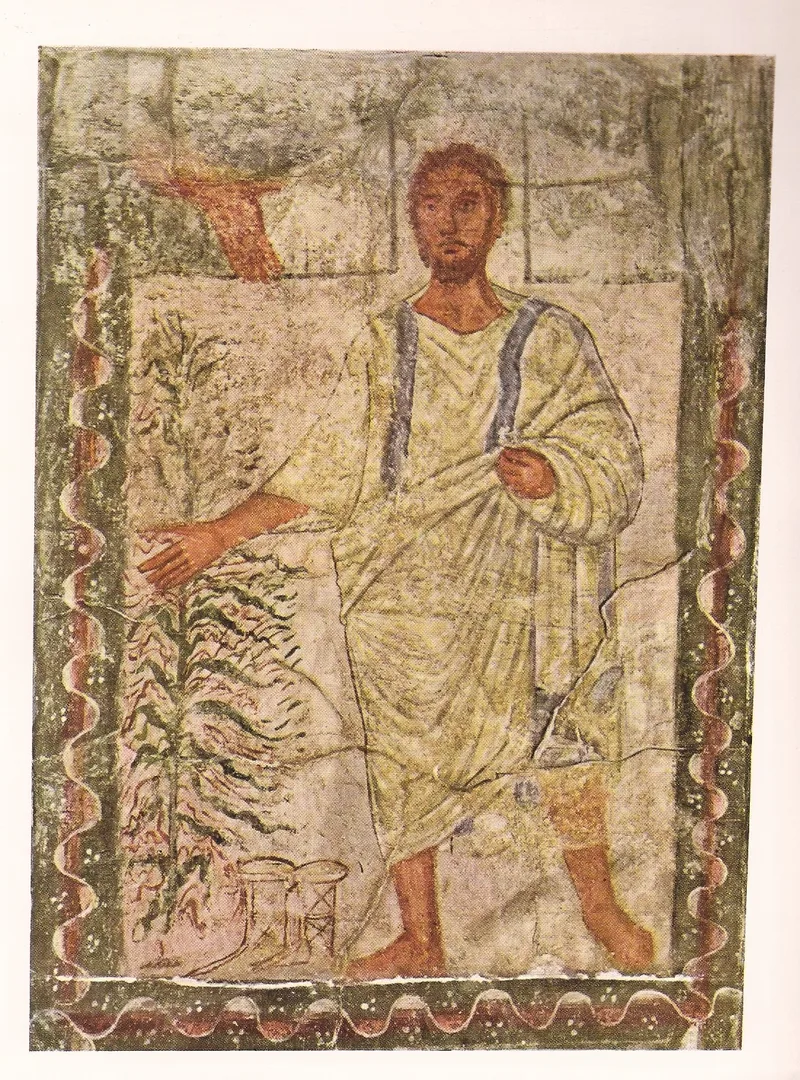
Moses is called at a burning bush: "the bush burned with fire, and the bush was not consumed" (Exodus 3:2). The Hebrew word is seneh, a particular bramble, and the text plays on it in naming Sinai (Adamo, 2017, p. 2). The bush is not called an acacia.
Benny Shanon, who had charted the phenomenology of the ayahuasca experience (Shanon, 2002), proposed in 2008 that the ancient Israelite religion was associated with entheogens. His starting point is botanical: in the arid lands of Sinai and southern Israel grow two plants carrying the same psychoactive molecules as the plants of ayahuasca, species of Acacia and the bush Peganum harmala. He builds on it with comparative phenomenology, linguistics, the exegesis of old Jewish texts and other Middle Eastern traditions, and anthropological and ethnobotanical data, all centred on the life of Moses (Shanon, 2008). In Nemu's summary, Shanon relates harmal, the Arabic name of P. harmala, to the Hebrew cherem, "taboo", and the Arabic haram, both "taboo" and "sacred". Nemu adds a pun of his own reading: the Talmud links the esteemed shittim to shtuth, "nonsense", which he finds makes more sense if the effects of DMT are considered (Nemu, 2019).
Nemu, broadly sympathetic, draws the limit himself: an ayahuasca analogue may have been used in the ancient Middle East, but there is no direct evidence of it in the Bible and no known reference to P. harmala at all. He finds the visions at Sinai better explained by Merkur's argument that the manna eaten before them was ergot (Nemu, 2019).
Eridu: the kiškanû and the apkallu
Mesopotamia has its own sacred tree. An incantation for a sick man begins in Eridu, the city of the god Ea:
"In Eridu groweth the dark kiskanu / That springeth forth in a place undefiled, / Whereof the brilliance is shining lapis / Which reacheth unto Ocean … In its depths (are) Shamash and Tammuz."Thompson (1903, p. liv)
Sayce and Pinches read the passage as the Babylonian Garden of Eden, and the kiškanû as the Tree of Life, which they took to be the vine. Thompson disagreed: he thought the kiškanû a flowering and perhaps thorny shrub growing thick as a grove by the river near Eridu, probably a tragacanth Astragalus, whose association with the gods explained its power in magic (Thompson, 1903, pp. liv–lxi). The tree's identity was contested at the outset and the sources read here do not settle it.
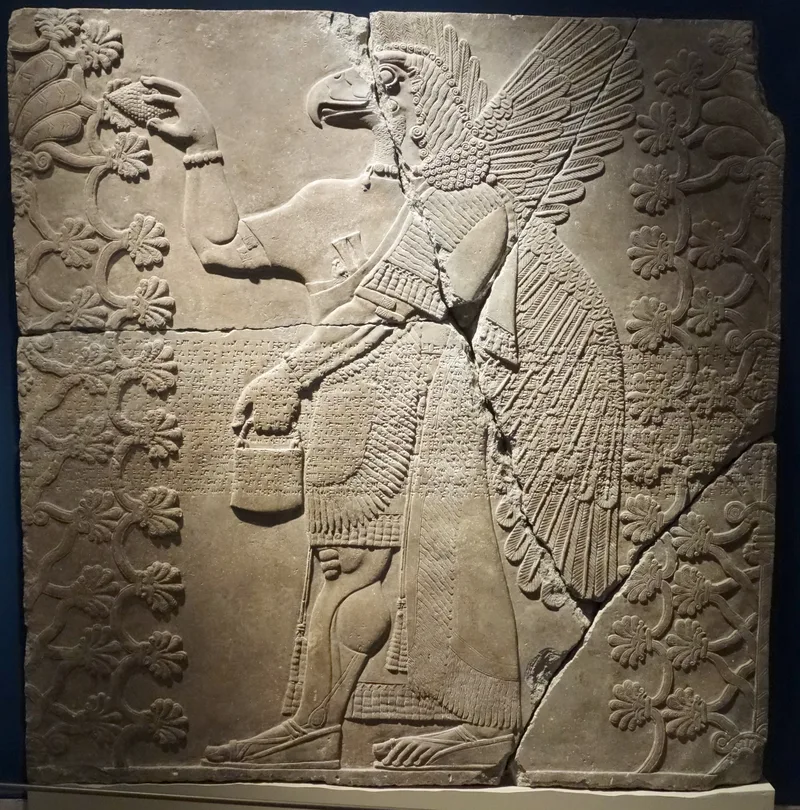
In Assyrian palace art the sacred tree is tended by chimeric beings. The figures usually associated with the term apkallu, "wise sage", an apotropaic demon or minor divinity, are shown as bearded men or with the heads of birds. They approach the tree with a cone in the raised hand and a bucket in the other; the cone is best read as a fir cone used for purification, and the bucket held water that brought about "release". That stylised tree derives from the date palm, associated with Ishtar, rather than the acacia (Collins, 2006, pp. 99, 103–105).
An open question
The question this page leaves open is whether the reverence these cultures gave to trees, and to the acacia among them, had anything to do with what the trees could do to the mind. Several strands make the question natural. The acacia was carved into Egyptian statues and coffins, strung as seed-shaped beads in a burial, set beside Osiris at Busiris and made holy in the boat of Ra; its Egyptian name passed, on Loret's etymology, into the Hebrew of the Ark; the trees around it were inhabited by souls and goddesses; and the genus that carried its name in the nineteenth century includes trees in which DMT has since been measured. Shanon joins the acacia to Peganum harmala, the harmel of North Africa and the harmal of Sinai, to propose an ancient analogue of ayahuasca (Shanon, 2008).
What would answer it is still missing. In the sources read, the Egyptian and biblical record names the acacia as material, sacred tree and holy wood, but never as something eaten, drunk or burned for visions, and Nemu finds no direct evidence of a brew in the Bible (Nemu, 2019). The chemistry of the African acacias awaits examination by methods Sadgrove would accept, so a negative is no more established than a positive (Sadgrove, 2022). And the trees of the ancient Nile grew in a landscape that has changed since. The question therefore waits on evidence still to be gathered: the analysis of the acacias of Egypt, Sudan and Sinai, and a reading of the texts for preparations as well as materials.
Acacia in Australian ayahuasca
Ayahuasca has been reimagined in the alternative healing circles of Western countries over the fifteen years before 2015; in Australia, drinking it is organised by ritual conventions that cast the participant as autonomous and responsible for his or her own ecstatic trance, purging and healing (Gearin, 2015). There the practice extends to brews in which native Acacia supplies the DMT, combined with Banisteriopsis caapi or Peganum harmala for the harmala alkaloids (Bonomo et al., 2025) — an Amazonian pairing rebuilt from Australian and Old World plants, and one strand of the wider Pangaean Entheobotanical Renewal.
The first clinical study
In 2025 a Melbourne group reported what it believed to be the first clinical trial of a DMT–harmala formulation derived from Acacia. Nine healthy volunteers with prior experience of ayahuasca took capsules whose DMT came from A. acuminata or a second Australian species and whose harmala alkaloids came from P. harmala seed. The authors framed the formulations as a possible alternative to traditional ayahuasca for clinical use, and noted that sourcing alkaloids this way could relieve pressure on Indigenous plant stocks in South America (Bonomo et al., 2025).
Taiwan: a medicine of wounds, a working tree
In Taiwan A. confusa was a traditional medicine — an aqueous extract of the leaves was applied to heal wounds and against blood stasis — and, far more widely, a working tree: firewood and charcoal, railway sleepers, mine construction and mushroom cultivation; a tree planted to hold water and soil; and a source of tannins that dyed cloth and tanned leather (Lin, Chang and Chang, 2018). It is still grown across southern China for wood and tannins (Flora of China Editorial Committee, 2010). No ritual or visionary use of the tree is recorded in the sources read.
Western Australia: a host for sandalwood
Western Australian sandalwood, Santalum spicatum, has been grown on Acacia hosts in trial plantings, and different A. acuminata variants have been compared as its host in the northern and eastern Wheatbelt (Brand, Robinson and Archibald, 2003; Brand, 2009). No record of Aboriginal use of the species was found in the sources read; any Noongar or other Aboriginal knowledge of it lies outside this record.
Sadgrove makes the same point for the genus: Aboriginal use of Acacia is not documented in enough detail to say whether it was used for psychotropic effects, and the rituals of the "men of high degree" were kept in strict secrecy, so no conclusion can be drawn (Sadgrove, 2022).
04Cosmology & key terms
The terms below are those the ancient record and its modern readers use for the tree. They name a material, a sacred tree and a hypothesis; none, in the sources read, names a rite of ingestion.
- Shant
- The ancient Egyptian name of Acacia nilotica in Loret's reading. Coptic shonte, Arabic sant and, he argued, Hebrew shittah derive from it (Loret, 1892, p. 84).
- Ash
- The tree Loret identified as A. seyal. Because its name is written with the sign of a pod, he held it to be a legume, against readings of it as a conifer (Loret, 1892, p. 85).
- Qami
- Egyptian for the gum of the acacia, used also for resin; Loret found in it the origin of the Greek word for gum, and so of "gum" itself (Loret, 1892, p. 84).
- Shittah / shittim
- Hebrew for the acacia and its wood: the wood of the Ark, the tabernacle and the incense altar (Exodus 25:10; 26:15; 30:1). Nemu derives it from shotet, "to pierce", and reads that as what DMT does to the veil of everyday reality, as well as what acacia thorns do to the skin (Nemu, 2019).
- Seneh
- The bush of Exodus 3:2, a particular bramble, its name played on in that of Sinai (Adamo, 2017, p. 2).
- Harmal
- The Arabic name of Peganum harmala, which Shanon relates to Hebrew cherem and Arabic haram (Nemu, 2019).
- Heru-Behutet
- Horus of Behutet, to whom, in Budge's retelling, the acacia and the sycamore were made sacred (Budge, 1904, p. 479).
- Ished
- The persea of Heliopolis, on whose leaves Seshat records the king's years (Külahlı, 2025, p. 147).
- Kiškanû
- The dark tree of Eridu in a Babylonian incantation; read as a Tree of Life by Sayce and Pinches, as a tragacanth shrub by Thompson (Thompson, 1903, pp. liv–lix).
- Apkallu
- "Wise sage", the term usually associated with the bearded and bird-headed genies who tend the Assyrian sacred tree (Collins, 2006, p. 103).
- Erica
- The tree that, in Plutarch's account of the myth, grew around the chest of Osiris at Byblos (Budge, 1911, p. 4).
05Visionary phenomenology
Phenomenological profile
The profile lists effects the sources report, for each preparation separately, grouped by domain. Each row gives the grade, how often the sources say the effect occurs (only where they say so; most do not) and the kinds of source behind it. A chip naming a compound, such as “Trial · psilocybin”, means the evidence comes from studies of that compound rather than of the preparation itself; “partial” means the route, purity or dose differs from the traditional preparation, so the row cannot be graded above supported. The line under each preparation says which domains have evidence entered here. A domain with nothing entered has not yet been assessed in this profile; that is not a finding that the literature is silent, and the article may discuss it. Open a row for the note and the sources.
Modern preparationsextract with harmala, or DMT inhaled
Evidence entered for 4 of 8 domains. Not yet entered: self and unity, affect, cognition, states of consciousness.
No ancient account of an Acacia preparation being taken survives in the sources read (Nemu, 2019). The one clinical study gave Acacia-derived DMT with harmala alkaloids by mouth, as in ayahuasca, and counts in full (Bonomo et al., 2025); studies of inhaled DMT, not identified by source, count at partial weight.
Visual
Geometric patterningLattices, spirals, tunnels and other repeating forms seen with eyes closed or overlaid on the visual field.SupportedSurvey · dmt, partial
Fractals, shapes and patterns were described in 32.6% of 3,778 inhaled-DMT reports, and vivid colours in 25.2% (Lawrence et al., 2022). Inhaled DMT acts within minutes and briefly, so this counts at partial weight.
Immersive realmsCoherent places or events that surround the experiencer, who seems to be located in them rather than looking at images.SupportedSurvey · dmt, partial
All 36 reports in a field study described emerging into other worlds (Michael, Luke and Robinson, 2021); alternate or higher dimensions appeared in a quarter of online reports, and rooms in 15.4% (Lawrence et al., 2022). Inhaled DMT acts within minutes and briefly, so this counts at partial weight. Read about the phenomenology of immersive realms →
Other senses
Intensified hearingHeightened acuity, salience or alteration of sound.SupportedSurvey · dmt, partial
An auditory ringing was among the commonest bodily effects, in 15.4% of reports (Lawrence et al., 2022). Inhaled DMT acts within minutes and briefly, so this counts at partial weight.
Body
Nausea and purgingNausea, vomiting or diarrhoea during the acute state.SupportedTrial · dmt
Nausea was the commonest physical adverse event in an open-label study of capsules made from Acacia DMT and harmala alkaloids, and two of nine participants vomited or retched; the authors found gastrointestinal effects less marked than with the liquid brew (Bonomo et al., 2025).
Altered bodily sensationTingling, vibration, heat, cold, heaviness, pressure or internal movement felt in the body.SupportedSurvey · dmt, partial
Somaesthesias were the commonest bodily effect, in 37.5% of reports (Lawrence et al., 2022). Inhaled DMT acts within minutes and briefly, so this counts at partial weight.
Relation to other beings
Autonomous entitiesBeings experienced as acting, communicating or observing independently of the experiencer’s will.SupportedSurvey · dmt, partial
Entities appeared in 45.5% of online reports, deities in 17.0% of those encounters (Lawrence et al., 2022), and in 34 of 36 field-study experiences (Michael, Luke and Robinson, 2021). Inhaled DMT acts within minutes and briefly, so this counts at partial weight. Read about the phenomenology of autonomous entities →
Sinai, read through ayahuasca
Shanon's hypothesis is in part a phenomenological argument: he compares the experiences reported by ayahuasca drinkers with passages of the Hebrew Bible (Shanon, 2008). Two such passages, as Nemu summarises them, are a fire that burns upon objects without consuming them (Exodus 24:17), which Shanon reads as a visual metaphor for the brilliant patterns that blaze around objects in psychedelic states, and the synaesthesia of the people at Sinai (Nemu, 2019):
"And all the people are seeing the voices, and the flames, and the sound of the trumpet."Exodus 20:18, Young's Literal Translation, quoted in Nemu (2019)
These are readings of a text. No account of a preparation of acacia being taken survives from the ancient world in the sources read for this record (Nemu, 2019).
Beings, helices and trees in DMT reports
Modern accounts of DMT offer the material for a different kind of comparison. An analysis of 3,778 inhaled DMT experiences posted to an online forum between 2009 and 2018 found deities in 17.0% of entity encounters, and creature-based beings, including reptilian and insectoid ones, in 9.2%; therianthropes, chimeras and hybrids appeared in 14 encounters. Among visual forms, helices, DNA, spirals or hourglass shapes appeared in 22 experiences, and trees or a tree of life in 12 (Lawrence et al., 2022). In a naturalistic field study, 34 of 36 experiences included an encounter with sentient entities; two people described DNA or a double helix, four met insectoid beings, and two reported human-animal hybrids (Michael, Luke and Robinson, 2021).
Readers who set these reports beside the bird-headed apkallu at their tree, the god-written ished and the soul in the branches are making a modern comparison; the ancient sources read here describe no plant taken to see such things. Whether the resemblance reflects shared experience, shared imagination or chance is part of the open question this page records.
What volunteers reported
The clinical study is the only account read of what an Acacia preparation does. Its volunteers rated the subjective experience of all three formulations as generally similar to ayahuasca; the purified formulation made from A. acuminata and P. harmala was rated similar to or more beneficial than ayahuasca in the strength and quality of the experience; and wellbeing and perceptual effects four weeks later differed little between formulations. Gastrointestinal effects were less marked than with the liquid brew, which the authors attribute to the capsule form. Most adverse mental-health events occurred in one participant at the higher dose of the purified formulation, including transient suicidal ideation. The authors caution that nine participants and an open-label design limit any general conclusion (Bonomo et al., 2025).
Gearin's ethnography describes the ritual frame in which such experiences are usually had outside the clinic: purging and visionary trance as the place where everyday life is "purged, rearticulated, and reconstituted", held within conventions that ask each participant to account for his or her own experience — what Gearin calls a "kaleidoscopic individualism" (Gearin, 2015). No account of visionary experience specific to A. confusa was found.
06Contemporary status
| Conservation | A. confusa: Least Concern (BGCI and IUCN SSC Global Tree Specialist Group, 2019). A. acuminata: Least Concern (IUCN SSC Global Tree Specialist Group and BGCI, 2020); not threatened in Western Australia (Western Australian Herbarium, 2026) |
|---|---|
| Spread | A. confusa is recorded as introduced across southern China and Hong Kong, the Ryukyu and Ogasawara islands, Hawaii, the Marianas and Caroline Islands, Mauritius and the Seychelles; 5,840 occurrence records, 3,686 from Taiwan (GBIF.org, 2026a). Of 2,082 records of A. acuminata, 2,011 are Australian (GBIF.org, 2026b) |
| Harvest | Commercially supplied A. acuminata was used in the clinical study; the authors withheld the name of their second species because of concern over wild harvesting (Bonomo et al., 2025) |
Legality
| Jurisdiction | Status |
|---|---|
| International | DMT is in Schedule I of the 1971 Convention on Psychotropic Substances; the Convention lists compounds, not plants (United Nations, 1971). |
| United States | DMT is listed in federal Schedule I, 21 CFR §1308.11; Acacia is not named (Electronic Code of Federal Regulations, 2026). |
| Australia | DMT and the harmala alkaloids are Schedule 9 prohibited substances that may by law be used only for research; the clinical study ran under hospital ethics approval, with permits for each participant from the Victorian Department of Health (Bonomo et al., 2025). The scheduling instrument itself was not opened for this record. |
Open questions on this entry
Safety and law
07Cross-correlations
| Harmala partners | Peganum harmala · Banisteriopsis caapi — the harmala sources paired with Acacia in the clinical study and in Australian brews |
|---|---|
| Ancient region | Sinai, the Negev and the Nile — shared with Peganum harmala, the second plant of Shanon’s hypothesis |
| Family | Fabaceae — Mimosa tenuiflora · Anadenanthera colubrina · Anadenanthera peregrina |
| Compound | DMT — Psychotria viridis · Mimosa tenuiflora · Diplopterys cabrerana · Virola theiodora · Phalaris |
| Cultural complex | Pangaean Entheobotanical Renewal — indexed → |
08Bibliography
How to read the labels on each source
- Source type
- What kind of work it is: journal article, book, legislation, patent application, database record and so on. A word after the dot (ethnography, protologue, primary source) keeps the genre the entry was first filed under. “Unclassified” means the citation does not say enough to tell.
- Peer review
- Recorded for each work separately, and only where it has been confirmed for that work. It is never inferred from a DOI, a publisher or a journal, since journals also publish editorials, letters and commentaries. Where it has not been confirmed, the entry records it as not established. It does not apply to legislation, court decisions, treaties, patents, datasets, database and collection records, historical texts, films, talks, press releases or web pages.
- Check
- What was checked when the entry was added. DOI checked: the DOI’s registry record (Crossref) matched the citation’s title, first author and year. Verified: the record itself was opened and matched the citation: a library catalogue record for a book, or the page itself for a database entry, law, patent or archive document. “Verified (abstract)” and “(summary)” mean only the abstract or a summary was read. Located: a record was found but not fully matched. Bibliographic record and Stable record (in essays): a catalogue or stable web record exists; what was checked against it is not recorded. Unverified: no check is recorded. No locator found: a search found no record. Secondary: read through another source.
- What the labels do not say
- None of them means the source supports a particular sentence. Where a sentence is graded, its evidence note names its sources and whether each supports it, disputes it or gives context. Dates and reviewers of checks are not recorded for each entry; the version note at the foot of a graded page dates its last review.