Introduction
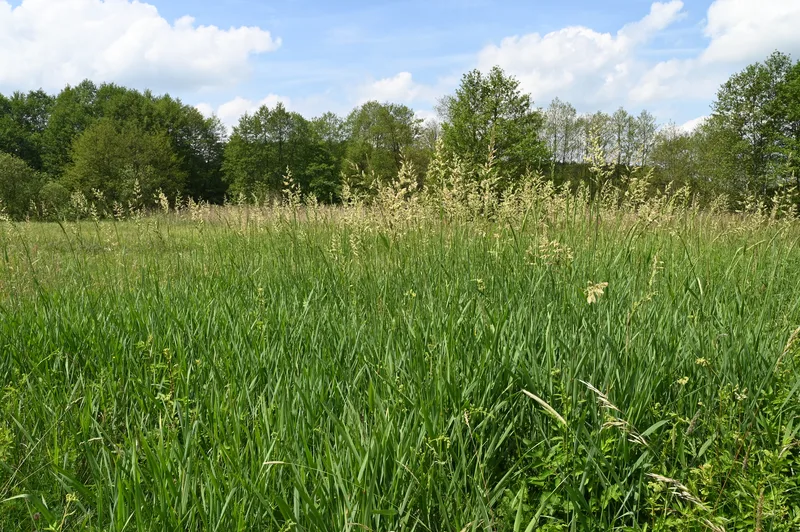
Phalaris, the canary grasses, are some twenty species of temperate grasses; this page treats reed canary grass, P. arundinacea, and bulbous canary grass, P. aquatica, both important forage grasses. Their indole alkaloids — gramine, DMT, 5-MeO-DMT and related tryptamines — vary sharply between plants, and cause the nervous syndrome of grazing sheep known as phalaris staggers. In the early 1990s the grasses were tried as the DMT half of temperate ayahuasca analogues; no study of a human Phalaris preparation exists. Reed canary grass was cultivated in Sweden from 1749 and has become an aggressive invader of North American wetlands.
All sections
| Botanical name | Phalaris arundinacea L. · Phalaris aquatica L. |
|---|---|
| Taxa | Poaceae · Poales · Angiosperms |
| Traditional names | Reed canary grass · Bulbous canary grass · Toowoomba canary grass · Harding grass |
| Regions | Circumboreal (P. arundinacea); the Mediterranean, from Portugal and Morocco to Mesopotamia, and the pastures of south-eastern Australia (P. aquatica) (Waggy, 2010; Stapf, 1909). |
| Ethnographic entheogenic use | The two canary grasses enter this archive through their chemistry; neither has a ritual history. Phalaris arundinacea, reed canary grass, is a wetland grass of the northern temperate zone, cultivated in Sweden from as early as 1749 and now an aggressive invader of North American wetlands. P. aquatica, bulbous canary grass, is a Mediterranean perennial that became, as "Toowoomba canary grass" and then simply "phalaris", one of the pasture grasses of south-eastern Australia. Both carry DMT, 5-MeO-DMT and related indole alkaloids — the chemistry that poisons the sheep that graze them, and that drew them, in the 1990s, into experiments with temperate-zone ayahuasca analogues. This page is a first assembly of what the sources read so far support, to be developed. |
01Ethnobotany of Phalaris
Botanical Info
| Genus | Phalaris — the canary grasses. Some twenty wild species, annual and perennial, in the temperate zones of both hemispheres and the mountains of tropical Africa and South America (Voshell et al., 2011; Voshell, Baldini and Hilu, 2016) |
|---|---|
| Family / order | Poaceae · Poales |
Territories
- 1Sweden · reed canary grass cultivated from as early as 1749 (Waggy, 2010)
- 2Eastern North America · maygrass, P. caroliniana, a crop of native eastern North American agriculture (Fritz, 2014)
- 3Natal · sent in 1907 as “an excellent drought-resisting winter grass” (Stapf, 1909)
- 4Toowoomba, Queensland · “Toowoomba canary grass” on trial in Queensland and New South Wales by 1906 (Stapf, 1909)
Deep Time
- 1749Cultivation of P. arundinacea in Sweden, the earliest recorded.
- 1753P. arundinacea described by Linnaeus.
- 1755P. aquatica described by Linnaeus.
- 1906–1909“Toowoomba canary grass” on trial in Queensland and New South Wales, identified at Kew as P. bulbosa.
- 19585-Methoxy-N-methyltryptamine isolated from P. arundinacea.
A third species, maygrass (P. caroliniana), was a crop of native eastern North American agriculture. No archaeological, ritual or visionary use of either species before the late twentieth century is found in the sources read.
Two species
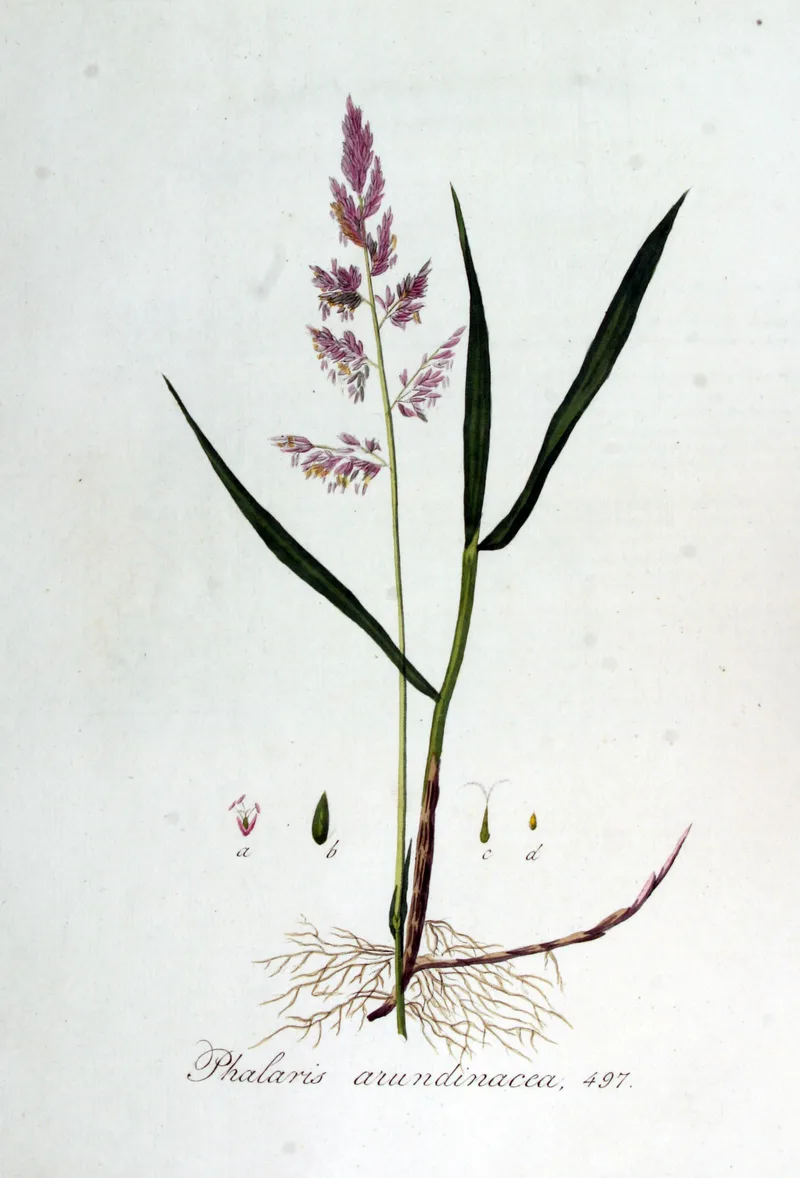
| Phalaris arundinacea | Phalaris arundinacea L., Species Plantarum 1: 55 (1753) (IPNI, 2026a). A cool-season, long-lived perennial capable of rapid vegetative spread, native to Eurasia and North America (Lavergne and Molofsky, 2004); circumboreal, in the temperate regions of five continents, and introduced to New Zealand, Australia and South America (Waggy, 2010). A variegated form, var. picta, is the ornamental ribbon grass (Waggy, 2010). Names: reed canary grass · ribbon grass · gardener's garters · Rohrglanzgras · alpiste roseau, baldingère · hierba cinta · scagliola palustre (GBIF.org, 2026a). Synonyms include Baldingera arundinacea (L.) Dumort., Digraphis arundinacea (L.) Trin. and Phalaridantha arundinacea (L.) St.-Lag. (GBIF.org, 2026a). Alkaloids: gramine · hordenine · DMT · 5-MeO-DMT · N-methyltryptamine · 5-MeO-N-methyltryptamine · β-carbolines. |
|---|---|
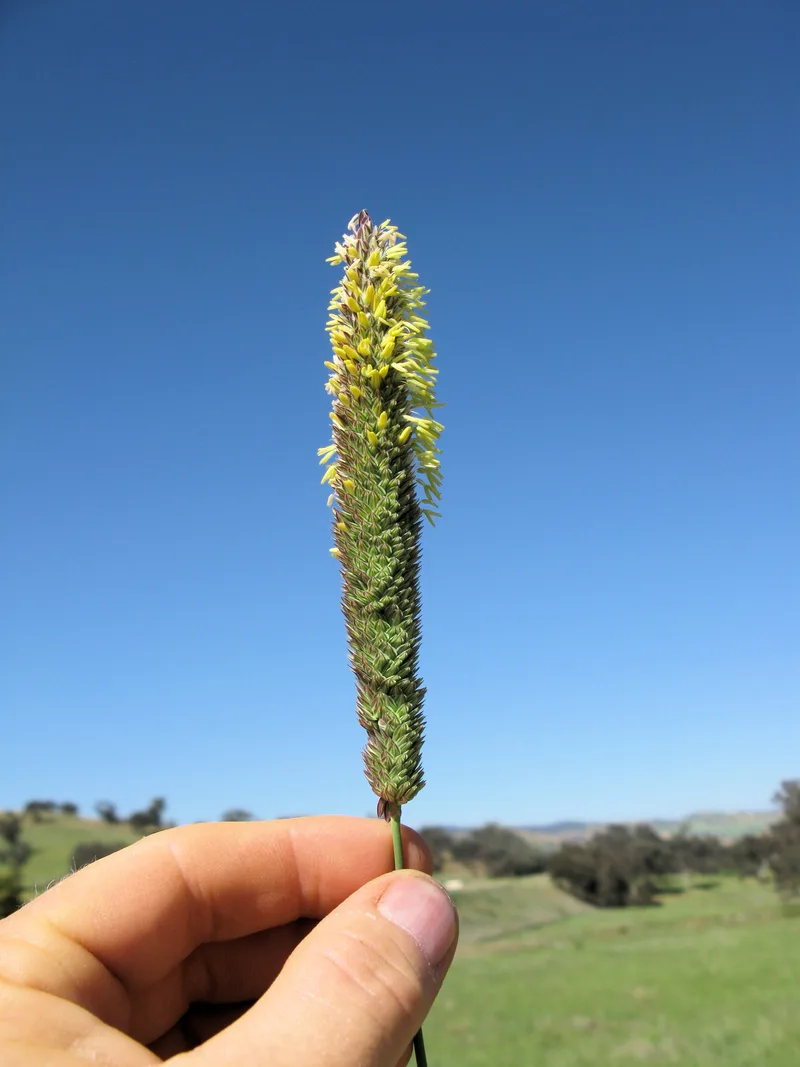
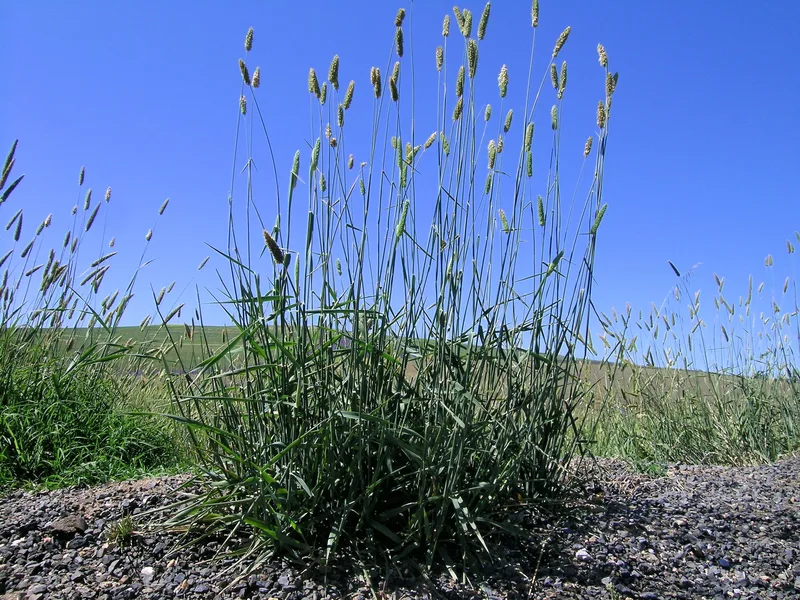
| Phalaris aquatica | Phalaris aquatica L., Centuria I Plantarum 4 (1755) (IPNI, 2026b). A perennial whose basal internodes swell slightly — the "bulbous" of its common name — distributed naturally from Portugal and Morocco to Mesopotamia, often on cultivated ground and the borders of cornfields (Stapf, 1909). Names: bulbous canary grass · Harding grass · Toowoomba canary grass · Australian phalaris · Knolliges Glanzgras · alpiste bulbeux · falaride tuberosa · rabillo de cordero (GBIF.org, 2026b). Synonyms include P. tuberosa L., P. bulbosa, P. nodosa L. and P. stenoptera Hack. (GBIF.org, 2026b) — the older literature calls it P. tuberosa. Alkaloids: DMT · 5-MeO-DMT · gramine · hordenine. |
One grass or two
The two species are close. Professor Hackel, sent specimens of the Toowoomba grass, took it for a new species intermediate between P. bulbosa (the present P. aquatica) and P. arundinacea; Otto Stapf at Kew, comparing the glumes of the spikelet, found "no occasion for the assumption of a hybrid origin" and judged it "simply a very robust race of the Mediterranean P. bulbosa, L." (Stapf, 1909, pp. 290–291). The two cross readily: first-generation hybrids between P. tuberosa and the hexaploid race of P. arundinacea were functionally male-sterile but grew more vigorously than either parent, and doubling their chromosomes gave allopolyploids of high fertility (McWilliam, 1962). Australian breeders later drew on P. arundinacea directly, bringing its genes into the acid-soil-tolerant P. aquatica cultivar Advanced AT (Culvenor and Simpson, 2014).
02Chemistry
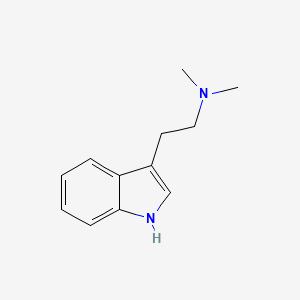
DMT
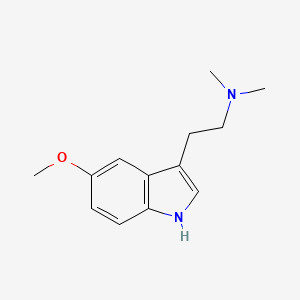
5-MeO-DMT
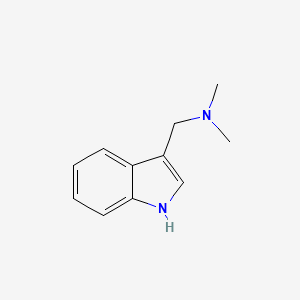
Gramine
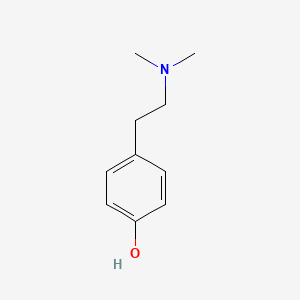
Hordenine

5-MeO-N-methyltryptamine

2-Methyl-tetrahydro-β-carboline
The alkaloids of the genus were found by chemists working for agriculture. A new indole alkaloid, 5-methoxy-N-methyltryptamine, was isolated from P. arundinacea in 1958 (Wilkinson, 1958); indolealkylamine alkaloids were reported from both species in 1964 (Culvenor, Dal Bon and Smith, 1964); and a tetrahydro-β-carboline, with variation in the plant's alkaloids, in 1976 (Gander et al., 1976). Ott's survey adds that P. tuberosa had been reported to contain DMT, 5-MeO-DMT and bufotenine, and that it and P. arundinacea also contain traces of β-carbolines (Ott, 1996, p. 245).
Reed canary grass is chemically several plants. Its breeders sorted the known indole alkaloids into three groups: gramine alone; a tryptamine group of N-methyltryptamine, DMT and 2-methyl-tetrahydro-β-carboline; and a methoxylated group of 5-MeO-N-methyltryptamine, 5-MeO-DMT and the corresponding 6-methoxy-β-carboline. Crosses fitted a two-gene model: one dominant allele switches on the tryptamine group, a second, closely linked and epistatic to the first, the methoxylated group, and a plant makes gramine alone only when it carries neither (Marum, Hovin and Marten, 1979). Cultivars differ accordingly — of those typed, 'Vantage' contained gramine exclusively, while 'Frontier', 'Grove' and 'Rise' carried both gramine and tryptamines (Hovin and Marten, 1975) — and most Norwegian, Soviet and North American populations grown in western Norway were of the gramine type (Østrem, 1987). Within a plant, gramine was ten times more concentrated in regrowth than in first growth, and hordenine twice (Woods, Hovin and Marten, 1979).
In P. aquatica the pathway to DMT has been measured enzyme by enzyme. In seedlings of the cultivar Australian Commercial, tryptophan decarboxylase and two N-methyltransferases rose to peak activity on the fifth day after planting; DMT peaked on the eighth day and then fell, as did every intermediate; and the second methyltransferase also converts 5-MeO-N-methyltryptamine to 5-MeO-DMT (Mack, Mulvena and Slaytor, 1988). In grazed Victorian pastures through one growing season, gramine, hordenine, DMT and 5-MeO-DMT all fell in concentration from February to June, and the β-carboline norharmane was not detected in any sample (Read et al., 2020).
Pharmacological open questions
- Contested
Which alkaloid does what to livestock. Given to sheep, 5-MeO-DMT, gramine and hordenine each produced the nervous form of phalaris poisoning, but none produced the cardiac "sudden death" syndrome (Bourke, Carrigan and Dixon, 1988); twenty outbreaks of sudden death suggested as many as four separate mechanisms, including cyanogenic and nitrate compounds (Bourke and Carrigan, 1992).
- Unresolved
What a given plant contains. Genotype (Marum, Hovin and Marten, 1979), cultivar (Hovin and Marten, 1975), growth stage (Woods, Hovin and Marten, 1979) and season (Read et al., 2020) all change the alkaloid profile, and cultivars bred for low alkaloids continue to cause staggers and sudden death (Kennedy et al., 1986; Read et al., 2020).
- Documented
5-MeO-DMT and the β-carbolines. 5-MeO-DMT is a non-selective serotonin agonist, inactivated mainly by monoamine oxidase A and converted by the enzyme CYP2D6 to the active metabolite bufotenine; taken with the β-carboline harmaline, its exposure is prolonged and increased, which the review discusses under the risks of serotonin toxicity (Shen et al., 2010).
03Tradition, ritual & cultural use
| Oldest evidenced use | As forage: reed canary grass cultivated in Sweden from as early as 1749 (Waggy, 2010). As a visionary plant: experimental use in temperate-zone ayahuasca analogues, reported in the early 1990s (Ott, 1996, p. 245). No archaeological or traditional ritual use of either species in the sources read. |
|---|---|
| Peoples & traditions | Graziers, agronomists and veterinarians of Europe, North America and Australia; the psychonautic networks of the analogue literature |
A fodder grass of the north
Reed canary grass has been cultivated extensively throughout Europe, and in North America mostly from introduced European cultivars — so widely that its distribution before agriculture is uncertain. Most North American floras treat it as native, and herbarium specimens collected in the inland Northwest before widespread European settlement, and in remote parts of Quebec in the nineteenth century, support that view in places (Waggy, 2010). Its alkaloids made it an object of breeding: they are negatively associated with palatability (Hovin and Marten, 1975), the tryptamines and carbolines are implicated in severe diarrhoea in sheep that graze it (Marum, Hovin and Marten, 1979), and breeders concluded that a variety free of them was feasible (Østrem, 1987).
Toowoomba: the rubbish-heap grass
The Australian history of P. aquatica begins in a botanic garden. About four or five years before Stapf wrote in 1909, Charles Ross of the State Farm at Westbrook, Queensland, distributed a promising fodder grass that R. Harding, curator of the Toowoomba Botanic Gardens, had found growing "in out of the way places, such as hedgerows and rubbish heaps". It was assumed to be the one survivor of some sixty grasses sent from New York in 1884 and thrown away during a drought. By 1906 it was on trial in Queensland and New South Wales, reported from Gippsland and shown at Adelaide; in 1907 it went to Natal as "an excellent drought-resisting winter grass" (Stapf, 1909, p. 290). Stapf doubted the New York story — twenty years separated the parcel of seed from the grass on the rubbish heap — and thought the plant more likely an accidental arrival with seed from the Mediterranean (Stapf, 1909, pp. 291–292). Under the names phalaris and P. tuberosa it became a mainstay of south-eastern Australian pasture, bred since for persistence under drought, acid soils and heavy grazing (Culvenor and Simpson, 2014).
Phalaris staggers
The grass's first human interpreters were the graziers and veterinarians who watched what it did to sheep. A study of 1956 found a nearly pure stand of phalaris toxic to sheep for almost six months of its growing period; dormant tubers and standing straw were not toxic, and eating lucerne, subterranean clover or other plants alongside it reduced the hazard considerably (Lee, Kuchel and Trowbridge, 1956). Later work separated two syndromes: a nervous "staggers", which the phalaris alkaloids reproduce, and a "sudden death" syndrome, which they do not (Bourke, Carrigan and Dixon, 1988; Bourke and Carrigan, 1992). A low-alkaloid cultivar bred to remove the problem, Sirolan, still poisoned cattle (Kennedy et al., 1986).
Anahuasca: the grass as a DMT source
In the analogue literature of the early 1990s, temperate grasses were proposed as the DMT half of an ayahuasca made without Amazonian plants. Ott records that Dennis McKenna had proposed the name "ayahuasca borealis" for such temperate-zone analogues, and that "two easily-propagated species now being used experimentally in temperate-zone ayahuasca" were the giant reed, Arundo donax, and "Canary reed", P. arundinacea; the most widely used source of the harmala alkaloids was the seed of Peganum harmala (Ott, 1996, p. 245). Italian researchers, he adds, made extensive phytochemical analyses of Phalaris and Arundo as potential tryptamine sources (Festi and Samorini, 1993, cited in Ott, 1996, p. 254). The enthusiasm was short-lived: "Problems with toxicity, perhaps a human version of the 'Phalaris staggers' affecting livestock, have cooled enthusiasm for use of these grasses in anahuasca, while Mimosa tenuiflora has emerged as the leading source of anahuasca DMT" (Ott, 1996, p. 254). The grasses thus stand at the margin of the Pangaean Entheobotanical Renewal, beside the Mimosa that displaced them and the Acacia of later Australian practice.
04Cosmology & key terms
Neither grass has a cosmology of its own in the sources read. The terms below belong to the two communities that have named it: pastoral science, and the analogue literature.
- Anahuasca
- The name Ott gives to an ayahuasca analogue assembled from a DMT plant and a β-carboline plant, of which P. arundinacea was one early candidate (Ott, 1996, pp. 245, 254).
- Ayahuasca borealis
- Dennis McKenna's proposed name for temperate-zone ayahuasca analogues, as Ott reports it (Ott, 1996, p. 245).
- Phalaris staggers
- The nervous syndrome of sheep grazing the grass, actively growing phalaris being potentially toxic to sheep in most, if not all, circumstances (Lee, Kuchel and Trowbridge, 1956); attributed to a direct action of the alkaloids on serotonergic receptors in particular brain and spinal-cord nuclei (Bourke, Carrigan and Dixon, 1990).
- Sudden death
- A separate, peracute syndrome that the tryptamine alkaloids do not reproduce, with perhaps several causes (Bourke, Carrigan and Dixon, 1988; Bourke and Carrigan, 1992).
- Gramine type · tryptamine type
- The breeders' classification of reed canary grass plants by the alkaloids they make (Marum, Hovin and Marten, 1979).
- Toowoomba canary grass
- The Australian name, after the Queensland botanic garden where the grass was found (Stapf, 1909).
- Ribbon grass · gardener's garters
- The variegated ornamental form of P. arundinacea, var. picta (Waggy, 2010).
05Visionary phenomenology
An absent record
No study of the human experience of a Phalaris preparation was found. The one assessment in the sources read is Ott's, quoted above: that toxicity, "perhaps a human version of the 'Phalaris staggers'", ended interest in the grasses (Ott, 1996, p. 254). Nothing in the record says what was seen.
The compounds, studied apart from the plant
Of the grasses' alkaloids, 5-MeO-DMT is the one whose effects have been surveyed. In a web-based survey of 515 people who had used it — synthetic, toad-derived or plant-derived, none identified as Phalaris — most used it infrequently and mainly for spiritual exploration, and reported intense mystical-type effects such as ineffability, timelessness, awe and an experience of pure being or awareness, with challenging experiences comparatively slight (Davis et al., 2018). Those findings describe the compound; a grass extract carries gramine, hordenine and a variable mixture of tryptamines besides.
The animal record
The best-documented nervous effects of the Phalaris alkaloids are in sheep. Comparing 96 naturally affected sheep with sheep injected with 5-MeO-DMT, and mapping indole-like pigments in their brains and spinal cords, Bourke and colleagues proposed that the nervous syndrome results from a direct action of the alkaloids upon serotonergic receptors in specific nuclei (Bourke, Carrigan and Dixon, 1990) — the same receptor family through which the tryptamines act in human pharmacology (Shen et al., 2010).
06Contemporary status
| Conservation | P. arundinacea: Least Concern (Lansdown, 2013). P. aquatica: not evaluated by the IUCN (GBIF.org, 2026b) |
|---|---|
| Spread | P. arundinacea: 801,822 occurrence records, most from Britain, France and the Netherlands (GBIF.org, 2026a). P. aquatica: 45,872 records, 32,801 of them Australian (GBIF.org, 2026b) |
| Invasion | After repeated introductions of European forage genotypes, reed canary grass became an aggressive invader of North American wet prairies, stream banks and wetlands, forming single-species stands (Lavergne and Molofsky, 2004); the introductions recombined genetic variation from different European regions into new genotypes with higher evolutionary potential than in the native range (Lavergne and Molofsky, 2007) |
| Economies | P. aquatica: a productive, persistent perennial pasture grass of south-eastern Australia (Culvenor and Simpson, 2014). P. arundinacea: one of the highest-yielding cool-season grasses, studied as a biofuel crop, with its high ash content and invasiveness counted against it (Wrobel, Coulman and Smith, 2008) |
Legality
| Jurisdiction | Status |
|---|---|
| International | DMT is in Schedule I of the 1971 Convention on Psychotropic Substances; the Convention lists compounds, not plants (United Nations, 1971). |
| United States | DMT and 5-MeO-DMT are listed in federal Schedule I, 21 CFR §1308.11; Phalaris is not named (Electronic Code of Federal Regulations, 2026). Ott argued that laws read as covering such plants are "unconstitutionally vague", giving P. arundinacea as his example of a common article of commerce that "can be purchased inexpensively by the truckload" (Ott, 1996, pp. 44–45). |
Open questions on this entry
Safety and law
07Cross-correlations
| Harmala partners | Peganum harmala · Banisteriopsis caapi — the β-carboline sources of the analogue literature |
|---|---|
| Rival DMT sources | Mimosa tenuiflora — the leading DMT source that displaced the grasses · Acacia — the DMT source of Australian analogue practice |
| Family | Poaceae — the only grass in this archive |
| Compound | DMT — Psychotria viridis · Diplopterys cabrerana · Mimosa tenuiflora · Acacia; 5-MeO-DMT — Virola theiodora · Anadenanthera peregrina |
| Region | Australia — Acacia acuminata |
| Cultural complex | Pangaean Entheobotanical Renewal — indexed → |
08Bibliography
How to read the labels on each source
- Source type
- What kind of work it is: journal article, book, legislation, patent application, database record and so on. A word after the dot (ethnography, protologue, primary source) keeps the genre the entry was first filed under. “Unclassified” means the citation does not say enough to tell.
- Peer review
- Recorded for each work separately, and only where it has been confirmed for that work. It is never inferred from a DOI, a publisher or a journal, since journals also publish editorials, letters and commentaries. Where it has not been confirmed, the entry records it as not established. It does not apply to legislation, court decisions, treaties, patents, datasets, database and collection records, historical texts, films, talks, press releases or web pages.
- Check
- What was checked when the entry was added. DOI checked: the DOI’s registry record (Crossref) matched the citation’s title, first author and year. Verified: the record itself was opened and matched the citation: a library catalogue record for a book, or the page itself for a database entry, law, patent or archive document. “Verified (abstract)” and “(summary)” mean only the abstract or a summary was read. Located: a record was found but not fully matched. Bibliographic record and Stable record (in essays): a catalogue or stable web record exists; what was checked against it is not recorded. Unverified: no check is recorded. No locator found: a search found no record. Secondary: read through another source.
- What the labels do not say
- None of them means the source supports a particular sentence. Where a sentence is graded, its evidence note names its sources and whether each supports it, disputes it or gives context. Dates and reviewers of checks are not recorded for each entry; the version note at the foot of a graded page dates its last review.