Introduction
Anadenanthera peregrina, yopo, niopo or cohoba, is a mimosoid tree of northern and eastern South America and the Caribbean whose seeds, joined to alkaline ash or shell lime, make the snuff of the Orinoco. Bufotenine is usually the dominant seed alkaloid and the most persistent in old material. Starch grains on grinding tools from Puerto Rico, of c. 1150–1250 CE, are the strongest precolonial species-level evidence; Fray Ramón Pané described cohoba on Hispaniola in the 1490s, and Humboldt and Spruce recorded niopo and yopo on the Orinoco. Piaroa, Cuiva and Sikuani yopo institutions continue today.
All sections
| Botanical name | Anadenanthera peregrina |
|---|---|
| Taxa | Fabaceae · Fabales · Angiosperms |
| Traditional names | Yopo · niopo · dopa · cohoba/cojoba · paricá |
| Regions | Northern and eastern South America and the Caribbean: Colombia, Venezuela, the Guianas, northern to south-eastern Brazil, Bolivia, Trinidad and Tobago, Puerto Rico, Hispaniola and parts of the Lesser Antilles in Kew’s current record. |
| Ethnographic entheogenic use | Yopo is the snuff of the Orinoco and the Caribbean. Starch grains on grinding tools from Puerto Rico give the strongest precolonial species-level evidence; Fray Ramón Pané described cohoba on Hispaniola in communication with the zemís; and Humboldt and Spruce documented niopo and yopo among Orinoco peoples (Pagán-Jiménez and Carlson, 2014; Pané, 1999; Spruce, 1908). |
01Ethnobotany of Anadenanthera peregrina
Botanical Info
| Accepted name | Anadenanthera peregrina (L.) Speg. Carl Linnaeus published the basionym Mimosa peregrina in 1753; Carlos Spegazzini made the accepted combination in Physis 6:314 in 1923 (Linnaeus, 1753; Spegazzini, 1923; POWO, 2026). |
|---|---|
| Family | Fabaceae (Leguminosae) · subfamily Caesalpinioideae, mimosoid clade. |
| Order | Fabales. |
| Native range | Northern and eastern South America and the Caribbean: Colombia, Venezuela, the Guianas, northern to south-eastern Brazil, Bolivia, Trinidad and Tobago, Puerto Rico, Hispaniola and parts of the Lesser Antilles in Kew’s current record. The Antillean distribution may include precolonial human translocation from continental South America (POWO, 2026; Pagán-Jiménez and Carlson, 2014). |
| Habitats | Seasonally dry tropical forest, savanna woodland, gallery forest, rocky outcrops and disturbed open ground. Colombian records place it in Orinoquia, the Guiana Shield and Andean lowlands at approximately 100–770 m (Bernal et al., 2020). |
| Local names | Yopo/jopo, niopo, dopa/dopane/dopanae, yupa/yompa, cohoba/cojoba, paricá and further local forms. These words may name a tree, seed, powder, implement set or event, and map inconsistently onto botanical species. Vilca and cebil usually belong to the southern A. colubrina field (Bernal et al., 2020; Torres and Repke, 2006). |
| Synonymy | Important historical names include Mimosa peregrina L., Piptadenia peregrina (L.) Benth., Niopa peregrina (L.) Britton & Rose, Inga niopo Willd. and Piptadenia niopo (Willd.) Spruce. Older literature filed as Piptadenia or “niopo” has to be searched under these names as well as the accepted one (POWO, 2026). |
Territories
- 1Puerto Rico · starch grains on grinding tools, the strongest precolonial species-level evidence (Pagán-Jiménez and Carlson, 2014)
- 2Hispaniola · Taíno cohoba and the zemís, described by Ramón Pané (Pané, 1999); a guaiacum-wood cohoba stand (Ostapkowicz et al., 2011)
- 3Middle Orinoco · niopo and yopo among Orinoco peoples (Spruce, 1908); Piaroa yopo, sometimes with Banisteriopsis caapi (Rodd, 2002)
- 4Upper Amazon, Peru · Omagua and Cocama snuffs recorded by La Condamine (Ott, 2001b)
Deep Time
- c. 2100–1200 BCEPipes and seeds at Inca Cueva and Huachichocana, north-west Argentina: a deep Anadenanthera horizon, usually attributed to A. colubrina.
- c. CE 974–1020A Taíno zemí cohoba stand of guaiacum wood, probably from Hispaniola, made in this range.
- c. CE 1150–1250Starch grains consistent with A. peregrina on coral grinding tools from eastern Puerto Rico.
- 1490sFray Ramón Pané describes cohoba on Hispaniola, taken to communicate with zemís.
- 1741José Gumilla describes the snuffing of yupa by the Otomac of the Orinoco.
- 1749La Condamine records curupá snuff and enema among the Omagua on the Amazon.
- 1800–1854Humboldt and Bonpland report niopo on the Orinoco; Spruce collects seeds and Guahibo apparatus.
- 1903–1905Koch-Grünberg records paricá snuff among the Bará of north-western Brazil.
- 1916Safford identifies Taíno cohoba as Piptadenia peregrina, ending its confusion with tobacco.
Morphology and taxonomy
Morphology and life history
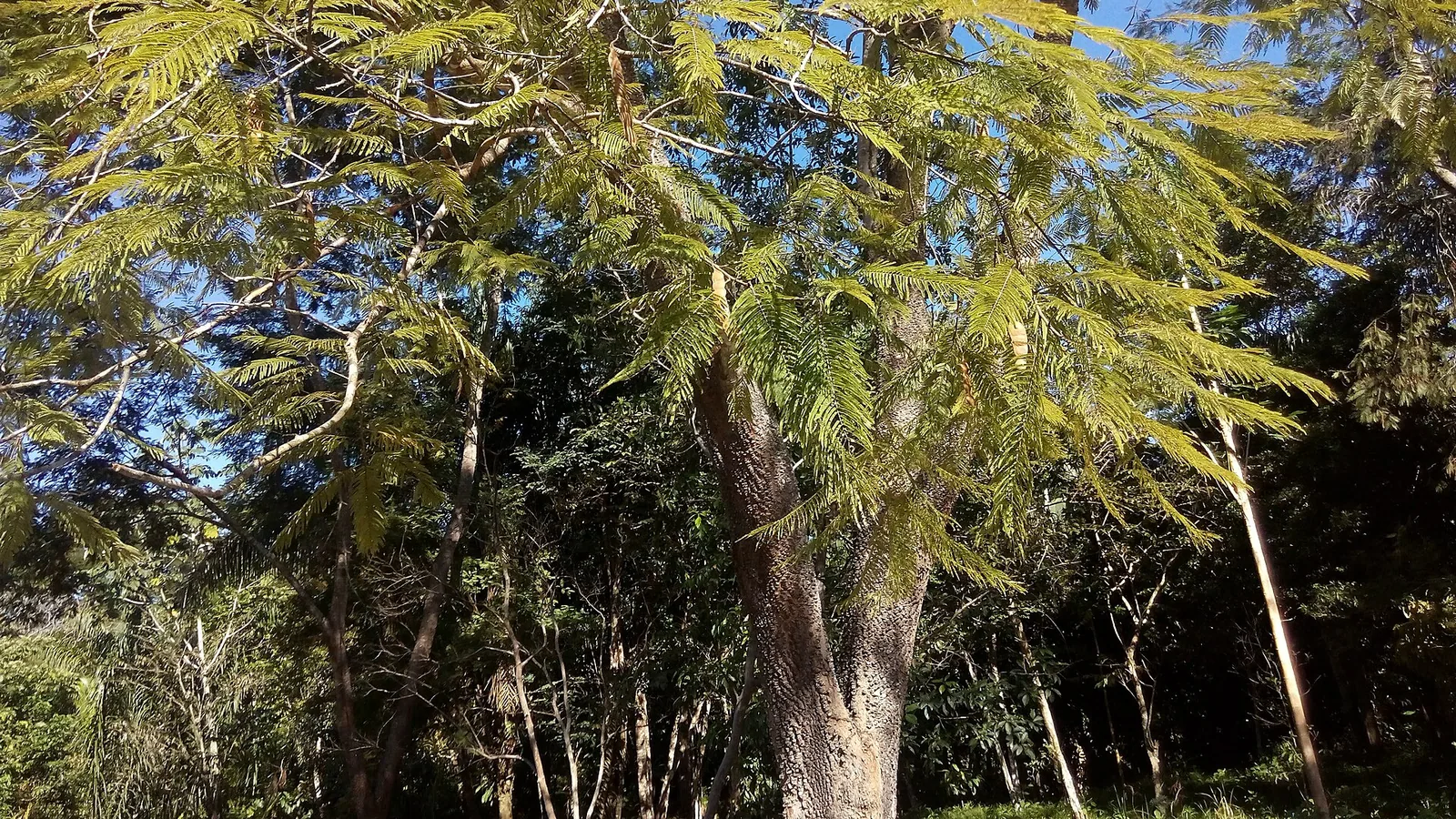
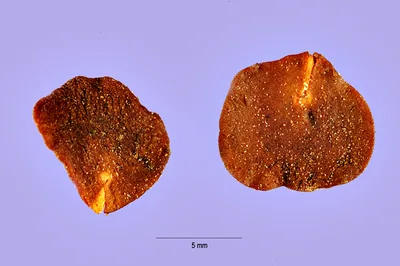
A deciduous or briefly leafless tree, commonly 5–20 m tall and sometimes larger, with an open crown and dark grey to brown bark that may bear conical bosses or short projections. Leaves are alternate and bipinnate: numerous small opposite leaflets produce the fine-textured canopy characteristic of mimosoid legumes. Pale cream to yellowish flowers are grouped in compact spherical heads. The fruit is a flat, leathery, brown dehiscent pod; when mature it opens to expose several hard, glossy, flattened and broadly lenticular seeds. The species fixes nitrogen through root symbioses and can establish in nutrient-poor seasonal environments (Lewis et al., 2005; POWO, 2026).
Flowers are insect-pollinated and mature pods release seeds near the parent tree, although water, animals and people extend dispersal. Seed collection is less directly destructive than stripping bark or roots, but recruitment still depends on reproductive adults, suitable fire regimes and connected habitat. The species is also planted for shade, fuelwood, timber, tannin-rich bark and ecological restoration, so ritual, utilitarian and environmental histories overlap (Mota et al., 2017).
Identification and taxonomic limits
- Accepted
Kew currently recognises A. peregrina as a species. Molecular work supports a four-species interpretation of Anadenanthera—including A. peregrina, A. colubrina, A. falcata and A. macrocarpa—in place of two species with varieties (Mangaravite et al., 2024).
- Look-alikes
A. peregrina and A. colubrina overlap in gross morphology, and sterile plants, loose seeds and trade powders are readily confused. Geographic labels such as yopo, vilca or cebil improve a hypothesis; identification needs a voucher.
- Hybridisation
Marker studies indicate incomplete lineage sorting and some gene flow among named entities. Taxonomic revision matters for mapping restricted populations and for avoiding an undifferentiated conservation category (Bonifácio-Anacleto et al., 2024; Mangaravite et al., 2024).
02Chemistry
The seed alkaloid profile is a variable field. Bufotenine (5-hydroxy-DMT) is commonly the dominant indole and the compound most consistently retained in old material. DMT, 5-MeO-DMT, their N-oxides, N-methyltryptamines and traces of related indoles have been reported, but presence and proportion vary with individual tree, tissue, maturity, processing and storage. Analyses of Spruce’s nineteenth-century collection and experimentally stored seeds found bufotenine more persistent than several companion alkaloids (Schultes et al., 1977; Torres and Repke, 2006).
Bufotenine
N,N-Dimethyltryptamine
5-Methoxy-DMT
Related indoles
Transformation in a prepared snuff
Ethnographic preparations commonly join seed material to alkaline plant ash or calcined shell. Raising pH changes the protonation state of indole alkaloids and may alter absorption across nasal mucosa; heat and storage also change composition. These are chemical principles, and named yopo and cohoba preparations varied. Piaroa material described by Rodd combined yopo with forms of Banisteriopsis caapi use, introducing β-carboline monoamine-oxidase inhibition as a second pharmacological relation; other Orinoco and Caribbean records may lack that combination (Rodd, 2002; Ott, 2001a).
Neuropharmacology and limits of inference
- Serotonergic
Bufotenine is active at several serotonin receptors, including 5-HT2A, 5-HT1A and 5-HT2C. 5-HT2A agonism is central to psychedelic visual effects, but receptor polypharmacology and route contribute to its distinctive bodily profile (McBride, 2000; Wallach et al., 2023).
- Central activity
Older claims that bufotenine was only a peripheral toxin are untenable: controlled historical challenges and later self-experiment documented marked perceptual effects. Those reports establish activity; Indigenous yopo is a different, whole preparation (McLeod and Sitaram, 1985; Ott, 2001a).
- 5-HT1A research
Structural and animal research published in 2025 identifies 5-HT1A signalling as a possible contributor to behavioural effects of bufotenine derivatives. It is preclinical work on molecules; the tree and snuff are untested clinically (Li et al., 2025).
- Whole preparation
No modern controlled human study characterises authenticated whole yopo while preserving its ritual setting. Seed chemistry, purified bufotenine, DMT neuroscience and ethnographic experience are adjacent evidence classes, each answering its own question.
03Tradition, ritual & cultural use
Oldest evidenced or proposed human use
| c. 2100–1200 BCE | Genus / sister species Pipes and seeds from Inca Cueva and Huachichocana in north-west Argentina establish a deep Anadenanthera horizon, usually attributed to A. colubrina. They are important comparative history, and weak evidence for A. peregrina (Torres and Repke, 2006; Lema, 2024). |
|---|---|
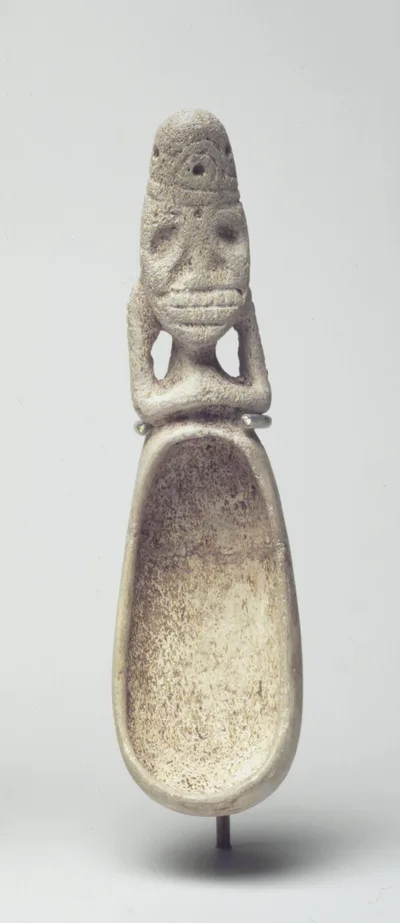
| c. 1000 CE | Material complex A guaiacum-wood Taíno zemí cohoba stand, probably from Hispaniola, has a modelled manufacture range of c. CE 974–1020. It establishes a developed cohoba material institution; the powder once placed upon it still needs chemical identification (Ostapkowicz et al., 2011; The Met, 2026). |
| c. 1150–1250 CE | Species-level Starch grains consistent with A. peregrina on coral grinding implements from eastern Puerto Rico provide the strongest direct precolonial species-level processing evidence in the Caribbean (Pagán-Jiménez and Carlson, 2014). |
| 1490s | Written account Fray Ramón Pané’s account of Hispaniola describes cohoba in communication with zemís and chiefly/religious practice. It is an indispensable but translated colonial text produced amid conquest, and is best read alongside archaeology (Pané, 1999; Oliver, 2009). |
| 1800–1854 | Natural history Humboldt and Bonpland reported niopo among Orinoco peoples; Richard Spruce later collected seeds and documented implements and preparation. Their specimens enabled later phytochemical analysis, while their writings also filtered practice through European categories of intoxication and “narcotic” plants (Spruce, 1908; Schultes et al., 1977). |
Peoples, territories and institutions
Otomac
José Gumilla described the snuffing of yupa by the Otomac of the Orinoco in 1741. Humboldt found their niopo made from baked cakes of manioc dough, snail-shell lime and the fermented pods of a legume he named Acacia niopo (von Humboldt and Bonpland, 1819, cited in Ott, 2001b, p. 15).
Omagua and Cocama
On the Amazon in Peru, La Condamine recorded curupá in 1749. The Omagua made one snuff of that name from the tree’s leaves, also given as an enema, and another, paricá, from its seeds; the Cocama curupá was likewise taken both ways (de la Condamine, 1749, cited in Ott, 2001b, p. 18).
Guahibo and Cuiva
Richard Spruce studied Guahibo ñopo with voucher specimens and a complete kit. Cuiva-Guahibo of the Río Kapanaparé shape crushed seed and snail-shell lime into cakes, dry them over heat and snuff the powder through a hollow bone (Coppens and Cato-David, 1971, cited in Ott, 2001b, pp. 15, 17–18).
Piaroa and Makiritaré
The Piaroa, “avid yopo inhalers”, travel to the savannas for seed; they may add Banisteriopsis caapi stem to the snuff or chew it while snuffing. Makiritaré shamans put roots of kaahi (B. caapi) and aiuku (Anadenanthera) inside their rattles (Ott, 2001b, p. 17).
Waiká (Yanomami)
Waiká obtain hisioma seed by trade or pilgrimage, or grow the tree near their shabonos. Some prefer it to their usual Virola snuff, as stronger and better keeping; they powder the toasted seed, sometimes with ash (Ott, 2001b, p. 17).
Maué and Mura
The Maué call both tree and snuff paricá and take it also as enema. An early-nineteenth-century French traveller listed three ingredients: “seeds of the acacia angico”, “the ashes of a vine” and “the juice of the leaves of the abuta” (Ott, 2001b, pp. 18–19).
Bará
Between 1903 and 1905 Theodor Koch-Grünberg recorded a “pungent grey snuff”, paricá, among the Bará of north-western Brazil, made from the seeds of a legume he called Mimosa acacioides, now A. peregrina (Koch-Grünberg, 1909, cited in Ott, 2001b, p. 18).
Cohoba identified
Taíno cohoba was taken for tobacco until 1916, when William E. Safford identified it as Piptadenia peregrina and linked it to the Otomac yupa, the Omagua curupá and the Guahibo ñopo (Safford, 1916, cited in Ott, 2001b, pp. 15–16).
Historical sources also associate niopo/yopo with Otomac, Pumé/Yaruro, Guahibo/Hiwi and other Orinoco peoples. A list of peoples is one thing, a lineage another: the same vernacular label may conceal different access rules, accompaniments, ritual offices and histories. A people may also use several psychoactive plants without organising them as one pharmacological system. The Circum-Amazonian Snuff Complex page treats those intersecting technologies at the regional scale.
Ritual practice, shamanism and healing
The conventional English word “shaman” groups offices that local vocabularies distinguish. Among Piaroa, long training in plant knowledge, myth, emotional control and song precedes senior ritual authority. Yopo can be used to inspect illness, locate hostile agency, recall creation histories, assess social tension, attract or understand game and work upon possible futures. A specialist’s breath and song act upon relations revealed in vision, so the event reaches well beyond the user’s private imagery (Rodd, 2003; 2006).
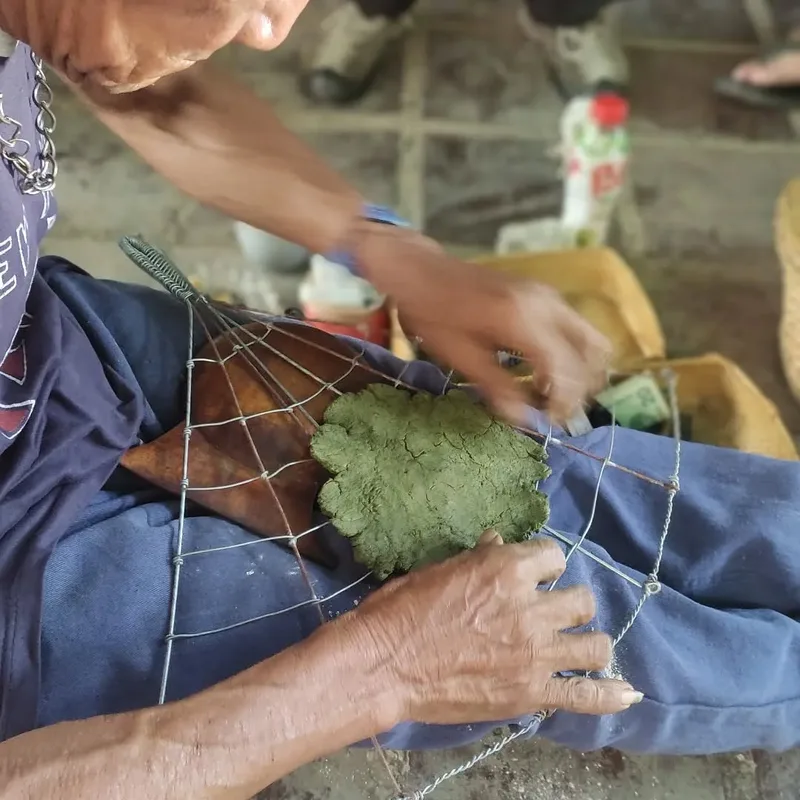
| Preparation as social work | Drying, roasting or heating, grinding and joining seed with alkaline material vary by group and period. Implements, makers, plant provenance and the person who administers the snuff can carry authority. The operational details are omitted here; ethnographically, preparation is already part of ritual (Spruce, 1908; Rodd, 2002). |
|---|---|
| Administration | Paired or forked tubes permit self-insufflation; longer tubes enable one person to blow powder for another. Directional breath makes the relation between giver and recipient materially explicit. Nasal pain, tears, mucus and emesis may be interpreted as ordeal, clearing or evidence of force, with meanings that vary from group to group. |
| Curing | Vision assists diagnosis, but curing also entails chant, tobacco smoke, sucking or blowing, massage, diet, conversation and collective recognition of social causes. Rodd’s Piaroa material places visionary pattern-recognition inside an ethics of managing fear, anger, envy and accusation (Rodd, 2006). |
| Yopo and capi | Piaroa specialists documented by Rodd relate yopo to Banisteriopsis caapi, sometimes through chewing or drinking capi before snuff. This may intensify or extend the state through β-carboline MAO inhibition. It is a specific Orinoco conjunction; other yopo and ancient cohoba may have been taken without caapi (Rodd, 2002). |
| Collective knowledge | Sikuani ritual dance demonstrates that visionary authority is assessed in performed consequences: the healer’s body, rhythm, memory and responsibility to people and territory. In Gaitán Quintero’s formulation, “The purpose of a shaman is not just to treat patients, but to heal the world” (Buitrago Escobar and Gaitán Quintero, 2016, p. 25). |
04Cosmology & key terms
Piaroa knowledge, creation and danger
Piaroa narratives remembered by Overing and Rodd place visionary power inside creation and ordinary life. Culture heroes and creator figures such as Wahari and Kuemoi transform worlds, provide foods and techniques, and also demonstrate the catastrophe of power without restraint. Their conflict helps explain mortality, predation and the loss of an earlier capacity for metamorphosis. Yopo is consequently double: a means of knowledge needed to sustain the future and a force whose undisciplined use can reproduce primordial violence (Overing, 1990; Rodd and Sumabila, 2011).
Märipa names power as practical knowledge: patterns acquired in cultivated visionary states are tested through diagnosis, prediction, hunting, gardening and social judgement. Initiatory accounts describe passage through a waterfall within a mountain and the reception of meye songs from Tseheru, a primordial female figure. Mountain, water, song and altered body together specify how perception becomes authorised knowledge (Rodd, 2002a; 2003).
Taíno zemís, ancestors and political presence
A zemí/cemí, often rendered “idol”, was a category of potent ancestral, divine or vital presence embodied in stones, cotton reliquaries, trees, bones and carved wood. Cohoba enabled caciques and behiques to question, feed or speak with zemís, while duhos positioned bodies in ranked ceremonial space. Colonial texts connect these consultations to illness, weather, warfare and collective decision; archaeology shows that the institution was also a highly worked material world (Pané, 1999; Oliver, 2009).

The Met’s guaiacum stand compresses bodily and cosmological signs: an emaciated crouching figure, streaming or inlaid eyes, exposed teeth and a platform above the head. Its hard wood, shell inlay, repeated polishing and long preservation suggest curated potency. Radiocarbon modelling places its manufacture around CE 974–1020, centuries before Pané, and supports the possibility that such objects were maintained across generations (Ostapkowicz et al., 2011; The Met, 2026).
Art and ritual apparatus
Table and forked tube
Columbus described Taíno cemí houses with “a finely wrought table, round like a scimitar” holding powder, taken “with a cane having two branches that they insert in their nostrils” (Columbus, cited in Ott, 2001b, p. 11).
Spruce’s Guahibo kit
Spruce brought back a complete Guahibo set of ñopo apparatus with his botanical vouchers; his seeds of 1854, analysed some 120 years later, still held 0.61% bufotenine and nothing else (Ott, 2001b, pp. 15, 28).
Natterer’s Maué kit
Johann Natterer collected elaborate paricá apparatus from the Maué early in the nineteenth century; the seeds kept with it held only minute traces of bufotenine when analysed in 1987 (de Smet and Rivier, 1987, cited in Ott, 2001b, p. 29).
Interpretive cautions
- Pan-Taíno
“Taíno” is useful for a broad late precolonial Caribbean field; archaeology and ethnohistory find no single doctrine shared unchanged across the islands.
- Visionary iconography
Geometric, skeletal or transformation imagery may be consistent with altered states without being a literal picture of a drug vision. Function, find context, chronology and Indigenous interpretation must converge before identification is secure.
- Living plurality
Piaroa, Cuiva and Sikuani yopo institutions are contemporary, changing intellectual traditions. Missionisation, schooling and urbanisation alter transmission, and the traditions change and continue (Rodd and Sumabila, 2011).
05Visionary phenomenology
The evidence divides cleanly by preparation. For the snuffs as traditionally made and taken, the record is ethnographic and historical, and it is consistent across peoples and centuries: the snuff gives access to beings and to knowledge. Pané’s account of Taíno cohoba, written within a few years of contact, describes the powder placed on the heads of cemí figures, and the caciques and behiques questioning the cemís under its influence (Pané, 1999; Kaye, 1999; Oliver, 2009). Among the Piaroa of southern Venezuela, divination and sorcery battles are conducted inside yopo visions (Rodd, 2006). Shamans adjust their dose of the Banisteriopsis caapi they take alongside the snuff to the strength of vision a given task requires (Rodd, 2002), and laypeople describe yopo as “required by shamans to create the future” (Rodd and Sumabila, 2011).
At Chavín de Huántar, snuffing tubes and spoons from the underground galleries, dated c. 800–350 BCE, carry residues of Anadenanthera colubrina var. cebil mixed with wild tobacco (Rick et al., 2025). The galleries were dark, enclosed and restricted, and the temple’s sculpture shows human heads in transformation, with nasal discharge, and the deity of the Lanzón (Burger, 2011; Nesbitt, 2025). The iconography is consistent with visionary encounter, but it is a representation shaped by the cult that made it, not a record of what any individual saw.
Isolated bufotenine, the seeds’ principal alkaloid, has a different and thinner record. Injection studies of the 1950s reported play of colours, lights and patterns alongside marked physical toxicity (Fabing and Hawkins, 1956; Isbell, 1956, cited in Turner and Merlis, 1959). Ott’s self-experiments found bufotenine visionary when snuffed or held under the tongue, without the facial flushing seen after injection, and with effects resembling yopo (Ott, 2001a). None of this literature reports encounters with beings. That absence says more about the conditions of study than about the plant. Laboratory and solitary self-experiments lack the admixtures, songs, expectations and trained specialists through which yopo visions acquire their inhabitants and their meaning.
Time course
Nasal snuff. Bands are the ranges this entry gives; no timing has been measured for authenticated yopo, so there are no measured marks. Not charted: yopo taken with capi, which the entry says may extend the state.
Phenomenological profile
The profile lists effects the sources report, for each preparation separately, grouped by domain. Each row gives the grade, how often the sources say the effect occurs (only where they say so; most do not) and the kinds of source behind it. A chip naming a compound, such as “Trial · psilocybin”, means the evidence comes from studies of that compound rather than of the preparation itself; “partial” means the route, purity or dose differs from the traditional preparation, so the row cannot be graded above supported. The line under each preparation says which domains have evidence entered here. A domain with nothing entered has not yet been assessed in this profile; that is not a finding that the literature is silent, and the article may discuss it. Open a row for the note and the sources.
Yopo snuffseed with ash or lime
Evidence entered for 6 of 8 domains. Not yet entered: self and unity, states of consciousness.
Seed is joined to alkaline ash or shell lime. Some Piaroa specialists take caapi with it, which may intensify or extend the state; other yopo and ancient cohoba may have been taken without caapi (Rodd, 2002). Bufotenine is the seed’s dominant and most persistent alkaloid (Schultes et al., 1977; Torres and Repke, 2006). Studies of purified bufotenine, injected, snuffed or vaporised, count at partial weight: route and purity differ from the snuff.
Visual
Immersive realmsCoherent places or events that surround the experiencer, who seems to be located in them rather than looking at images.SupportedEthnography
Cuiva accounts describe a “world of beauty and abundance” (Rodd and Sumabila, 2011, p. 41). Pané records spatial inversion: the house turned upside down (Kaye, 1999). Purified bufotenine has not been reported to produce this in controlled or self-experimental studies (Fabing and Hawkins, 1956; Ott, 2001a); those studies lack the admixtures, setting and specialists of traditional use, so the silence says little about the snuff. Read about the phenomenology of immersive realms →
Geometric patterningLattices, spirals, tunnels and other repeating forms seen with eyes closed or overlaid on the visual field.SupportedExperienceTrial · bufotenine, partial
Geometric patterning is not described in the verified ethnography of yopo (Rodd, 2006; Rodd and Sumabila, 2011), but purified bufotenine produced colours, lights and patterns after injection (Isbell, 1956, cited in Turner and Merlis, 1959; Fabing and Hawkins, 1956) and ring-like, swirling coloured patterns in self-experiment (Ott, 2001a); route and purity differ from the seed snuff, so this counts at partial weight.
Other senses
Intensified hearingHeightened acuity, salience or alteration of sound.SupportedHistory
The first register is frequently bodily: explosive nasal burning, tears, mucus, buzzing or roaring, nausea, vomiting, muscular heaviness, tremor and impaired coordination (Pané, 1999; Ott, 2001a).
Body
Nausea and purgingNausea, vomiting or diarrhoea during the acute state.SupportedHistoryExperienceTrial · bufotenine, partial
The first register is frequently bodily: explosive nasal burning, tears, mucus, buzzing or roaring, nausea, vomiting, muscular heaviness, tremor and impaired coordination (Pané, 1999; Ott, 2001a). Purified bufotenine caused nausea and vomiting after injection (Fabing and Hawkins, 1956), and is “extremely nauseating” in first-person testimony (Morris, 2021).
Tremor and motor slowingTrembling, impaired coordination or slowed movement.SupportedHistory
The first register is frequently bodily: explosive nasal burning, tears, mucus, buzzing or roaring, nausea, vomiting, muscular heaviness, tremor and impaired coordination (Pané, 1999; Ott, 2001a).
Affect
Fear and dreadFear, panic, chaos or a sense of threat during the experience.SupportedTrial · bufotenine, partial
Extreme anxiety and a sense of imminent death at a high intravenous dose of bufotenine (McLeod and Sitaram, 1985). Injection differs from snuffing, so this counts at partial weight.
Cognition
NoesisThe felt disclosure of knowledge: understanding that seems to arrive with what is perceived.SupportedEthnography
Knowledge sought and acted on: divination, diagnosis, and for the Piaroa, creating the future (Rodd and Sumabila, 2011; Rodd, 2006; Rodd, 2002a).
Relation to other beings
Autonomous entitiesBeings experienced as acting, communicating or observing independently of the experiencer’s will.SupportedEthnographyIconography
Taíno caciques and behiques consulted cemís through cohoba (Pané, 1999; Kaye, 1999); Piaroa conduct divination and sorcery battles within visions (Rodd, 2006); Chavín iconography shows transformation and deities (Burger, 2011; Nesbitt, 2025). Graded as reports of practice; the iconography is interpretive. Purified bufotenine has not been reported to produce this in controlled or self-experimental studies (Fabing and Hawkins, 1956; Ott, 2001a); those studies lack the admixtures, setting and specialists of traditional use, so the silence says little about the snuff. Read about the phenomenology of autonomous entities →
Phenomenology Discussion
Somatic passage
The first register is frequently bodily: explosive nasal burning or pressure, tears, salivation, mucus, facial flushing, buzzing or roaring, nausea, vomiting, muscular heaviness, tremor and impaired coordination. Head and limbs may droop; ordinary posture and orientation can briefly fail. Some accounts interpret these signs as clearing, ordeal or the visible arrival of power. A clinical vocabulary instead records autonomic and mucosal effects. Both describe the same body through different practical questions (Pané, 1999; Ott, 2001a).
Visual, spatial and relational fields
| Pattern | Rapid coloured spots, lattices, rings, arabesques, pulsing surfaces, tunnels and rotational or inversion effects. Reports of red and purple colour, geometric repetition and accelerated imagery recur in both alkaloid and snuff accounts. |
|---|---|
| World transformation | Rooms or landscapes may tilt, fold or appear animated; scale and distance fluctuate; the body can feel elongated, heavy, split or transported. Movement through openings, water, mountains or sky may be read through local narrative topographies. |
| Persons and agencies | Animal, human, ancestral and powerful nonhuman presences may be encountered. In ritual accounts their identity and intention are interpreted through myth, training, song and the social problem under investigation. |
| Knowledge and affect | Fear, awe, beauty, abundance, predation and lucidity can follow one another rapidly. Piaroa specialists cultivate attention to relational pattern and emotional consequence; Cuiva accounts gathered by Rodd and Sumabila speak of a “world of beauty and abundance” (2011, p. 41). |
| Return | The visual field can recede quickly while nausea, fatigue, clarity or emotional activation remain. Ceremonial questioning, narration and action determine whether an episode becomes knowledge. |
The purpose of a shaman is not just to treat patients, but to heal the world. — Clemente Gaitán, Sikuani healer, in Buitrago Escobar and Gaitán Quintero (2016, p. 25)
Four non-equivalent archives of experience
- Ethnography
Piaroa, Cuiva and Sikuani testimony describes cultivated experience inside training, kinship, myth and territorial responsibility. It best addresses what visions do socially, though publications sample particular places and interlocutors.
- Colonial text
Pané records inversion, weakness and consultation with zemís, but translation, Christian polemic and conquest condition the description. An untouched Taíno first-person phenomenology is lost.
- Purified alkaloid
Human bufotenine reports clarify rapid visual and somatic effects, yet route, purity, expectation and solitude differ from yopo. They are pharmacological comparators (Ott, 2001a).
- Contemporary reports
Online and neo-ceremonial accounts often lack botanical vouchers, chemical analysis and cultural provenance. Species, ingredients and continuity need evidence beyond the label “yopo”.
06Contemporary status
Conservation, land and transmission
Anadenanthera peregrina is assessed globally as Least Concern, reflecting its wide range; local populations may still be at risk (BGCI and IUCN SSC Global Tree Specialist Group, 2019). Seasonally dry forests and savannas face conversion to pasture and crops, mining, fire-regime change and infrastructure. Local seed trees, sacred places and genetically distinct populations may disappear without changing the global category. Molecular evidence for cryptic lineages increases the importance of provenance-aware conservation (Mangaravite et al., 2024).
The biological resource is only one part of continuity. Yopo knowledge depends on language, elders, access to territory, time for apprenticeship and political capacity to conduct healing without criminalisation or missionary suppression. Seed harvest can be renewable, and cultivation can support restoration, while songs, offices and community authority depend on people (Rodd, 2018).
Local and global economies
| Local exchange | Ethnography records seeds and prepared yopo moving through kin and specialist networks; among Piaroa interlocutors described by Rodd, yopo was exchanged between specialists. Labour, reputation and reciprocal obligation structure value (Rodd, 2002). |
|---|---|
| Non-ritual uses | The tree supplies fuel, timber, tannin-rich bark, shade and restoration value. Commercial extraction aimed at wood or bark can affect populations differently from seasonal seed gathering (Mota et al., 2017). |
| Internet trade | Seeds circulate globally as botanical specimens, ornamentals and psychoactive material. Market labels commonly omit vouchers, origin and alkaloid analysis; “yopo,” “vilca” and “cebil” are sometimes interchanged, complicating both safety and ethnobotanical claims. |
| Cultural tourism | Neo-ceremonial sessions and retreats increasingly detach yopo from local apprenticeship or recombine it with ayahuasca-style formats. These are contemporary ritual formations whose continuity claims require evidence; their economic effects on source communities remain poorly quantified. |
Law, patents and governance
International
DMT is on the INCB's Green List of psychotropic substances under international control (36th edition, 2025); bufotenine does not appear on it (INCB, 2025).
United States
Bufotenine, DMT and 5-MeO-DMT are each listed in federal Schedule I, 21 CFR §1308.11; the tree and its seeds go unnamed (eCFR, 2026).
United Kingdom
Bufotenine and N,N-dimethyltryptamine are Class A drugs under Part I of Schedule 2 to the Misuse of Drugs Act 1971 (UK Government, 2026).
Patents on the genus
A 2009 international patent application by the Brazilian company Chemyunion Química claims extracts of angico-branco, identified as Piptadenia colubrina, for cosmetic and dermatological formulations — an interest in the genus far from the snuff (Velazquez Pereda, Eberlin and de Campos Dieamant, 2009).
Research, safety and open questions
Current science and open questions
- 2024 systematics
Genome-scale and marker studies are revising species boundaries within Anadenanthera. Better taxonomy should improve archaeological identification, pharmacognosy and conservation (Mangaravite et al., 2024).
- 2025 pharmacology
High-resolution receptor studies of bufotenine derivatives identify distinct 5-HT1A binding modes and antidepressant-like effects in animals. This supports compound development but provides no efficacy evidence for yopo or human depression (Li et al., 2025).
- Clinical gap
There are no modern randomised clinical trials of authenticated A. peregrina or whole yopo, and no controlled neuroscience preserving Indigenous ceremonial context.
- Ethnobotanical gap
Longitudinal, community-led research is needed on present-day Cuiva, Sikuani, Piaroa and neighbouring practices, including women’s knowledge, youth transmission, trade and the effects of territorial change. Published evidence remains concentrated in a few male specialists and localities.
- Archaeometric gap
Direct chemical or microbotanical analysis of Caribbean tubes, stands and residues remains rare. Species-level identification needs it; object form and colonial naming are insufficient.
Open questions on this entry
Safety and law
07Cross-correlations
| Circum-Amazonian Snuff Complex | Regional complex page: Anadenanthera, Virola and Nicotiana snuffs; alkaline ashes; breath, apparatus and distinct ceremonial traditions. PRIMARY CULTURAL COMPLEX |
|---|---|
| Anadenanthera colubrina | Southern sister species associated especially with vilca/cebil in the Andes, north-west Argentina, Chaco and Brazil. It carries much of the genus’s deepest archaeological sequence. TAXONOMIC / ARCHAEOLOGICAL SIBLING |
| Banisteriopsis caapi | Species monograph: capi may be chewed or drunk in documented Piaroa yopo practice, adding β-carboline pharmacology and a distinct vine relation. ORINOCO CO-USE |
| Nicotiana rustica | Strong tobacco may accompany yopo as smoke, snuff or shamanic agent and supplies some activator ashes in the wider snuff complex. RITUAL ALLY / ASH |
| Mimosa tenuiflora | Species monograph: jurema-preta, a fellow mimosoid legume whose root bark carries DMT; its disjunct range overlaps that of A. peregrina in Venezuela and Colombia (Ott, 2001b, p. 70). MIMOSOID KIN / SHARED DMT |
| Virola spp. | Species monograph (V. theiodora): Trees whose bark-resin snuffs are often grouped with yopo in comparative literature; their material, chemistry, ecologies and ethnographic distributions are their own. COMPARATIVE SNUFF LINEAGE |
08Bibliography
How to read the labels on each source
- Source type
- What kind of work it is: journal article, book, legislation, patent application, database record and so on. A word after the dot (ethnography, protologue, primary source) keeps the genre the entry was first filed under. “Unclassified” means the citation does not say enough to tell.
- Peer review
- Recorded for each work separately, and only where it has been confirmed for that work. It is never inferred from a DOI, a publisher or a journal, since journals also publish editorials, letters and commentaries. Where it has not been confirmed, the entry records it as not established. It does not apply to legislation, court decisions, treaties, patents, datasets, database and collection records, historical texts, films, talks, press releases or web pages.
- Check
- What was checked when the entry was added. DOI checked: the DOI’s registry record (Crossref) matched the citation’s title, first author and year. Verified: the record itself was opened and matched the citation: a library catalogue record for a book, or the page itself for a database entry, law, patent or archive document. “Verified (abstract)” and “(summary)” mean only the abstract or a summary was read. Located: a record was found but not fully matched. Bibliographic record and Stable record (in essays): a catalogue or stable web record exists; what was checked against it is not recorded. Unverified: no check is recorded. No locator found: a search found no record. Secondary: read through another source.
- What the labels do not say
- None of them means the source supports a particular sentence. Where a sentence is graded, its evidence note names its sources and whether each supports it, disputes it or gives context. Dates and reviewers of checks are not recorded for each entry; the version note at the foot of a graded page dates its last review.