Mirante, D. (ed.) (2026) Teonanácatl: Mesoamerican Mushroom Traditions. Entheocene, version 1.0. Available at: https://entheocene.com/complex-teonanacatl.html (Accessed: 17 October 2026).
DOI: not yet minted.
Introduction
Although the cultural framing, commerce, and science surrounding magic mushrooms have evolved over time, the core human ritual behind their use has remained unchanged for thousands of years. Psilocybin mushrooms grow naturally throughout southern and central Mexico, where the Aztecs referred to them as teonanácatl, meaning “flesh of the gods.” While scholars continue to debate specific historical details — such as the true antiquity of the practice, the exact species documented by sixteenth-century Spanish chroniclers, and whether ancient Mayan stone carvings depict mushrooms — the practical ceremony itself has stayed remarkably consistent.
Contents
In this enduring tradition, a participant arrives seeking guidance for a pressing hardship, such as an unresolved illness or a personal loss. The mushrooms are harvested with deliberate care and consumed only after dark, in total blackness, alongside a sober monitor who remains present to anchor the experience and record what takes place. Rather than prioritising visual hallucinations, traditional Mazatec practice treats the mushroom as an oracle that speaks, a perspective captured in the chants of the healer María Sabina, who identified herself as a woman of language.
This specific framework — defined by clear intent, darkness, a sober facilitator, and verbal revelation — has persevered across centuries of upheaval. It endured through Aztec merchant banquets, the 1957 LIFE magazine feature that exposed the ceremonies to the world, the laboratory isolation of the psilocybin compound shortly thereafter, and the rise of contemporary regulated therapy centres and pharmaceutical patents. Ultimately, whether ingested as wild fungi in a traditional Mazatec home or administered as a patented synthetic drug by a licensed clinician, the essential human practice predates and outlasts any modern vessel created to contain it.
Deep Time
Fungal lineagePsilocybe diverges · c. 68 Ma→
ArchaeologyMushroom stones, Kaminaljuyú · c. 1000–500 BCE→
Colonial recordMerchant feast, Florentine Codex Book IX→
PublishedWasson in LIFE · 13 May 1957→
Living practiceEl Peral consultations · 2021–2024
Psilocybin-containing mushrooms have documented uses in Mesoamerican healing, divination and religious ceremony. The Nahuatl term teonanácatl, conventionally translated as “flesh of the gods”, appears in accounts of Mexica ceremonial life. Ethnographic research describes related practices among Mazatec, Mixtec, Zapotec, Chatino, Chinantec, Mixe, Matlatzinca and Nahua communities. These traditions differ in the species consumed, the organisation of ceremonies and the knowledge attributed to mushroom experiences (Schultes, 1940; Spiers et al., 2024).
The evidence comprises mushroom-shaped archaeological objects, pictorial manuscripts, colonial descriptions, recorded ceremonies and contemporary fieldwork. Each supports a different historical claim. Archaeological interpretations concern the possible uses and meanings of objects; colonial texts describe particular ceremonies; ethnography records practices maintained or recalled by identifiable communities. Evolutionary studies address a separate question: the antiquity of the fungi and their capacity to produce psilocybin (Bradshaw et al., 2024).
Visionary reports include elaborate architecture, journeys through inhabited landscapes, encounters with small humanlike beings, bodily interventions and unusually fluent speech. Some modern accounts describe polished, transparent or apparently technological surfaces. Terence McKenna associated these qualities with an advanced intelligence and a future transformation of culture. His testimony is particularly relevant to the term archaeofuturistic: the impression that a visionary environment is both ancient and technologically sophisticated (McKenna, 1982; 1983–1984).
01Ethnobotany
The six species, and who named them
Six Psilocybe the reading below names, each with the nomenclatural anchor the prose does not carry: who published the name, in what, and what habitat and locality the protologue records. What each species does inside the traditions is the reading itself.
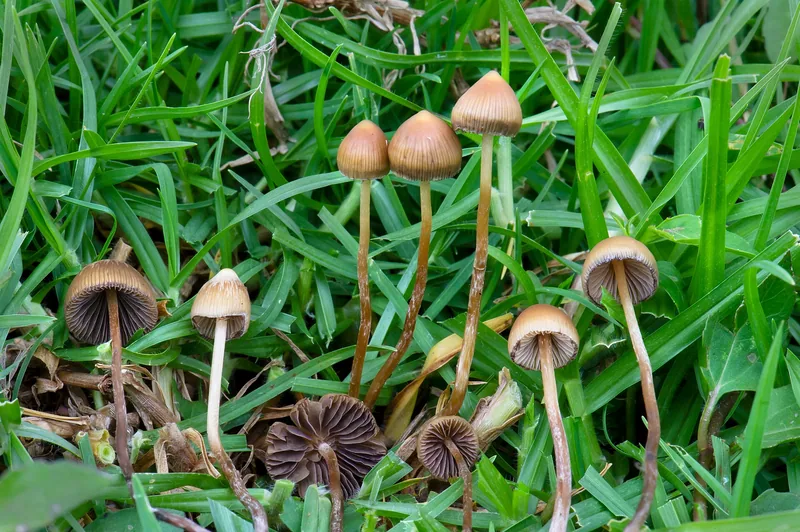
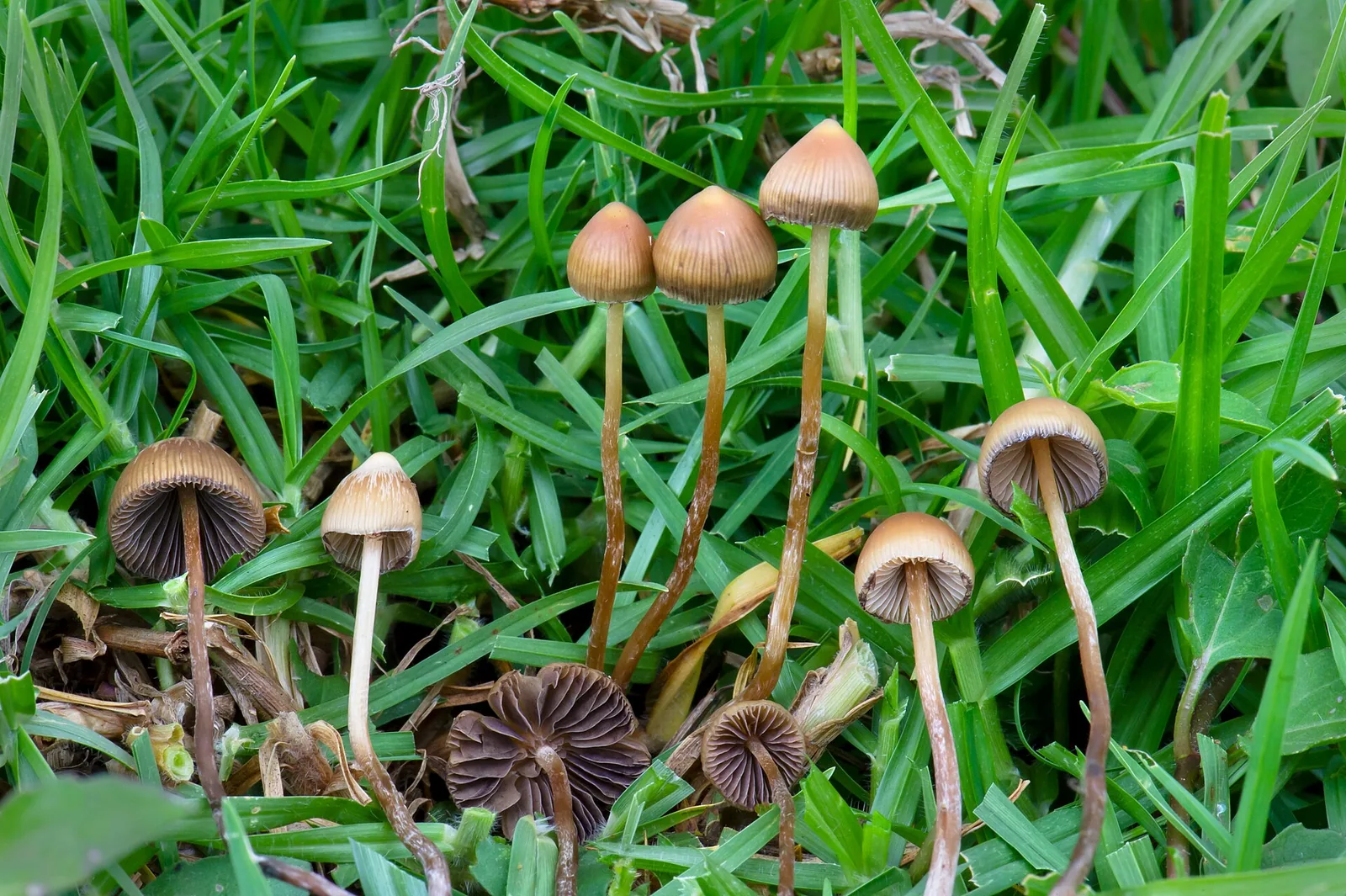
Highland pasture. Heim published the name from Oaxacan material; the holotype is PC 0085751 in Paris. This is the species the 1958 isolation paper names in its title (Index Fungorum, 2026; Hofmann et al., 1958).
Soil and disturbed ground. The oldest of these names and the only one not erected on Mexican material: Murrill described it from an Alabama collection, thirty-four years before Heim named the others (Murrill, 1923; Index Fungorum, 2026).
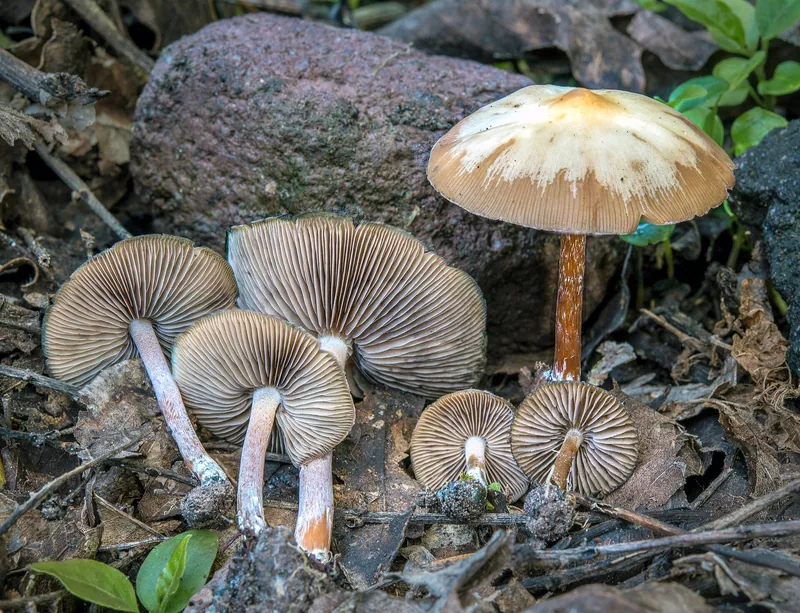
Very wet, muddy ground. The epithet honours the Zapotec, and the El Peral fieldwork of 2021–2024 is the uncommon case in this genus where a name, a living local name and a documented use are recorded against one another (Guzmán, 2012; Haro-Luna et al., 2025).
Damp montane meadow under conifers — the narrowest habitat of the five, in the high volcanic belt of central Mexico. Holotype PC 0096811 (Index Fungorum, 2026).
Protologue
Revue de Mycologie 22(1): 78 (1957)
Protologue habitat
Damp grassy meadowland under conifers · México State
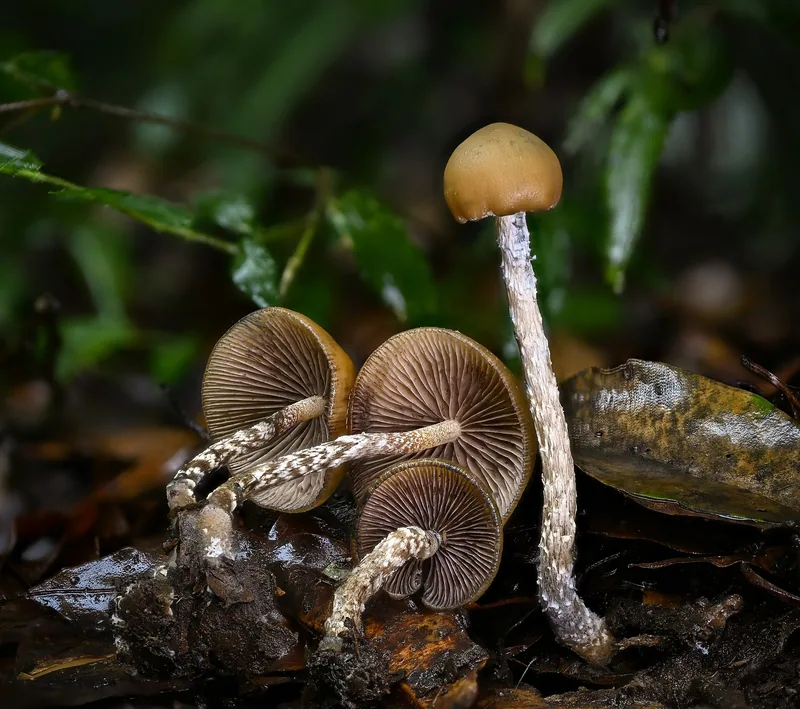
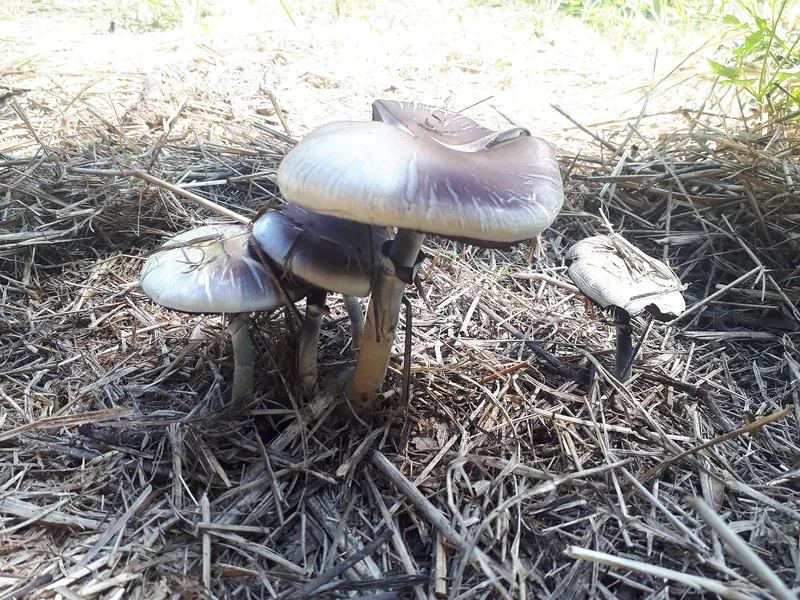
Dung and grazed pasture, pantropical. The one species here whose range is not Mesoamerican, and the one that travelled: what carried it was cultivation rather than ceremony (Guzmán, 2008).
Protologue
Basionym Stropharia cubensis Earle; combination in Sydowia 2: 37 (1948)
Minor alkaloid · N-demethyl analogue of psilocybin
This is the reading's list, a small part of Mexican Psilocybe: Guzmán's reviews document a far larger assemblage whose taxonomy has been revised repeatedly. What a card can fix is a name, its publication and its type. What a ceremony uses is a separate question, and the ethnographic record frequently leaves it unvouchered (Guzmán, 2008; 2012).
Plate 01 · Psilocybe mexicana · deep view
P. mexicana photographed in Veracruz · Alan Rockefeller · CC BY-SA 4.0 ↗
Bradshaw and colleagues estimate that the Psilocybe lineage separated from its closest sampled relatives approximately 68 million years ago. They date the common ancestor of its surviving lineages to approximately 56 million years ago. Their genomic reconstruction identifies wood decomposition as the ancestral ecology, followed by transitions to other substrates, including independent adaptations to herbivore dung. These estimates concern fungal evolution; the history of human consumption requires archaeological and historical evidence (Bradshaw et al., 2024).
Psilocybin production also has a complex evolutionary history. Reynolds and colleagues found evidence that the biosynthetic gene cluster passed between mushroom lineages through horizontal gene transfer. Several of the fungi studied inhabit decaying wood or dung, where they interact with invertebrates using the same resources. The authors proposed that these ecological interactions helped favour the retention and transfer of the gene cluster. This hypothesis concerns the compound’s function in fungal ecology (Reynolds et al., 2018).
The earliest human encounters with psychoactive mushrooms remain a subject of reconstruction. Rodríguez Arce and Winkelman propose that increasingly diverse hominin diets created repeated opportunities for consumption. Their evolutionary model links possible psychedelic effects on emotional responsiveness, associative thought and social behaviour with the development of cooperation and collective ritual. Repeated experiences could have encouraged practices that preserved knowledge of the fungi and organised their use. The model combines ecological opportunity with findings from contemporary psychedelic research; its account of prehistoric behaviour is explicitly hypothetical (Rodríguez Arce and Winkelman, 2021).
An ethnographic comparison gives this hypothesis a practical context. Hernández-Santiago and colleagues documented knowledge of 106 mushroom species in four Mixtec communities during research conducted between 2009 and 2014. Twenty-six species were eaten and six were used in games. Participants distinguished habitats, seasonal availability, edible species and toxic fungi. The first author, a Mixtec speaker from the region, contributed linguistic and local knowledge to the study. Such research shows the extensive familiarity with fungi within which a specialised ceremonial practice can develop (Hernández-Santiago et al., 2016).
The defining fungi
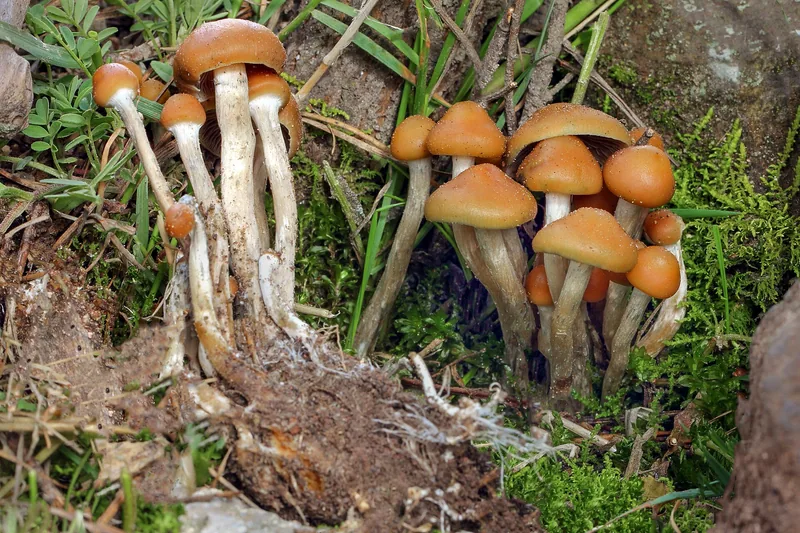
Mexican ceremonial use involves several species, including Psilocybe mexicana, P. caerulescens, P. zapotecorum and P. aztecorum. Guzmán’s review documents this diversity and the taxonomic revisions that have affected its description. Habitats include disturbed ground, wooded environments and wet soils. A historical name such as teonanácatl can cover questions that modern taxonomy divides among several species (Guzmán, 2008; 2012).
Scientific and vernacular classifications record different information. Taxonomy distinguishes organisms through anatomical and genetic characters. Local names may describe appearance, habitat, kinship or sacred identity. Ethnographic identification is most informative when it records the scientific specimen, local name and use together. The association of P. zapotecorum with the Zapotec name Ni’tobe’ya in El Peral provides a recent example (Haro-Luna et al., 2025).
Psilocybe mexicana
Psilocybe mexicana was central to the laboratory identification of psilocybin. Work involving Mexican specialists, Roger Heim and the Wassons supplied material for mycological and chemical study. Hofmann and colleagues reported the isolation of psilocybin from this species in 1958. The finding enabled researchers to investigate a defined compound alongside the effects of whole mushrooms (Hofmann et al., 1958).
Psilocybe caerulescens
Guzmán identifies P. caerulescens as a species used in Mexican ceremonies and proposes it as a candidate for mushrooms described in Sahagún’s account. This is a taxonomic interpretation of a historical description. Its significance lies in the attempt to connect recorded ceremonial use with an identifiable organism (Guzmán, 2008).
Psilocybe zapotecorum
Guzmán’s taxonomic reassessment associates P. zapotecorum with very wet, muddy environments and examines the microscopic characters used to distinguish it (Guzmán, 2012). Fieldwork conducted in El Peral between 2021 and 2024 identifies the species as the holy mushroom used in local consultations. These concern illness, family relationships and other practical questions (Haro-Luna et al., 2025).
Psilocybe aztecorum and the highland repertoire
Psilocybe aztecorum is prominent in Wasson’s interpretation of the Xochipilli sculpture. He identified some of its carved motifs as representations of this mushroom and interpreted the figure’s posture as evidence of an entheogenic state (Wasson, 1980). The proposed identification forms part of an iconographic argument discussed below.
Other Mexican species, including P. muliercula, appear in taxonomic and ethnomycological studies. Guzmán’s revisions illustrate the continuing work required to connect named species, specimens and reports of use. The ceremonial complex encompasses several fungi with distinct ecological distributions (Guzmán, 2012).
Psilocybe cubensis and cultivation
Psilocybe cubensis became especially important in international counterculture through cultivation. Terence and Dennis McKenna’s 1976 manual, published under the names O. T. Oss and O. N. Oeric, made cultivation knowledge available to readers interested in psychedelic experience. McKenna later discussed the manual in relation to their wider intellectual project (McKenna, 1983–1984).
Cultivation changed access to the fungi. People could obtain mushrooms through a reproducible domestic practice as well as through gathering, travel and local exchange. Printed instructions could circulate independently of the communities in which Western visitors had first encountered ceremonial use. This technical development helped establish the material conditions for an international mushroom culture.
Psilocybin
Psilocybin is a phosphorylated tryptamine. Fricke, Blei and Hoffmeister characterised four enzymes involved in its biosynthesis: PsiD, PsiH, PsiK and PsiM. The pathway involves decarboxylation, hydroxylation, phosphorylation and methylation of a tryptophan-derived precursor. Their work established how coordinated fungal enzymes produce the compound (Fricke, Blei and Hoffmeister, 2017).
Psilocin
Psilocin is the dephosphorylated compound central to psilocybin’s acute effects in humans. Madsen and colleagues combined positron emission tomography, blood measurements and subjective reports. Both serotonin 2A receptor occupancy and plasma psilocin concentrations were associated with reported intensity. The study connects the time course of subjective effects with measurable pharmacological activity (Madsen et al., 2019).
Baeocystin, norbaeocystin and associated tryptamines
Gotvaldová and colleagues analysed 226 fruiting bodies from 82 collections across seven genera for psilocybin, psilocin, baeocystin, norbaeocystin and aeruginascin. They found considerable variation across taxa and collections. Whole mushrooms consequently provide chemically variable material, while studies using a purified compound specify a more restricted intervention (Gotvaldová et al., 2022). Comparisons between ceremonial use and laboratory research benefit from identifying the material consumed as precisely as the evidence allows.
β-carbolines and fungal chemical complexity
Blei and colleagues identified β-carbolines, including harmane and harmine, in studied Psilocybe material. Their presence is pharmacologically relevant because compounds in this family can inhibit monoamine oxidase. Whether the concentrations present in consumed mushrooms materially affect human experience remains a research question. The study establishes their occurrence and provides a basis for investigating interactions among fungal constituents (Blei et al., 2020).
Blueing
Lenz and colleagues identified the biochemical reactions responsible for blue staining after injury to Psilocybe tissue. A phosphatase removes the phosphate group from psilocybin, and a laccase promotes oxidation of psilocin. Subsequent reactions produce coloured oligomers. This visible response to tissue damage is a chemical property of the mushroom (Lenz et al., 2020).
02Culture
Peoples and territories
Sierra Mazateca
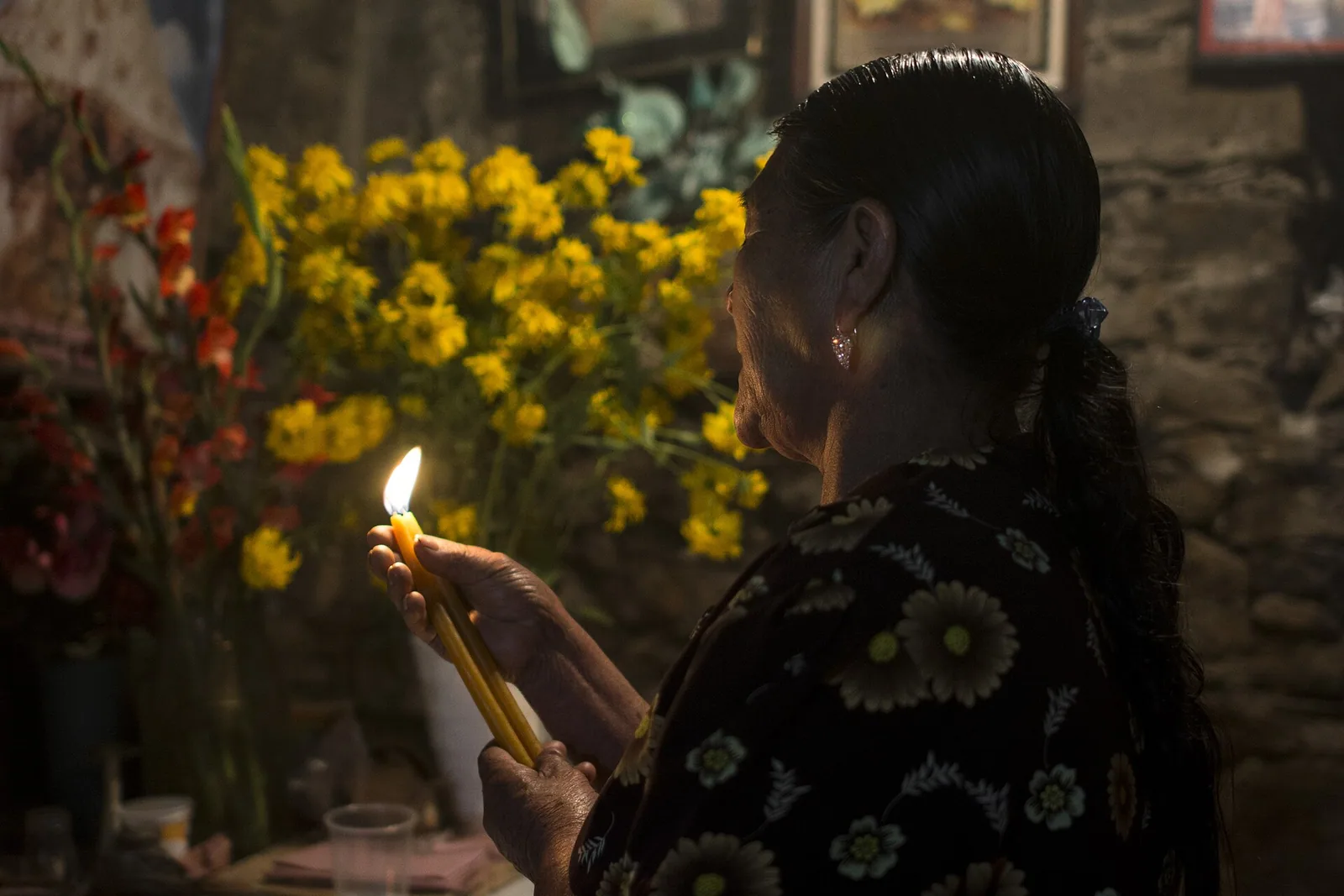
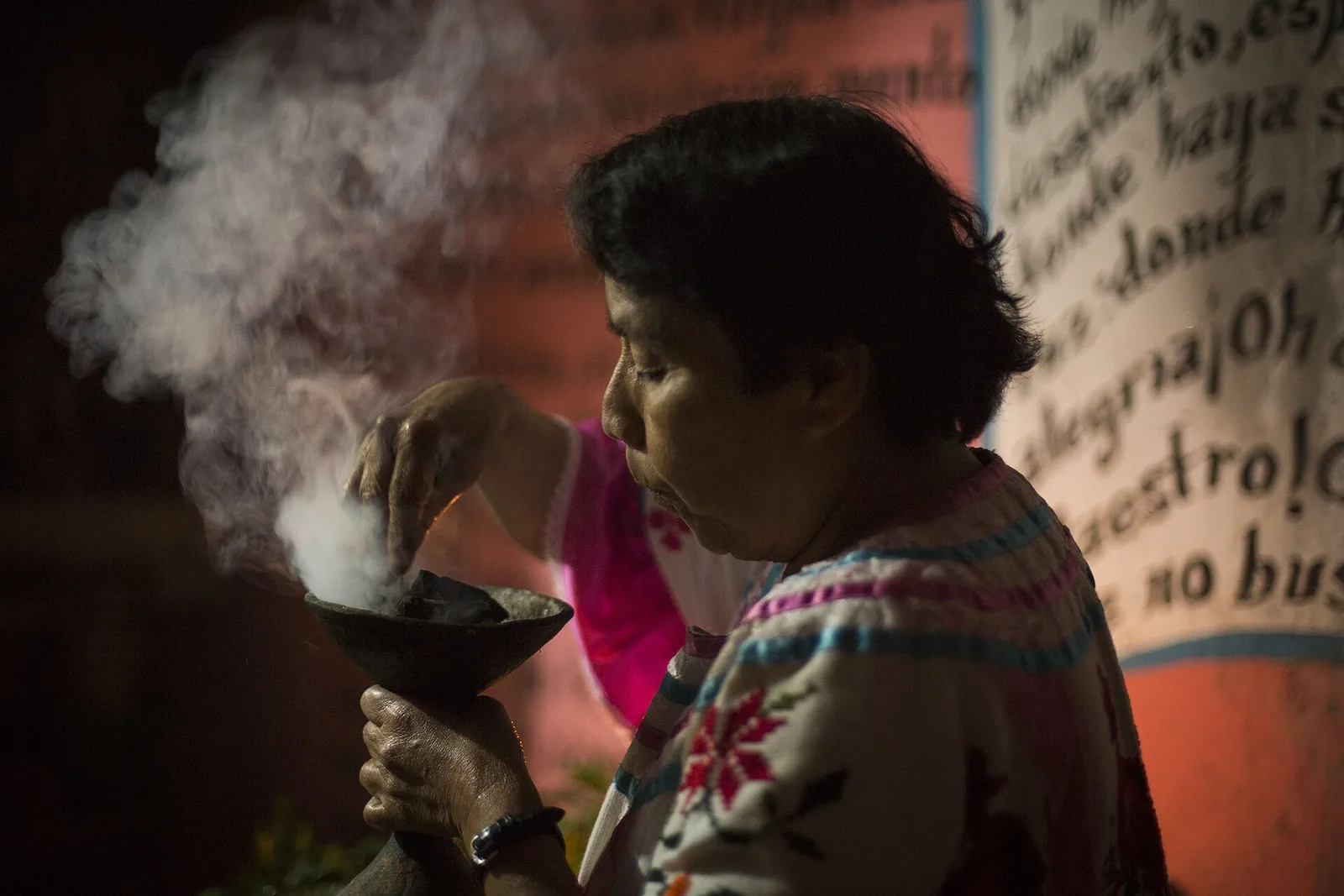
Huautla de Jiménez, in the Sierra Mazateca. A curandera prepares a limpia, a cleansing — not a mushroom velada, but the same practitioner, the same room and the same repertoire of candle, smoke and spoken address that a velada is held in.EfrenDelRosal · CC BY-SA 4.0 · Wikimedia Commons
The Sierra Mazateca has received extensive ethnographic attention through fieldwork, ceremonial recordings, tourism and Mazatec writing. Spiers and colleagues’ annotated bibliography places Mazatec practices within a wider Mexican distribution and identifies differences in ritual organisation across communities (Spiers et al., 2024).
Feinberg’s ethnography examines the region through the interests of curers, cultivators, businesspeople, intellectuals and visitors. Mushrooms, caves and accounts of the past contribute to competing descriptions of Mazatec culture. His study situates ceremonial knowledge within contemporary regional society, including the ways residents and outsiders represent it (Feinberg, 2003).
Mixtec, Zapotec and Chatino Oaxaca
Ravicz’s Mixtec study describes mushroom consultation and the role of a companion who attends to the consumer. Recent Zapotec research in El Peral documents questions about migration, spouses and property. Chatino testimony from Santa Lucía Teotepec describes nocturnal consultation of a voice associated with the mushrooms. Together these studies show considerable variation in the organisation and purposes of ceremonies within Oaxaca (Ravicz, 1961; Haro-Luna et al., 2025; López-García, Gómez-Hernández and Gándara, 2024).
Chinantec, Mixe and Matlatzinca settings
Several regional accounts describe mushroom-associated beings as small humanlike persons. Miller’s Mixe account includes a male–female pair who converse with the consumer. Rubel and Gettelfinger-Krejci describe tiny boys and girls in the diagnostic work of Don Antonio at Santiago Comaltepec. Matlatzinca accounts collected by Escalante and López-González describe small saintly persons. These beings communicate information relevant to illness or consultation (Miller, 1966; Escalante and López-González, 1972; Rubel and Gettelfinger-Krejci, 1976, all cited in Spiers et al., 2024).
The recurring features are diminutive scale, personhood and conversation. These details help specify the encounters: the beings have recognisable social identities and respond to human concerns. Their reported authority is compatible with a childlike appearance.
Central Mexican highlands and Nahua sacred landscapes
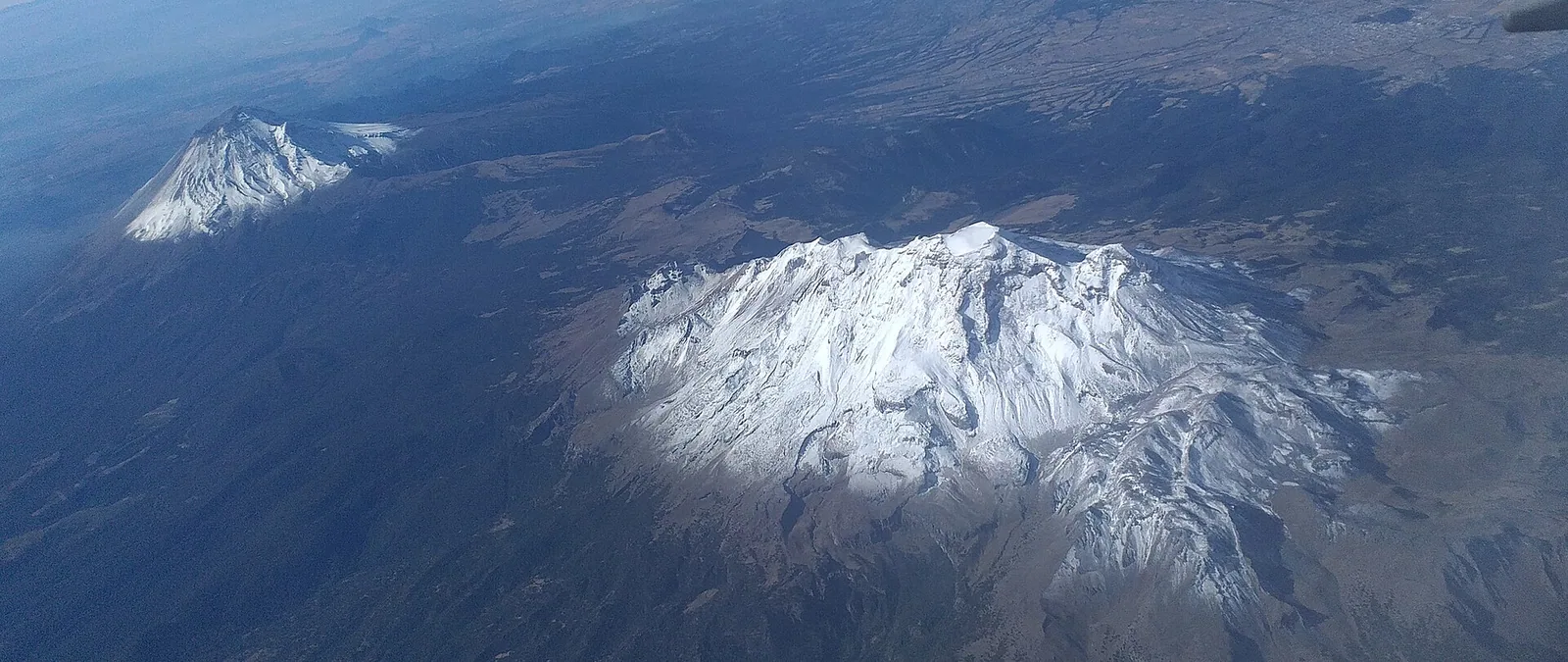
Iztaccíhuatl and Popocatépetl from the air. The weather workers Benítez Corona records are concerned with rain, with agriculture, and with waters held inside these mountains — a subterranean realm their dreams furnish with pipes, reservoirs and bells.Adriana Gaytán-Caballero · CC BY-SA 4.0 · Wikimedia Commons
Benítez Corona’s research around Popocatépetl describes weather workers whose activities concern rain, agriculture and waters within the mountains. A practitioner named Joel dreamed of children requesting food before he found mushrooms. Other reported dreams involved recruitment by soldiers and instruction about subterranean waters. Pipes, reservoirs and bells appeared within these mountain interiors (Benítez Corona, 2023).
These are dream reports within a broader account of mushroom-related practice. Their imagery combines rain beings and sacred mountains with recognisable infrastructure. The subterranean realm contains organised work, equipment and instruction. This combination is relevant to the apparent coexistence of ancient cosmological settings and technologically familiar features in visionary descriptions (Benítez Corona, 2023).
History and evidence
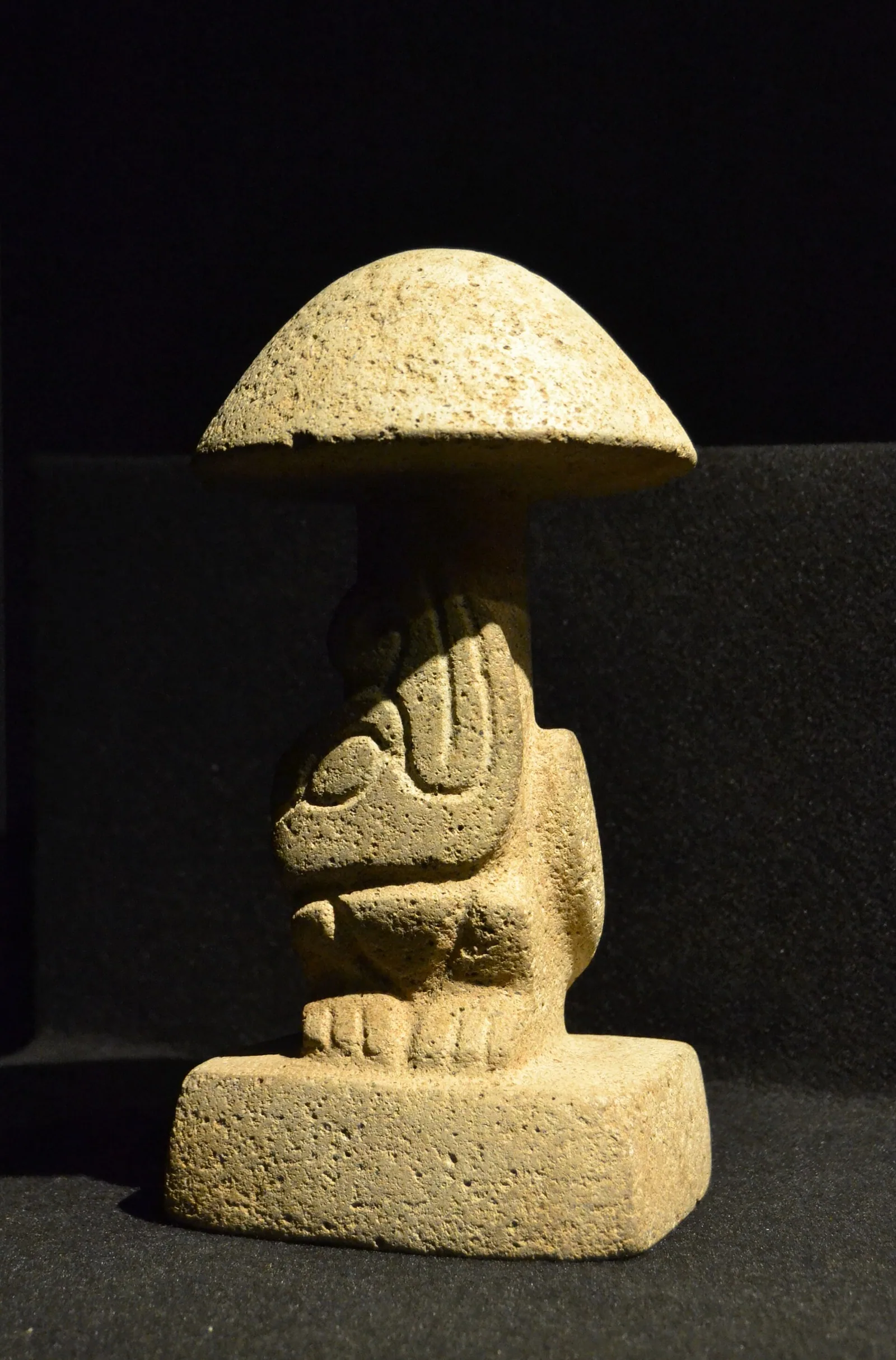
A mushroom-form sculpture in basalt from Kaminaljuyú, Late Preclassic. Borhegyi excavated nine such miniatures at the site’s Verbena cemetery, cached with nine miniature metates and handstones. The grinding equipment is the evidence; the ceremony is the inference.Joanbanjo · CC BY-SA 4.0 · Wikimedia Commons
Mushroom-shaped stones from Guatemala provide archaeological evidence for the symbolic importance of mushroom forms. Some combine a cap and stem with human or animal figures. Borhegyi examined a cache at the Verbena cemetery, Kaminaljuyú, containing nine miniature mushroom stones and nine miniature metates with handstones. He dated the assemblage to approximately 1000–500 BCE and proposed associations with ceremonial mushroom preparation and the nine Lords of the Night (Borhegyi, 1961).
The association with miniature grinding equipment supports investigation of preparation practices. The repeated number prompted Borhegyi’s cosmological interpretation. The objects and their archaeological association are the evidence; ceremonial consumption and the connection with the Lords of the Night are his proposed explanations. This distinction allows the assemblage to contribute to the history of mushroom symbolism with its evidential scope clearly stated.
Hernández-Santiago and colleagues interpret mushroom imagery on pages 24–25 of the Mixtec Yuta Tnoho, also known as the Codex Vindobonensis Mexicanus I, in relation to the first dawn. Their argument combines iconographic analysis, linguistic evidence and contemporary ethnography. It places the depicted mushrooms within an account of cosmological origins and ceremonial action (Hernández-Santiago et al., 2017).
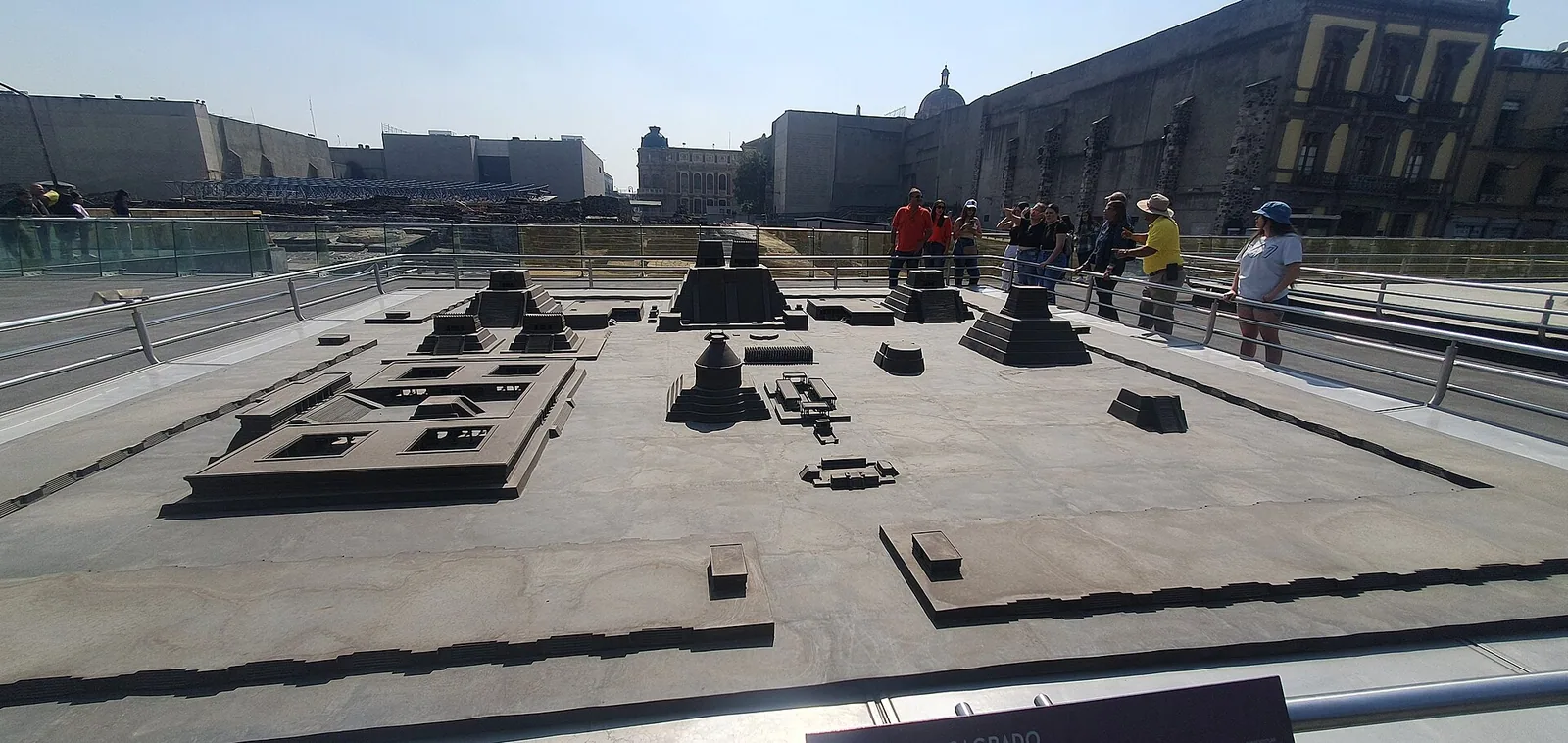
The ceremonial centre of Tenochtitlan, as modelled at the Templo Mayor. The merchant feast of Florentine Codex Book IX, at which participants ate mushrooms and afterwards recounted what they had seen, belongs to a city of this scale and this degree of order.José Luiz · CC BY-SA 4.0 · Wikimedia Commons
The Mexica subsequently incorporated mushroom consumption into the institutions of an urban imperial society. Tenochtitlan expanded from an island settlement into a major capital in less than two centuries. Tribute supported monumental construction and specialised production; canals, causeways and aqueducts organised transport and water supply. Earlier cities, including Teotihuacan, supplied precedents for planning and religious architecture. Painted pyramids and white palaces contributed to the capital’s strongly ordered appearance (King, 2004).
This urban context is relevant to the appearance of Mexica art and architecture. The regular forms, specialised materials and dense iconography were products of established craft and religious institutions. Their apparent sophistication to a modern viewer is consistent with the technical and administrative capacities documented for the city (King, 2004).
The merchant feast described in Book IX of the Florentine Codex provides a specific setting for mushroom consumption. Sahagún and his Nahua collaborators record participants seeing possible destinies, including prosperity, poverty, captivity and violent death. Participants subsequently recounted their visions. The ceremony therefore involved ingestion, individual experiences and collective narration within a recognised social institution (Sahagún and Nahua collaborators, Book IX, chapter 8, cited in González Romero, 2026a).
The content concerns fortune and social position as well as extraordinary perception. This differs in emphasis from later reports organised around diagnosis, initiation or psychological treatment. The comparison demonstrates the range of purposes for which mushroom experiences have been interpreted.
Colonial descriptions preserved Nahua testimony through European religious and scholarly categories. Schultes later assembled historical descriptions and compared them with botanical specimens and reports of continuing use. His 1940 study helped establish the identification of teonanácatl with Mexican psychoactive mushrooms. It connected textual scholarship with field collecting and local knowledge (Schultes, 1940).
Xochipilli and the “flowers”
The best-known Mexica term for the mushrooms, teonanácatl, “god’s flesh”, used by Sahagún and Motolinía, is absent from Alonso de Molina’s Nahuatl lexicon of 1571. Molina gives instead xochinanácatl, from xochitl, “flower” — a word that survives in the place name Xochinanacatlan, in Tlaola, Puebla. Wasson asked whether a churchman had good reason to prefer it to so “appalling” a word as god’s flesh (Wasson, 1973, pp. 305–306). Nahuatl poets, he observed, write incessantly of flowers without distinguishing their kinds, though the language was rich in plant names; if xochitl stood for the inebriating mushrooms, or for hallucinogens as a class, the habit would be explained. A song in the Romances de los Señores de la Nueva España, of about 1470, reads in his English: “O! I have drunk the liquor of inebriating mushrooms! My heart is weeping!” (Wasson, 1973, p. 306).
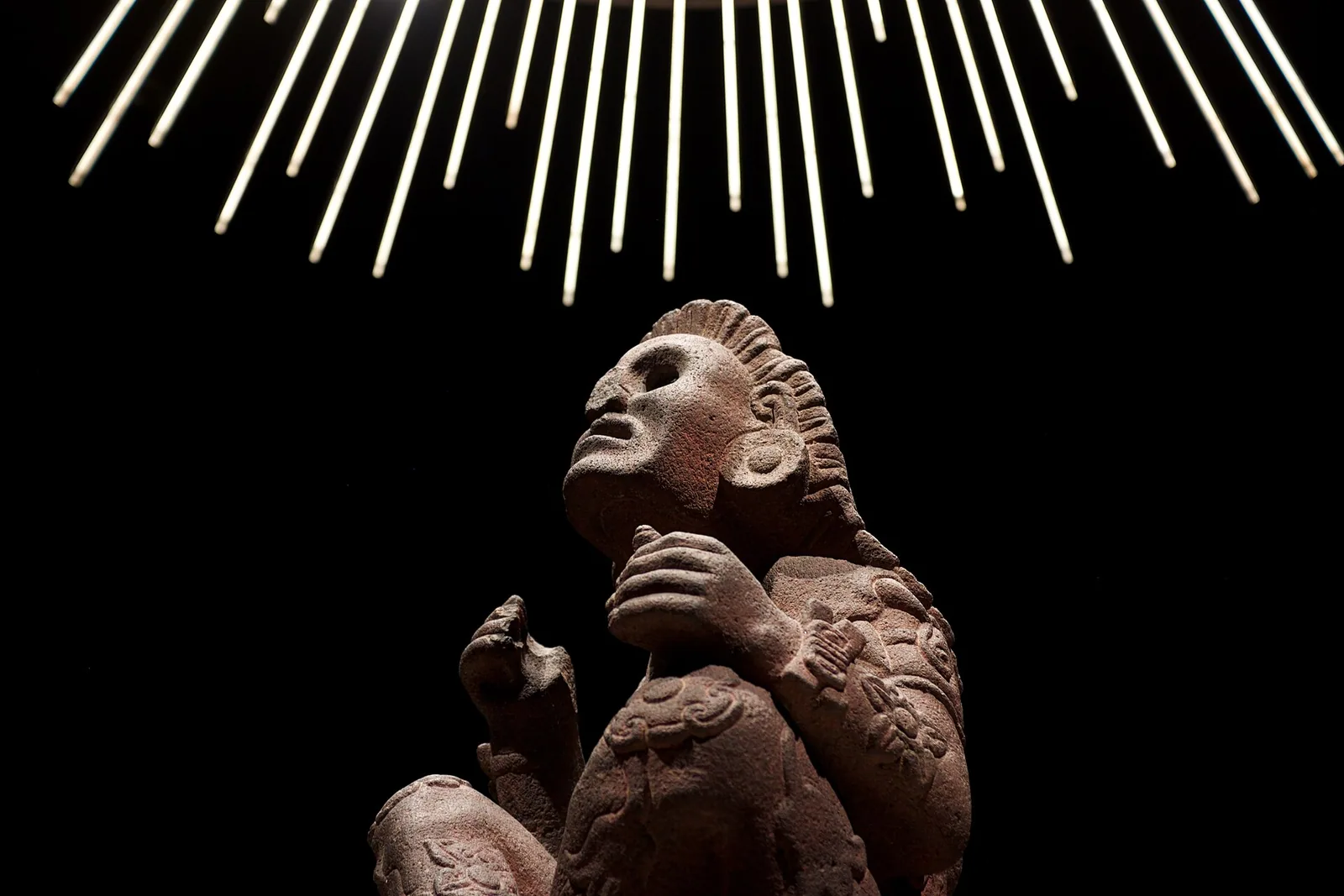
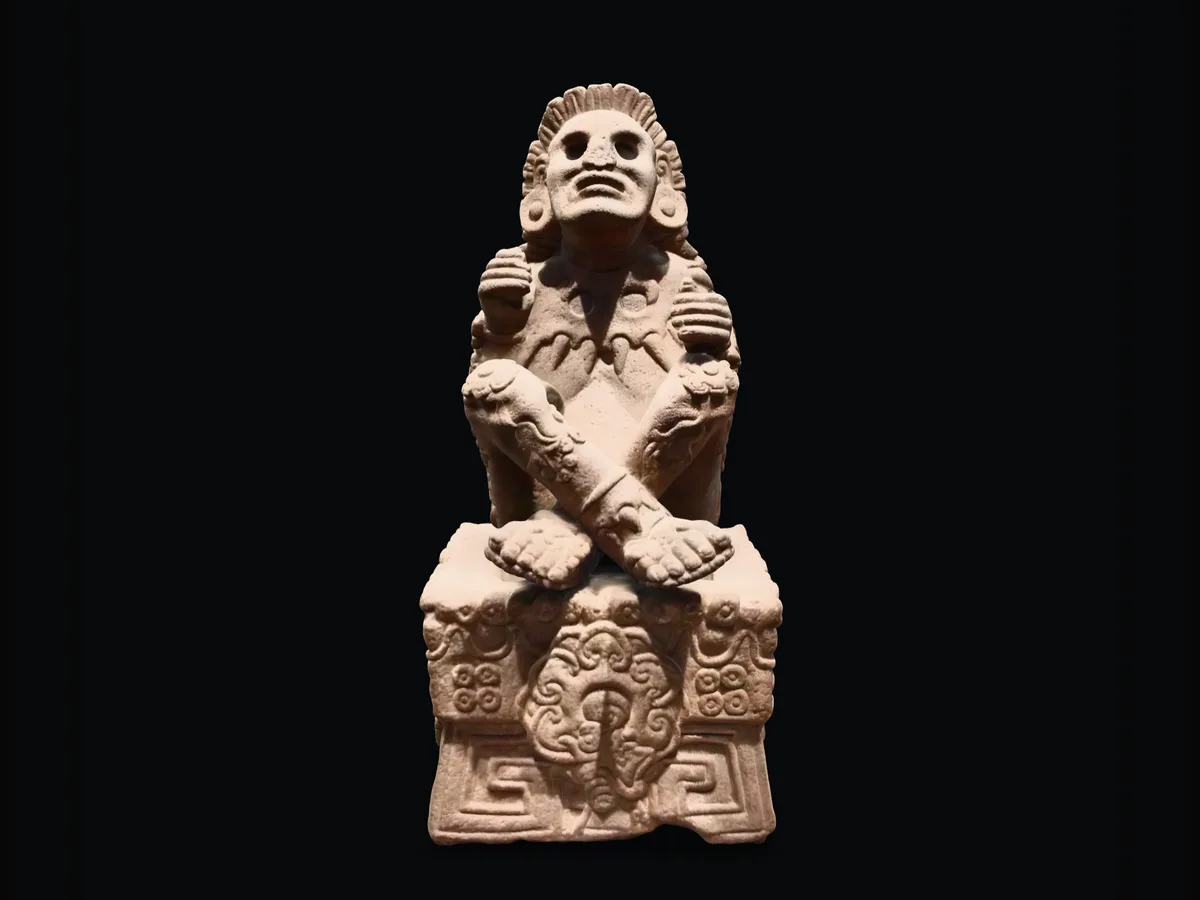
The statue of Xochipilli, the “Prince of Flowers”, was unearthed at Tlalmanalco on the slopes of Popocatépetl (Wasson, 1973, p. 308). Justino Fernández had seen “ecstasy” in its face but thought it better minimised; for Wasson “ecstasy in this statue is of the essence”: “The skyward tilt of the head, the half-open mouth and jutting jaw, the hands poised in the air at different levels, the crossed legs and feet raised off the ground” (Wasson, 1973, p. 308). He noted that the figure wears a mask, visible in the eye-sockets and under the chin, and liked to think the sockets had been left empty from the beginning (Wasson, 1973, pp. 308–310).
Xochipilli (The Flower Prince) · three-dimensional view
Drag to turn · scroll or pinch to magnify
Xochipilli (The Flower Prince). Xochipilli belongs to the Mesoamerican entheogenic and shamanic plant tradition within Mexica (Aztec) cosmology. As the "Flower Prince" (Xōchipilli in Nahuatl), his domain uniquely marries agricultural abundance, art, and the ritual use of sacred, mind-altering plants—a philosophy encapsulated by the Aztec concept of In xochitl, in cuicatl ("Flower and Song"). 3D model by Daniel Mirante, created from available museum photographs.
The carvings, Wasson wrote, “largely reflect” the identifications of Richard Evans Schultes, his students Timothy Plowman and Tommie Lockwood, and the scientific artist Elmer W. Smith, with drawings by Margaret Seeler (Wasson, 1973, p. 310). The emblem repeated on the four sides of the base he read as five mushroom caps in profile, their inturned margins characteristic of Psilocybe aztecorum, the species Roger Heim had found with Nahuatl-speaking guides near the place the statue was unearthed; a stylised butterfly perches among them, in Nahua iconography a creature of Tlalocan and, in some Mazatec communities still, a soul of the departed (Wasson, 1973, pp. 311–315). On the right thigh he saw the flower of ololiuhqui, the morning glory, and on the left leg the same flower emerging; the pointed pendants usually taken for jaguar fangs or eagle claws might, he suggested, be its closed flowers; and Schultes read sinicuichi, Heimia salicifolia, on the right leg below the knee (Wasson, 1973, pp. 315–319).
Wasson called his essay “a suggested interpretation”, and its closing argument is lexical: in Nahuatl, he wrote, xochitl meant flower but by extension a divinatory plant, “and included among those ‘flowers’ we find xochinanacatl, the hallucinogenic mushroom” (Wasson, 1973, p. 324). Other readings of the same carvings, from the museum’s own catalogue, are set out under Art and material culture below.
Ritual practice
Selection and transformation
Species identification, collection and ritual naming are closely related in contemporary practice. In El Peral, P. zapotecorum is known as Ni’tobe’ya and used to obtain answers during consultation. Participants also attribute significance to the gatherer’s emotional disposition. A cheerful or angry gatherer may influence the communicative character attributed to the mushrooms. This is a local explanation of how the conditions of collection affect the subsequent encounter (Haro-Luna et al., 2025).
Preparation of persons and place
Copal smoke. Chatino testimony from Santa Lucía Teotepec describes copal and nocturnal questioning; Ravicz’s Mixtec account describes a metate, a night, and a companion who listens. The apparatus is modest and the same few things recur across the region.EfrenDelRosal · CC BY-SA 4.0 · Wikimedia Commons
Ravicz describes Mixtec consultations in which the person seeking information consumes the mushrooms while a companion attends to speech and behaviour. A specialist may officiate. The companion’s responsibilities include listening and helping recall the experience afterwards. Preparation may involve a metate, and the consultation takes place at night (Ravicz, 1961).
The allocation of roles matters. The consumer undergoes the altered state, while another person can retain an account of what was said and done. Recollection is consequently supported by the arrangement of the ceremony itself. Illness or another practical question gives the consultation its purpose (Ravicz, 1961).
Speech, song and the mushroom
María Sabina’s recorded ceremony provides direct evidence of the verbal form of a Mazatec velada. The English translation accompanying the 1957 Folkways release includes “I’m a speech woman” and “I’m a wilderness woman”. Repeated first-person declarations identify capacities associated with healing, sacred figures and the surrounding world (Sabina, 1957, liner notes, p. 4).
The recording was made on 21–22 July 1956. Mazatec speech incorporates references to Christ and the Virgin. Repetition, rhythm and successive declarations sustain the performance and establish the practitioner’s capacity to act. The recording allows analysis of the ceremony’s timing and vocal delivery alongside its translated words (Sabina, 1957).
The Mazatecs say that the mushrooms speak. If you ask a shaman where his imagery comes from, he is likely to reply: I didn’t say it, the mushrooms did.Munn (1973), p. 88
No mushroom speaks, that is a primitive anthropomorphization of the natural, only man speaks, but he who eats these mushrooms, if he is a man of language, becomes endowed with an inspired capacity to speak.Munn (1973), p. 88
The shamans who eat them, their function is to speak, they are the speakers who chant and sing the truth, they are the oral poets of their people, the doctors of the word, they who tell what is wrong and how to remedy it, the seers and oracles, the ones possessed by the voice.Munn (1973), p. 88
Language is an ecstatic activity of signification.Munn (1973), p. 88
Henry Munn made the relationship between mushrooms and speech central to ‘The Mushrooms of Language’. He describes nocturnal ceremonies involving chanting, rocking and clapping. The Mazatec marker tzo, translated as “says”, punctuates speech. Munn interprets this as part of an experience in which language becomes unusually fluent and seems to be received from another source (Munn, 1973).
His translated passages include paths, footprints and searches through which a practitioner investigates illness. Language performs the consultation: utterances identify relationships, pursue causes and articulate responses. Munn’s account gives verbal fluency a central place in mushroom phenomenology, alongside the visual scenes emphasised by many Western writers (Munn, 1973).
Ordeal, vision and action
Fagetti, Martínez Cordero and Mateos Segovia describe Mazatec initiation through illness, apprenticeship and encounters that authorise healing. Their account of Pablo records illness at sixteen and the beginning of practice at thirty-five, following years of learning. Initiatory imagery includes a table, a book, journeys towards the east and a world of flowers. A turkey dances on a silver table (Fagetti, Martínez Cordero and Mateos Segovia, 2023).
The study relates these experiences to the altar and the practitioner’s subsequent work. Visionary objects represent capacities and responsibilities acquired during initiation. The chronology is significant: the reported encounters form part of a prolonged development of competence and recognition (Fagetti, Martínez Cordero and Mateos Segovia, 2023).
Traditional preparation: gathering and the nocturnal vigil
The ethnographic record describes several components of preparation: identifying and collecting the fungi, preparing the material, arranging the place of consultation and establishing who will consume and who will attend. Ravicz’s account includes a metate and a companion; Chatino testimony includes copal and nocturnal questioning; El Peral research records the importance attributed to the gatherer’s disposition (Ravicz, 1961; López-García, Gómez-Hernández and Gándara, 2024; Haro-Luna et al., 2025).
These accounts support a regional comparison of practices. The velada provides sufficient time for effects, speech and consultation to develop during the night. The presence of other participants also supports recollection and the interpretation of what occurred. The specific procedures depend on the community and practitioner described.
Mythology and cosmology
In her account to Álvaro Estrada, Sabina describes receiving a Book from the Principal Ones and learning its wisdom. She states: “Wisdom is Language. Language is in the Book.” In another passage, God rises from the earth and grows to the scale of a tree or mountain. The Book emerges with great force, teaches her what to say to the sick and subsequently becomes part of her memory (Estrada, 1981, cited in González Romero, 2026b).
Other accounts describe sacred geography through mountains, caves and waters. Reyes García records relationships with Tlalocan and rain-associated beings; Benítez Corona describes instruction about waters within Popocatépetl. In each case, the landscape contains agents and activities relevant to human life. Illness, rain and agricultural work are understood through relations with those agents (Reyes García, 1970; Benítez Corona, 2023).
Faudree documents a domestic example in Chilchotla. A household experiencing difficulties with building work consulted a specialist about an offended chikon, or earth lord. Offerings and the corners of the house organised the intervention, and an invitation to return for a mushroom ceremony followed. Her study also examines Mazatec writers and local textual production. Ritual practice and accounts of cultural identity develop within the same contemporary community (Faudree, 2015).
Shamanism and healing
Shamanism is a comparative term used for practices in which specialists work through relationships with spiritual agents. The local accounts specify different roles. A Mazatec chjota chjine acquires a vocation through learning and authorising encounters. In Ravicz’s Mixtec account, the person seeking information may consume the mushrooms while a companion attends. The identity of the consumer and the role of the specialist vary across the documented practices (Ravicz, 1961; Fagetti, Martínez Cordero and Mateos Segovia, 2023).
Reports of healing frequently describe an intervention with a recognisable sequence. Beings examine or touch the person, remove an affliction or restore the body. The sensory details include pressure, softness, pain and movement of internal organs. These descriptions establish what participants experienced as treatment and how they understood the agents responsible (Reyes García, 1970; Fagetti and Mercadillo, 2022).
Art and material culture
The Xochipilli sculpture from Tlalmanalco, near Iztaccíhuatl, depicts a seated figure with raised knees, a tilted head and botanical motifs on the body. INAH identifies it as Chalca and dates it to the Late Postclassic period. Traces of red, ochre and white pigments survive on the volcanic stone. Xochipilli, the Flower Prince, is associated with flowers, music and dance (INAH, 2018).
Wasson interpreted the posture as absorption in an entheogenic experience. He identified motifs on the body and pedestal as psychoactive flora, including Psilocybe aztecorum, and related the figure to temicxoch, or dream flowers. His interpretation connects the botanical imagery, the pose and the deity’s associations with artistic and sensory experience (Wasson, 1980).
INAH’s catalogue presents additional readings. Concentric forms on the pedestal are interpreted in relation to tonalli, solar heat, while Aurora Montúfar’s botanical work identifies a broader floral repertoire. These interpretations place the sculpture within overlapping discussions of plants, divinity, solar qualities and artistic practice (INAH, 2018).
Its relevance to an archaeofuturistic aesthetic can be stated in formal terms. The body is covered by a consistent system of signs; the surface combines anatomical and botanical forms; the posture directs attention towards an experience beyond the figure’s immediate surroundings. The impression of unfamiliar sophistication is a contemporary response to those properties. Wasson’s entheogenic reading offers one historical interpretation of the imagery.
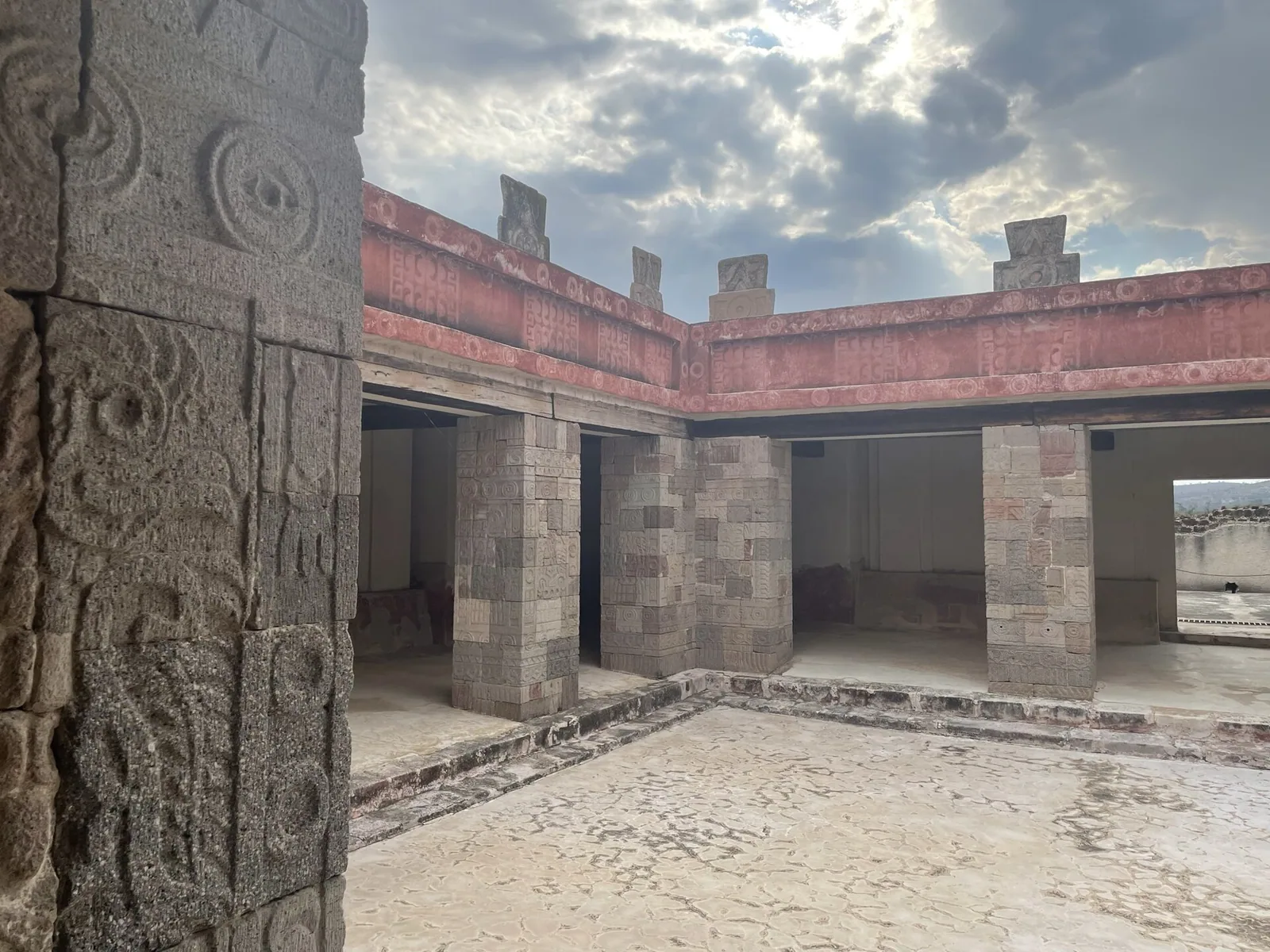
Carved column detail at the Palace of Quetzalpapalotl, Teotihuacan. It is into sockets like these that obsidian was set for the eyes Ott and Wasson read as visionary sight — perception distributed across the architecture, looking back at the room’s occupants.Peachseltzer · CC BY-SA 4.0 · Wikimedia Commons
Ott and Wasson’s study of “disembodied eyes” at Teotihuacan examines a separate group of motifs. At the Palace of Quetzalpapalotl, carved eyes with obsidian pupils appear on columns around an avian figure. In mural imagery, eyes accompany droplets issuing from flowers. The authors interpret the droplets as an entheogenic potion and the eyes as visionary sight. They also propose that some decorated, labyrinthine buildings functioned as cenacula, rooms for communal sacramental consumption (Ott and Wasson, 1984).
The phrase “disembodied eyedrops” combines two elements of this argument: detached eye motifs and eye-associated droplets. The article’s entheogenic interpretation concerns the relationship between those images, sacred substances and visionary perception. Its architectural proposal extends the argument to the possible use of the decorated rooms (Ott and Wasson, 1984).
As an aesthetic interpretation, the repeated eyes suggest perception distributed across the surrounding architecture. Obsidian pupils and repeated placement make the eyes visually distinct, while their separation from faces gives them an unusual autonomy. Reading the room as an environment that appears to see its occupants is a speculative extension of the imagery. The evidence for that reading consists of the motifs, materials and spatial arrangement described by Ott and Wasson.
03Visionary phenomenology
Accounts
R. Gordon Wasson · palaces, waters and an observing presence
Wasson and the photographer Allan Richardson participated in a ceremony led by María Sabina at Huautla de Jiménez in June 1955. His account appeared in LIFE on 13 May 1957 under the title ‘Seeking the Magic Mushroom’. Sabina was introduced as Eva Méndez. The article gave a mass readership access to a detailed description of mushroom-induced visions within a Mazatec ceremony (Wasson, 1957).
Wasson describes an initial sequence of geometric patterns followed by jewelled palaces, courts, arcades and gardens. The apparent scale expands beyond the physical room. In his account of another session, transparent waters and an immense sea beneath a low sun are perceived from a detached observing position. These descriptions distinguish the visual scene from the location of his physical body (Wasson, 1957).
The relevant qualities are architectural complexity, apparent spatial extent, ornament, luminosity and a mobile or disembodied viewpoint. Sabina’s voice accompanies the experience. Wasson’s account is especially detailed about the appearance of environments and the position from which he seems to perceive them. It supplies early published examples of the elaborate spatial experiences later prominent in psychedelic counterculture (Wasson, 1957).
Nahua testimony · bodily intervention
Reyes García records a Nahuatl account from Amatlán de los Reyes in which the earth sees and hears, caves connect with Tlalocan, and small beings are associated with rain and the dead. Mushrooms appear in a ceremonial context that includes flowers and saints. A woman reports little hands working on her abdomen and movement of her internal organs (Reyes García, 1970).
This testimony emphasises touch and internal bodily sensation. The perceived agents are small, and their actions are experienced as treatment. The account locates the intervention within a sacred geography already concerned with subterranean places and nonhuman persons. Its phenomenological detail lies in the combination of bodily access, tactile contact and attributed healing activity (Reyes García, 1970).
Contemporary Mexican veladas · attendants, interiors and thresholds
Fagetti and Mercadillo describe Ricardo, a young man seeking help for an eye affliction. He reports warmth, stars and paths leading towards a large church. Four Virgins in wine-coloured clothing attend him. Their touch feels exceptionally soft. The treatment includes pain and the removal of objects experienced as thorns. A further door presents a possible next stage, which he postpones because of the effort it requires (Fagetti and Mercadillo, 2022).
The sequence contains several distinct spatial and sensory features: travel towards a destination, entry into a building, the presence of attendants, tactile treatment and a further threshold. The attendants appear competent and their actions concern the problem that brought Ricardo to the ceremony. Softness and pain contribute different emotional qualities to the same episode (Fagetti and Mercadillo, 2022).
In the same study, Gudelia describes her body opened like a cloth, exposing its internal organs, then restored by a gesture from God. The report combines a radical alteration of bodily form with an intervention attributed to a divine agent. The body is experienced as accessible and repairable through actions that are immediate within the scene (Fagetti and Mercadillo, 2022).
These two accounts provide specific examples of immersion. Ricardo experiences a route through an environment; Gudelia experiences the transformation of her own body. Both reports include agents acting directly upon the participant. Their detail concerns events and sensations as well as imagery.
Albert Hofmann · Mexican imagery in the laboratory
Hofmann recalls that Mexican imagery dominated his surroundings during a mushroom experiment. The doctor attending him appeared as an Aztec priest. The experience transformed the perceived identity of a person already present and gave the laboratory a Mexican historical character. Hofmann presents this as part of his own encounter with the substance (Hofmann, 1980).
His memoir also records taking synthetic psilocybin to Sabina in 1962. She recognised its effects within her ceremonial practice and described the pills as having the same power as the mushrooms. This episode records a practitioner’s assessment of the experiential similarity between a laboratory preparation and the fungi she used (Hofmann, 1980).
Terence McKenna · polished surfaces and the archaic future
In his Psychozoic Press interview, McKenna associates psilocybin with “super-glossy, machine-like, highly polished surfaces that you can see into”. He describes a science-fiction quality and interprets the experience as anticipating future cultural forms. The quotation specifies a combination of reflectivity, finish and visible depth within a surface (McKenna, 1983–1984, n.p.).
In the same interview, his discussion of the wider tryptamine field includes visible language: sound produces forms that appear available for shaping and communication. This adds responsiveness and intentional expression to his account of unusual materials. The distinction between his psilocybin-specific description and his broader discussion of tryptamines helps identify which claims concern mushrooms directly (McKenna, 1983–1984).
McKenna’s 1982 lecture describes psilocybin encounters with a Logos, an articulate intelligence capable of dialogue. He interprets visionary forms as “translinguistic information complexes” and speculates about an extraterrestrial history of mushroom spores and mycelium. In this account, the mushroom gives access to an intelligence with a history extending beyond humanity (McKenna, 1982, n.p.).
His use of futurist imagery is connected to reported sensory features. Polished surfaces suggest manufactured objects; transparency suggests accessible internal structure; dialogue suggests a responsive intelligence. McKenna develops these impressions into claims about communication and cultural transformation. The phenomenological description and the speculative cosmology are identifiable components of his argument.
The spoken True Hallucinations material describes apparently autonomous worlds containing planets, organisms, societies, ruins and machines. McKenna uses the idea of a holographic field to explain how many possible forms and places could become immediately available to perception. His description combines the apparent remoteness of these environments with a sense of direct access to them (McKenna, n.d.).
Within his interpretation, the archaic and futuristic qualities concern different aspects of the encounter. The intelligence is imagined as ancient; the visible forms suggest capacities beyond contemporary technology. This is a specific countercultural formulation of archaeofuturism. It combines the impression of entering an already existing world with the perception of unfamiliar materials, instruments and means of communication (McKenna, 1982; 1983–1984; n.d.).
La Chorrera, 1971 · the mushroom the McKennas were not looking for
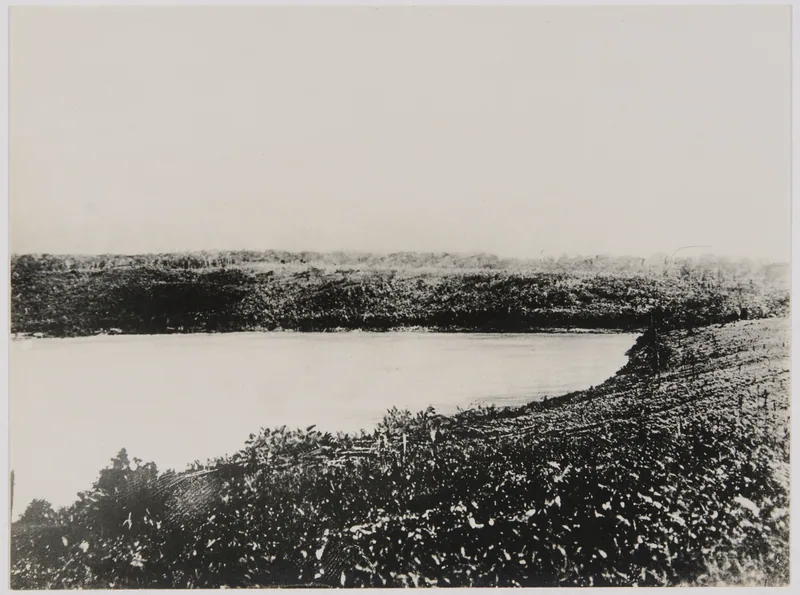
In February 1971 Dennis and Terence McKenna reached La Chorrera, a mission settlement on the Igara Paraná in the Colombian Amazon, looking for an orally active DMT preparation they knew as oo-koo-hé. They did not find it. What they found, in Dennis McKenna’s account of the expedition fifty years afterwards, was Psilocybe cubensis fruiting from nearly every cow pie in the pastures cleared around the mission — the same pantropical dung species this record files above, met by two brothers who had come for something else entirely (McKenna, 2021).
The Igara Paraná beneath La Chorrera, photographed by Thomas Whiffen early in the twentieth century. The McKenna brothers arrived at the mission here in February 1971 in search of an oral DMT preparation, and found a pasture full of Psilocybe cubensis instead.Thomas W. Whiffen · CC0 · Wikimedia Commons
What followed is the countercultural episode the archive files under this complex rather than under DMT, because the fungus at its centre is this one. On the evening of 4 March 1971 the brothers each ate seventeen large carpophores with a Banisteriopsis decoction and attempted what they called the Experiment: an alchemical operation intended to produce an artefact they named the Eschaton. It did not work. Dennis McKenna’s retrospective is plain about that — “Reality displayed a stubborn resistance” — and plain, too, that the failure was generative: Terence’s Time Wave Zero came out of it, and the voice they called the Mushroom Teacher told them only that it would take time (McKenna, 2021).
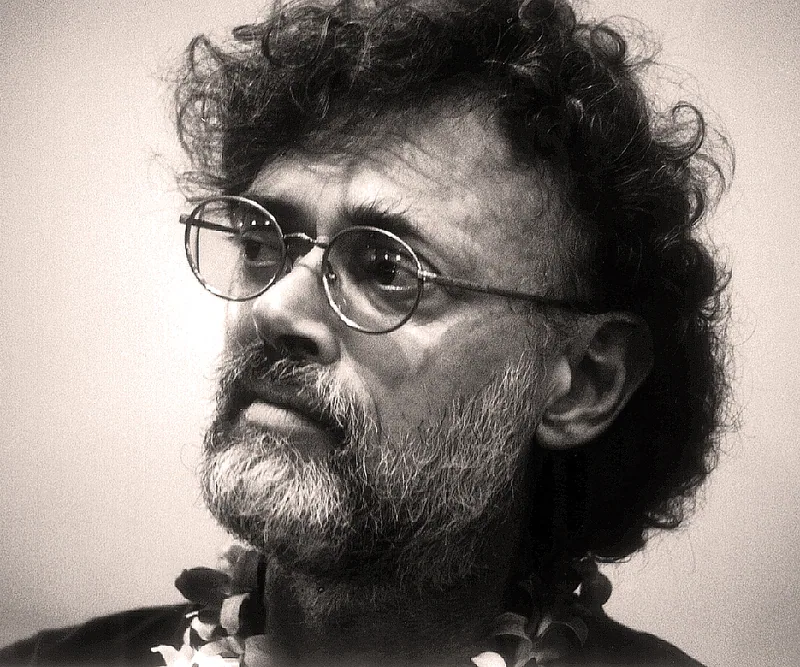
Terence McKenna at the AllChemical Arts Conference, Kona, Hawaii, 1999 — twenty-eight years after La Chorrera, and the year before his death.Jon Hanna · CC BY-SA 3.0 · Wikimedia Commons
The lasting result was agricultural. The brothers carried spores home, and after two years of failure arrived at a method for growing the mushroom on sterilised rye grain in mason jars. That technique, published as a slim grower’s guide, is what put Psilocybe cubensis within reach of anyone with a pressure cooker — and it is the mechanism behind the cultivation this reading describes above, by which printed instructions could circulate independently of the communities where Western visitors had first encountered ceremonial use (McKenna, 2021).
Therapeutic testimony · guides, green eyes and a place at the table
Belser and colleagues interviewed thirteen participants in research on psilocybin-assisted treatment for cancer-related anxiety. Seven described guiding presences, often resembling loved ones. Victor reported a guide resembling his father who accompanied him through harsh landscapes, caves and a garden. Another participant described green eyes seeking him while his ordinary sense of identity dissolved. Participants related these experiences to illness, grief, family relationships and changing priorities (Belser et al., 2017).
These accounts distinguish several types of encounter. A guide can be recognisably connected with the participant’s biography; a presence can also appear through a partial feature such as eyes. Travel through threatening and reassuring places gives the experience an emotional sequence. Music accompanies changes in imagery and feeling (Belser et al., 2017).
Swift and colleagues examined cancer-related themes in the same thirteen-person interview corpus. Erin recalled a sketch-like image of a circular dinner table at which cancer was present as a participant. She associated the scene with acceptance and a sense of inclusion within life. The arrangement gave an illness a place in a familiar social setting (Swift et al., 2017).
The table scene differs visually from reports of ornate architecture. Its spatial structure is simple, and its significance concerns the relation between its occupants. Together, these accounts show the range of imagery in the corpus: extensive journeys, guiding persons, isolated eyes and a domestic arrangement experienced as personally consequential.
Duration, intensity and visionary descriptions
Impact
Studerus and colleagues pooled eight experimental studies involving 110 healthy participants. Their analysis followed acute changes in perception, mood and the sense of self, together with subsequent assessments. Responses varied with dose and included strongly pleasurable effects and episodes of anxiety (Studerus et al., 2011).
In a larger analysis of 409 administrations to 261 healthy volunteers, dose was a major predictor of response. Absorption, emotional state before administration and experimental circumstances also contributed to particular dimensions of experience. These findings support attention to both pharmacology and the conditions of a session (Studerus et al., 2012).
The ethnographic accounts describe how these conditions are understood locally. In El Peral, participants attribute aspects of the mushroom’s communicative character to the gatherer’s mood. In Ravicz’s Mixtec material, companionship and subsequent recollection are organised in advance. The anticipated purpose and social arrangements of the ceremony are therefore part of the documented experience (Ravicz, 1961; Haro-Luna et al., 2025).
Individual reports also specify how an experience begins. Ricardo’s warmth and stars precede his movement towards a church; Wasson’s geometric patterns precede elaborate scenes. Such sequences are useful for studying how a change in sensation develops into an immersive environment (Wasson, 1957; Fagetti and Mercadillo, 2022).
Disassembly
Several accounts describe changes in the organisation of body and viewpoint. Gudelia’s body opens like cloth. Wasson observes extensive scenes from a detached position. A participant interviewed by Belser and colleagues describes eyes approaching during a loss of ordinary identity. Each report identifies a different alteration: bodily form, apparent location or sense of self (Wasson, 1957; Belser et al., 2017; Fagetti and Mercadillo, 2022).
Bodily sensation remains prominent in many of these descriptions. Touch, internal movement, warmth and pain contribute to the perceived reality of the event. A phenomenological account of immersion consequently includes where the participant seems to be, how the body is experienced and what kinds of contact appear possible.
Carbonaro and colleagues surveyed 1,993 people about their most psychologically difficult experience with psilocybin mushrooms. Eighty-four per cent nevertheless reported benefit from the experience. Because respondents were asked about their most difficult event, the sample describes selected challenging experiences. It documents the coexistence of acute distress and positive retrospective assessments (Carbonaro et al., 2016).
The distinction between immediate emotion and later evaluation is relevant to narratives of ordeal. Fear, pain or disorientation may occur within an experience later regarded as valuable. The sequence and subsequent interpretation provide information that a single overall description of the experience would omit.
Arrival
A recurring feature of the accounts is entry into a place containing agents and organised activity. Ricardo reaches a church where attendants treat him. Victor travels with a guide. Wasson encounters architectural environments with courts, arcades and gardens. The perceived environment contains relationships among places, persons and actions (Wasson, 1957; Belser et al., 2017; Fagetti and Mercadillo, 2022).
This gives a precise meaning to the impression that a realm is already inhabited. A path has a destination; attendants appear to know their tasks; a door suggests a further area. These features can make a scene appear to continue beyond the participant’s immediate view. In the reported healing encounters, organisation is expressed through what beings do and how the participant moves through the setting.
McKenna’s futuristic descriptions add apparent technical sophistication. High polish, depth within surfaces and responsive forms suggest materials or means of communication with unfamiliar capacities. His descriptions associate the experience with manufactured environments and articulate intelligence (McKenna, 1982; 1983–1984). The word archaeofuturistic is useful for this combination when its component qualities are specified: apparent antiquity, elaborate construction, unfamiliar functionality and direct accessibility.
The emotional atmosphere also varies across accounts. Ricardo describes exceptional softness alongside pain. Victor’s fatherlike guide accompanies him through both harsh and reassuring settings. Wasson emphasises the grandeur and detail of architecture. These descriptions locate atmosphere in reported sensations, relationships and changes during the experience (Wasson, 1957; Belser et al., 2017; Fagetti and Mercadillo, 2022).
Music can alter imagery and emotional direction. Kaelen and colleagues interviewed nineteen patients receiving psilocybin in research on treatment-resistant depression. Participants described music as evoking images, providing guidance, promoting calm or provoking unwelcome feelings. Some felt led in an uncomfortable direction. The study examined how liking, resonance with and openness to the music related to experience and outcomes (Kaelen et al., 2018).
These findings provide a research comparison for accounts in which ceremonial speech accompanies visions. Sabina’s recorded practice and Wasson’s description identify a live voice within the event; the clinical study examines responses to music. In both settings, sound is part of the conditions under which imagery and emotion develop (Sabina, 1957; Wasson, 1957; Kaelen et al., 2018).
Interpretive return
Watts and colleagues interviewed twenty participants six months after an open-label psilocybin study for treatment-resistant depression. Two major themes were increased connectedness and greater acceptance. Participants described changes in their relationships with themselves, other people, the world and difficult emotions. The interviews document how they related the session to their subsequent lives (Watts et al., 2017).
Other settings organise recollection differently. Ravicz’s companion helps retain what happened during a consultation. The Nahua merchant-feast account describes participants recounting their visions. Sabina describes knowledge from the Book becoming available in later healing work. Each source identifies a procedure through which an experience is remembered and applied (Ravicz, 1961; Estrada, 1981, cited in González Romero, 2026b; Sahagún and Nahua collaborators, cited in González Romero, 2026a).
Munn and McKenna both give unusual fluency a prominent role, although they describe different purposes. Munn analyses speech in a healing consultation; McKenna links perceived communication to a speculative account of intelligence and cultural change. Their accounts remain most useful when those purposes and settings are retained (Munn, 1973; McKenna, 1982).
04Contemporary transformations
Contemporary expressions and transformations
The isolation of psilocybin in 1958 enabled experimental work with a defined compound. Hofmann, Heim, Brack and Kobel’s report connected material from P. mexicana with chemical investigation (Hofmann et al., 1958). In 1963, Leary, Litwin and Metzner published research on psilocybin administered in a supportive environment. Their study treated the participant’s surroundings and interpersonal circumstances as relevant to the response (Leary, Litwin and Metzner, 1963).
Wasson’s LIFE article had already brought a Mazatec ceremony to an international readership. Its descriptions of visions and its presentation of Sabina helped establish mushrooms as a subject of popular interest alongside scientific investigation (Wasson, 1957). Subsequent visitors, researchers and writers approached the region with interests in healing, religion, art and extraordinary experience. García de Teresa documents how this attention developed through collecting, hospitality and trade (García de Teresa, 2022).
The McKennas’ cultivation manual supplied a practical basis for access beyond Mexico. Their accompanying books, interviews and recordings presented mushrooms through questions about language, human origins and intelligence. Cultivation and speculative interpretation thus developed together within their contribution to counterculture (McKenna, 1983–1984).
In Food of the Gods, Terence McKenna proposed a role for mushroom consumption in human evolution. Discussing the book in 1993, he connected mushrooms with sociality, language and recognisably human capacities. He also described a cultural purpose: to make psychoactive experience central to an account of human origins. The hypothesis gave countercultural mushroom use a proposed prehistoric ancestry (McKenna, 1993).
Rodríguez Arce and Winkelman later examined related evolutionary questions through a model of psychedelics, cooperation and social development. Their argument draws on ecological opportunities for consumption and contemporary evidence concerning psychedelic effects. Both approaches explore deep prehistory, while their explanatory methods and supporting materials differ (Rodríguez Arce and Winkelman, 2021).
Contemporary Mexican research documents continuing veladas across several regions. Fagetti, Mateos Segovia and Reinoso Niche distinguish places supported by recent fieldwork from those chiefly represented in older records. This provides a more precise account of continuity than treating all historically documented locations as equally active (Fagetti, Mateos Segovia and Reinoso Niche, 2023).
In El Peral, fieldwork between 2021 and 2024 records P. zapotecorum consultations about illness, land disputes and the fidelity of spouses working in the United States. The mushrooms address questions shaped by migration and contemporary family life. Participants also describe how a gatherer’s cheerfulness or anger can influence the mushrooms’ communicative character (Haro-Luna et al., 2025).
Chatino respondents in Santa Lucía Teotepec describe nocturnal use involving copal and questions directed towards a voice perceived within the head. The practice concerns healing and divination and appears within a broader study of local fungal knowledge (López-García, Gómez-Hernández and Gándara, 2024). Around Popocatépetl, Benítez Corona records the use of WhatsApp to coordinate ceremonial activities. These examples document changes in the questions, communications and circumstances of continuing practice (Benítez Corona, 2023).
Western therapeutic research generally organises psilocybin administration through preparation, an attended session and subsequent discussion. Griffiths and colleagues’ 2006 study compared psilocybin with methylphenidate in thirty-six volunteers under supportive conditions. Participants were encouraged to close their eyes and attend inwardly. At two months, many attributed substantial personal and spiritual significance to the experience. Positive changes in attitudes and behaviour were assessed through participants and community observers (Griffiths et al., 2006).
This setting assigns specific roles to the compound, the participant, session staff and follow-up assessment. Clinical trials also define an outcome such as a change in depression or drinking behaviour. In the ethnographic material, consultation may instead concern an illness’s cause, a family question or authorisation to practise healing. Comparing these settings requires attention to what participants seek, who interprets the experience and how its consequences are assessed.
The transition into therapy involves changes in material as well as institutions. Whole fungi become a specified pharmaceutical preparation; a ceremony becomes a research or treatment session; a report of experience becomes part of a clinical dataset. Qualitative studies preserve some of the experiences within that process, including encounters, bodily changes and autobiographical interpretations (Belser et al., 2017; Swift et al., 2017; Watts et al., 2017).
Cultural and biological threat / conservation
Haro-Luna and colleagues’ 2026 Chinantec study reports declining divinatory practice and the concentration of knowledge among a small number of elders. Some participants understand the capacity to interpret mushroom messages as an innate gift. The study identifies the recognition and transmission of this expertise as important to the continuation of the practice (Haro-Luna et al., 2026).
Biological continuity also depends on the habitats used by particular species. Wood-associated fungi, mushrooms of wet soils and species adapted to disturbed ground have different ecological requirements. Taxonomic and ethnomycological research helps identify these requirements and the places in which locally valued species occur (Guzmán, 2012; Bradshaw et al., 2024).
Cultural and biological research consequently address related questions: whether the fungi remain available, whether people retain knowledge of their identification and whether ceremonial expertise passes between generations. Recent fieldwork supplies community-specific evidence for these questions (Haro-Luna et al., 2025; 2026).
Local and global economies
García de Teresa examines mushroom exchange within the economic history of the Sierra Mazateca. Scientific expeditions generated demand for specimens during the 1950s, while changing coffee prices affected local livelihoods. Gatherers, intermediaries and hosts negotiated payment for mushrooms and services. Tourism and prohibition subsequently altered the conditions of exchange (García de Teresa, 2022).
Regulated services establish a different division of activities. An Oregon Employment Department report recorded eleven licensed manufacturers, one laboratory, twenty-three service centres and 389 facilitators as of 1 February 2026. Production, testing, premises and facilitation appear as separate licensed functions (Oregon Employment Department, 2026).
Legality
Mexico’s Federal Penal Code, article 195 bis, contains a provision concerning possession of peyote or hallucinogenic mushrooms for the ceremonies, usages and customs of Indigenous and Afro-Mexican peoples and communities. Where the quantity and circumstances indicate such use, recognised by the communities’ own authorities, the provision directs the federal prosecutor to refrain from proceeding for that possession offence (Cámara de Diputados, 2026, art. 195 bis).
Oregon permits access for adults aged twenty-one and over through licensed service centres and facilitators. A preparation session precedes administration. Access is available without a prescription or medical referral under the state’s service framework (Oregon Health Authority, n.d.).
In Australia, appropriately authorised psychiatrists can prescribe psilocybine for treatment-resistant depression through the Therapeutic Goods Administration’s authorised-prescriber arrangements. The pathway requires a protocol approved by a human research ethics committee. Products supplied through it retain the regulatory status of unapproved medicines (Therapeutic Goods Administration, 2026).
The United Kingdom’s official controlled-drug list classifies psilocin, and fungi containing psilocin or its esters, as Class A and Schedule 1 (Home Office, 2025). These legal frameworks establish different conditions for ceremonial possession, facilitated access and medical prescribing. The cited provisions describe the jurisdictions and dates specified in the bibliography.
Patents, ownership and law
US patent 11,180,517, assigned to Compass Pathfinder Limited, concerns preparations and crystalline forms of psilocybin. Its claims include treatment-resistant depression using a defined crystalline form characterised by diffraction peaks and chemical purity. The claimed treatment is specified through the material’s laboratory characteristics, its formulation and its application (Compass Pathfinder Limited, 2021).
Article 12 of the Nagoya Protocol addresses traditional knowledge associated with genetic resources. It calls for attention to customary laws, community protocols and procedures, and addresses community participation in access and benefit-sharing arrangements. This provides a framework for discussing the contributions of communities whose knowledge informs research and development (Secretariat of the Convention on Biological Diversity, 2011).
For mushrooms, the relevant contributions include local identification, ceremonial expertise, specimen collection, chemical analysis and pharmaceutical development. Questions of ownership and benefit concern how those contributions are recognised in research agreements, publications and commercial arrangements.
Scientific research: current frontier
Goodwin and colleagues enrolled 233 adults with treatment-resistant depression in a trial of synthetic psilocybin with psychological support. At three weeks, the 25 mg group showed a greater reduction in depression scores than the 1 mg comparator group. Reported adverse events included headache, nausea and dizziness. Suicidal ideation or behaviour and self-injury occurred across dose groups. These findings describe both the measured short-term benefit and adverse outcomes in that trial (Goodwin et al., 2022).
Bogenschutz and colleagues randomised ninety-five adults in a trial combining psychotherapy with psilocybin or the active comparator diphenhydramine. Ninety-three received study medication and entered the primary analysis. During the thirty-two-week period after the first administration, heavy drinking days accounted for 9.7 per cent of days in the psilocybin group and 23.6 per cent in the comparison group. Treatment included twelve weeks of psychotherapy and two medication sessions (Bogenschutz et al., 2022).
Neuroscientific research examines mechanisms relevant to the perceptual effects. Kometer and colleagues combined measures of visual processing and electrical brain activity with pharmacological blockade of serotonin 2A receptors. Their findings connect psilocybin’s visual effects with this receptor system, including changes in alpha oscillations and visual-evoked responses (Kometer et al., 2013).
Tagliazucchi and colleagues used functional magnetic resonance imaging to study the range of brain activity states during psilocybin exposure. They reported greater variability and an expanded repertoire of dynamical configurations in aspects of the recorded activity (Tagliazucchi et al., 2014). Siegel and colleagues’ precision-mapping study found acute desynchronisation of functional organisation, especially in association networks, together with changes in hippocampal connectivity persisting beyond the session (Siegel et al., 2024).
A specific research opportunity is to compare such measurements with the temporal detail of reported experiences. Relevant events include a geometric pattern becoming an architectural scene, a shift in the apparent location of the observer, the appearance of a speaking presence and a change from watching to receiving bodily contact. Recording these transitions could improve comparisons between experiential descriptions and physiological data.
The ethnographic literature supplies additional variables: species consumed, language, ceremonial roles, reasons for consultation and the participant’s prior relationships with the beings described. Qualitative clinical research adds accounts of music, biography and therapeutic interpretation. Studying these features together would improve the description of how mushroom experiences develop and how their meaning depends on the circumstances of use.
05Bibliography
69 sources in 7 threads · 66 with a working locator · Harvard (Cite Them Right) · status and kind are recorded per source, not assumed
How to read the labels on each source
Source type
What kind of work it is: journal article, book, legislation, patent application, database record and so on. A word after the dot (ethnography, protologue, primary source) keeps the genre the entry was first filed under. “Unclassified” means the citation does not say enough to tell.
Peer review
Recorded for each work separately, and only where it has been confirmed for that work. It is never inferred from a DOI, a publisher or a journal, since journals also publish editorials, letters and commentaries. Where it has not been confirmed, the entry records it as not established. It does not apply to legislation, court decisions, treaties, patents, datasets, database and collection records, historical texts, films, talks, press releases or web pages.
Check
What was checked when the entry was added. DOI checked: the DOI’s registry record (Crossref) matched the citation’s title, first author and year. Verified: the record itself was opened and matched the citation: a library catalogue record for a book, or the page itself for a database entry, law, patent or archive document. “Verified (abstract)” and “(summary)” mean only the abstract or a summary was read. Located: a record was found but not fully matched. Bibliographic record and Stable record (in essays): a catalogue or stable web record exists; what was checked against it is not recorded. Unverified: no check is recorded. No locator found: a search found no record. Secondary: read through another source.
What the labels do not say
None of them means the source supports a particular sentence. Where a sentence is graded, its evidence note names its sources and whether each supports it, disputes it or gives context. Dates and reviewers of checks are not recorded for each entry; the version note at the foot of a graded page dates its last review.
Botany & taxonomy
Bradshaw, A.J., Ramírez-Cruz, V., Awan, A.R., Furci, G., Guzmán-Dávalos, L. and Dentinger, B.T.M. (2024) ‘Phylogenomics of the psychoactive mushroom genus Psilocybe and evolution of the psilocybin biosynthetic gene cluster’, Proceedings of the National Academy of Sciences, 121(3), e2311245121. doi:10.1073/pnas.2311245121.
DOI checkedJournal articlePeer review not establishedOpen record ↗cited 3× in this record
Guzmán, G. (2008) ‘Hallucinogenic mushrooms in Mexico: An overview’, Economic Botany, 62(3), pp. 404–412. doi:10.1007/s12231-008-9033-8.
DOI checkedJournal articlePeer review not establishedOpen record ↗cited 4× in this record
Guzmán, G. (2012) ‘Nuevas observaciones taxonómicas y etnomicológicas en Psilocybe s.s. (Fungi, Basidiomycota, Agaricomycetidae, Agaricales, Strophariaceae) de México, África y España’, Acta Botanica Mexicana, 100, pp. 79–106. doi:10.21829/abm100.2012.32.
DOI checkedJournal articlePeer review not establishedOpen record ↗cited 5× in this record
Hernández-Santiago, F., Pérez-Moreno, J., Xoconostle-Cázares, B., Almaraz-Suárez, J.J., Ojeda-Trejo, E., Mata-Montes de Oca, G. and Díaz-Aguilar, I. (2016) ‘Traditional knowledge and use of wild mushrooms by Mixtecs or Ñuu savi, the people of the rain, from Southeastern Mexico’, Journal of Ethnobiology and Ethnomedicine, 12, article 35. doi:10.1186/s13002-016-0108-9.
DOI checkedJournal articlePeer review not establishedOpen record ↗cited 1× in this record
Reynolds, H.T., Vijayakumar, V., Gluck-Thaler, E., Korotkin, H.B., Matheny, P.B. and Slot, J.C. (2018) ‘Horizontal gene cluster transfer increased hallucinogenic mushroom diversity’, Evolution Letters, 2(2), pp. 88–101. doi:10.1002/evl3.42.
DOI checkedJournal articlePeer review not establishedOpen record ↗cited 1× in this record
Archaeology & history
Borhegyi, S.F. de (1961) ‘Miniature mushroom stones from Guatemala’, American Antiquity, 26(4), pp. 498–504. doi:10.2307/278737.
DOI checkedJournal articlePeer review not establishedOpen record ↗cited 1× in this record
González Romero, O.S. (2026a) ‘Aztec ritual with Psilocybe mushrooms (Teonanacatl)’, Center for the Study of World Religions, Harvard Divinity School, 16 March. Includes translated excerpts from Sahagún and Nahua collaborators, Florentine Codex, Book IX, ch. 8. Read.
UnverifiedWeb pagePeer review not applicableOpen record ↗
Hernández-Santiago, F., Martínez-Reyes, M., Pérez-Moreno, J. and Mata, G. (2017) ‘Representación pictográfica del primer amanecer y su asociación con hongos enteógenos en un Códice Mesoamericano Mixteco del siglo XVI’, Revista Mexicana de Micología [now Scientia Fungorum], 46, pp. 19–28. doi:10.33885/sf.2017.46.1173.
DOI checkedJournal articlePeer review not establishedOpen record ↗cited 1× in this record
Instituto Nacional de Antropología e Historia (INAH) (2018) Xochipilli, el Señor de las Flores. Mexico City: INAH. ISBN 9786075391540. Exhibition catalogue.
VerifiedBookPeer review not establishedOpen record ↗cited 2× in this record
King, H. (2004) ‘Tenochtitlan’, Heilbrunn Timeline of Art History. New York: The Metropolitan Museum of Art, October. Essay.
VerifiedReference workPeer review not establishedOpen record ↗cited 2× in this record
Ott, J. and Wasson, R.G. (1984) ‘Carved “disembodied eyes” of Teotihuacan’, Botanical Museum Leaflets, Harvard University, 29(4), pp. 387–400. doi:10.5962/p.168668.
DOI checkedJournal articlePeer review not establishedOpen record ↗cited 2× in this record
Schultes, R.E. (1940) ‘Teonanacatl: The narcotic mushroom of the Aztecs’, American Anthropologist, 42(3), pp. 429–443. doi:10.1525/aa.1940.42.3.02a00040.
DOI checkedJournal articlePeer review not establishedOpen record ↗cited 2× in this record
Wasson, R.G. (1973) ‘The role of “flowers” in Nahuatl culture: a suggested interpretation’, Botanical Museum Leaflets, Harvard University, 23(8), pp. 305–324.
DOI checkedJournal articlePeer review not establishedOpen record ↗cited 9× in this record
Wasson, R.G. (1980) The Wondrous Mushroom: Mycolatry in Mesoamerica. New York: McGraw-Hill. Chapter 3, ‘Xochipilli, Prince of Flowers: A new interpretation’. Bibliographic record; chapter in French translation.
VerifiedBookPeer review not establishedOpen record ↗cited 2× in this record
Ethnography, ritual & cosmology
Belser, A.B., Agin-Liebes, G., Swift, T.C., Terrana, S., Devenot, N., Friedman, H.L., Guss, J., Bossis, A. and Ross, S. (2017) ‘Patient experiences of psilocybin-assisted psychotherapy: An interpretative phenomenological analysis’, Journal of Humanistic Psychology, 57(4), pp. 354–388. doi:10.1177/0022167817706884.
DOI checkedJournal articlePeer review not establishedOpen record ↗cited 6× in this record
Benítez Corona, V.A. (2023) ‘Notas etnográficas sobre el uso de psilocibios en el volcán Popocatépetl’, Elementos, 131, pp. 41–46. Full text.
VerifiedJournal articlePeer review not establishedOpen record ↗
Escalante, R. and López-González, A. (1972) ‘Hongos sagrados de los matlatzincas’, Atti del XL Congresso Internazionale degli Americanisti, 2, pp. 243–250. Consulted through Spiers et al. (2024).
No locator foundJournal articlePeer review not establishedcited 1× in this record
Estrada, Á. (1981) María Sabina: Her Life and Chants. Translated by H. Munn. Santa Barbara: Ross-Erikson. Testimony consulted through González Romero (2026b).
No locator foundBookPeer review not established
Fagetti, A. and Mercadillo, R.E. (2022) ‘Experiences with sacred mushrooms and psilocybin in dialogue: Transdisciplinary interpretations of the “velada”’, Anthropology of Consciousness, 33(2), pp. 385–411. doi:10.1111/anoc.12163.
DOI checkedJournal articlePeer review not establishedOpen record ↗cited 8× in this record
Fagetti, A., Martínez Cordero, M.A. and Mateos Segovia, E. (2023) ‘La mesa, el libro y el guajolote: elementos simbólicos en el proceso de iniciación de los chjota chjine’, Elementos, 131, pp. 27–35. Full text.
VerifiedJournal articlePeer review not establishedOpen record ↗cited 4× in this record
Fagetti, A., Mateos Segovia, E. and Reinoso Niche, J. (2023) ‘Cartografía etnográfica del uso ritual y terapéutico de hongos del género Psilocybe en México’, Elementos, 131, pp. 71–82. Full text.
VerifiedJournal articlePeer review not establishedOpen record ↗
Faudree, P. (2015) ‘Tales from the land of magic plants: Textual ideologies and fetishes of indigeneity in Mexico’s Sierra Mazateca’, Comparative Studies in Society and History, 57(3), pp. 838–869. doi:10.1017/S0010417515000304.
DOI checkedJournal articlePeer review not establishedOpen record ↗cited 1× in this record
Feinberg, B. (2003) The Devil’s Book of Culture: History, Mushrooms, and Caves in Southern Mexico. Austin: University of Texas Press. doi:10.7560/705500. Publisher’s description consulted.
DOI checkedBookPeer review not establishedOpen record ↗cited 1× in this record
García de Teresa, M. (2022) ‘Selling the priceless mushroom: A history of psilocybin mushroom trade in the Sierra Mazateca (Oaxaca)’, Journal of Illicit Economies and Development, 4(2), pp. 177–190. doi:10.31389/jied.101.
DOI checkedJournal articlePeer review not establishedOpen record ↗
González Romero, O.S. (2026b) ‘Psilocybe mushroom rituals’, Center for the Study of World Religions, Harvard Divinity School, 9 July. Includes attributed Nahua, Mazatec and Zapotec testimony. Read.
UnverifiedWeb pagePeer review not applicableOpen record ↗
Haro-Luna, M.X., Ruan-Soto, F., Ramírez-Cruz, V., Amaya-Pérez, J. and Guzmán-Dávalos, L. (2025) ‘Current use of holy mushrooms of the genus Psilocybe in a Zapotec community in Oaxaca, Mexico’, IMA Fungus, 16, e148070. doi:10.3897/imafungus.16.148070.
DOI checkedJournal articlePeer review not establishedOpen record ↗cited 9× in this record
Hofmann, A. (1980) LSD: My Problem Child. Translated by J. Ott. New York: McGraw-Hill. Chapter 6, ‘The Mexican relatives of LSD’. Chapter text.
VerifiedBookPeer review not establishedOpen record ↗cited 2× in this record
López-García, A., Gómez-Hernández, M. and Gándara, E. (2024) ‘Variation in traditional knowledge of culturally important macromycete species among three indigenous communities of Oaxaca, Mexico’, Journal of Ethnobiology and Ethnomedicine, 20, article 38. doi:10.1186/s13002-024-00679-8.
DOI checkedJournal articlePeer review not establishedOpen record ↗cited 3× in this record
McKenna, D. (2021) ‘The experiment at La Chorrera: a 50-year retrospective’, McKenna Academy, 17 February.
VerifiedJournal articlePeer review not establishedOpen record ↗cited 3× in this record
McKenna, T. (1982) ‘Tryptamine hallucinogens and consciousness’. Lecture recording. Big Sur, CA: Dolphin Tapes. Transcript.
VerifiedFilm, broadcast or podcastPeer review not applicableOpen record ↗cited 3× in this record
McKenna, T. (1983–1984) ‘Terence McKenna talks to the Psychozoic Press’. Interview by E.D. Smith, Psychozoic Press, issues 5–9. Transcript.
VerifiedInterview or oral testimonyPeer review not applicableOpen record ↗
McKenna, T. (1993) Interview by Gracie and Zarkov. Transcript.
VerifiedInterview or oral testimonyPeer review not applicableOpen record ↗cited 1× in this record
McKenna, T. (n.d.) ‘The oversoul as saucer’ and ‘Open ending’, chapters 20–21 in the spoken True Hallucinations. Transcript of the TalkingBook version, hosted by Erowid. Transcript.
VerifiedFilm, broadcast or podcastPeer review not applicableOpen record ↗
Miller, W.S. (1966) ‘El tonalamatl mixe y los hongos sagrados’, in Summa anthropologica en homenaje a Roberto J. Weitlaner. Mexico: Instituto Nacional de Antropología e Historia, pp. 317–328. Consulted through Spiers et al. (2024).
No locator foundBook chapterPeer review not establishedcited 1× in this record
Munn, H. (1973) ‘The mushrooms of language’, in Harner, M.J. (ed.) Hallucinogens and Shamanism. New York: Oxford University Press, pp. 86–122. Chapter scan.
VerifiedBook chapterPeer review not establishedOpen record ↗cited 3× in this record
Ravicz, R. (1961) ‘La Mixteca en el estudio comparativo del hongo alucinante’, Anales del Instituto Nacional de Antropología e Historia, 13, pp. 73–92. Original article.
VerifiedJournal articlePeer review not establishedOpen record ↗cited 7× in this record
Reyes García, L. (1970) ‘Una relación sobre los hongos alucinantes’, Tlalocan, 6(2), pp. 140–145. Nahuatl and Spanish original.
VerifiedJournal articlePeer review not establishedOpen record ↗
Rodríguez Arce, J.M. and Winkelman, M.J. (2021) ‘Psychedelics, sociality, and human evolution’, Frontiers in Psychology, 12, article 729425. doi:10.3389/fpsyg.2021.729425.
DOI checkedJournal articlePeer review not establishedOpen record ↗
Rubel, A.J. and Gettelfinger-Krejci, J. (1976) ‘The use of hallucinogenic mushrooms for diagnostic purposes among some highland Chinantecs’, Economic Botany, 30, pp. 235–248. doi:10.1007/BF02909732. Detailed account consulted through Spiers et al. (2024).
DOI checkedJournal articlePeer review not establishedOpen record ↗
Sabina, M. (1957) Mushroom Ceremony of the Mazatec Indians of Mexico. Recorded by V.P. and R.G. Wasson at Huautla de Jiménez, 21–22 July 1956. Folkways Records, FW08975. Includes commentary and linguistic notes by R.G. Wasson, E.V. Pike and S.C. Gudschinsky. Recording and liner notes.
VerifiedFilm, broadcast or podcastPeer review not applicableOpen record ↗cited 2× in this record
Spiers, N., Labate, B.C., Ermakova, A.O., Farrell, P., González Romero, O.S., Gabriell, I. and Olvera, N. (2024) ‘Indigenous psilocybin mushroom practices: An annotated bibliography’, Journal of Psychedelic Studies, 8(1), pp. 3–25. doi:10.1556/2054.2023.00297.
DOI checkedJournal articlePeer review not establishedOpen record ↗cited 2× in this record
Swift, T.C. et al. (2017) ‘Cancer at the Dinner Table: Experiences of Psilocybin-Assisted Psychotherapy for the Treatment of Cancer-Related Distress’, Journal of Humanistic Psychology, 57(5), pp. 488–519. doi:10.1177/0022167817715966.
DOI checkedJournal articlePeer review not establishedOpen record ↗cited 2× in this record
VerifiedJournal articlePeer review not establishedOpen record ↗cited 9× in this record
Watts, R., Day, C., Krzanowski, J., Nutt, D. and Carhart-Harris, R. (2017) ‘Patients’ Accounts of Increased “Connectedness” and “Acceptance” After Psilocybin for Treatment-Resistant Depression’, Journal of Humanistic Psychology, 57(5), pp. 520–564. doi:10.1177/0022167817709585.
DOI checkedJournal articlePeer review not establishedOpen record ↗cited 2× in this record
Chemistry & pharmacology
Blei, F. et al. (2020) ‘Simultaneous Production of Psilocybin and a Cocktail of β‐Carboline Monoamine Oxidase Inhibitors in “Magic” Mushrooms’, Chemistry – A European Journal, 26(3), pp. 729–734. doi:10.1002/chem.201904363.
DOI checkedJournal articlePeer review not establishedOpen record ↗cited 1× in this record
Bogenschutz, M.P. et al. (2022) ‘Percentage of heavy drinking days following psilocybin-assisted psychotherapy vs placebo in the treatment of adult patients with alcohol use disorder: A randomized clinical trial’, JAMA Psychiatry, 79(10), pp. 953–962. doi:10.1001/jamapsychiatry.2022.2096.
DOI checkedJournal articlePeer review not establishedOpen record ↗cited 1× in this record
Fricke, J., Blei, F. and Hoffmeister, D. (2017) ‘Enzymatic Synthesis of Psilocybin’, Angewandte Chemie International Edition, 56(40), pp. 12352–12355. doi:10.1002/anie.201705489.
DOI checkedJournal articlePeer review not establishedOpen record ↗cited 1× in this record
Gotvaldová, K., Borovička, J., Hájková, K., Cihlářová, P., Rockefeller, A. and Kuchař, M. (2022) ‘Extensive Collection of Psychotropic Mushrooms with Determination of Their Tryptamine Alkaloids’, International Journal of Molecular Sciences, 23(22), 14068. doi:10.3390/ijms232214068.
DOI checkedJournal articlePeer review not establishedOpen record ↗cited 1× in this record
Griffiths, R.R., Richards, W.A., McCann, U. and Jesse, R. (2006) ‘Psilocybin can occasion mystical-type experiences having substantial and sustained personal meaning and spiritual significance’, Psychopharmacology, 187(3), pp. 268–283. doi:10.1007/s00213-006-0457-5.
DOI checkedJournal articlePeer review not establishedOpen record ↗cited 1× in this record
Hofmann, A., Heim, R., Brack, A. and Kobel, H. (1958) ‘Psilocybin, ein psychotroper Wirkstoff aus dem mexikanischen Rauschpilz Psilocybe mexicana Heim’, Experientia, 14, pp. 107–109. doi:10.1007/BF02159243.
DOI checkedJournal articlePeer review not establishedOpen record ↗cited 3× in this record
Kaelen, M. et al. (2018) ‘The hidden therapist: evidence for a central role of music in psychedelic therapy’, Psychopharmacology, 235(2), pp. 505–519. doi:10.1007/s00213-017-4820-5.
DOI checkedJournal articlePeer review not establishedOpen record ↗cited 2× in this record
Kometer, M., Schmidt, A., Jäncke, L. and Vollenweider, F.X. (2013) ‘Activation of serotonin 2A receptors underlies the psilocybin-induced effects on α oscillations, N170 visual-evoked potentials, and visual hallucinations’, Journal of Neuroscience, 33(25), pp. 10544–10551. doi:10.1523/JNEUROSCI.3007-12.2013.
DOI checkedJournal articlePeer review not establishedOpen record ↗cited 1× in this record
Leary, T., Litwin, G.H. and Metzner, R. (1963) ‘Reactions to psilocybin administered in a supportive environment’, Journal of Nervous and Mental Disease, 137(6), pp. 561–573. doi:10.1097/00005053-196312000-00007.
DOI checkedJournal articlePeer review not establishedOpen record ↗cited 1× in this record
Lenz, C. et al. (2020) ‘Injury‐Triggered Blueing Reactions of Psilocybe “Magic” Mushrooms’, Angewandte Chemie International Edition, 59(4), pp. 1450–1454. doi:10.1002/anie.201910175.
DOI checkedJournal articlePeer review not establishedOpen record ↗cited 1× in this record
Madsen, M.K. et al. (2019) ‘Psychedelic effects of psilocybin correlate with serotonin 2A receptor occupancy and plasma psilocin levels’, Neuropsychopharmacology, 44(7), pp. 1328–1334. doi:10.1038/s41386-019-0324-9.
DOI checkedJournal articlePeer review not establishedOpen record ↗cited 1× in this record
Siegel, J.S. et al. (2024) ‘Psilocybin desynchronizes the human brain’, Nature, 632(8023), pp. 131–138. doi:10.1038/s41586-024-07624-5.
DOI checkedJournal articlePeer review not establishedOpen record ↗cited 1× in this record
Studerus, E., Gamma, A., Kometer, M. and Vollenweider, F.X. (2012) ‘Prediction of Psilocybin Response in Healthy Volunteers’, PLoS ONE, 7(2), e30800. doi:10.1371/journal.pone.0030800.
DOI checkedJournal articlePeer review not establishedOpen record ↗cited 1× in this record
Tagliazucchi, E., Carhart‐Harris, R., Leech, R., Nutt, D. and Chialvo, D.R. (2014) ‘Enhanced repertoire of brain dynamical states during the psychedelic experience’, Human Brain Mapping, 35(11), pp. 5442–5456. doi:10.1002/hbm.22562.
DOI checkedJournal articlePeer review not establishedOpen record ↗cited 1× in this record
Toxicology & safety
Carbonaro, T.M. et al. (2016) ‘Survey study of challenging experiences after ingesting psilocybin mushrooms: Acute and enduring positive and negative consequences’, Journal of Psychopharmacology, 30(12), pp. 1268–1278. doi:10.1177/0269881116662634.
DOI checkedJournal articlePeer review not establishedOpen record ↗cited 1× in this record
Goodwin, G.M. et al. (2022) ‘Single-dose psilocybin for a treatment-resistant episode of major depression’, New England Journal of Medicine, 387(18), pp. 1637–1648. doi:10.1056/NEJMoa2206443.
DOI checkedJournal articlePeer review not establishedOpen record ↗cited 1× in this record
Studerus, E., Kometer, M., Hasler, F. and Vollenweider, F.X. (2011) ‘Acute, subacute and long-term subjective effects of psilocybin in healthy humans: a pooled analysis of experimental studies’, Journal of Psychopharmacology, 25(11), pp. 1434–1452. doi:10.1177/0269881110382466.
DOI checkedJournal articlePeer review not establishedOpen record ↗cited 1× in this record
Conservation & ecology
Haro-Luna, M.X., Ruan-Soto, F., Ramírez-Cruz, V., López-García, A. and Guzmán-Dávalos, L. (2026) ‘Decline of divination practices using Psilocybe mushrooms in the Chinantec region of Oaxaca, Mexico’, Human Ecology, 54, article 87. doi:10.1007/s10745-026-00754-6. Published 3 August 2026; abstract consulted.
DOI checkedJournal articlePeer review not establishedOpen record ↗cited 1× in this record
Law, policy & patents
Cámara de Diputados (2026) Código Penal Federal. Consolidated text, last reform 13 March 2026, article 195 bis. Mexico: Cámara de Diputados del H. Congreso de la Unión. Official text.
UnverifiedLegislation or regulationPeer review not applicableOpen record ↗
Compass Pathfinder Limited (2021) Preparation of psilocybin, different polymorphic forms, intermediates, formulations and their use. US Patent 11,180,517 B2. Patent text and claims.
VerifiedGranted patentPeer review not applicableOpen record ↗
Home Office (2025) List of most commonly encountered drugs currently controlled under the misuse of drugs legislation. Updated 1 April. London: UK Government. Official list.
VerifiedInstitutional report or publicationPeer review not establishedOpen record ↗
Oregon Employment Department (2026) ‘Oregon’s newest industry continues sprouting up’, QualityInfo. Includes licensing data as of 1 February 2026. Official report.
UnverifiedJournal articlePeer review not establishedOpen record ↗
Oregon Health Authority (n.d.) Oregon Psilocybin Services: Access psilocybin services. Salem: Oregon Health Authority. Official guidance.
VerifiedInstitutional report or publicationPeer review not establishedOpen record ↗
Secretariat of the Convention on Biological Diversity (2011) Nagoya Protocol on Access to Genetic Resources and the Fair and Equitable Sharing of Benefits Arising from their Utilization. Montreal: Secretariat of the Convention on Biological Diversity. Article 12, traditional knowledge associated with genetic resources. Official text.
VerifiedTreaty or conventionPeer review not applicableOpen record ↗
Therapeutic Goods Administration (2026) Prescribe MDMA or psilocybine (psychiatrists). Updated 11 June. Australian Government. Official guidance.
UnverifiedInstitutional report or publicationPeer review not establishedOpen record ↗