Psychotria viridis
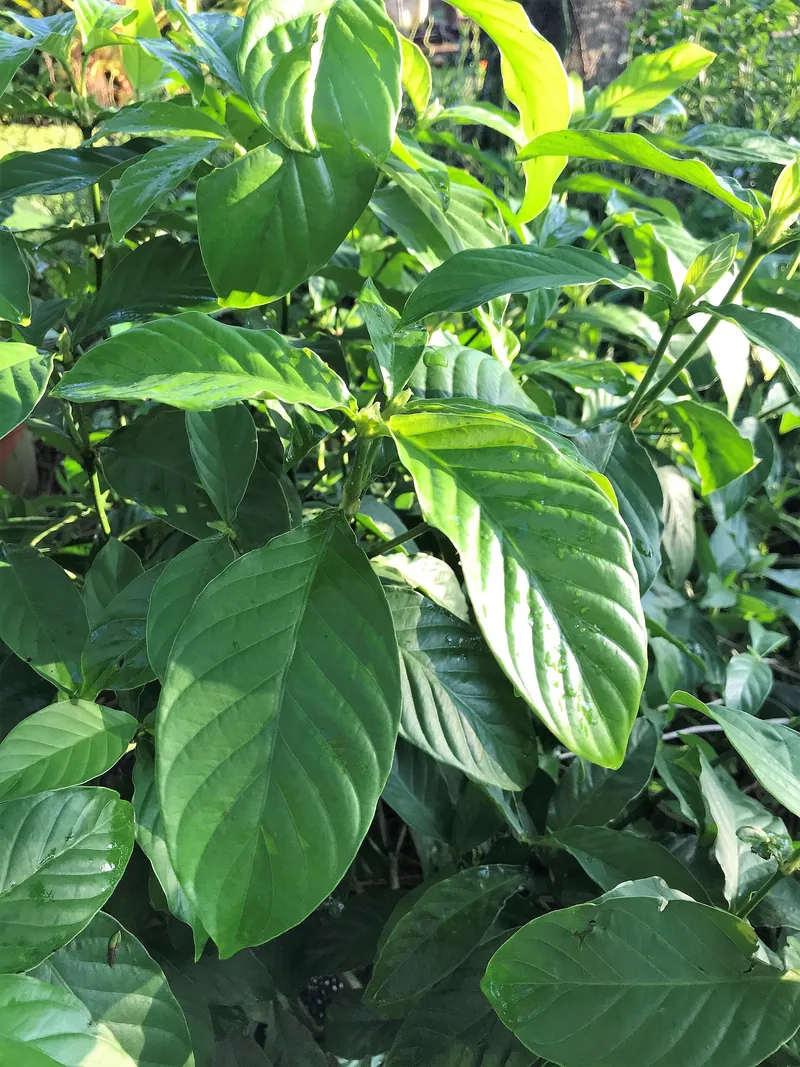
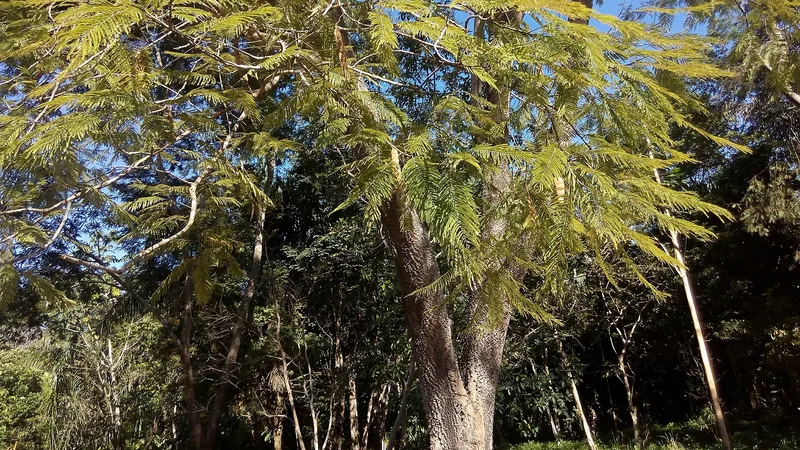
DMT-bearing leaf in ayahuasca preparations
- Molecular relevance
- N,N-DMT

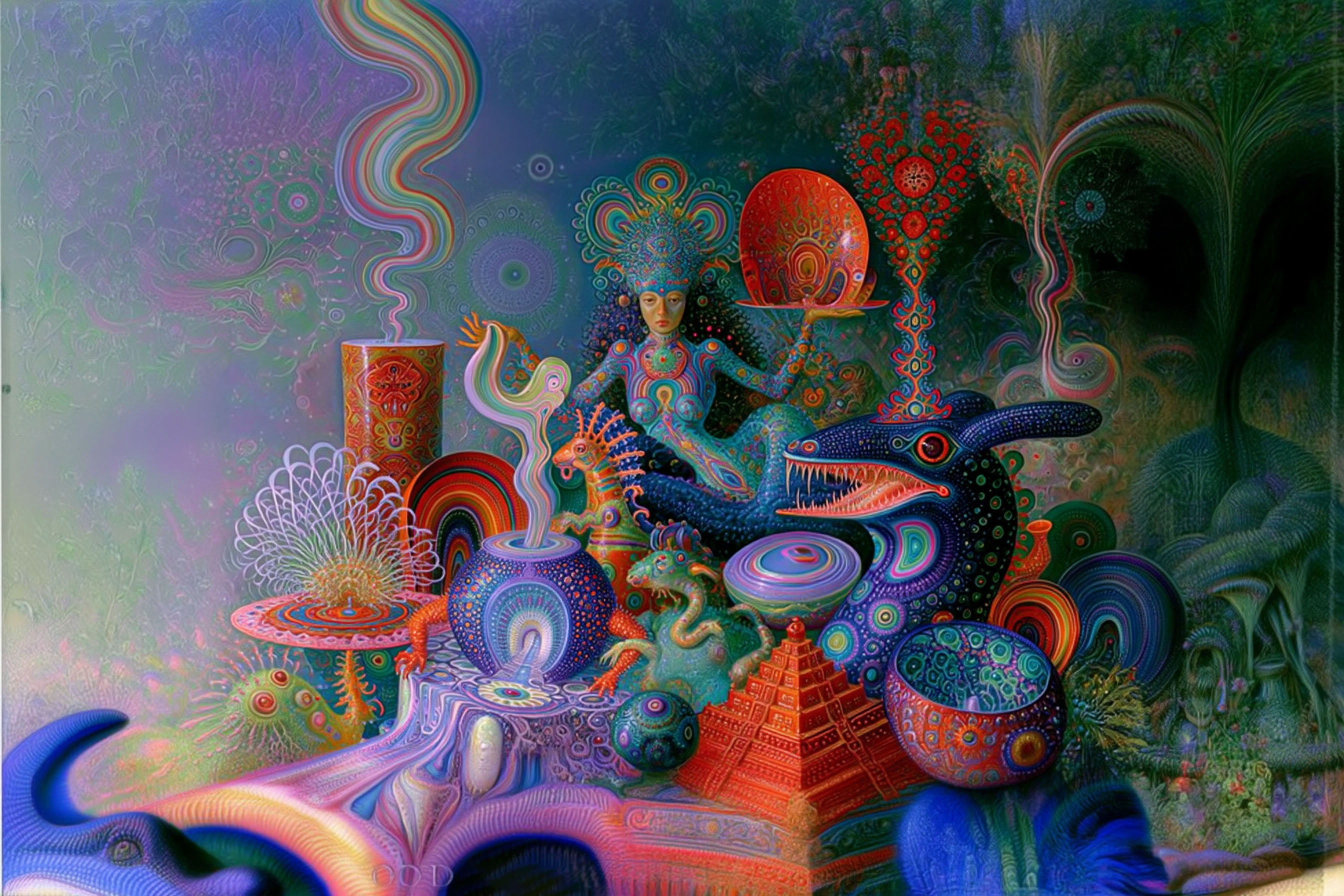
Psychonautic DMT is a complex organised around the exploration of powerful and remarkably immersive states of consciousness. Researchers and psychonautic explorers orientate around persistent questions of what the nature of such experiences reveals about the mind, brain and nature of reality.
Contents
The principal molecule of intrigue is N,N-dimethyltryptamine, whose architectures and presences have become objects of phenomenological and neuroscientific research. 5-MeO-DMT supplies additional and complementary inquiries around 'non-dual' states. Extended administration, commonly called DMTx or DMT-X, now allows researchers to investigate N,N-DMT experiences over longer periods.
The Entheocene significance lies in the possibility that disciplined engagement with these states could contribute to human learning and cultural adaptation.
| Molecule | Research emphasis | Distinction relevant to this complex |
|---|---|---|
| N,N-DMT | Immersive environments, complex imagery, perceived agency and communication; bolus and extended-infusion research | The principal molecule in the entity/realm and DMTx studies discussed here |
| 5-MeO-DMT | Disruption of embodied and narrative selfhood, intense affect, nondual or minimally differentiated experience | A distinct serotonergic compound; its profile includes strong 5-HT1A affinity as well as 5-HT2A activity, and needs its own research beyond N,N-DMT findings |

Sources: Barker (2018); Ermakova et al. (2022). The comparison identifies research emphases; experiences vary.
Both compounds are serotonergic tryptamines, but their receptor profiles and typical experiential emphases differ. Throughout this article, unqualified DMT means N,N-DMT. Extended N,N-DMT findings are kept apart from 5-MeO-DMT.
DMT was synthesised in 1931 and its human psychoactivity investigated in the 1950s (Barker, 2018). Terence McKenna subsequently gave the inhabited DMT environment a prominent place in psychedelic discourse. Speaking publicly from the early 1980s, he described smoking DMT as a fifteen-second passage into a domed, curved 'space' he nicknamed the Merry-Go-Raum, populated by entities he called self-transforming machine elves that seemed to cheer the traveller's arrival and to press a single instruction — do what we are doing — while emitting a visible, beheld language (McKenna, 1982). He treated the experience less as intoxication than as a problem of communication and knowledge, and returned repeatedly to the claim that its contents were 'un-Englishable' — genuinely novel information that the monkey mind could not pour meaning over. His account also carried a caution that later research would echo: the terror of the state, he argued, was not incidental but a mark of its reality (McKenna, 1982; McKenna, 1991).
Concurrently, Gracie and Zarkov's 1980s writings gave a first-person account of a visible-language encounter (Gracie and Zarkov, 1985). Peter Meyer's 1993 essay, 'Apparent Communication with Discarnate Entities Induced by Dimethyltryptamine', was the first publication to describe such contact in detail and to weigh competing interpretations of its source, offering eight candidate readings from elaborate hallucination to genuinely independent beings (Meyer, 1992). Meyer later assembled a corpus of 340 trip reports, of which about two-thirds describe entities experienced as existing independently of the observer, and proposed that consistency across many independent accounts is itself a kind of evidence (Meyer, n.d.; Meyer, 2015). His work moved the entity question from anecdote toward a problem with a method attached.
Jim DeKorne's Psychedelic Shamanism brought practical ethnobotanical knowledge into conversation with the imaginal world and the structure of psyche. His work with The Entheogen Review also belongs to the exchange of reports and botanical information through which independent inquiry developed (Montagne, 1994). The book's account of entities and shamanic realities made interpretation part of that inquiry (DeKorne, 2011).
Callaway's 1988 paper proposed a biochemical relationship between endogenous tryptamine derivatives and dream visions (Callaway, 198890064-3)).
Strassman and colleagues' 1990s intravenous studies supplied controlled dose–response observations of rapidly developing, intense subjective effects (Strassman et al., 1994). Strassman's widely read account of those sessions reported that volunteers frequently met apparently autonomous nonhuman presences under clinical conditions, which carried entity reports from the underground into published medicine (Strassman, 2001). Together, these approaches made the relationship between unusual experience and neurochemistry experimentally addressable.
Andrew Gallimore's publications connect computational neuroscience with the interpretation of DMT worlds. His 2013 paper considered autonomous structures of psyche alongside external-reality hypotheses. Alien Information Theory (2019) and Reality Switch Technologies (2022) develop more explicit proposals concerning informational realities and the brain's capacity to construct or access different experiential worlds (Gallimore, 2013; 2019; 2022).
In 2016, Gallimore and Rick Strassman proposed using target-controlled intravenous infusion to prolong an immersive DMT state. Their paper modelled delivery using pharmacokinetic data and methods developed for anaesthesia. It supplied a technical basis for sustained exploration, ahead of any trial (Gallimore and Strassman, 2016).
The Imperial College programme subsequently tested bolus-plus-constant-infusion regimens in eleven healthy volunteers. Subjective effects could be maintained during thirty-minute sessions; intensity plateaued despite rising plasma concentrations, suggesting acute psychological tolerance. This demonstrated the feasibility of extended administration under the study conditions (Luan et al., 2024). The protocol developed the extended-state approach without implementing the original target-controlled model unchanged.
| Study | Design and contribution | Relevance to extended exploration |
|---|---|---|
| Vogt et al. (2023) | Randomised placebo-controlled crossover study in 27 healthy participants; compared infusion alone with bolus-plus-infusion. Subjective effects stabilised during continued administration; boluses produced greater initial intensity and anxiety | Demonstrates that the manner of entering a sustained state changes its experiential profile |
| Erne et al. (2025) | Placebo-controlled crossover study in 22 participants, including 120-minute infusions and a separate participant-guided titration session. Effects were dose-dependent, with moderate acute tolerance | Establishes an experimental basis for participant involvement in adjusting intensity; control of specific content is unestablished |
| van der Heijden et al. (2025) | Randomised placebo-controlled study of six-hour infusions in 29 healthy participants, producing mild psychedelic effects at the studied exposures | Demonstrates prolonged administration; six hours of confirmed immersive entity/realm experience is a further claim |
Sources: Vogt et al. (2023); Erne et al. (2025); van der Heijden et al. (2025).
The Eleusis Mind project brings extended-state exploration into a contemporary facilitated setting. Its public programme combines psychedelic immersion, preparation and integration; its listed medical and research team includes Andrew Gallimore, Carl Hayden Smith and Chris Timmermann. These are the project's own descriptions of its programme and affiliations (Eleusis, n.d.a; n.d.b). Alongside such institutions, a large online corpus of trip reports and interviews keeps realms and entities a live subject for researchers, explorers, psychologists and neuroscientists; the content analyses discussed in §04 draw much of their material from exactly this circulation.
DMT induces highly organised spaces that appear higher-dimensional or 'more real than reality' to participants, who describe spatial relations or transformations that exceed their ordinary ability to visualise or reconstruct them. These are syntropic realms — chambers and environments of tessellating, saturated colour and often awe-inspiring design, ranging from the temple-like to the hyper-futuristic. McKenna put the impression at its strongest:
a universe of active intelligence that is transhuman, hyper-dimensional, and extremely alienTerence McKenna (1982)
In Michael, Luke and Robinson's naturalistic field study, one participant described "Like that experience of a universe folding and unfolding"; another called it "Very sci-fi" (GR and FF; Michael, Luke and Robinson, 2021, Results), and Lawrence and colleagues' content analysis found geometry, alternative environments, rooms and tunnels alongside bodily and auditory phenomena (Lawrence et al., 2022). Meyer's corpus makes the same point in the plainer idiom of first encounter, where the environments arrive already built — architectural, solid and often industrial:
walking from a dark night into a brightly lit casinoDMT trip-report corpus, report #3
a complex scaffold of constantly morphing angular prisms shimmering with coloursreport #40
a large cube of light made of hundreds of smaller cubesreport #52
At the far end of the range the environments open into entire cities, and their coherence feeds directly into the ontological conviction discussed below. One report describes being flown at speed through
Multidimensional, jewel-faceted, hard and immaterial palacesreport #338
— geometrical, tentacular structures assembled and dismantled faster than memory can hold, a blue humanoid raising a hand in greeting, and a central fountain from which data, or new test-tube universes, streamed in ultraviolet froth. The author insisted this was no projection of his own mind but a nonhuman reality, took it for an ideal city that earthly cities only crudely echo, and came away suspecting its inhabitants of having built our own universe — to play with us, or to teach us.
The material is self-selected and retrospective, but it establishes that inhabited, constructed environments are substantial and consistent components of contemporary testimony (Meyer, n.d.).
Entity encounters introduce a peculiar relational aspect to the experience. Communication is repeatedly described as a direct transfer of meaning, without speech — an early report captures the blending of sense and message:
They sang/I saw/read/felt/heardGracie and Zarkov (1985)
Across Meyer's corpus of 340 reports, roughly two-thirds describe beings apprehended as existing independently of the observer, frequently attentive to the traveller and evidently trying to show or tell them something. The beings welcome, they instruct, and they are felt to exist on their own account:
thousands of entities bursting out, welcoming mereport #11
almost as if to try and tell me to do what they were doingreport #20
this face seemed to exist completely independent of myselfreport #9
The instruction in report #20 — to "do what they were doing" — is, uncannily, the same imperative McKenna reported from the machine elves.
What is communicated often arrives as something seen: a visible, symbolic language that the traveller can read but cannot translate. The glyphs present themselves as meaningful, even addressed to the viewer, yet slip away before they resolve:
deciphering mysto-glyphs for eternityreport #115
hieroglyphs of arcane and hauntingly familiar aspects, but not quite decipherablereport #340
Report #340 holds onto the ache of the near-miss — luminous spheres descending through veils and passing on, leaving the viewer grasping after a meaning that never quite lands. This is McKenna's 'un-Englishable' language met first-hand: information that offers itself as decipherable and withholds itself in the same instant.
A further recurrent and strange note is familiarity: travellers describe being welcomed, even welcomed 'back', as though returning somewhere already known —
now I remember, this is where I have been beforereport #18
— a feature any theory of the state has to explain rather than explain away, and the one on which Meyer builds an entire hypothesis (§05) (Meyer, n.d.).
Among 2,561 respondents selected for having experienced a memorable DMT entity encounter, 69% reported receiving a message, task or insight. Seventy-two per cent believed the entity continued to exist afterwards, and 80% reported a change in their fundamental conception of reality (Davis et al., 2020). In the companion analysis of the naturalistic study, participant MS stated: "That's what it taught me, the impermanence of everything" (Michael, Luke and Robinson, 2023, Results). Meyer proposed a deliberately public test for such claims: "the criterion of 'real' is intersubjective verifiability" — a couple of hundred broadly consistent independent reports are not dismissed as easily as one (Meyer, 2015).
The neuroscience of self supplies one account of why these states carry such weight. The default mode network (DMN), a set of midline regions coherent at rest, is associated with self-referential processing, mind-wandering and autobiographical memory; across psychedelics there is consistent acute disruption of within-DMN connectivity and increased communication between normally segregated networks (Gattuso et al., 2023). DMT's own EEG-fMRI signature shows the same desegregation and a flattening of the cortical hierarchy (Timmermann et al., 2023). When the machinery that maintains a bounded, continuous self is loosened, self and world can come apart, and what is disclosed can arrive with the full authority of perception.
Theories of psychedelic cognition formalise this. REBUS proposes reduced precision of high-level beliefs, allowing previously constrained information to exert greater influence (Carhart-Harris and Friston, 2019). ALBUS additionally considers conditions under which beliefs or experiential constructions become strengthened (Safron et al., 2025). These are theoretical frameworks, still short of a demonstrated neural explanation of ontological conviction. Their corollary matters for §06: the same loosening that permits insight can also unseat a worldview faster than it can be rebuilt.
The following discussion explores whether the experienced pedagogy of these states can contribute to learning, and how such learning might become cultural inheritance.
Callaway proposed that endogenous tryptamine derivatives might participate in dream imagery (Callaway, 198890064-3)). Gallimore developed the most detailed neurobiological model of the DMT world, arguing that the brain continuously builds the world that appears to consciousness, largely from intrinsic thalamocortical activity, and that serotonin normally holds the system in its 'consensus' world-building mode. On his account DMT displaces serotonin and shifts the same machinery into a parallel, equally structured mode that builds the 'alien' world — which is why, he suggests, the DMT realms are so consistent across people and so unlike dreams (Gallimore, 2013, pp. 480–482, 492–494). He speculates that DMT may be an 'ancestral neuromodulator' once secreted endogenously, concluding that the worlds it opens may be "a deep, long-forgotten part of us" rather than somewhere external. Crucially for what follows, Gallimore himself entertains a Jungian reading in which those worlds are the informational structure of autonomous psychic complexes — fragments of psyche that, if confronted, would appear entirely alien and other (Gallimore, 2013, pp. 494–495).
Not everyone accepts the ancestral-neuromodulator step. Meyer, arguing from a frankly idealist position, objects that natural selection would gain nothing from a second world-building capacity with no survival value in the consensus world, and instead treats the DMT entities as genuinely independent souls (Meyer, 2015). In place of Gallimore's evolutionary story he offers a developmental one, and it is aimed squarely at the phenomenology's strangest feature — that the alien realm feels known. Meyer proposes that each of us once inhabited the DMT World directly: from roughly the second trimester the foetal thalamocortical system builds that world under DMT, and only across the first year of life does serotonin displace it as the dominant neuromodulator and the consensus world take over. On this reading the DMT flash is a return to the brain-state of the womb and earliest infancy — which is why it can feel at once utterly alien and uncannily familiar, and why travellers so often report being welcomed 'back'. The proposal is avowedly metaphysical, resting on an idealist 'Primordial Mind' and offered for consideration rather than asserted; but it is striking how often naive voyagers reach unprompted for the same intuition, that this is the place we were before we were born:
probably where they are before you are bornDMT trip-report corpus, report #15
The realist and the immanent readings mark the poles of the field. This essay keeps to the immanent one — Meyer's developmental account and Gallimore's autonomous-complexes reading are its idealist and psychological neighbours — while noting that the phenomenology underdetermines the choice.
Hobson's account of REM sleep proposes a virtual model of the world that contributes to the development and maintenance of waking consciousness (Hobson, 2009). Such a model need not reproduce waking experience exactly to be useful. A simulated environment can vary relationships and consequences, permit unusual associations, or rehearse situations that have not occurred. Its usefulness depends on what can subsequently be retained or applied.
Experimental work connects dream content with problem-solving directly. Konkoly and colleagues used sound cues associated with unsolved puzzles to influence dreams during REM sleep. Cueing increased puzzle-related dream content, and in a post-hoc analysis participants whose dreams responded more strongly to cueing also showed greater subsequent benefit in solving the corresponding puzzles (Konkoly et al., 2026). This is a qualified experimental result, not evidence for DMT-mediated dreaming, but it establishes a concrete route for studying internally generated experiences as contributors to later cognition. Gandy and colleagues bring dreams, hypnagogia and psychedelics into a common discussion of scientific creativity and insight, considering conditions under which unusual experiences could support discovery (Gandy et al., 2022).
The hypothesis that emerges across these researchers' work is that DMT may expose generative activity in a form accessible to a conscious participant: environments, transformations and interactions. An entity demonstrating a multidimensional geometric object could be experienced as an instructor while the encounter performs a cognitive function analogous to a conscious exposure to subconscious or generative processing. The apparent autonomy of these realms and entities may reflect the participant's position within the event: undergoing exposure to operant layers without conscious access to their construction. Ordinary insight already provides a limited analogy. Jung-Beeman and colleagues identified neural differences between verbal problems solved with and without reported insight, including activity associated with connecting distantly related information (Jung-Beeman et al., 2004). A solution may arrive suddenly despite preceding processing outside awareness. Extending that principle to a dialogue or immersive demonstration is a hypothesis about the form in which generative cognition becomes available.
Ancient accounts of civilisation represent practical and institutional capacities as received from divine beings. McKenna's Food of the Gods places mushroom use within a speculative account of human cognitive evolution (McKenna, 1992). Its quasi-Lamarckian vulnerability arises wherever capacities acquired during psychedelic experience are treated as directly heritable biological changes. Acquiring a new association or mode of attention does not itself provide a mechanism for transmitting that acquisition genetically. Cultural inheritance provides a more direct route: an image, song, insight or practice can be remembered, taught, imitated and revised across generations. McKenna himself gestured this way when he suggested that the visible-language faculty glimpsed on DMT might, given ten thousand years of attention, "fall right into the mainstream of cultural evolution" and become a cultural convenience much as mathematics has (McKenna, 1982). The argument then concerns the contribution of altered states to cumulative culture, without requiring acquired visions to enter the germline. Rodríguez Arce and Winkelman discuss social learning, niche construction and gene–culture feedback, including an explicitly non-Lamarckian Baldwin-effect pathway (Rodríguez Arce and Winkelman, 2021). This revision preserves a consequential part of McKenna's theory: repeated encounters with apparent instruction could contribute to cultural innovation even if they did not cause the biological transition from ape to human. Their evolutionary relevance would follow through the practices, relationships and environments that people subsequently created.
Chimeric deities and tutelary beings would then be considered partly through the forms in which generative cognition was experienced and authorised. Jaynes's bicameral-mind hypothesis offers a related account of directive cognition experienced as authoritative voices (Jaynes, 1976). Its relevance here is the possibility that instruction can be received as another's utterance before it is recognised as psychological activity. A compelling encounter could provide an unfamiliar image, instruction or norm together with a powerful conviction of its significance; if retained and transmitted, that material could become part of a community's practices and accounts of sacred origin. 'The Anunnaki are us' is a formulation for the possibility that apparently discarnate pedagogical beings are dissociated or relatively autonomous aspects of psyche. 'Us' refers to psychological activity extending beyond the autobiographical self. An operant vision-logic layer names the proposed capacity to apprehend relations through images, transformations and dialogue without conscious access to their production. This is a functional hypothesis, rather than an identified anatomical layer or a clinical diagnosis. It is notable that both McKenna and Gallimore, from opposite ends of the field, arrived at versions of the same intuition — McKenna that the most alien thing in the cosmos is the estranged human soul, which disguises itself as an extraterrestrial so as not to alarm us (McKenna, 1982), and Gallimore that the alien worlds are a long-forgotten part of ourselves. McKenna also explicitly declined the literal ancient-astronaut reading, that visitors 'taught us to measure', which is precisely the move the immanent hypothesis generalises.
The dynamic is still observable in first-person reports. One contemporary voyager found himself in a stepped, Teotihuacan-like temple among beings who
seemed to have been waiting for mereport #97
— beings he was certain were Hindu deities, until a poster of Egyptian figures later jogged his memory and re-labelled them. The vision came first and the pantheon was fitted to it afterwards, which is much how a private encounter hardens into a shared god.
Kopenawa describes the arrival of the xapiri: "Then they slowly come down on their mirrors from their houses fixed to the sky's chest, singing all the while" (Kopenawa and Albert, 2013, chapter 3). Songs and encounters belong within the transmission of knowledge. Lewis-Williams and Dowson's neuropsychological interpretation of Upper Palaeolithic art connected internally generated visual phenomena with the production of geometric and figurative imagery (Lewis-Williams and Dowson, 1988). Their proposal supplies a precedent for relating visionary processes to early image-making. It cannot date the first visionary experience or establish DMT as the cause of Palaeolithic art. 'Simultaneous emergence' is consequently a hypothesis about their mutual development, rather than a demonstrated single event.
In his 2013 model, Gallimore speculates that ancestral cyclic DMT activity supported a distinct repertoire of world construction, with later changes restricting access (Gallimore, 2013, pp. 489–494). The scientifically useful extension concerns regulation: access might depend on synthesis, degradation, receptor distribution, cellular location and the wider state of neural systems. A capacity could become less available through altered coordination without requiring the disappearance of its chemical components.
Wright and Gynn propose that changes from an ancestral fruit-rich dietary ecology altered neurochemistry and cerebral functioning, producing what they interpret as a biological basis for traditions of a human Fall (Wright and Gynn, 2014). Their account includes claims about hemispheric imbalance that have not been established by comparative neurobiology. Its productive contribution here is the question it raises: could a change in dietary and ecological inputs alter the availability of particular modes of consciousness?
There is a biological basis for asking whether precursor availability matters. Fernstrom and Wurtman demonstrated in rats that changes in plasma tryptophan could alter brain serotonin content (Fernstrom and Wurtman, 1971). This establishes sensitivity of one relevant pathway to precursor availability. It does not specify how a prehistoric diet affected DMT. A proposed shift towards serotonin and melatonin would concern the regulation of existing pathways: melatonin has an evolutionary history extending far beyond humans, and its synthesis commonly proceeds through serotonin (Zhao et al., 2019). Agriculture also produced measurable changes in human conditions; an integrated skeletal and paleogenomic study found evidence consistent with relatively reduced health among early European farmers, although some estimates weakened after adjustment for genetic ancestry (Marciniak et al., 2022). This supports attention to physiological costs of particular subsistence transitions; it provides no direct measurement of ancient neurotransmission.
The resulting "Fall" would concern a narrowing of accessible states and recognised ways of knowing, potentially involving both metabolism and social organisation. This formulation gives the dietary hypothesis explanatory work to do while preserving the possibility that much of the change was institutional rather than a loss of neural capacity. The persistence of visionary practices, and the ability of contemporary people to enter immersive states, would be compatible with restricted access rather than irreversible disappearance.
An encounter generates or reorganises experience; apparent instruction gives some of that material salience; subsequent practice determines what can be retained; and social transmission makes a contribution available to others. Culture can influence the encounter while the encounter also changes culture. This reciprocal account accommodates the persistence of otherness and the emergence of novelty without assuming that every unfamiliar experience carries useful instruction. It makes the pedagogical space a researchable proposition about learning and transmission.
Neuroplasticity research supplies a relevant mechanism. Nardou and colleagues found that several psychedelics reopened a social reward learning critical period in mice (Nardou et al., 2023). Such results suggest that altered conditions of learning can outlast acute experience. They do not show that a particular teaching is correct or that human societies will become more adaptive. What is potentially changed is receptivity to learning; the direction depends on what is encountered and reinforced.
The pedagogical reading has an obligatory counterweight, and recent work supplies it directly. Argyri and colleagues interviewed twenty-six people who experienced lasting existential distress after a psychedelic experience, part of a larger project in which around a third of 608 respondents reported difficulties lasting more than a year and half reported protracted 'ontological challenges' — disturbances in how they understood reality and existence (Argyri et al., 2025). The same loosening of high-level belief that can deliver insight can also produce ontological shock: participants described existential struggle, derealisation, a collapse of the sense of self, and what Grof called 'no-exit' states. One began an atheist and emerged, after months of turmoil, a Buddhist nun; the trajectory is neither pathology nor enlightenment but something the authors, following Brouwer and Carhart-Harris, call a pivotal mental state — hyper-plastic and outcome-agnostic, tending toward growth or toward trauma depending on what follows. What made the difference in recovery was rarely a further dose. It was grounding: return to the body, community that could hear the experience without judgement, and interpretive frameworks — spiritual, scientific or otherwise — that renarrated groundlessness as a passage rather than a verdict.
Read against §04, this is the mechanism's shadow side. If DMN disruption and relaxed priors are what let the realms arrive with the authority of perception, they are also what can leave a person unable to re-ground afterward. McKenna's intuition that terror is 'the stamp of validity' looks, in this light, less like bravado than an early description of ontological shock — and an argument for the integration that his generation largely lacked. It also places a pointed question against the commercial extended-state settings of §03: Argyri and colleagues note that ungrounded people are unusually vulnerable to trusting authority and adopting frameworks uncritically, and that codependency, spiritual grandiosity and outright abuse recur in under-held psychedelic cultures. Any Entheocene worthy of the name has to build the grounding infrastructure before it scales the access.
An encounter generates or reorganises experience; apparent instruction gives some of that material salience; subsequent practice determines what can be retained; and social transmission makes a contribution available to others. Culture can influence the encounter while the encounter also changes culture. This reciprocal account accommodates the persistence of otherness and the emergence of novelty without assuming that every unfamiliar experience carries useful instruction. It makes the pedagogical space a researchable proposition about learning and transmission.
Winkelman's recent theoretical account considers psychedelics in relation to humanity's future evolution, discussing plasticity, sociality and adaptive possibilities (Winkelman, 2026). Ross connects psychedelic neuroscience with artificial intelligence, proposing ways in which AI might support human creativity through processes analogous to those discussed in psychedelic research (Ross, 2025). These publications establish a current scholarly discussion of future adaptation and AI-related creativity; they do not yet demonstrate that psychedelic use improves adaptation to AI-driven social change.
McKenna framed the recovery of these states as an 'archaic revival' — a deliberate return to ecstatic, shamanic modes of knowing that literate, dominator societies had marginalised (McKenna, 1991). The Entheocene, as proposed here, is the disciplined version of that idea: not a retreat into the archaic but a re-opening of access to the pedagogical space under standards of preparation, integration and evaluation, with the extended-state programmes and the Eleusis Mind project as its uneasy standard-bearers. Carl Hayden Smith is a useful exemplar of the accompanying philosophy. A long-term participant in Imperial's DMT research and, by his own account, an early subject of the extended-state work, Smith advances hyperhumanism as a counter-position to transhumanism: where transhumanism outsources human capacities to machines, hyperhumanism treats technology — including the entheogenic 'reality switch' — as a means of developing innate human capacities rather than replacing them, with 'context engineering' as the discipline of designing the conditions under which such development happens (Smith and Castañeda, 2020; Smith and Lundström, 2024; Smith, n.d.b; n.d.d). It is an adaptive, life-positive stance offered in response to the adaptive stress of technological acceleration
An Entheocene is a culture in which liminal experiences are explicitly and consciously recgonised to have a role in contribution to collective knowledge and collective wisdom. Art, therapy, science and ceremonial traditions all evaluate those contributions from different viewpoints but all share common space or organically arising 'interdiscourse' within liminality. An Entheocene approach preserves detailed accounts, investigates mechanisms and evaluates what becomes possible through the encounter - a development toward acknowledgement of the selective, adaptive and creative advantages of liminal space.
DMT-bearing leaf in ayahuasca preparations
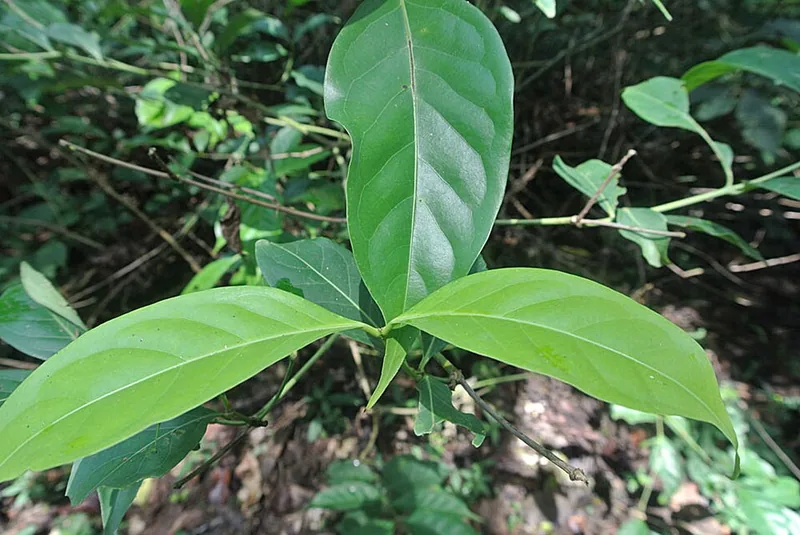
DMT-bearing admixture in yagé/ayahuasca traditions

Northeastern Brazilian jurema traditions
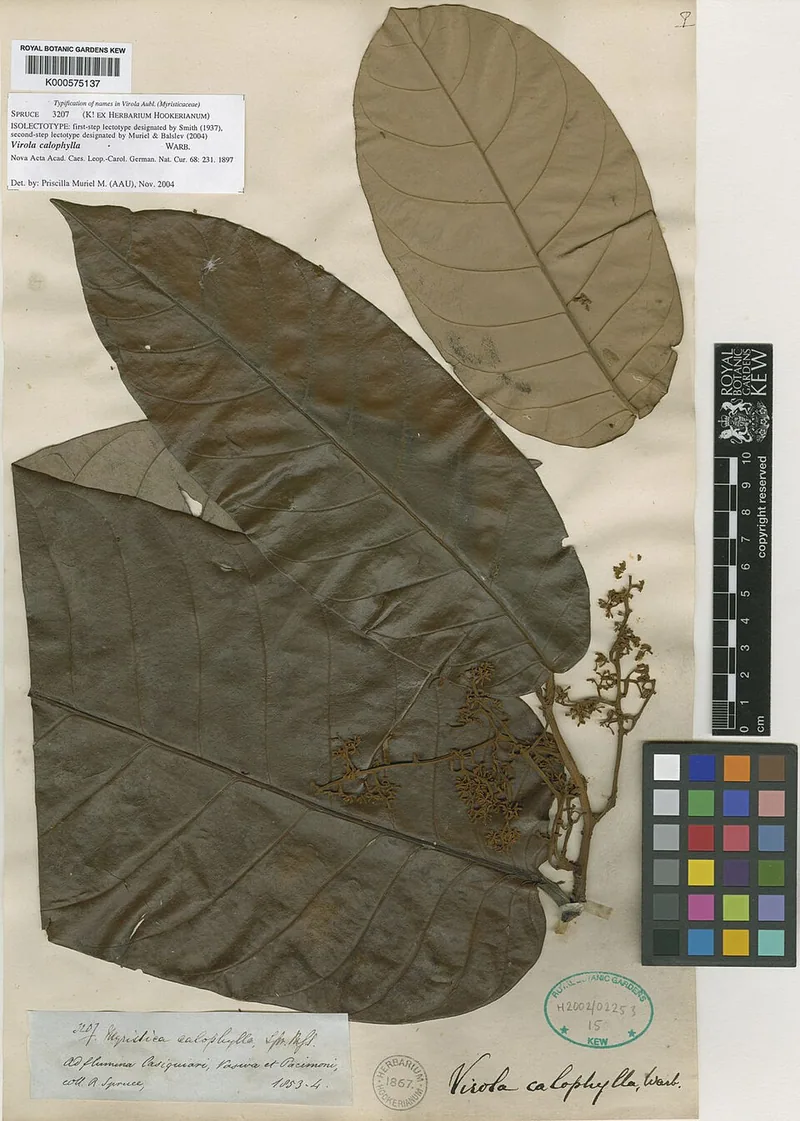
Amazonian and Orinocan bark-exudate snuff traditions
Yopo/cohoba and vilca/cebil snuff traditions

DMT has several histories. South American traditions of psychoactive snuffing and plant preparation — along with mythologies and shamanic traditions involving realms and discarnate entities — precede Western chemistry by centuries or millennia. Archaeological research at Chavín de Huántar, a Peruvian ceremonial centre active approximately 1200–400 BCE, identifies vilca and tobacco in ritual implements. The findings place psychoactive plant use within organised ceremonial and political life (Rick et al., 2025). A roughly thousand-year-old ritual bundle from Bolivia contained DMT, harmine, bufotenine and coca-related compounds, demonstrating botanical knowledge and access to plants from different ecological regions. Their presence together establishes an assemblage; it does not identify a particular combined recipe (Miller et al., 2019).
Snuff is the primordial delivery system, and it is chemically distinct from smoked DMT. Torres traces a deep Andean lineage of tryptamine snuffs prepared from Anadenanthera seeds — yopo and cohoba in the north, vilca and cebil further south — whose principal alkaloid is bufotenine (5-OH-DMT) (Torres, 2019). The material record is eloquent about how old this is: carved stone snuff mortars and trays, elaborate bone and wood snuffing tubes, and, at Chavín, tenon-heads sculpted mid-transformation with mucus streaming from the nose — the physiological signature of insufflated snuff rendered in stone. Later North Andean goldworking traditions, Muisca and Quimbaya among them, cast snuff trays in precious metal, marking the practice as central to these societies (Torres, 2019). The lineage matters for this complex precisely because it warns against flattening it: a bufotenine-rich snuff, an MAOI-potentiated brew and a lungful of vaporised N,N-DMT are three different pharmacologies, and the shared word 'DMT' covers three different experiences.
Ethnography establishes that visionary states have been cultivated as occasions of instruction. Among four mestizo practitioners interviewed near Iquitos, Luna documented knowledge attributed to 'plant teachers', acquired through apprenticeship, prescribed diets and isolation. Healing songs, diagnosis and relations with helping spirits were parts of an organised learning practice (Luna, 198490036-9)). For millennia such experiences have been integrated into human groups, raising the question of what selective advantages, if any, such molecules and their associated plants may have conferred.
Banisteriopsis caapi commonly supplies β-carbolines in ayahuasca, allowing DMT-bearing plant decoctions to be orally active. Sonoran Desert toad secretion belongs to a separate animal-derived contemporary 5-MeO-DMT context; synthetic 5-MeO-DMT is also used in research and practice (Barker, 2018; Torres, 2019; Ermakova et al., 2022).