Mirante, D. (ed.) (2026) Mazatec Divinatory Medicine Complex. Entheocene, version 1.0. Available at: https://entheocene.com/complex-mazatec-divinatory-medicine.html (Accessed: 17 October 2026).
DOI: not yet minted.
Introduction
In the Sierra Mazateca, visionary medicine is several plants and a single institution. Mushrooms called ndi xi tjo—“little ones that emerge”—may speak as saints, children or divine persons; xka Pastora is approached as a quieter Marian presence; seeds of the Virgin open another route to knowledge; tobacco cleans, protects, treats and addresses forces that pharmacology alone leaves unnamed. Their meeting-place is the velada: a nocturnal vigil in which darkness, paired distribution, prayer, abstinence, Catholic images, copal, candlelight and the improvised-poetic word of a chjota chjine turn altered perception toward diagnosis, lost persons, conflict, fate and repair. This page therefore follows a repertoire of medicines, each taken on its own, governed by one divinatory institution. It also follows what happened when that institution was recorded, published, toured, chemically isolated and transformed into a global psychedelic origin story (Munn, 1973; Faudree, 2015; Fagetti and Mercadillo, 2022).
Contents
01Constituents & preparation
Deep Time
REGIONALColonial mushroom and ololiuhqui recordssixteenth–seventeenth centuries
WITNESSEDMazatec mushroom ceremony1938
PUBLISHEDVelada / global circulation1957 onward
The common botanical architecture
The 4 plants this complex is assembled from. Each holds its own record; the account of what it does, and of how this tradition uses it, belongs there.
The medicines form a repertoire, each taken on its own. A healer may choose among mushrooms, Salvia divinorum and morning-glory seeds according to season, strength, diagnosis, lineage and availability, while tobacco can operate across visionary and ordinary therapeutic settings. Local categories cut across Western divisions between “drug,” “medicine,” “sacrament” and “person.”
Defining logic
A night-centred complex of divination and healing in which sentient medicines disclose causes and possible futures through the disciplined speech, perception and interpretation of a knowledgeable person. Shared form matters more than co-ingestion.
Geographic centre
The Mazatec-speaking region of northern Oaxaca, particularly the highland cloud-forest zone around Huautla de Jiménez, with lowland communities in the Papaloapan basin and displaced communities extending into Puebla, Veracruz and urban Mexico.
Ceremonial unit
The velada, a nocturnal vigil conducted for a concrete need: illness, misfortune, conflict, a missing person or object, uncertainty about travel or work, or the moral-spiritual task described as straightening a person’s path or fate (Minero Ortega, 2022).
Specialist
Chjota chjine (orthographies vary): literally and ethically, “person who knows.” “Shaman” and “curandero/a” are useful translations but can obscure the importance of learned speech, service, abstinence, kinship and accountability.
Role 01 · speaking saints / strongest diviner
Ndi xi tjo — sacred mushrooms
Psilocybe caerulescens, P. mexicana, P. cubensis and other locally distinguished taxa
The name is often glossed “little ones that emerge/sprout”; Spanish devotional names include niños santos. Mazatec classification attends to habitat, season, colour, size, strength and personhood, alongside what botanists call species.
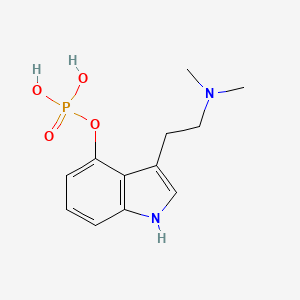
Psilocybin is dephosphorylated to psilocin, a partial agonist whose psychedelic effects depend strongly on 5-HT2A signalling. Baeocystin, norbaeocystin and other tryptamines occur variably, but their contribution in whole fungi remains unsettled (Gotvaldová et al., 2021).
Mushrooms are distributed in pairs, widely interpreted through male–female complementarity. They are eaten in a morally and ritually prepared setting.
Role 02 · quiet Marian diviner / seasonal alternative
Xka Pastora — leaves of the Shepherdess
Salvia divinorum Epling & Játiva · hojas de María · ska/xka María Pastora
An accepted Oaxacan endemic/cultigen in Lamiaceae, propagated mainly by cuttings. The sacred names place the leaf in a Catholic–Mazatec relational field associated with Mary; no pre-Hispanic botanical name is known (POWO, 2026a; Valdés et al., 1983).
Salvinorin A is a neoclerodane diterpene and potent selective κ-opioid-receptor agonist—chemically and pharmacologically unlike serotonergic classic psychedelics (Roth et al., 2002).
Ethnographic use privileges fresh leaves, oral preparations, darkness and quiet. In several accounts it is approached when mushrooms are unavailable or when a gentler, more inward consultation is judged appropriate.
Role 03 · seed oracle / Virgin medicine
Ololiuhqui — semilla de la Virgen
Ipomoea corymbosa (syn. Rivea/Turbina corymbosa) · possibly other morning glories
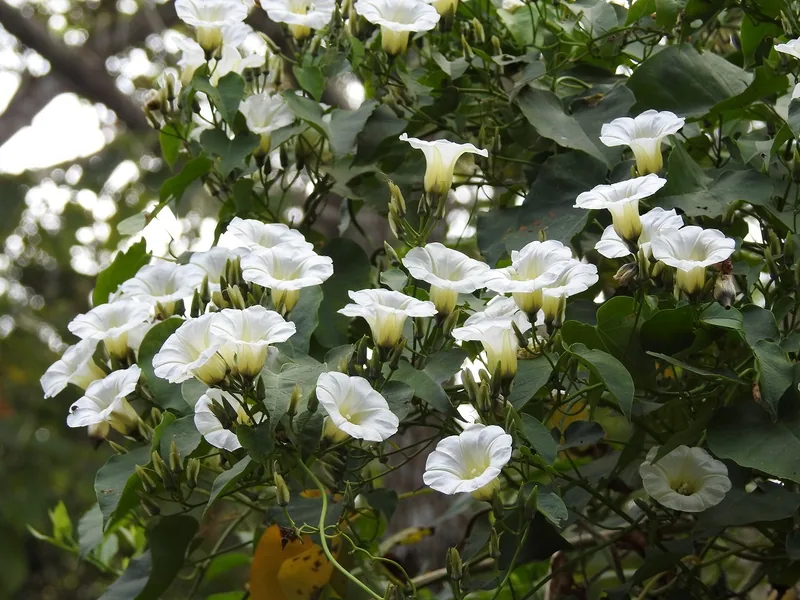
Kew accepts Ipomoea corymbosa; older ethnographies use Rivea corymbosa or Turbina corymbosa. “Ololiuhqui” historically names round seeds and a wider Mesoamerican drug category, spanning more than one species (POWO, 2026b).
Seeds contain ergoline alkaloids including ergine (lysergic acid amide) and lysergic acid hydroxyethylamide, produced through an inherited symbiosis with Periglandula fungi (Hofmann and Tscherter, 1960; Steiner and Leistner, 2012).
Schultes recorded Mazatec reports of seed divination in 1938–39. Direct documentation is thinner than for mushrooms and Salvia; broad Aztec/Nahua histories are a separate record from specifically Mazatec practice.
Role 04 · master medicine / protection / everyday bridge
Piciete — sacred tobacco
Nicotiana tabacum and local forms · tobacco powder, smoke, bundles and washes
A 2025 Huautla study recorded 33 uses and described tobacco as the chief medicinal plant in Mazatec knowledge—evidence that a “psychedelic” index can badly understate its importance (Pelayo-Delgado et al., 2025).
Nicotine acts at nicotinic acetylcholine receptors; dose and route can range from alerting to toxic. Ritual efficacy, however, is also explained through cleansing, protection, diagnosis and relations with sacred owners.
Tobacco may be present without a hallucinogenic medicine and has offices of its own. It joins household therapeutics, divination and the material altar.
Botanical and mycological anchors
Ritual role
Accepted name / scope
Family / order
Range and morphology
Sacred mushrooms
Several Psilocybe spp.; reports most often name P. caerulescens, P. mexicana and P. cubensis, with local identity sometimes unvouchered
Hymenogastraceae / Agaricales
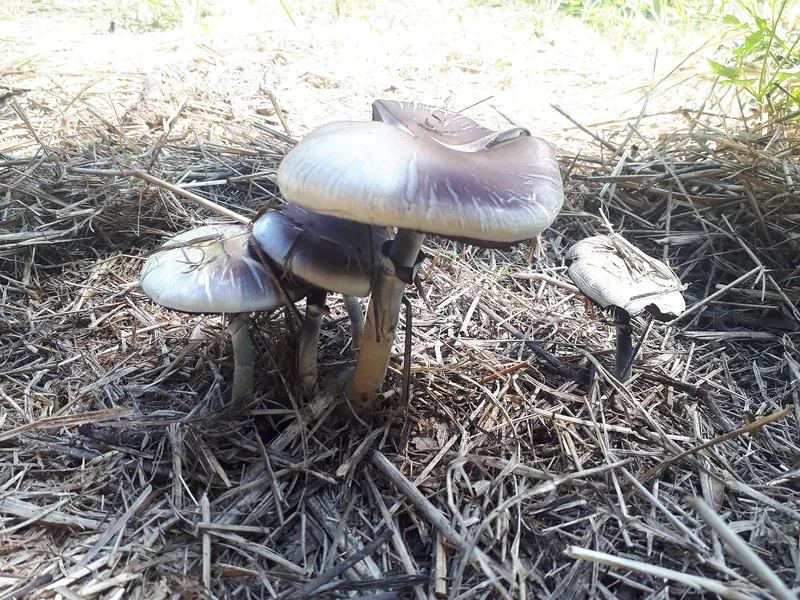
Small gilled basidiomycetes of dung, pasture, disturbed soil or forest substrates depending on species. Many bruise blue through oxidation of psilocin-related compounds. P. mexicana is a current accepted fungal name with its type locality in Oaxaca (Index Fungorum, 2026).
María Pastora
Salvia divinorum Epling & Játiva
Lamiaceae / Lamiales
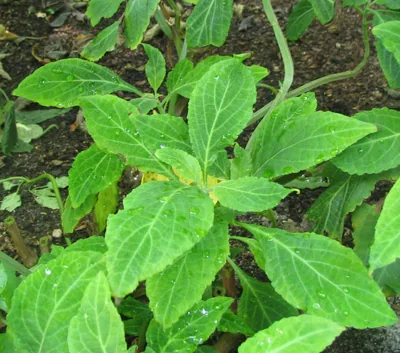
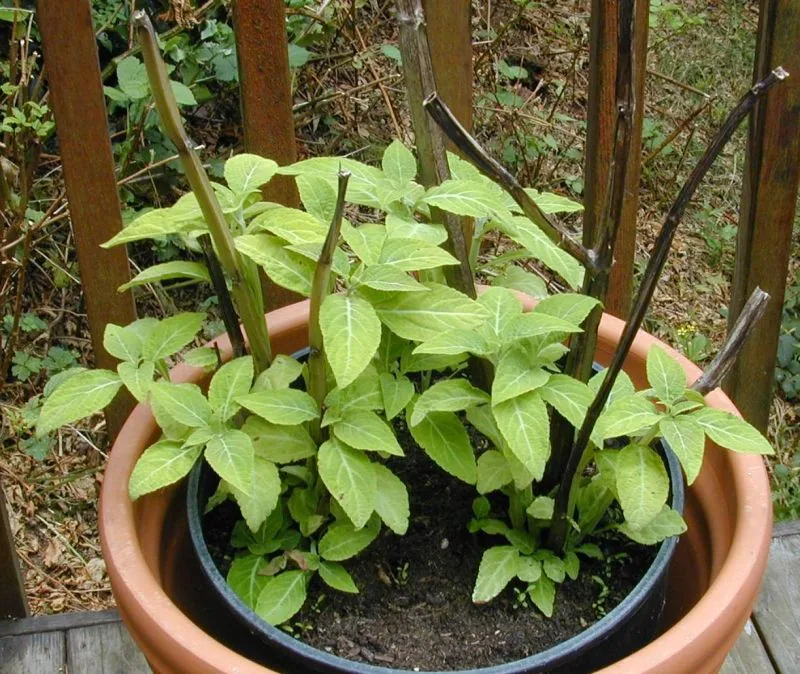
Oaxacan perennial with square hollow stems, opposite ovate leaves and white flowers with purple calyces; rarely sets viable seed and is principally propagated clonally (POWO, 2026a; Casselman et al., 2014).
A woody or perennial twining liana native from Mexico through tropical America, with heart-shaped leaves, clusters of white funnel flowers and small round brown seeds (POWO, 2026b).
A large cultivated annual or short-lived perennial with broad sticky leaves and tubular pink flowers. Centuries of exchange make present distribution a history of cultivation.
Associated compounds
Source
Principal entheogenic compounds
Primary pharmacology
Interpretive limit
Psilocybe mushrooms
Psilocybin, psilocin; variable baeocystin, norbaeocystin, aeruginascin and norpsilocin.
Psilocybin is a prodrug for psilocin; classic psychedelic action is substantially mediated by 5-HT2A receptor agonism.
A chemical assay identifies compounds, and a Mazatec ritual taxon is something more; purified psilocybin leaves out the social presence, paired grammar and speaking agency of ndi xi tjo.
Salvia divinorum
Salvinorin A; salvinorin B and related diterpenoids are far less psychoactive.
High-efficacy κ-opioid receptor agonism; no nitrogen atom and no primary 5-HT2A mechanism (Roth et al., 2002).
Rapid smoked extract use in global markets is pharmacokinetically and culturally distinct from fresh-leaf Mazatec practice.
Ipomoea corymbosa seed–fungus holobiont
Ergine, lysergic acid hydroxyethylamide, ergonovine and related ergolines.
Mixed serotonergic, dopaminergic and adrenergic actions; human pharmacology is much less resolved than for LSD or psilocybin.
Potency and alkaloid profile vary. Nausea, vascular effects and sedation complicate the popular shorthand “natural LSD.”
Nicotiana tabacum
Nicotine, nornicotine, anatabine and related alkaloids.
Nicotinic acetylcholine-receptor agonism with central and autonomic effects; high exposure can be medically dangerous.
The Mazatec plant’s ritual biography is its own, distinct from industrial cigarettes and from nicotine.
Traditional preparation
Published descriptions establish recurrent operations, which vary from healer to healer. The material is consecrated and counted, the room and altar are ordered, participants observe dietary and sexual restrictions, and the medicine is taken after dark under specialist supervision. This dossier describes that grammar; it gives no dosing instructions.
Medicine / operation
Documented form
Ritual rationale
Mushroom pairs
Fresh mushrooms are cleaned, paired and apportioned by the specialist. Some records describe cacao or honey; practices vary by household and season.
Pairing embodies complementarity and social order. Prayer and abstinence make the eater capable of receiving truthful speech.
Fresh Salvia leaves
Leaves may be counted in pairs, passed through copal, rolled for prolonged chewing, or crushed into a water-based preparation; sessions privilege silence and darkness (Valdés et al., 1983).
The Pastora is said to have a quiet voice. The slower oral route and low-stimulation setting create a different encounter from concentrated smoked extracts.
Virgin seeds
Historical sources describe seeds ground and taken in water for divination. Exact plant identity and contemporary frequency require case-by-case evidence (Schultes, 1941).
The preparation is a consultation with a sacred seed medicine, whose chemistry is only one part of it.
Tobacco
Dried powder may be held in the mouth; leaves can be smoked, burned, rubbed, washed or assembled with other ritual materials (Pelayo-Delgado et al., 2025).
Tobacco cleans, tests, protects and directs. Its sensory force and nicotine pharmacology participate in a wider medicine of relation.
Diet / abstinence
Restrictions on sex, alcohol and certain foods may precede and follow a vigil; duration and content vary.
Abstinence is at once bodily preparation, moral contract and protection against contamination or misdirected power.
Calea check: relevant, but not Mazatec core
CHONTAL
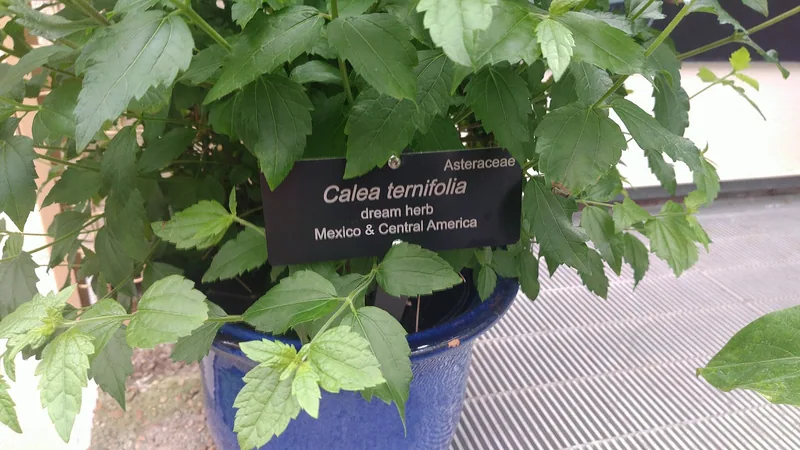
Calea ternifolia Kunth—widely sold under the synonym C. zacatechichi—is documented as a dream-divinatory plant among the Chontal of Oaxaca. The classic human sleep study explicitly makes that attribution (Mayagoitia et al., 1986; Mata et al., 2022).
NOT CORE
Oaxaca holds many ethnobotanical cultures. No strong source located for this dossier establishes Calea as a canonical Mazatec velada medicine. It belongs here as a regional oneiromantic comparison and linked species.
02Culture
“Mazatec shamanism” is an outsider convenience for a plural religious world. Catholic saints, Jesus, the Virgin and the sign of the cross coexist with the owners or principal beings of hills, caves, rivers and springs; illness may involve body, soul, envy, fright, wrongdoing, conflict or damaged relations with place. Knowledge is held by many kinds of specialist, learned through kinship, dreams, calling, illness, apprenticeship, repeated vigils and service.
Peoples and territories
Huautla de Jiménez · Eloxochitlán · Santa María Chilchotla
Mazatec highlands / Sierra Alta
Cloud forest, limestone mountains, caves and steep coffee-growing slopes form the best-known theatre of mushroom and Salvia practice. Huautla became globally iconic through María Sabina, but the tradition belongs to many households, specialists and towns (Faudree, 2015).
Jalapa de Díaz · Ixcatlán · Papaloapan basin
Mazatec lowlands / Sierra Baja
Lowland religious and botanical life differs ecologically and historically from Huautla. The Miguel Alemán dam flooded extensive territory in the 1950s and displaced more than 20,000 Mazatec people, fracturing communities, fields, cemeteries and relations with sacred landscape (Barabas and Bartolomé, 1973).
Mushroom, morning-glory, tobacco and dream-divination practices cross ethnolinguistic borders, but they do so through distinct names and institutions. Comparative Mesoamerican evidence helps reconstruct a regional field only when difference is preserved.
Puebla · Veracruz · Mexico City · United States
Diaspora and mediated Huautla
Migration, language shift, tourism and digital media extend Mazatec identity beyond the Sierra. Contemporary healers, artists and writers negotiate simultaneous pressures to protect restricted knowledge, serve local patients and answer a global culture that often equates the people with one commodity (Faudree, 2015).
History and evidence
Evidence horizon
What it establishes
What it cannot establish
Sixteenth–seventeenth-century Mesoamerica
Sources including Sahagún and Ruiz de Alarcón document divinatory mushrooms and ololiuhqui under colonial persecution; these practices were regionally significant centuries before the twentieth (Schultes, 1940).
The sources are largely Nahua and colonial. An unchanged Huautla velada, the present Mazatec names and a direct local chain of transmission are all absent from them.
1938–39 ethnographic threshold
Roberto and Irmgard Weitlaner and Jean Bassett Johnson witnessed a Mazatec mushroom ceremony in 1938. Johnson published on Mazatec witchcraft and religion in 1939; Schultes conducted botanical work and heard reports of ololiuhqui use.
Outsider documentation begins here; Mazatec knowledge is far older. The archive is shaped by translation, secrecy and the researchers’ search for “survivals.”
1955–57 Wasson / María Sabina encounter
R. Gordon Wasson participated in María Sabina’s velada in 1955 and publicised it in Life in 1957. Roger Heim cultured and identified fungi; Albert Hofmann isolated psilocybin and psilocin from P. mexicana.
The mushrooms were known long before the publicity. What it did was expose a named woman and town to tourism, surveillance and extraction, while narrowing a collective tradition into a modern origin myth.
1962 Salvia collection
Hofmann and Wasson obtained flowering Salvia divinorum specimens that Epling and Játiva described, linking a living Mazatec medicine to global taxonomy (Casselman et al., 2014).
The scientific naming date records when botanists described the plant; it says nothing about when it was adopted. Unsupported claims of pre-Conquest antiquity exceed the available botanical record.
1974 recorded velada
María Sabina and Her Mazatec Mushroom Velada preserved text, photographs, musical notation and audio from a 1958 ceremony, making performance available for linguistic, musical and phenomenological study (Wasson et al., 1974).
A recorded performance is one night by one healer. María Sabina’s exceptional voice is hers, and other practitioners have their own.
Contemporary Indigenous scholarship
Mazatec writers, cultural associations and researchers increasingly re-socialise the medicines within language, place, kinship and community memory, challenging the fetish of “magic plants” (Faudree, 2015; Spiers et al., 2024).
Local authority, consent, benefit-sharing and accurate representation have to be achieved in practice, whatever the rhetoric of decolonisation.
Ritual practice
Need, divination and moral readiness
A vigil begins with a specific problem. The specialist assesses whether a visionary medicine is appropriate and whether participant, healer and household can enter the required abstinence and seriousness.
Altar and medicine
Candles, saint images, flowers, copal, cacao, tobacco, water and other household sacred objects order the space. Mushroom pairs or leaves are counted, blessed and distributed. Material details vary by lineage.
Darkness and listening
Light is reduced or extinguished. Stillness limits distraction and allows subtle visual, bodily and auditory signs to become legible. The medicine may speak through the healer, participant, image or event.
Invocation and travelling word
Prayer shifts into chant, rhythmic speech, whistles and named invocations. The chjota chjine verbally traces paths through places, books, saints, ancestors and causes of suffering (Munn, 1973).
Diagnosis and negotiation
Visions are interrogated. Who or what caused the trouble? Where is the lost person? What obligation has been neglected? The answer can involve plants, prayer, restitution, travel, biomedical care or changed conduct.
Closure and keeping the word
Dawn, food, washing and the return of ordinary light close the vigil. Restrictions and treatment may continue. Truth is tested in later events and in whether the patient’s relations and body improve.
Mythology and cosmology
Sacred owners. Mountains, caves, springs, rivers and other “delicate” places may have chikones or principal beings: possible agents, witnesses and destinations within diagnosis.
Catholic–Mazatec translation. Mushrooms may be saints, the blood or body of Christ, or gifts through which Jesus speaks; Salvia is kin to Mary the Shepherdess. Centuries of translation produced a religious world in which Marian, Christic and place-based agencies can be simultaneously real.
Personhood and danger.Ndi xi tjo are described as having spirit, consciousness and will. “Sacred” also means powerful, delicate and dangerous: falsehood, disrespect, sexual impurity or frivolous use can spoil communication and harm the person.
Paired world. Mushroom pairs materialise complementarity—female/male, mother/father, speaker/listener—while the velada repeatedly moves across life/death, near/far, visible/hidden and embodied/spirit worlds. The point is relation.
Shamanism and healing
The healer selects the medicine, protects the participants, recognises truthful imagery, voices knowledge and converts revelation into an actionable diagnosis. Healing can concern biomedical symptoms, but also susto (fright/soul loss), envy, sorcery, grief, conflict, luck and damaged relations. The client is often an active witness and interpreter (Minero Ortega, 2022; Fagetti and Mercadillo, 2022).
Calling and apprenticeship vary. Some specialists inherit knowledge within families; others describe dreams, persistent illness or spontaneous speech under the mushrooms. Repeated experience without ethical service is insufficient. The office is authorised through results, discipline and community recognition, even as tourism has produced new public “shaman” identities.
Art and material culture
Medium
Ritual work
Anthropological significance
The travelling chant
Parallel phrases, repeated first-person identities, place names, saintly invocations and improvised images create an audible road along which knowledge arrives and the patient’s soul can be gathered.
The vision is inseparable from verbal art. María Sabina’s “Book of Language” names an authority heard and performed (Munn, 1973; Wasson et al., 1974).
Tone and whistle speech
Mazatec languages are tonal; melody, contour and whistling can carry lexical information. Ritual musicality therefore operates at the boundary of speech and song.
Translation into flat English prose loses semantic pitch, breath, rhythm, gendered voice and the social distribution of listening.
House altar
Saint prints, Virgin images, candles, flowers, copal, cacao, water, tobacco and vessels make a domestic room a protected sacred geography.
Material Catholicism and Indigenous place-relations are assembled in practice. The altar is an active diplomatic field.
Textile, photograph and record
Huipiles, portraits, record sleeves, books and tourism murals have made María Sabina and mushrooms globally visible.
Visibility can support Mazatec art and memory while also turning a people and a woman into endlessly reproducible psychedelic signs. Contemporary collectives such as Casa Adobe actively renegotiate that image.
Paired living forms
Mushrooms and leaves are counted, paired, placed and handled with care. Their arrangement is itself a small ritual sculpture of complementarity.
Preparation is an aesthetic and ethical act; the “dose” abstraction strips away gender, relation, touch and consecration.
03Visionary phenomenology
The following account distinguishes pharmacological duration from ceremonial time. A mushroom effect may last roughly six hours, yet a velada continues until knowledge is tested, speech closes and ordinary light returns. Traditional oral Salvia is slower and longer than smoked extract; ololiuhqui evidence is sparse. Intensity is relational: the “strongest” medicine is the one whose voice a specialist can hear and govern.
Accounts
Mazatec wise woman · María Sabina
Her chants repeatedly become first-person offices—woman of medicine, woman of the book, woman who looks inside. Knowledge arrives as authorised identities and language arriving through her voice as much as in pictures (Wasson et al., 1974; Munn, 1973).
Ethnographic interpretation · Henry Munn
Munn described the mushrooms’ distinctive gift as discourse: an eloquent, rhythmic verbal current in which the healer names pathways, causes and powers. The phenomenological centre is speaking that makes a world navigable (Munn, 1973).
Mazatec Salvia session · field account
Fresh-leaf sessions recorded prayer, extinguished candlelight, body-boundary loss and an enveloping non-Euclidean terrain. The same report stresses the family, altar, storm and trust around the experience—a landscape of relation (Blosser, 1991).
I am the woman who looks inside and examines.María Sabina’s 1958 velada, translated in Wasson et al. (1974). Short excerpt; translations and orthographies vary.
Duration, intensity and visionary descriptions
Medicine
Typical temporal profile
Intensity / sensory form
Salient divinatory form
Psilocybin mushrooms
Oral effects commonly begin within tens of minutes, peak around two hours and remain subjectively active for about 5–7 hours in controlled studies; whole-mushroom timing varies (Holze et al., 2023).
Moderate to very intense. Patterning, luminous colour, faces and scenes; bodily waves; auditory transformation; autobiographical and transpersonal material; anxiety and disorientation remain possible.
Voices and images disclose hidden causes, distant events or possible futures. In the velada, chant can organise the visual field into a legible journey and turn emotion into diagnosis.
Fresh-leaf Salvia
Traditional oral routes usually emerge more gradually and may remain active for roughly one to several hours; published timing is less standardised than smoked salvinorin A.
Often introduced as “gentler” than mushrooms, yet can become ontologically radical: gravity shifts, merging with surfaces, loss of body, recursive spaces, presences and displacement into another scene.
A quiet voice, felt answer or spatial demonstration. Low light and silence are techniques for making subtle communication perceptible (Valdés et al., 1983).
Ololiuhqui / Virgin seeds
Slow onset and several-hour course are described, but rigorous human pharmacokinetic data for traditional I. corymbosa preparations are lacking.
Variable; dreamlike imagery, sedation, introspection and auditory/visual alterations may coexist with nausea, vasoconstriction and bodily heaviness.
Consultation about illness, loss or uncertainty. Phenomenological certainty is lower because plant identity, chemistry and contemporary Mazatec accounts are less well documented.
Tobacco
Route-dependent, from rapid smoke or buccal effects to slower external/ritual applications.
Focused alertness, dizziness, nausea, bodily force and, at high exposure, toxicity; few visual effects.
Clearing, protection, testing, smoke-sign interpretation and making other communication possible; the plant may diagnose without producing elaborate imagery.
The medicine speaks
Auditory phenomena range from inner words to full dialogic presence. Mazatec interpretation can locate agency in the mushrooms, saints or divine world.
Seeing elsewhere
Remote places, absent people, roads, cities, oceans, ancestors and future outcomes can appear with the conviction of witnessed fact. Later events are used to judge whether a vision was truthful.
Becoming the book
The healer may experience knowledge as a sequence of roles and competencies—doctor, translator, lawyer, saintly woman—voiced in parallel formulae. Identity becomes an instrument of diagnosis.
Embodied danger
Cold, trembling, vomiting, fear, heaviness and loss of orientation are part of the record. Ritual protection gives them meaning; the pharmacological and psychological risks remain.
Synesthetic road
Rhythm, pitch, breath and image converge. The chant can feel seen; visionary space can feel grammatical; a repeated name becomes both map and vehicle.
Return and verification
Insight is provisional until placed into biography and action. The test is whether the person, family or situation becomes intelligible and repairable.
04Contemporary transformations
Contemporary expressions and transformations
Transformation
Present form
Critical issue
Mushroom pilgrimage and tourism
Since 1957, Huautla has received waves of seekers, hippies, tourists, retreat entrepreneurs and researchers. Seasonal markets and ceremonies can provide income.
Income is uneven; demand can encourage public performance, price inflation and untrained facilitation. Faudree calls the reduction of people to “magic plants” a semiotic collapse (Faudree, 2015; de Teresa, 2022).
María Sabina as global icon
Her face and words circulate through posters, murals, music, fashion and psychedelic branding.
Celebration coexists with dispossession: the global commercial afterlife of her knowledge was beyond her control. Ethical use requires biography, community history and attribution.
Global Salvia
Clonal plants and concentrated extracts moved through botanical networks and online markets, producing a brief, intense smoked phenomenology unlike the fresh-leaf vigil.
“Making medicine” now names competing projects: Mazatec ritual, pharmaceutical KOR research, recreational commodities and heritage claims (Faudree, 2020).
Psychedelic medicine
Purified psilocybin is studied for depression and other conditions in highly standardised clinical settings.
Clinical efficacy and the velada are separate matters, and trials reproduce only part of it. Reciprocity, Indigenous credit, language and community benefit remain governance questions.
Mazatec-led cultural work
Archives, artists, poets, healers and local associations document chants, textiles, photographs, territory and the names of medicines on their own terms.
Projects need durable local ownership. Digitisation can preserve endangered media while also making restricted knowledge infinitely extractable.
Cultural and biological threat / conservation
LANGUAGE
Mazatec is a family of tonal language varieties. Migration, Spanish-language schooling and religious conflict pressure transmission; losing ritual vocabulary means losing distinctions among medicine, place, tone, spirit and ethical action that translation only partly recovers.
TERRITORY
The Miguel Alemán dam’s flooding and resettlement materially rearranged sacred geography, plant access, cemeteries and intergenerational continuity. Coffee-market instability, road building and climate change continue to reshape cloud-forest lifeways.
FUNGI
Most ritually used Psilocybe taxa lack comprehensive population assessments. Forest conversion, soil disturbance, altered grazing and climate change can change fruiting. Tourism demand may increase local collecting, but the scale and taxon-specific impact remain poorly quantified.
SALVIA
Salvia divinorum has a very narrow native/cultivated Mazatec range, weak sexual reproduction and extensive clonal propagation. Kew’s 2024 extinction-risk model predicts it as threatened with confident model support; a formal IUCN assessment is still lacking (POWO, 2026a). Ex-situ clones conserve neither territory, associated knowledge nor full genetic diversity.
CALEA
Calea ternifolia is widespread from Mexico to Costa Rica, with a conservation picture of its own. Its larger contemporary problem here is attribution: commercial “Mazatec dream herb” labelling can erase the specifically Chontal divinatory record.
Patents, ownership and law
Domain
Status / example
Why it matters to the complex
Early chemistry
Hofmann and Troxler’s US Patent 3,075,992 (filed 1959; granted 1963) concerns indole esters including O-acetylpsilocin; it is expired (Google Patents, 2026a).
Scientific isolation converted fungi received through Mexican field networks into patentable molecular classes, while Mazatec ritual knowledge itself remained unremunerated prior art.
Contemporary psilocybin
Compass Pathways holds patents including US 10,519,175 on preparation and crystalline polymorphs and US 11,149,044 on an alternative crystalline form and treatment claims (Google Patents, 2026b).
The claims cover manufacturing, form and method; the mushrooms and the velada are outside them. They exemplify how familiar molecules can be enclosed through such claims.
Mexico
Psilocybin and psilocin remain scheduled under Mexican health law; 2025 litigation reopened debate over whether naturally occurring mushrooms and Indigenous ceremonial contexts require distinct constitutional treatment.
Popular claims that all ceremonial use is simply “legal in Mexico” are too broad. Law, prosecutorial practice, Indigenous rights and local custom align only loosely.
United States
Psilocybin/psilocin are federal Schedule I. Salvia divinorum is federally unscheduled but controlled in numerous states; state and municipal psilocybin reforms leave federal law unchanged (DEA, 2020).
Global “decriminalisation” is a patchwork. The legal status of a molecule, fungus, living plant, ceremony and commercial service may differ.
United Kingdom
Psilocybin and psilocin are Class A/Schedule 1; psychoactive mushroom possession is controlled. Salvia supply for human consumption is prohibited under the Psychoactive Substances Act 2016.
Law generally recognises chemical risk categories; the distinction between a Mazatec relational medicine and a commodity extract is invisible to it.
Scientific research: current frontier
Programme
Finding
Interpretive caution
Psilocybin and depression
A phase 2 trial in treatment-resistant depression found greater three-week symptom reduction after a single 25 mg dose than 1 mg, with adverse events and some suicidal ideation/behaviour requiring close attention (Goodwin et al., 2022). A 52-week observational follow-up reported longer maintenance in the 25 mg group (Goodwin et al., 2025).
These data concern screened participants, synthetic psilocybin and structured psychological support. Unsupervised mushrooms and the velada lie outside what they measured.
Precision neuroimaging
Repeated fMRI in healthy adults found acute, widespread desynchronisation and reduced individual network distinctiveness after psilocybin, strongly related to subjective intensity; anterior hippocampal/default-mode connectivity changes persisted for weeks (Siegel et al., 2024).
Network entropy is a measurement vocabulary; the experienced agency of saints, voice or place is a different order of description.
Psilocybin biosynthesis
Structural work in 2025 resolved catalytic steps in the fungal psilocybin pathway, enabling biosynthetic engineering and comparative evolutionary research (Meng et al., 2025).
Biosynthetic mastery can reduce pressure on wild fungi, but also moves value toward proprietary platforms detached from source communities.
Salvinorin A / KOR
Salvinorin A remains a unique non-nitrogenous KOR scaffold. A 2025 review synthesised toxicology and possible pain, mood, addiction and neuroprotective applications; a 2025 meta-analysis found preclinical signals for pain, addiction and stroke (Calado et al., 2025; Zürrer et al., 2025).
Most therapeutic evidence is preclinical. KOR agonism can produce dysphoria and perceptual disruption; derivative development and clinical validation of the plant are separate questions.
Mazatec tobacco ethnobotany
The 2025 Huautla study documented 33 tobacco uses spanning medicine, ritual and cosmovision, making this the page’s newest directly Mazatec ethnobotanical research (Pelayo-Delgado et al., 2025).
It corrects the molecule-centred archive: the most culturally central plant may be the one least marketable as a “psychedelic.”
Calea and dream science
The classic human pilot reported altered dream-related measures; later reviews and animal work explore sleep, memory and sesquiterpene chemistry (Mayagoitia et al., 1986; Mata et al., 2022).
Evidence remains small and weak for strong lucid-dream claims. More importantly here, it documents Chontal oneiromancy; the Mazatec record is separate.
05Linked species
Species records supply full botany and chemistry; this page records how living organisms enter a cultural apparatus. The four core links are internal roles. The Calea link is intentionally marked regional adjacency.
A principal Mazatec medicine spanning ritual cleansing, diagnosis and household therapeutics.
Regional adjacency · Chontal oneiromancy
Calea ternifolia
Accepted name for the “dream herb” sold as C. zacatechichi. Relevant to Oaxacan divination; the secure dream-ritual attribution is Chontal.
Comparative · uncertain local scope
Ipomoea tricolor complex
Morning-glory seeds called tlitliltzin or allied names appear in Mesoamerican literature; Mazatec identification needs vouchers.
06Bibliography
41 sources in 6 threads · 37 with a working locator · Harvard (Cite Them Right) · status and kind are recorded per source, not assumed
How to read the labels on each source
Source type
What kind of work it is: journal article, book, legislation, patent application, database record and so on. A word after the dot (ethnography, protologue, primary source) keeps the genre the entry was first filed under. “Unclassified” means the citation does not say enough to tell.
Peer review
Recorded for each work separately, and only where it has been confirmed for that work. It is never inferred from a DOI, a publisher or a journal, since journals also publish editorials, letters and commentaries. Where it has not been confirmed, the entry records it as not established. It does not apply to legislation, court decisions, treaties, patents, datasets, database and collection records, historical texts, films, talks, press releases or web pages.
Check
What was checked when the entry was added. DOI checked: the DOI’s registry record (Crossref) matched the citation’s title, first author and year. Verified: the record itself was opened and matched the citation: a library catalogue record for a book, or the page itself for a database entry, law, patent or archive document. “Verified (abstract)” and “(summary)” mean only the abstract or a summary was read. Located: a record was found but not fully matched. Bibliographic record and Stable record (in essays): a catalogue or stable web record exists; what was checked against it is not recorded. Unverified: no check is recorded. No locator found: a search found no record. Secondary: read through another source.
What the labels do not say
None of them means the source supports a particular sentence. Where a sentence is graded, its evidence note names its sources and whether each supports it, disputes it or gives context. Dates and reviewers of checks are not recorded for each entry; the version note at the foot of a graded page dates its last review.
Botany & ethnomycology
Plants of the World Online (POWO) (2026a) ‘Salvia divinorum Epling & Játiva’. Royal Botanic Gardens, Kew. Available at: powo.science.kew.org (Accessed: 29 July 2026).
UnverifiedDatabase recordPeer review not applicableOpen record ↗
Plants of the World Online (POWO) (2026b) ‘Ipomoea corymbosa (L.) Roth’. Royal Botanic Gardens, Kew. Available at: powo.science.kew.org (Accessed: 29 July 2026).
UnverifiedDatabase recordPeer review not applicableOpen record ↗
Index Fungorum (2026) ‘Psilocybe mexicana R. Heim, record 304487’. Royal Botanic Gardens, Kew. Available at: indexfungorum.org (Accessed: 29 July 2026).
UnverifiedDatabase recordPeer review not applicableOpen record ↗
Guzmán, G. (2012) ‘New taxonomical and ethnomycological observations on Psilocybe s.s. (Fungi, Basidiomycota, Agaricomycetidae, Agaricales, Strophariaceae) from Mexico, Africa and Spain’, Acta Botanica Mexicana, 100, pp. 79–106. Available at: https://doi.org/10.21829/abm100.2012.32.
DOI checkedJournal articlePeer review not establishedOpen record ↗
Casselman, I., Nock, C.J., Wohlmuth, H., Weatherby, R.P. and Heinrich, M. (2014) ‘From local to global—fifty years of research on Salvia divinorum’, Journal of Ethnopharmacology, 151(2), pp. 768–783. Available at: https://doi.org/10.1016/j.jep.2013.11.032.
DOI checkedJournal articlePeer review not establishedOpen record ↗cited 2× in this record
Mata, R., Contreras-Rosales, A.J., Gutiérrez-González, J.A., Villaseñor, J.L. and Pérez-Vásquez, A. (2022) ‘Calea ternifolia Kunth, the Mexican “dream herb”, a concise review’, Botany, 100(2), pp. 261–274. Available at: https://doi.org/10.1139/cjb-2021-0063.
DOI checkedJournal articlePeer review not establishedOpen record ↗cited 2× in this record
Spiers, N., Labate, B.C., Ermakova, A.O., Farrell, P., González Romero, O.S., Gabriell, I. and Olvera, N. (2024) ‘Indigenous psilocybin mushroom practices: an annotated bibliography’, Journal of Psychedelic Studies, 8(1), pp. 3–25. Available at: https://doi.org/10.1556/2054.2023.00297.
DOI checkedJournal articlePeer review not establishedOpen record ↗cited 1× in this record
Pelayo-Delgado, P. et al. (2025) ‘Entre el humo y lo sagrado: conocimiento, usos y cosmovisión de Nicotiana tabacum entre los mazatecos de Huautla de Jiménez, Oaxaca’, Botanical Sciences, 103(2), pp. 431–451. Available at: https://doi.org/10.17129/botsci.3625.
DOI checkedJournal articlePeer review not establishedOpen record ↗cited 3× in this record
Ethnography, ritual & performance
Johnson, J.B. (1939) ‘Elements of Mazatec witchcraft’, Ethnologiska Studier, 9, pp. 128–150.
DOI checkedJournal articlePeer review not establishedOpen record ↗
Valdés, L.J. III, Díaz, J.L. and Paul, A.G. (1983) ‘Ethnopharmacology of ska María Pastora (Salvia divinorum, Epling and Játiva-M.)’, Journal of Ethnopharmacology, 7(3), pp. 287–312. Available at: https://doi.org/10.1016/0378-8741(83)90004-1.
DOI checkedJournal articlePeer review not establishedOpen record ↗cited 3× in this record
Munn, H. (1973) ‘The mushrooms of language’, in Harner, M.J. (ed.) Hallucinogens and Shamanism. New York: Oxford University Press, pp. 86–122.
UnverifiedBook chapterPeer review not establishedcited 4× in this record
Wasson, R.G., Cowan, G., Cowan, F. and Rhodes, W. (1974) María Sabina and Her Mazatec Mushroom Velada. New York: Harcourt Brace Jovanovich.
UnverifiedBookPeer review not establishedcited 3× in this record
Estrada, Á. (1981) María Sabina: Her Life and Chants. Translated by H. Munn. Santa Barbara, CA: Ross-Erikson.
VerifiedBookPeer review not establishedOpen record ↗
Blosser, B. (1991) ‘Lessons in the use of Mazatec psychoactive plants’, Yearbook for Ethnomedicine and the Study of Consciousness, 1, pp. 189–199. Available at: Salvia divinorum Research and Information Center.
UnverifiedJournal articlePeer review not establishedOpen record ↗cited 1× in this record
Feinberg, B. (1997) ‘Three Mazatec wise ones and their books: local knowledge, intertextuality and cultural authority in the Sierra Mazateca’, Critique of Anthropology, 17(2), pp. 411–437. Available at: https://doi.org/10.1177/0308275X9701700221.
DOI checkedJournal articlePeer review not establishedOpen record ↗
Minero Ortega, F. (2022) ‘Sacred journey into the presence of God: ritual use of sacred mushrooms among the Mazatecs of Oaxaca, Mexico’, in Horák, M. (ed.) A Reader in Ethnobotany and Phytotherapy. Brno: Mendel University, pp. 142–155. Available at: https://doi.org/10.11118/978-80-7509-881-8-0142.
DOI checkedBook chapterPeer review not establishedOpen record ↗
Fagetti, A. and Mercadillo, R.E. (2022) ‘Experiences with sacred mushrooms and psilocybin in dialogue: transdisciplinary interpretations of the “velada”’, Anthropology of Consciousness, 33(2), pp. 385–411. Available at: https://doi.org/10.1111/anoc.12163.
DOI checkedJournal articlePeer review not establishedOpen record ↗cited 1× in this record
DOI checkedJournal articlePeer review not establishedOpen record ↗cited 1× in this record
Schultes, R.E. (1941) ‘A contribution to our knowledge of Rivea corymbosa: the narcotic ololiuqui of the Aztecs’, Botanical Museum Leaflets, Harvard University, 9(3), pp. 37–62. Available at: JSTOR stable record.
UnverifiedJournal articlePeer review not establishedOpen record ↗cited 1× in this record
Wasson, R.G. (1957) ‘Seeking the magic mushroom’, Life, 13 May, pp. 100–120.
UnverifiedJournal articlePeer review not established
Barabas, A.M. and Bartolomé, M.A. (1973) Hydraulic Development and Ethnocide: The Mazatec and Chinantec People of Oaxaca, Mexico. Copenhagen: International Work Group for Indigenous Affairs.
UnverifiedBookPeer review not establishedcited 1× in this record
Faudree, P. (2015) ‘Tales from the land of magic plants: textual ideologies and fetishes of indigeneity in Mexico’s Sierra Mazateca’, Comparative Studies in Society and History, 57(3), pp. 838–869. Available at: https://doi.org/10.1017/S0010417515000304.
DOI checkedJournal articlePeer review not establishedOpen record ↗cited 4× in this record
Faudree, P. (2020) ‘“Making medicine” with Salvia divinorum: competing approaches and their implications’, Medical Anthropology, 39(7), pp. 582–596. Available at: https://doi.org/10.1080/01459740.2020.1814772.
DOI checkedJournal articlePeer review not establishedOpen record ↗cited 1× in this record
García de Teresa, M. (2022) ‘Selling the priceless mushroom: a history of psilocybin mushroom trade in the Sierra Mazateca (Oaxaca)’, Journal of Illicit Economies and Development, 4(2), pp. 177–190. Available at: https://doi.org/10.31389/jied.101.
DOI checkedJournal articlePeer review not establishedOpen record ↗
Chemistry & pharmacology
Hofmann, A. and Tscherter, H. (1960) ‘Isolation of lysergic acid alkaloids from the Mexican drug ololiuqui (Rivea corymbosa (L.) Hall. f.)’, Experientia, 16, p. 414. Available at: https://doi.org/10.1007/BF02178840.
DOI checkedJournal articlePeer review not establishedOpen record ↗cited 1× in this record
Roth, B.L. et al. (2002) ‘Salvinorin A: a potent naturally occurring nonnitrogenous κ opioid selective agonist’, Proceedings of the National Academy of Sciences, 99(18), pp. 11934–11939. Available at: https://doi.org/10.1073/pnas.182234399.
DOI checkedJournal articlePeer review not establishedOpen record ↗cited 2× in this record
Steiner, U. and Leistner, E. (2012) ‘Ergoline alkaloids in convolvulaceous host plants originate from epibiotic clavicipitaceous fungi of the genus Periglandula’, Fungal Ecology, 5(3), pp. 316–321. Available at: https://doi.org/10.1016/j.funeco.2011.04.004.
DOI checkedJournal articlePeer review not establishedOpen record ↗cited 1× in this record
Gotvaldová, K. et al. (2021) ‘Stability of psilocybin and its four analogs in the biomass of the psychotropic mushroom Psilocybe cubensis’, Drug Testing and Analysis, 13(2), pp. 439–446. Available at: https://doi.org/10.1002/dta.2950.
DOI checkedJournal articlePeer review not establishedOpen record ↗cited 1× in this record
Mayagoitia, L., Díaz, J.L. and Contreras, C.M. (1986) ‘Psychopharmacologic analysis of an alleged oneirogenic plant: Calea zacatechichi’, Journal of Ethnopharmacology, 18(3), pp. 229–243. Available at: https://doi.org/10.1016/0378-8741(86)90002-4.
DOI checkedJournal articlePeer review not establishedOpen record ↗cited 2× in this record
Calado, S. et al. (2025) ‘Salvinorin A and Salvia divinorum: toxicology, pharmacological profile, and therapeutic potential’, International Journal of Molecular Sciences, 26(12), 5588. Available at: https://doi.org/10.3390/ijms26125588.
DOI checkedJournal articlePeer review not establishedOpen record ↗cited 1× in this record
Zürrer, W.E. et al. (2025) ‘Therapeutic potential of salvinorin A: a systematic review and meta-analysis of preclinical studies’, Translational Psychiatry, 15, 397. Available at: https://doi.org/10.1038/s41398-025-03638-3.
DOI checkedJournal articlePeer review not establishedOpen record ↗cited 1× in this record
Phenomenology, clinical science & neuroscience
Holze, F., Becker, A.M., Kolaczynska, K.E., Duthaler, U. and Liechti, M.E. (2023) ‘Pharmacokinetics and pharmacodynamics of oral psilocybin administration in healthy participants’, Clinical Pharmacology & Therapeutics, 113(4), pp. 822–831. Available at: https://doi.org/10.1002/cpt.2821.
DOI checkedJournal articlePeer review not establishedOpen record ↗cited 1× in this record
Goodwin, G.M. et al. (2022) ‘Single-dose psilocybin for a treatment-resistant episode of major depression’, New England Journal of Medicine, 387(18), pp. 1637–1648. Available at: https://doi.org/10.1056/NEJMoa2206443.
DOI checkedJournal articlePeer review not establishedOpen record ↗cited 1× in this record
DOI checkedJournal articlePeer review not establishedOpen record ↗cited 1× in this record
Goodwin, G.M. et al. (2025) ‘Results from a long-term observational follow-up study of a single dose of psilocybin for a treatment-resistant episode of major depressive disorder’, Journal of Clinical Psychiatry, 86(1), 24m15449. Available at: https://doi.org/10.4088/JCP.24m15449.
DOI checkedJournal articlePeer review not establishedOpen record ↗cited 1× in this record
DOI checkedJournal articlePeer review not establishedOpen record ↗cited 1× in this record
Law & patents
Drug Enforcement Administration (DEA) (2020) Drug Fact Sheet: Salvia Divinorum. Washington, DC: US Department of Justice. Available at: dea.gov (Accessed: 29 July 2026).
UnverifiedLegislation or regulationPeer review not applicableOpen record ↗cited 1× in this record
Google Patents (2026a) ‘US3075992A—Esters of indoles’, inventors A. Hofmann and F. Troxler; legal status: expired. Available at: patents.google.com (Accessed: 29 July 2026).
UnverifiedGranted patentPeer review not applicableOpen record ↗
Google Patents (2026b) ‘US10519175B2—Preparation of psilocybin, different polymorphic forms, intermediates, formulations and their use’, assignee Compass Pathfinder Ltd. Available at: patents.google.com (Accessed: 29 July 2026).
UnverifiedGranted patentPeer review not applicableOpen record ↗
International Center for Ethnobotanical Education, Research and Service (ICEERS) (2025) ‘Mexico reopens the debate on psilocybin mushrooms’, 11 September. Available at: iceers.org (Accessed: 29 July 2026).
UnverifiedLegislation or regulationPeer review not applicableOpen record ↗
UK Government (2025) ‘List of most commonly encountered drugs currently controlled under the misuse of drugs legislation’. Available at: gov.uk (Accessed: 29 July 2026).
UnverifiedLegislation or regulationPeer review not applicableOpen record ↗