Introduction
Psilocybe is a genus of about 165 species of mushrooms, several of which are eaten in Mexican ceremonies, especially in Oaxaca and the central highlands. Their psilocybin, first isolated from P. mexicana in 1958, is converted in the body to psilocin. A molecular clock places the genus’s stem lineage about 67 million years ago, and psilocybin biosynthesis first arose within it. At El Peral, Oaxaca, P. zapotecorum is consulted today about illness, family and land, but because ceremonial records are rarely vouchered, the history of the practice is more secure than the history of its species.
All sections
| Botanical name | Psilocybe — five species |
|---|---|
| Taxa | Hymenogastraceae · Agaricales · Fungi |
| Traditional names | P. mexicana · P. caerulescens · P. zapotecorum · P. aztecorum · P. cubensis |
| Regions | Mexico, especially Oaxaca and the central highlands; P. caerulescens was described from Alabama (Index Fungorum, 2026a; Guzmán, 2012; Murrill, 1923). |
| Ethnographic entheogenic use | Mexican ceremonial mushroom use draws on several Psilocybe species, and its practices differ between communities. At El Peral, Oaxaca, P. zapotecorum is consulted today about illness, family and land; around Popocatépetl, weather workers carry mushroom-related practice into the present (Guzmán, 2008; Haro-Luna et al., 2025; Benítez Corona, 2023). |
01Ethnobotany of Psilocybe
Botanical Info
| Genus | Psilocybe — about 165 species, whose phylogeny and taxonomy remain substantially incomplete (Bradshaw et al., 2024) |
|---|---|
| Kingdom / phylum | Fungi · Basidiomycota |
| Family / order | Hymenogastraceae · Agaricales |
| Deep history | A molecular clock places the stem lineage of the genus about 67 million years ago and its diversification about 56 million years ago. Psilocybin biosynthesis first arose in Psilocybe, with four or five possible horizontal transfers to other mushrooms between 40 and 9 million years ago; two distinct orders of the biosynthetic genes correspond to a deep split in the genus, possibly two independent acquisitions (Bradshaw et al., 2024). |
| Ecological guild | Saprotrophic. Genomic reconstruction across the genus identifies wood decomposition as the ancestral ecology, followed by transitions to other substrates including independent adaptations to herbivore dung (Bradshaw et al., 2024). |
| Local names | The Nahuatl teonanácatl covers several species: it spans questions modern taxonomy divides among them (Schultes, 1940; Guzmán, 2008). |
| Conservation | No global IUCN Red List assessment located for P. mexicana, P. caerulescens, P. zapotecorum or P. aztecorum. |
Territories
- 1Alabama · the collection from which Murrill described P. caerulescens in 1923 (Murrill, 1923)
- 2Mexico City · the Late Postclassic Chalca sculpture of Xochipilli (INAH, 2018), read by Wasson for mushroom imagery (Wasson, 1980)
- 3Popocatépetl · weather workers carrying mushroom-related practice into the present (Benítez Corona, 2023)
- 4El Peral, Oaxaca · P. zapotecorum, Ni’tobe’ya, consulted about illness, family and land (Haro-Luna et al., 2025)
Deep Time
- c. 67 million years agoThe stem lineage of Psilocybe, by molecular clock; psilocybin biosynthesis first arose in the genus.
- Late PostclassicThe Chalca sculpture of Xochipilli, in whose carved motifs Wasson read P. aztecorum.
- 1923Murrill describes P. caerulescens, from a collection made in Alabama.
- 1957Heim names P. mexicana, P. zapotecorum and P. aztecorum.
- 1958Psilocybin isolated from P. mexicana.
- 2021–2024Fieldwork at El Peral, Oaxaca, records P. zapotecorum as Ni’tobe’ya, consulted about illness, family and land.
Five species
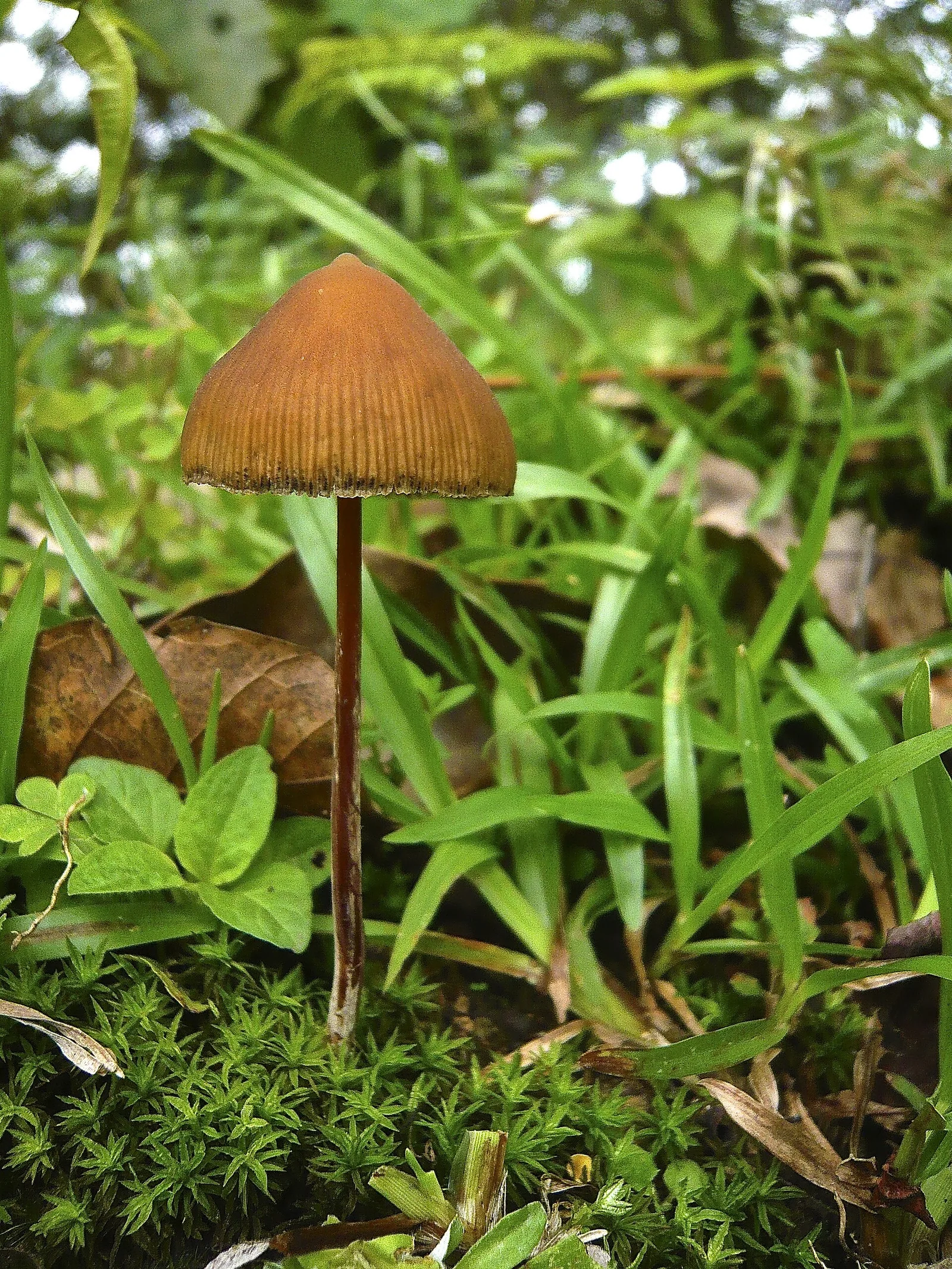
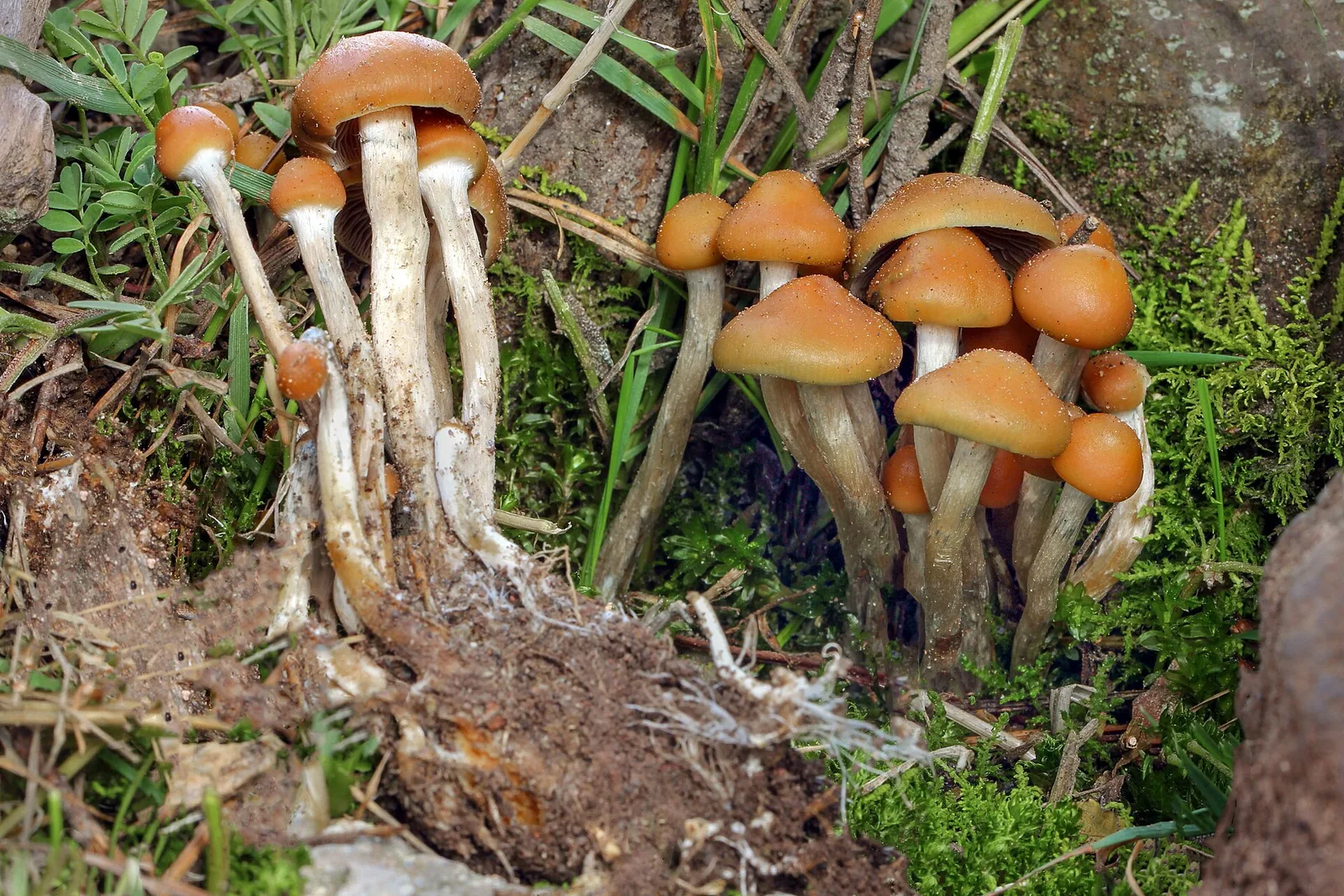
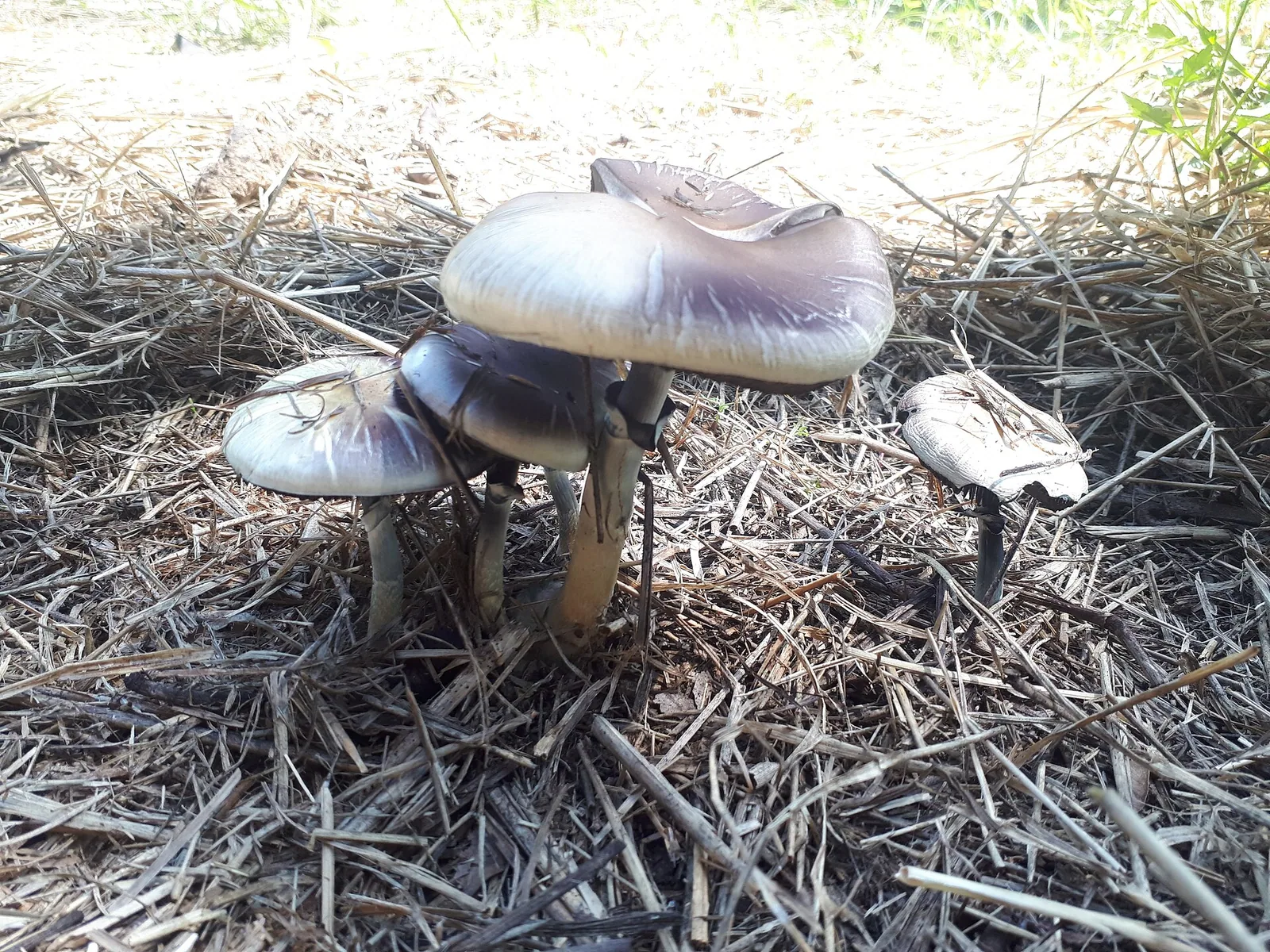
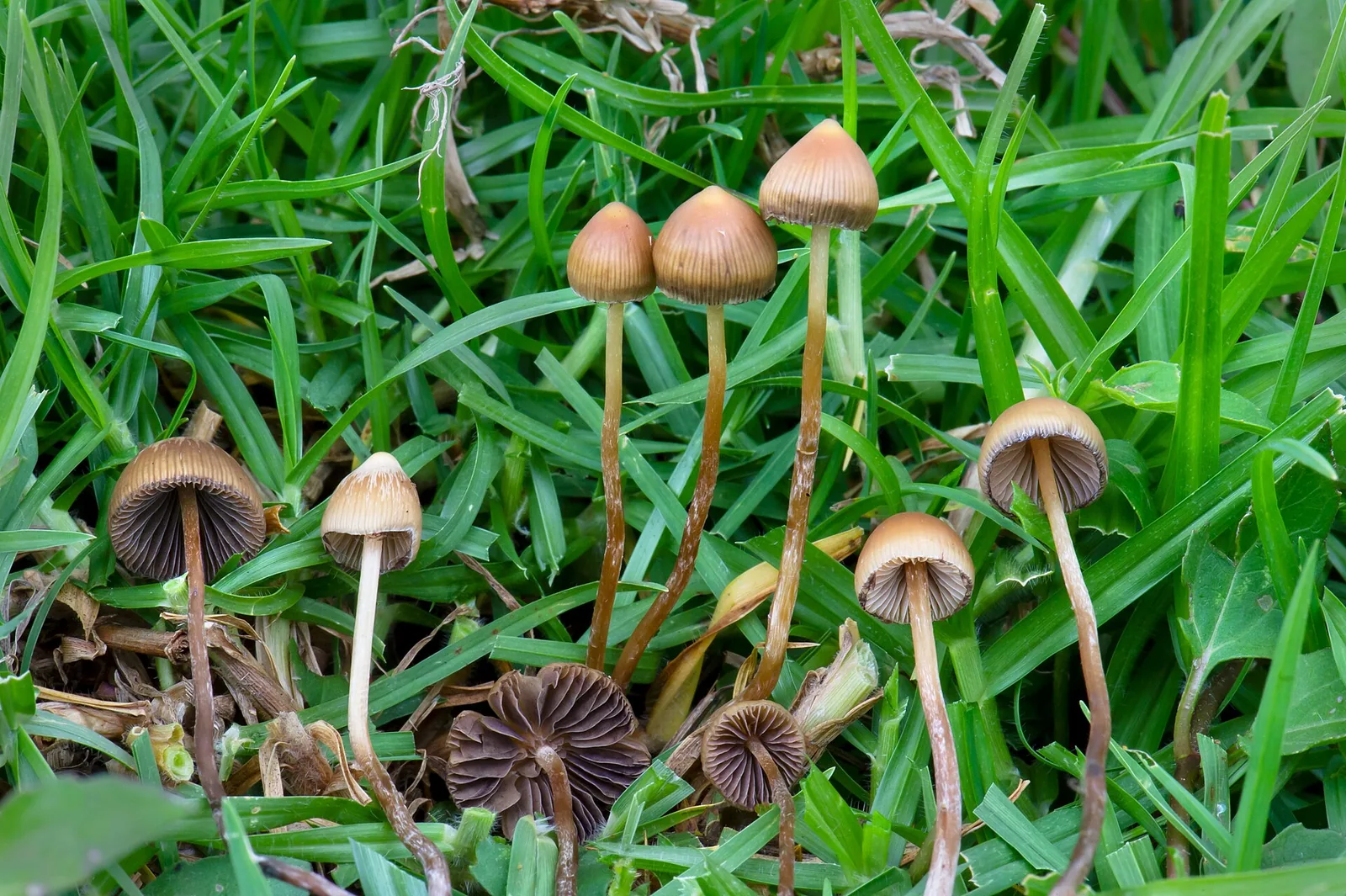
| Psilocybe mexicana | R.Heim, Revue de Mycologie 22(1): 77 (1957) — GBIF 5242538. Holotype PC 0085751, Paris; the protologue records the habitat as ground in mountainous pastures and the locality as Oaxaca (Index Fungorum, 2026a). Spanish: pajarito, “little bird” (GBIF, 2026a). The species from which psilocybin was first isolated. |
|---|---|
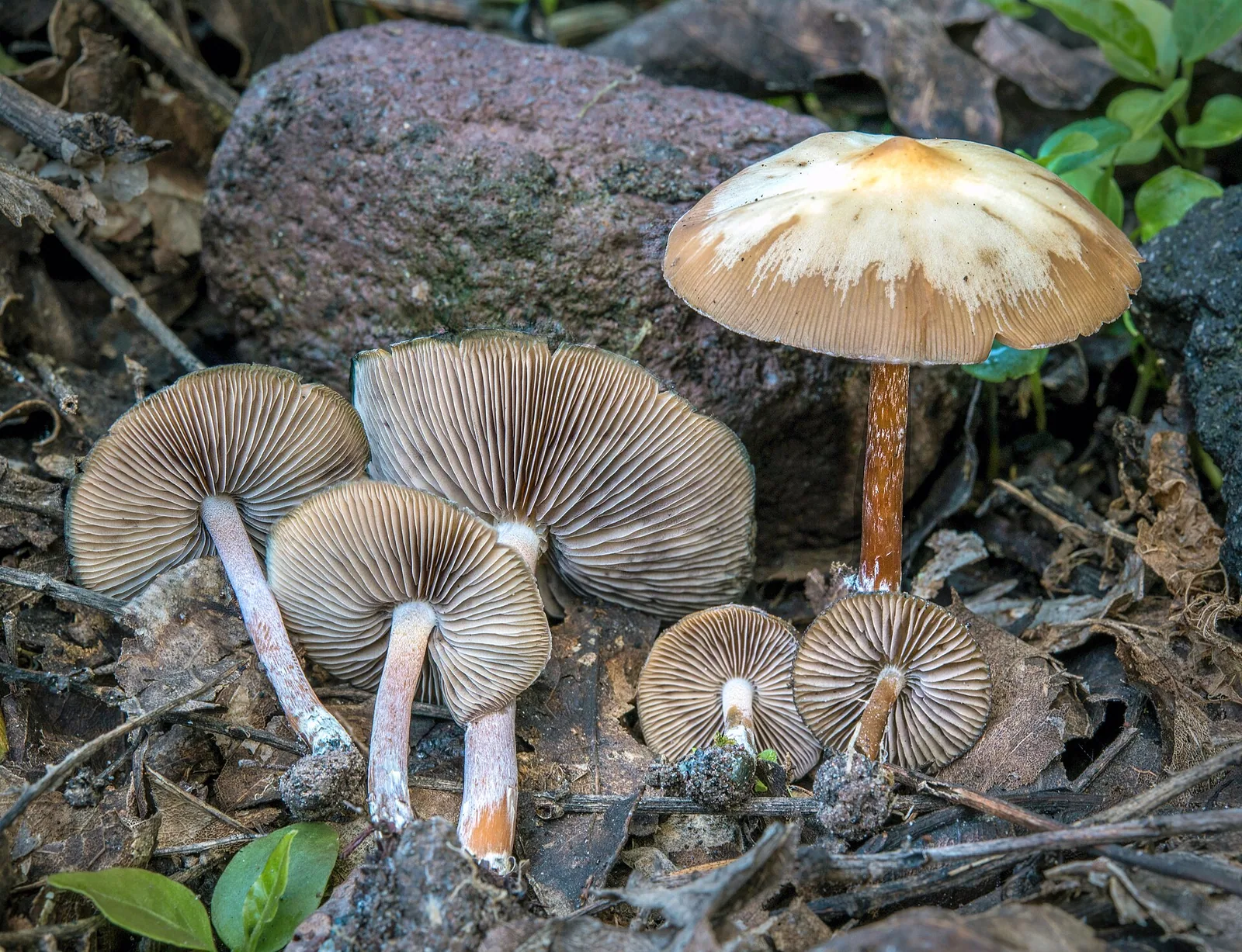
| Psilocybe caerulescens | Murrill, Mycologia 15(1): 20 (1923) — GBIF 5242497. Type Burke s.n.; the protologue records the habitat as soil and the locality as Alabama, in the United States (Murrill, 1923; Index Fungorum, 2026b). Spanish: hongo derrumbe, “landslide mushroom”, and hongo maestro, “master mushroom” (GBIF, 2026b). |
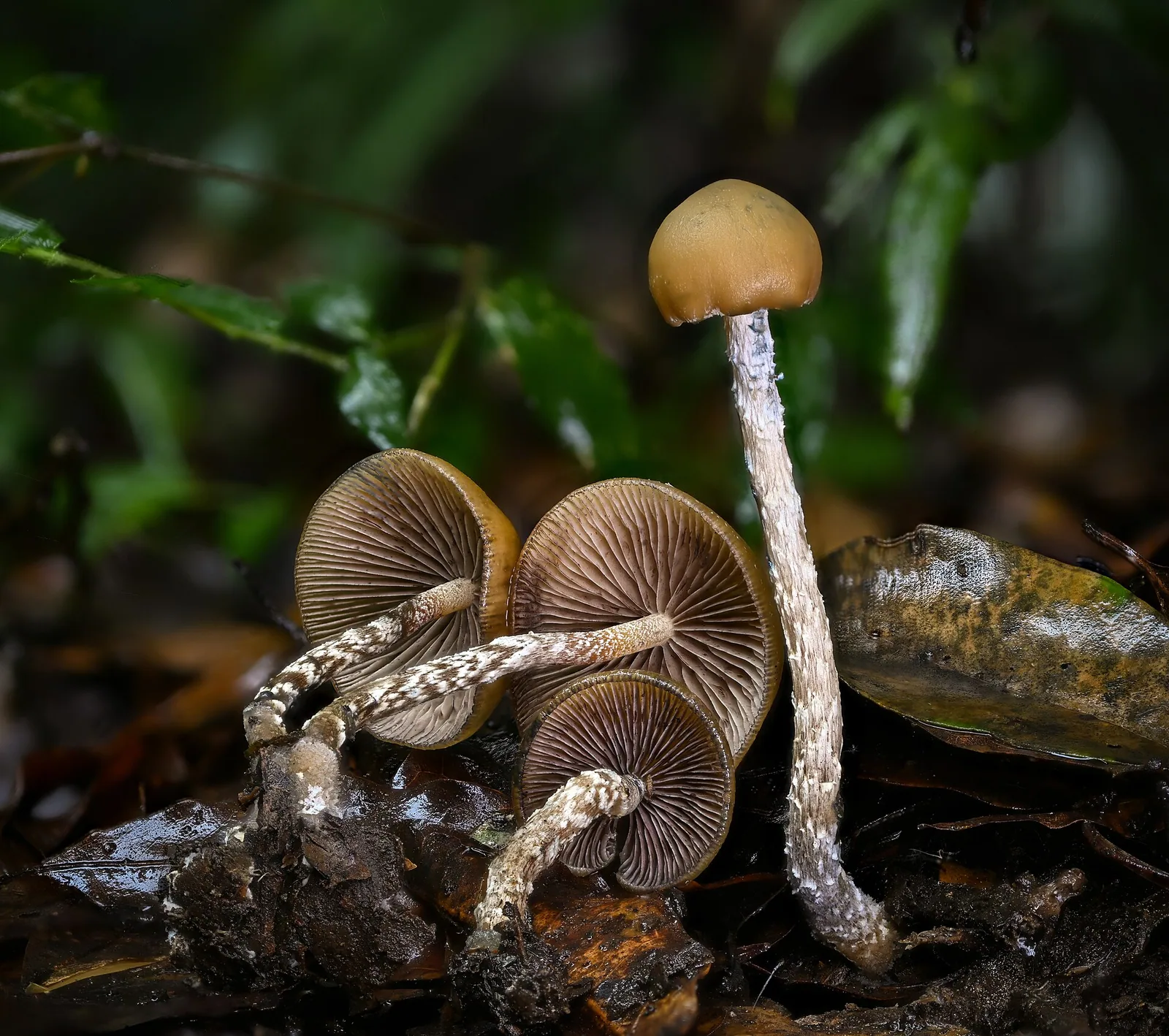
| Psilocybe zapotecorum | R.Heim, Revue de Mycologie 22(1): 77 (1957) — GBIF 5242545. The protologue records the habitat as boggy ground and the locality as Mexico (Index Fungorum, 2026c); Guzmán’s reassessment associates it with very wet, muddy environments (Guzmán, 2012). Zapotec: Ni’tobe’ya, recorded at El Peral, Oaxaca (Haro-Luna et al., 2025); English: drunken mushroom (GBIF, 2026c). |
| Psilocybe aztecorum | R.Heim, Revue de Mycologie 22(1): 78 (1957) — GBIF 5242509. Holotype PC 0096811, Paris; the protologue records the habitat as damp grassy meadowland under conifers and the locality as México State (Index Fungorum, 2026d). Spanish: hongo alucinógeno — a description rather than a traditional name (GBIF, 2026d). |
| Psilocybe cubensis | (Earle) Singer, Sydowia 2: 37 (1948) — GBIF 5242510; basionym Stropharia cubensis Earle. Spanish: San Isidro (GBIF, 2026e). |
Names, types and specimens
Three of the five were named in one sitting. Heim published P. mexicana, P. zapotecorum and P. aztecorum in 1957 in the same short run of pages of the Revue de Mycologie — a fair record of how quickly the mycology followed the ethnography (Index Fungorum, 2026a; Index Fungorum, 2026c; Index Fungorum, 2026d). He named P. zapotecorum for the Zapotec, and nearly seventy years later fieldwork at El Peral, Oaxaca, between 2021 and 2024 identified it as the holy mushroom used in local consultations and recorded its Zapotec name, Ni’tobe’ya. The epithet and the practice are, unusually for this genus, documented against each other (Haro-Luna et al., 2025).
P. caerulescens is older, and was not erected on Mexican material. Murrill published it in 1923 in the fifth of his Dark-Spored Agarics papers, from a collection made in Alabama (Murrill, 1923; Index Fungorum, 2026b). That the name applied to mushrooms eaten in Oaxacan ceremony was first fixed on a specimen from the south-eastern United States is a useful check on how far a binomial can travel from the practice it ends up describing. Guzmán identifies it as a species used in Mexican ceremonies, separated from its congeners on taxonomic characters rather than field appearance (Guzmán, 2008; 2012).
Guzmán’s reviews document both the diversity of the Mexican assemblage — whose habitats include disturbed ground, wooded environments and wet soils, the species differing in which they occupy — and the revisions that have repeatedly altered its description (Guzmán, 2008; 2012). Scientific and vernacular classifications record different information: taxonomy distinguishes organisms through anatomical and genetic characters, while local names may describe appearance, habitat, kinship or sacred identity. An ethnographic identification is most informative when the scientific specimen, the local name and the use are recorded together (Haro-Luna et al., 2025).
- Documented
Vouchering is the limit. Several Mexican Psilocybe overlap in field appearance, and local identity is often unvouchered in the ethnographic record. A photograph, or a ceremony’s own name for what it uses, leaves the species open. Where the record names a species the identification is frequently unvouchered, so the species-level history of Mexican ceremonial mushrooms remains less secure than the practice-level history (Guzmán, 2012).
Altitude as a habitat
The protologue of P. aztecorum — damp grassy meadowland under conifers — places it in the montane forest belt of the central Mexican volcanoes rather than in the pasture and disturbed ground occupied by several of its congeners (Index Fungorum, 2026d; Guzmán, 2012). That altitude matters to the ethnography as well as to the mycology: the sacred mountains of the central highlands — Popocatépetl, Iztaccíhuatl, the Nevado de Toluca — are the landscape in which the highland practices are set, and they are the landscape this mushroom actually grows in.
Under the microscope
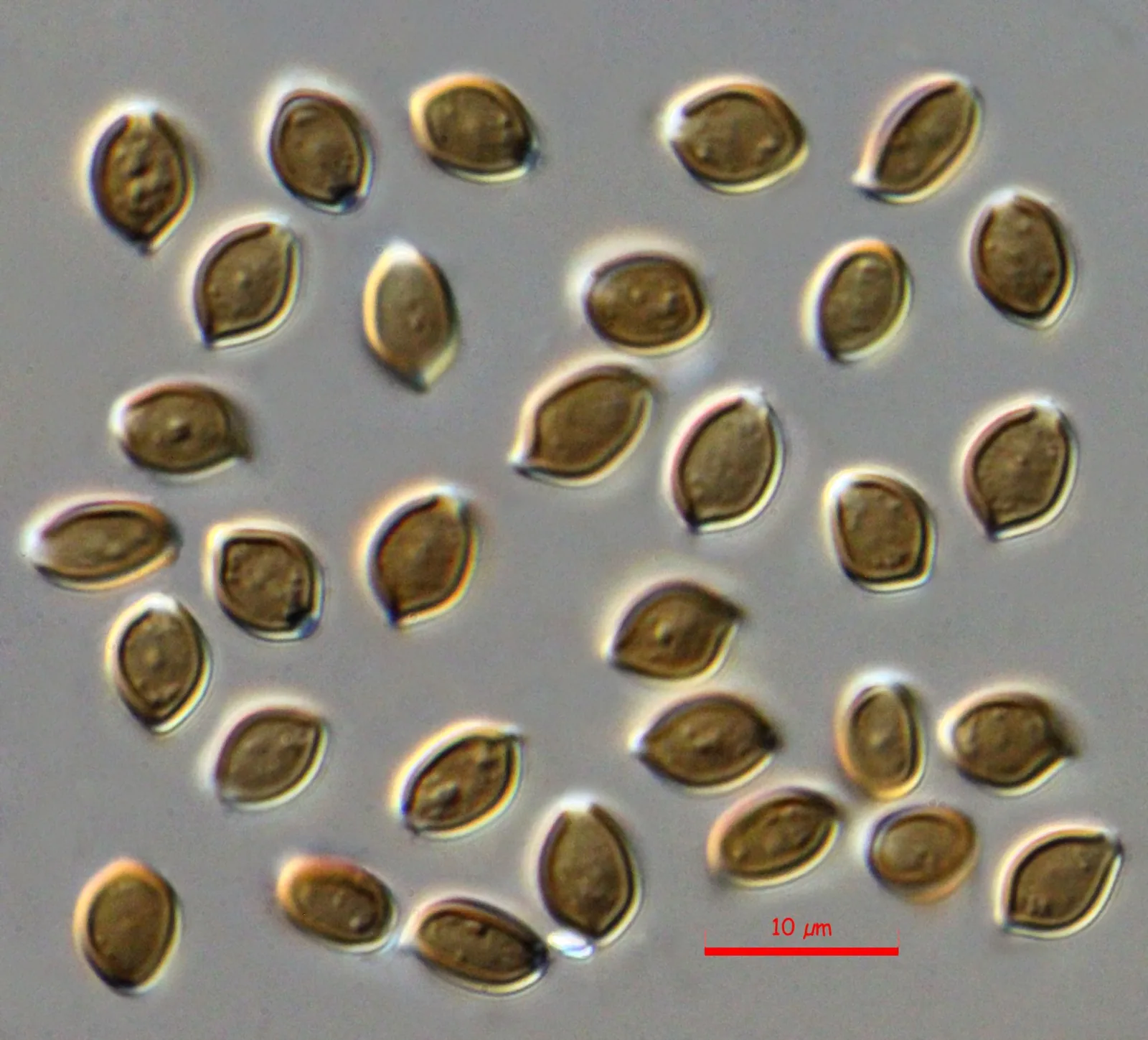
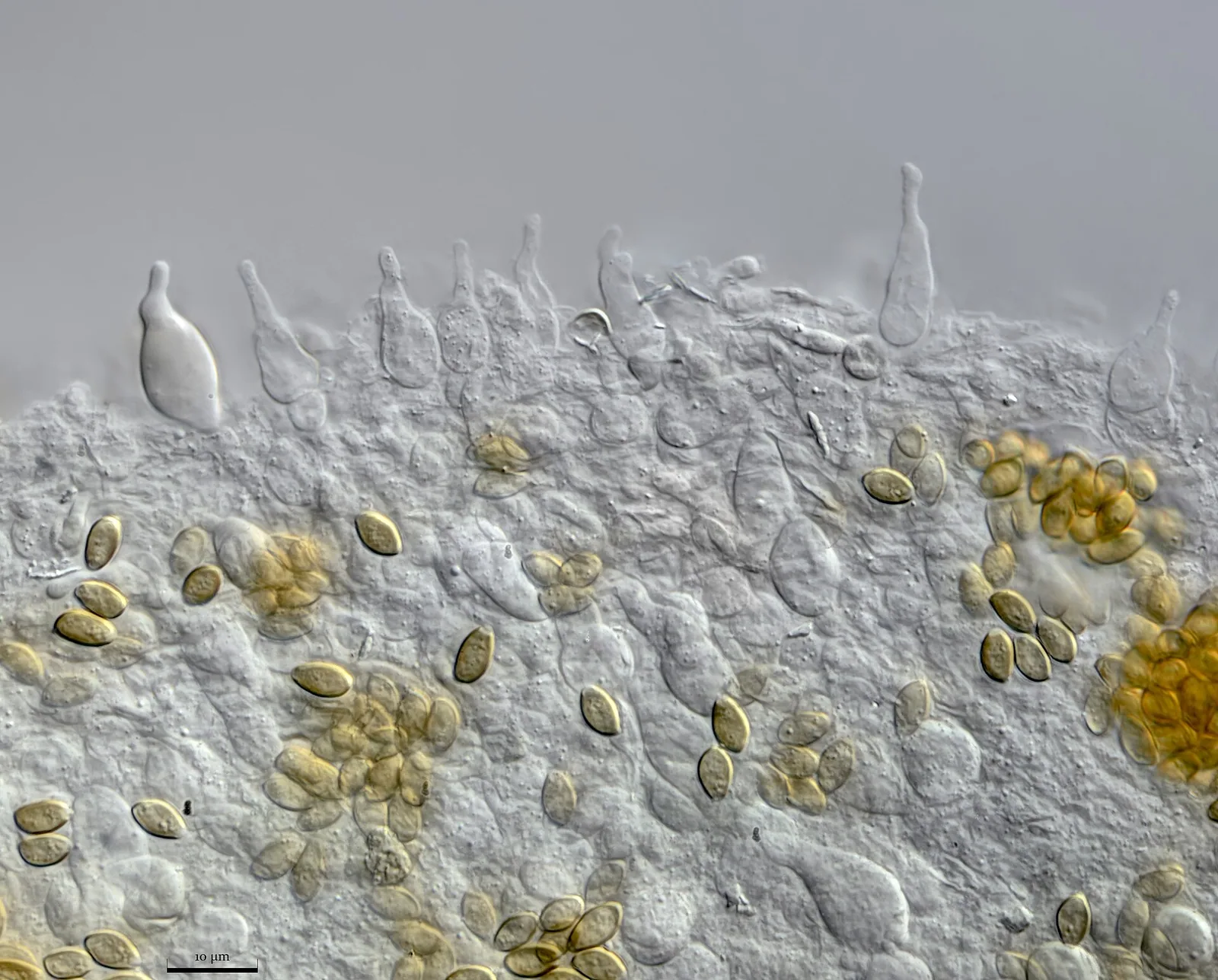
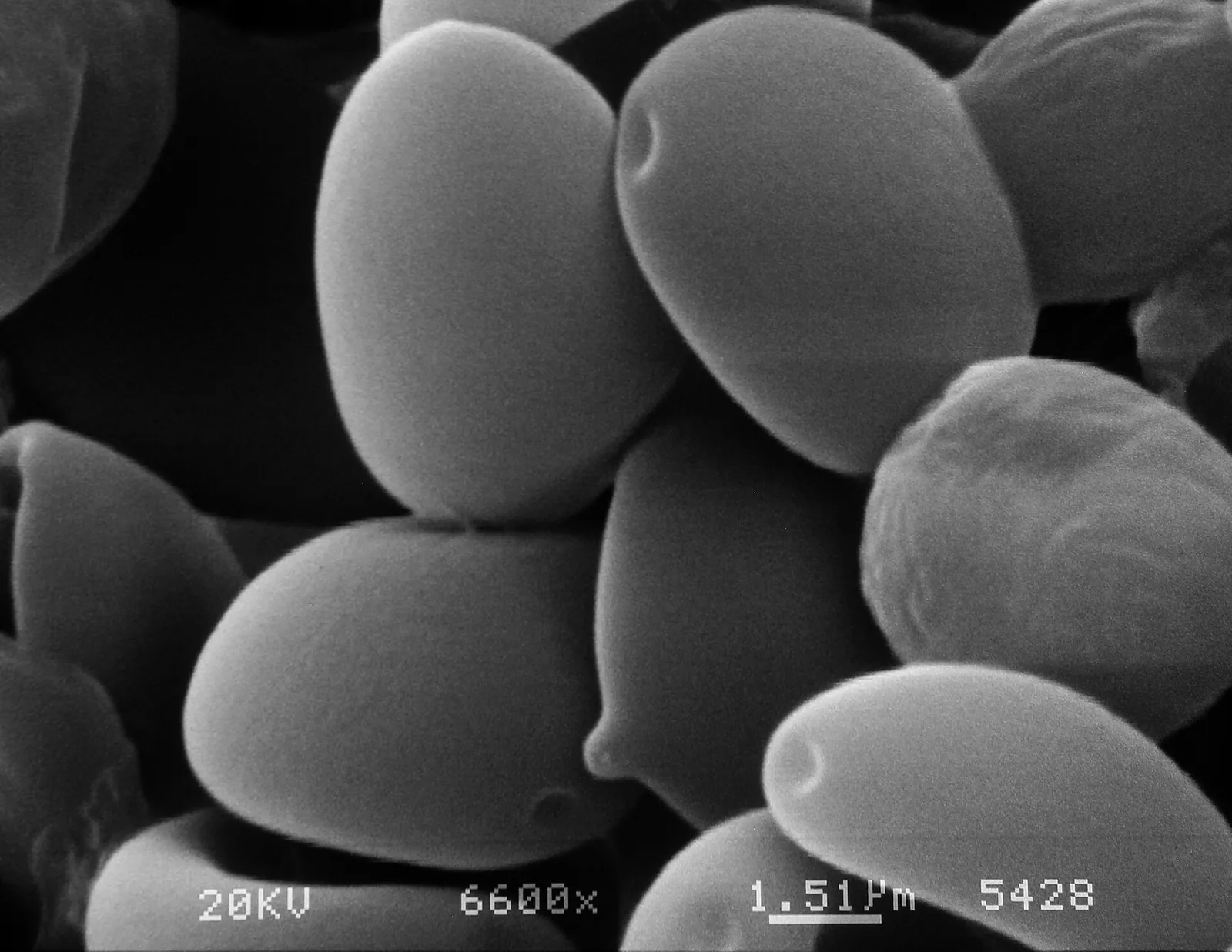
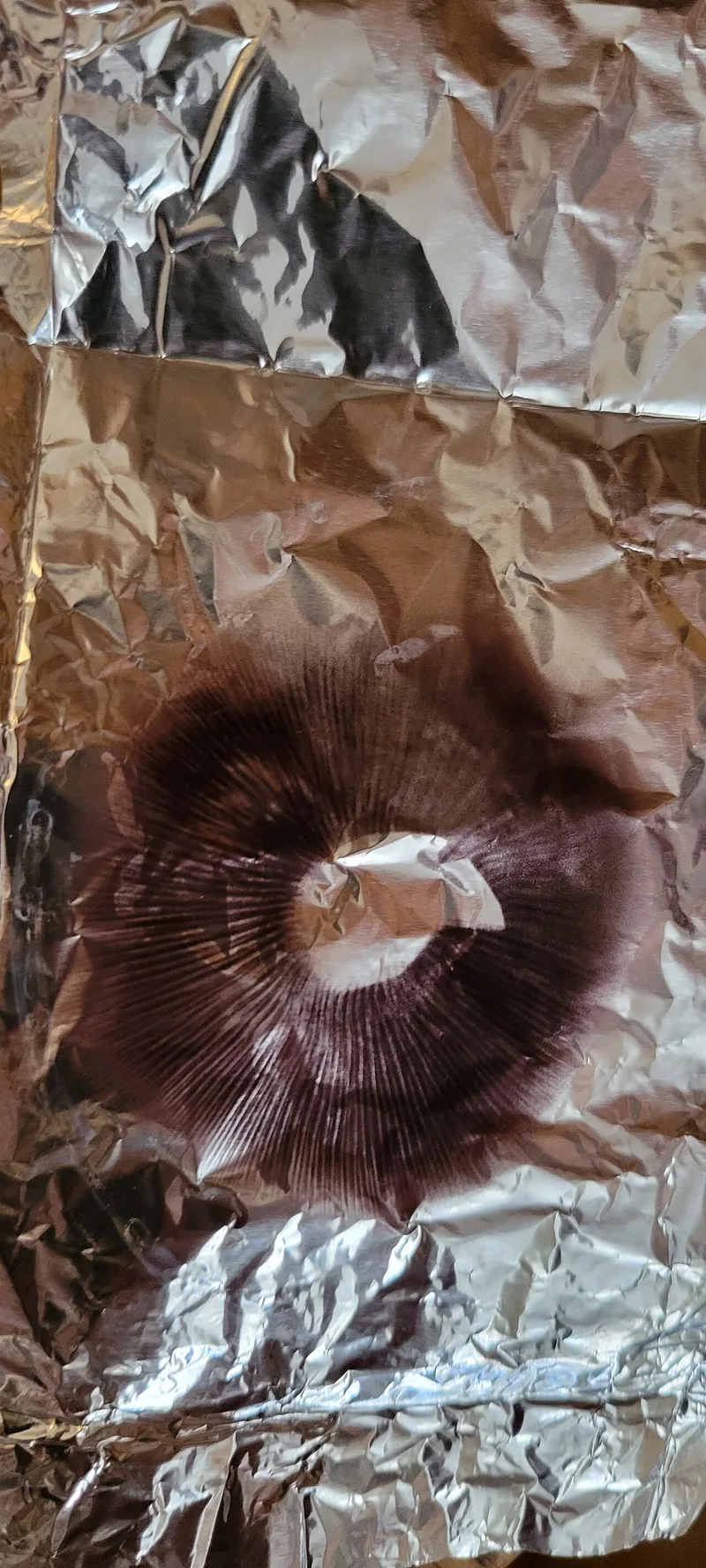
02Chemistry
The compound was first taken from P. mexicana. Hofmann, Heim, Brack and Kobel reported the isolation of psilocybin in 1958, naming the species in the title of the paper; the finding let researchers investigate a defined compound alongside the effects of whole mushrooms (Hofmann et al., 1958). The following year Hofmann and colleagues described psilocybin and psilocin together as two psychotropic principles of the Mexican mushrooms (Hofmann et al., 1959).
Fricke, Blei and Hoffmeister later characterised the four enzymes of the biosynthetic pathway — PsiD, PsiH, PsiK and PsiM — which decarboxylate, hydroxylate, phosphorylate and methylate a tryptophan-derived precursor (Fricke, Blei and Hoffmeister, 2017). Gotvaldová and colleagues assayed 226 fruiting bodies from 82 collections across seven genera and found considerable variation in psilocybin, psilocin, baeocystin, norbaeocystin and aeruginascin between taxa and between collections: whole mushrooms are chemically variable material, a species name says little about potency, and a purified compound specifies a more restricted intervention (Gotvaldová et al., 2022).
Blei and colleagues additionally identified β-carbolines, including harmane and harmine, in studied Psilocybe material. Their presence is pharmacologically relevant because compounds in that family can inhibit monoamine oxidase; whether the concentrations present in consumed mushrooms materially affect human experience remains a research question, and the study establishes occurrence rather than effect (Blei et al., 2020).
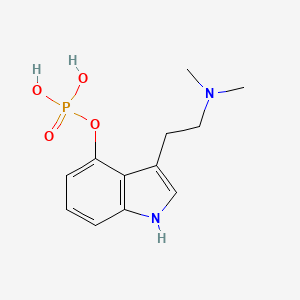
Psilocybin

Psilocin

Baeocystin
Blueing
Lenz and colleagues identified the reactions behind the blue stain that follows injury to Psilocybe tissue: a phosphatase removes the phosphate group from psilocybin, a laccase promotes oxidation of the resulting psilocin, and subsequent reactions produce coloured oligomers. The bruise is a chemical property of the mushroom, and a poor measure of potency (Lenz et al., 2020).
03Tradition, ritual & cultural use
Peoples & traditions
Mexican ceremonial use draws on several species; the practices, the organisation of ceremonies and the knowledge attributed to mushroom experiences differ between communities (Guzmán, 2008; Schultes, 1940). The ceremonies themselves belong to the Teonanácatl complex and, for the Mazatec, to Mazatec Divinatory Medicine, which is where this archive keeps them.
The Spanish vernaculars are worth keeping in view: hongo maestro names the mushroom as a teacher, which is a claim about what it does rather than about what it is, and it sits beside a taxonomy that answers only the second question (GBIF, 2026b).
- Proposed
The mushroom of the merchant feast? Guzmán proposes P. caerulescens as a candidate for the mushrooms described in Sahagún’s account of Mexica ceremony. This is a taxonomic interpretation of a sixteenth-century textual description; its significance lies in the attempt to connect a recorded use with an identifiable organism, and it remains an interpretation (Guzmán, 2008).
Consultations at El Peral
At El Peral the mushrooms are consulted to obtain answers: the recorded questions concern illness, family relationships, land disputes and the fidelity of spouses working in the United States. The practice is contemporary and its subject matter is shaped by migration and present-day family life as well as by inherited cosmology (Haro-Luna et al., 2025).
Participants also attribute significance to the gatherer’s emotional disposition — a cheerful or an angry gatherer may influence the communicative character attributed to the mushrooms. This is a local explanation of how the conditions of collection affect the encounter that follows, and it is a claim about the relationship rather than about the chemistry (Haro-Luna et al., 2025).
Weather workers of Popocatépetl
The central Mexican highlands carry mushroom-related practice into the present: Benítez Corona’s research around Popocatépetl describes weather workers whose activities concern rain, agriculture and the waters within the mountains (Benítez Corona, 2023).
What the 1958 isolation changed
Material reaching Hofmann’s laboratory came through work involving Mexican specialists, Roger Heim and the Wassons. The transition it began — whole fungi becoming a specified pharmaceutical preparation, a ceremony becoming a research session, a report of experience becoming part of a clinical dataset — is followed in the complex record rather than restated here (Hofmann et al., 1958).
04Cosmology & key terms
The Xochipilli sculpture from Tlalmanalco, near Iztaccíhuatl, depicts a seated figure with raised knees, a tilted head and botanical motifs across the body. INAH identifies it as Chalca and dates it to the Late Postclassic; traces of red, ochre and white pigment survive on the volcanic stone, and Xochipilli, the Flower Prince, is associated with flowers, music and dance (INAH, 2018).
Wasson identified some of the carved motifs as representations of P. aztecorum and interpreted the figure’s posture as absorption in an entheogenic state, relating it to temicxoch, or dream flowers (Wasson, 1980). The identification is the reason P. aztecorum appears in the art-historical literature at all.
- Interpretation
An iconographic argument. INAH’s own catalogue presents other readings of the same carving — concentric forms on the pedestal interpreted in relation to tonalli, solar heat, and Aurora Montúfar’s botanical work identifying a broader floral repertoire. A motif on Late Postclassic volcanic stone is far harder to key to a species than a specimen, and Wasson’s reading is one historical interpretation of the imagery (INAH, 2018; Wasson, 1980).
05Visionary phenomenology
Time course
Oral psilocybin in a controlled study of fixed doses of 15, 25 and 30 mg: mean durations of subjective effects were 5.6, 5.5 and 6.4 hours, and psilocin peaked about 2 hours after the dose (Holze et al., 2023). Because the mushrooms vary in strength, a ceremony’s course may run shorter or longer.
Phenomenological profile
The profile lists effects the sources report, for each preparation separately, grouped by domain. Each row gives the grade, how often the sources say the effect occurs (only where they say so; most do not) and the kinds of source behind it. A chip naming a compound, such as “Trial · psilocybin”, means the evidence comes from studies of that compound rather than of the preparation itself; “partial” means the route, purity or dose differs from the traditional preparation, so the row cannot be graded above supported. The line under each preparation says which domains have evidence entered here. A domain with nothing entered has not yet been assessed in this profile; that is not a finding that the literature is silent, and the article may discuss it. Open a row for the note and the sources.
Mushrooms eatenin ceremony, and oral psilocybin in trials
Evidence entered for all 8 domains.
Psilocybin is the mushrooms’ principal active (Hofmann et al., 1958; Hofmann et al., 1959), taken by mouth in ceremonies and in the trials alike, so the trial literature corresponds in full. Trials give fixed doses (15–30 mg in Holze et al., 2023), whereas the mushrooms’ psilocybin content varies widely between taxa and collections (Gotvaldová et al., 2022), so the same effects may come stronger or weaker in a ceremony. Ceremonies use several species, and the ethnographic record is often unvouchered to species.
Visual
Geometric patterningLattices, spirals, tunnels and other repeating forms seen with eyes closed or overlaid on the visual field.SupportedTrial · psilocybin
Across trials of oral psilocybin, ratings of elementary imagery (simple forms, colours and patterns) rose with dose, although the studies varied widely on this scale (Hirschfeld and Schmidt, 2021). In eight pooled placebo-controlled studies, psilocybin produced profound, dose-dependent changes in perception (Studerus et al., 2011).
Immersive realmsCoherent places or events that surround the experiencer, who seems to be located in them rather than looking at images.SupportedTrial · psilocybin
Ratings of complex imagery (scenes, landscapes and figures) correlated positively with the dose of oral psilocybin across trials, although the slope was not statistically significant (Hirschfeld and Schmidt, 2021). Disembodiment, which the archive reads as part of immersive realms, did the same (Hirschfeld and Schmidt, 2021). Read about the phenomenology of immersive realms →
Other senses
Sound–vision couplingMusic or voice changing the form, movement, colour or emotional tone of imagery.SupportedTrial · psilocybin
Audio-visual synaesthesia, sounds changing what is seen, rose with dose, with wide variation between studies (Hirschfeld and Schmidt, 2021).
Body
Raised blood pressureA measured rise in arterial blood pressure during the acute state.SupportedTrial · psilocybin
Mean arterial pressure rose moderately, and only 60 minutes after the highest dose tested (315 µg/kg); heart rhythm and body temperature were unaffected (Hasler et al., 2004).
Self and unity
Ego dissolutionLoosening or loss of the sense of being a bounded self.SupportedTrial · psilocybin
Dose raised most strongly the ratings of perceptual alteration and of positively experienced ego dissolution (Hirschfeld and Schmidt, 2021).
Unitive experienceThe sense that self and world, or all things, are one or interconnected.SupportedTrial · psilocybin
Ratings of the experience of unity rose with dose (Hirschfeld and Schmidt, 2021). A high oral dose under supportive conditions raised measures of mystical experience, in experiences similar to spontaneously occurring ones (Griffiths et al., 2006).
Affect
Fear and dreadFear, panic, chaos or a sense of threat during the experience.SupportedOccasionalTrial · psilocybin
Strong dysphoria or anxiety and panic occurred only at the two highest doses, in a relatively small proportion of participants (Studerus et al., 2011); moods were labile, including anxiety (Griffiths et al., 2006). Across trials, measures of challenging experience were small and barely changed with dose (Hirschfeld and Schmidt, 2021).
Bliss and euphoriaIntense joy, beauty, love or wellbeing.SupportedTrial · psilocybin
Most participants described the experience as pleasurable, enriching and non-threatening (Studerus et al., 2011); ratings of the blissful state rose with dose (Hirschfeld and Schmidt, 2021).
Cognition
NoesisThe felt disclosure of knowledge: understanding that seems to arrive with what is perceived.SupportedTrial · psilocybin
Ratings of insightfulness rose with dose (Hirschfeld and Schmidt, 2021). In a survey of encounter experiences, about three-quarters of participants reported receiving a message, mission or insight (Griffiths et al., 2019).
Autobiographical recallVivid re-experiencing or re-viewing of one’s own past, often recast from new positions.SupportedTrial · psilocybin, partial
Given intravenously (2 mg) to ten participants, psilocybin enhanced the recollection of positive autobiographical memories. The route differs from eating the mushrooms, so this counts at partial weight (Carhart-Harris et al., 2012).
IneffabilityThe experience resists description in words.SupportedTrial · psilocybin
Ratings of ineffability on the Mystical Experience Questionnaire rose with dose (Hirschfeld and Schmidt, 2021).
Time distortionTime felt to slow, stretch, stop or lose its ordinary order, or durations misjudged.SupportedTrial · psilocybin
In a placebo-controlled study of 24 volunteers, time was reported to slow, and judgements of durations longer than two seconds shifted and lost precision (Scholle et al., 2026). Ratings of transcendence of time and space rose with dose (Hirschfeld and Schmidt, 2021).
Relation to other beings
Autonomous entitiesBeings experienced as acting, communicating or observing independently of the experiencer’s will.SupportedEthnographySurvey · psilocybin
At El Peral, participants attribute a communicative character to the mushrooms, which are consulted for answers (Haro-Luna et al., 2025). Among 1,184 people describing their most memorable encounter with psilocybin, 44% said it was initiated by that which was encountered; such encounters frequently involved communication with something experienced as conscious, benevolent and intelligent (Griffiths et al., 2019). Read about the phenomenology of autonomous entities →
Teaching by the plantThe plant or its spirit is experienced as a teacher, giving knowledge, songs, diet or diagnosis.SupportedEthnography
At El Peral, Oaxaca, the mushrooms are consulted to obtain answers about illness, family relationships, land disputes and the fidelity of spouses working in the United States (Haro-Luna et al., 2025). In the Chinantec region some elders understand the capacity to interpret mushroom messages as an innate gift (Haro-Luna et al., 2026). The Spanish name hongo maestro, “master mushroom”, names the mushroom as a teacher (GBIF Secretariat, 2026b).
States of consciousness
Dreamlike statesOneiric experience: dream formation, dreamlike sequences or a waking state resembling dreaming.SupportedTrial · psilocybin
“Dreaminess” was among the few mood scales to rise, at the medium and high doses (Hasler et al., 2004).
06Contemporary status
Guzmán’s revisions illustrate the continuing work required to connect named species, specimens and reports of use, and the taxonomy of Mexican Psilocybe has not settled (Guzmán, 2012). Biological continuity depends on habitat: wood-associated fungi, mushrooms of wet soils and species adapted to disturbed ground have different ecological requirements, and identifying those requirements is part of what taxonomic and ethnomycological research is for. A fungus of damp meadow in a narrow altitudinal band on a small number of volcanoes, as P. aztecorum is, has less room than one adapted to disturbed ground (Guzmán, 2012; Bradshaw et al., 2024).
Haro-Luna and colleagues’ 2026 study of the Chinantec region of Oaxaca reports declining divinatory practice and the concentration of knowledge among a small number of elders, some of whom understand the capacity to interpret mushroom messages as an innate gift. The study identifies the recognition and transmission of that expertise as important to the continuation of the practice — a conservation question about knowledge rather than about habitat, running alongside the ecological one (Haro-Luna et al., 2026).
Psilocybin has also entered clinical research: a 2016 open-label feasibility study gave psilocybin with psychological support to people with treatment-resistant depression (Carhart-Harris et al., 2016). Clinical protocols and Indigenous ceremony are different institutions.
Open questions on this entry
Safety and law
07Cross-correlations
| Cultural complexes | Teonanácatl · Mazatec Divinatory Medicine — indexed → |
|---|---|
| Compound | Psilocybin — no other genus in the archive yet |
| Region | Mesoamerica — Salvia divinorum · Ipomoea corymbosa, its partners in Mazatec practice |
| Heimia salicifolia | Species monograph: sinicuichi, a flower on the same Xochipilli statue that Wasson’s reading associates with P. aztecorum. XOCHIPILLI STATUE |
| Kingdom | Fungi — Amanita muscaria · Claviceps purpurea |
08Bibliography
How to read the labels on each source
- Source type
- What kind of work it is: journal article, book, legislation, patent application, database record and so on. A word after the dot (ethnography, protologue, primary source) keeps the genre the entry was first filed under. “Unclassified” means the citation does not say enough to tell.
- Peer review
- Recorded for each work separately, and only where it has been confirmed for that work. It is never inferred from a DOI, a publisher or a journal, since journals also publish editorials, letters and commentaries. Where it has not been confirmed, the entry records it as not established. It does not apply to legislation, court decisions, treaties, patents, datasets, database and collection records, historical texts, films, talks, press releases or web pages.
- Check
- What was checked when the entry was added. DOI checked: the DOI’s registry record (Crossref) matched the citation’s title, first author and year. Verified: the record itself was opened and matched the citation: a library catalogue record for a book, or the page itself for a database entry, law, patent or archive document. “Verified (abstract)” and “(summary)” mean only the abstract or a summary was read. Located: a record was found but not fully matched. Bibliographic record and Stable record (in essays): a catalogue or stable web record exists; what was checked against it is not recorded. Unverified: no check is recorded. No locator found: a search found no record. Secondary: read through another source.
- What the labels do not say
- None of them means the source supports a particular sentence. Where a sentence is graded, its evidence note names its sources and whether each supports it, disputes it or gives context. Dates and reviewers of checks are not recorded for each entry; the version note at the foot of a graded page dates its last review.