1.0: evidence grades, abstract, Deep Time timeline and safety box added.
Grades marked automatically follow the editor’s existing evidence labels and explicit wording. Contested, editorial, safety-critical and upgraded grades are reviewed by the editor. Automatic grades are audited by sample.
Mirante, D. (ed.) (2026) Claviceps purpurea. Entheocene, version 1.0. Available at: https://entheocene.com/plant-claviceps-purpurea.html (Accessed: 15 October 2026).
DOI: not yet minted.
Introduction
Ergot, Claviceps purpurea, is a fungus that replaces the grains of rye and many other grasses with hard sclerotia rich in ergot alkaloids; the name covers several cryptic lineages. Eaten in bread, it caused the gangrenous and convulsive epidemics of medieval and early modern Europe; isolated, its alkaloids became medicines for childbirth and migraine, and the starting point for LSD. Its entheogenic history rests on the 1978 proposal that processed ergot made the kykeon of Eleusis psychoactive. A 2026 experiment showed that alkaline hydrolysis of sclerotia yields LSA, which makes the proposal chemically feasible without confirming it.
All sections
Botanical name
Claviceps purpurea
Taxa
Clavicipitaceae · Hypocreales · Sordariomycetes
Traditional names
Ergot · rye spur · Mutterkorn · secale cornutum · St Anthony’s fire
Regions
Cosmopolitan across temperate and cool cereal- and grass-growing regions of Europe, Asia, North Africa, the Americas, Australasia and elsewhere.
Ethnographic entheogenic use
Ergot's human history is mostly one of affliction — the "holy fire" of medieval epidemics — and of medicine, in midwifery and later in pharmacy. Its entheogenic history rests on the 1978 hypothesis that processed ergot made the kykeon of Eleusis psychoactive, which recent archaeology and chemistry make more plausible without confirming (Grzybowski et al., 2021; Lee, 2009a; Wasson, Hofmann and Ruck, 1978; Antonopoulos et al., 2026).
01Ethnobotany of Claviceps purpurea
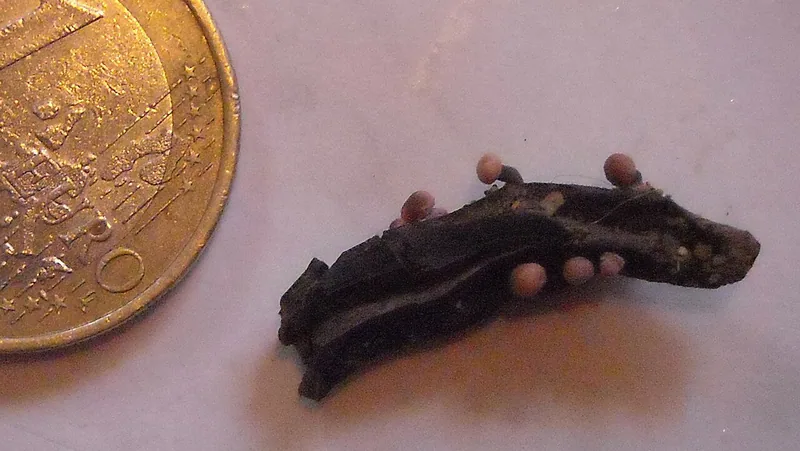
Plate 01 · specimen · deep view
Stromata germinating from a sclerotium · Odile Jacquin, 2009 · GFDL / CC BY-SA 3.0 ↗
Botanical Info
Accepted name
Claviceps purpurea (Fr.) Tul. Elias Magnus Fries described the basionym Sphaeria purpurea; Louis-René Tulasne established the combination in Claviceps in 1853 (Tulasne, 1853; MycoBank, 2026).
Kingdom / phylum
Fungi · Ascomycota.
Family
Clavicipitaceae.
Order
Hypocreales · class Sordariomycetes.
Geographic range
Cosmopolitan across temperate and cool cereal- and grass-growing regions of Europe, Asia, North Africa, the Americas, Australasia and elsewhere. Older records use a broad C. purpurea concept; recent phylogenetic work separates ecological and cryptic lineages, so historic distribution maps partly aggregate several species (Pažoutová et al., 2015; Píchová et al., 2018).
Hosts
An obligate ovarian parasite of Poaceae, reported under the broad species concept from more than 400 grass hosts. Rye (Secale cereale) is especially susceptible because its open, cross-pollinating florets expose unfertilised stigmas; triticale, wheat, barley and many forage and seed grasses are also affected, while oats are less commonly infected (Miedaner and Geiger, 2015).
Local names
Ergot (French, “spur”); rye spur, horned rye, cockspur; Mutterkorn (“mother grain”), Wolfszahn (“wolf’s tooth”), secale cornutum, cornezuelo del centeno, ergot de seigle. Names encode the sclerotium’s horned form, its association with childbirth and older animal or demonic metaphors.
Conservation
Unassessed by the IUCN. It is widespread and managed as a crop pathogen. Species splitting complicates statements about the abundance of rarer wetland- and wild-grass-associated relatives.
Territories
Territories · places named on this page · deep view
1Eleusis · the hypothesis that processed ergot made the kykeon psychoactive (Wasson, Hofmann and Ruck, 1978), tested for chemical feasibility (Antonopoulos et al., 2026)
2Mas Castellar de Pontós · ergot in a vessel from a Demeter-and-Kore sanctuary and in dental calculus, fourth–second centuries BCE (Juan-Tresserras, 2002)
3Pont-Saint-Esprit · the 1951 poisoning: “dreamy delirium”, animal hallucinations, agitation (Gabbai, Lisbonne and Pourquier, 1951)
4Basel · Arthur Stoll’s group at Sandoz isolated ergotamine in 1918 (Lee, 2009b)
1853Tulasne establishes the genus combination Claviceps purpurea.Supported · Tulasne, 1853
1918Stoll’s group at Sandoz isolates ergotamine.Supported · Lee, 2009b
1951The Pont-Saint-Esprit outbreak, diagnosed as ergot poisoning; its agent is disputed.Contested · Gabbai, Lisbonne and Pourquier, 1951
1978Wasson, Hofmann and Ruck propose that processed ergot made the kykeon psychoactive.Unresolved · Wasson, Hofmann and Ruck, 1978
2026Alkaline hydrolysis of sclerotia yields LSA and iso-LSA in the laboratory.Supported · Antonopoulos et al., 2026
Ergot in archaeological cereal deposits shows a crop–fungus relation, not ingestion; the Mas Castellar finds rest on a source with no locator on the page.
Morphology and life cycle
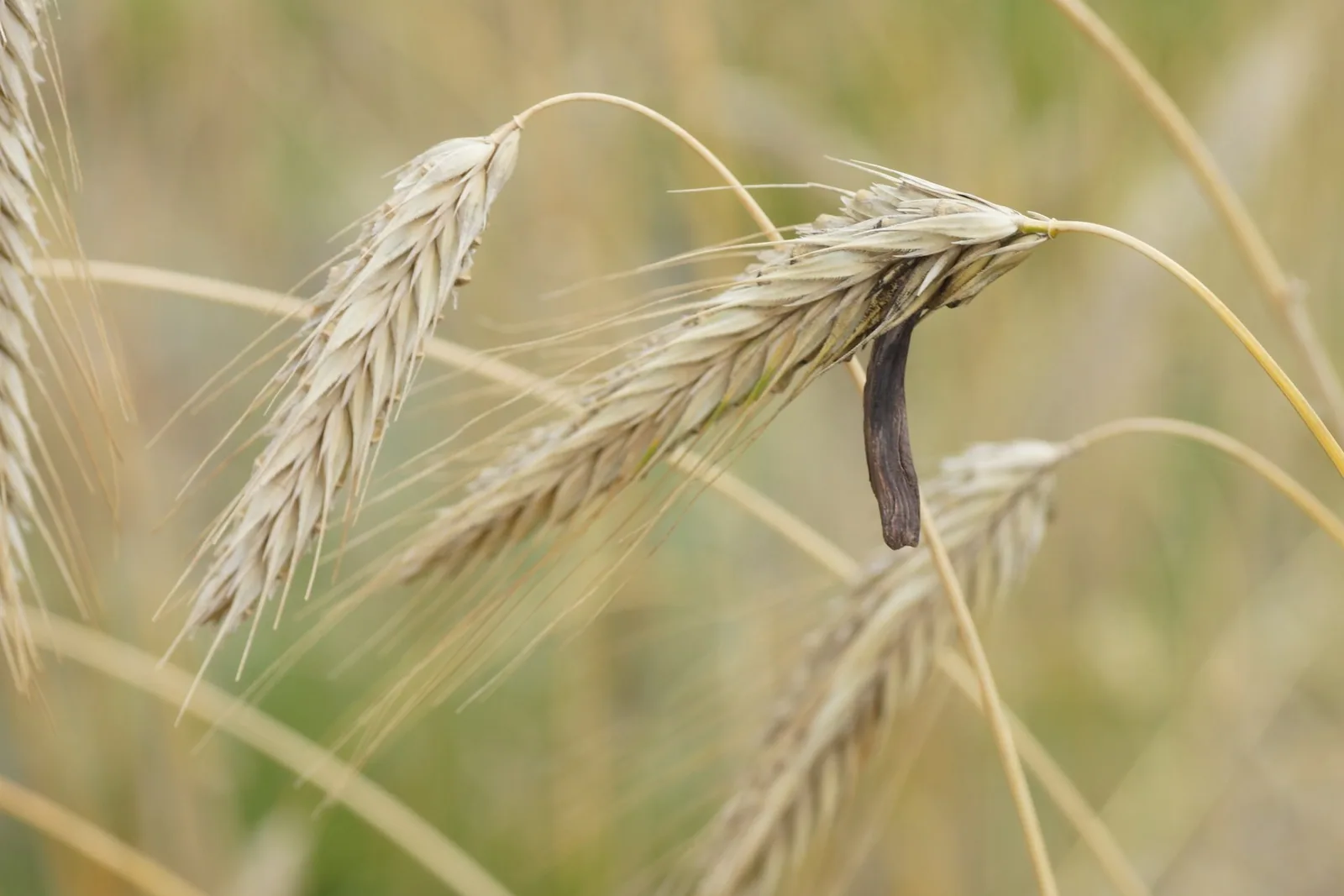
The visible “ergot” is a survival body: an elongated, hard sclerotium, often 1–4 cm on rye, purple-black outside and whitish within, which replaces a single grain. Fallen sclerotia overwinter at or near the soil surface. After cold conditioning they germinate in spring, raising stalked stromata with pink, red-brown or violet globose heads. Perithecia embedded in each head produce cylindrical asci and threadlike ascospores that are discharged when susceptible grasses flower (Miedaner and Geiger, 2015; Dung et al., 2021).
An ascospore germinates on an unfertilised stigma and follows the route ordinarily taken by a pollen tube into the ovary. Fungal tissue replaces the developing kernel while preserving access to host vascular supply. During the sphacelial phase the infected floret exudes sugary honeydew packed with conidia; rain splash, contact and insects distribute this secondary inoculum. The tissue then hardens and accumulates lipids, pigments and alkaloids as a mature sclerotium. Its resemblance to a grain permits entry into harvests; its larger, lighter body also enables removal by modern optical and density sorting.
Taxonomic and evolutionary limits
Species complex
Molecular work divided the former G1, G2 and G3 populations and recognised taxa including C. purpurea sensu stricto, C. humidiphila and C. arundinis. Most agricultural rye ergot belongs to the broadly distributed G1/sensu-stricto lineage; old vouchers and historical outbreaks usually stay unassigned (Pažoutová et al., 2015).
Genome
Comparative genomics reveals a large accessory genome and frequent recombination, features that may support a broad host range and rapid adaptation. Chromosome-level assemblies nevertheless recover eight conserved chromosomes with strain-level rearrangements (Wyka et al., 2022; Witte et al., 2023).
Range history
The modern cosmopolitan distribution follows both wild Pooideae and transported cereal agriculture. A present-day occurrence can therefore reflect old biogeography, crop movement or local wild-grass reservoirs.
Ancient identity
Archaeological sclerotia are morphologically assignable to ergot but rarely preserve the molecular resolution needed to distinguish modern cryptic taxa. “C. purpurea” in ancient contexts normally means the historical rye-ergot complex.
02Chemistry
The sclerotium produces a chemotype-dependent mixture of indole-derived ergot alkaloids. Three overlapping classes matter: clavines such as agroclavine and elymoclavine; simple lysergic acid amides, especially ergometrine/ergonovine; and cyclic peptide alkaloids or ergopeptines, including ergotamine, ergocristine, ergocornine, ergosine and α/β-ergocryptine. Each pharmacologically active C-8-(R) form can epimerise to a corresponding “-inine” C-8-(S) form during storage, extraction or analysis. Genotype, host, weather, maturity and handling all change the profile; the mass of visible sclerotia is therefore an imperfect proxy for total alkaloids (Florea, Panaccione and Schardl, 2017; Cherewyk et al., 2024).
Ergotamine
C₃₃H₃₅N₅O₅
Ergopeptine · lysergic acid–tripeptide cyclol
Persistent vasoconstrictor · historic migraine drug
Ergometrine / ergonovine
C₁₉H₂₃N₃O₂
Simple lysergic acid amide
Uterotonic · central activity at sufficient exposure
Ergocristine
C₃₅H₃₉N₅O₅
Ergopeptine alkaloid
Major in some chemotypes · regulated analytical congener
Ergine / LSA
C₁₆H₁₇N₃O
Lysergic acid amide
Usually minor in raw sclerotia · central to processed-kykeon hypothesis
Biosynthesis and receptor pharmacology
Dimethylallyltryptophan synthase, encoded by dmaW, joins tryptophan and dimethylallyl diphosphate at the first committed step. A clustered pathway proceeds through chanoclavine, agroclavine and lysergic acid; lineage-specific non-ribosomal peptide synthetases then assemble ergopeptines. Variation and loss within this cluster generate divergent toxin profiles among strains (Hicks et al., 2021). Ergot alkaloids share an ergoline scaffold able to engage serotonin, dopamine and α-adrenergic receptors, but each ligand has a distinct pattern of agonism, partial agonism and antagonism. Vasoconstriction, uterine contraction and central excitation are consequently distributed unevenly across the mixture (Schiff, 2006; Florea, Panaccione and Schardl, 2017).
Chemical distinctions
Natural mixture
Raw C. purpurea contains ergot alkaloids; LSD is a laboratory product. LSD-25 is a diethylamide first synthesised by Albert Hofmann in 1938 from the ergot-alkaloid research programme at Sandoz.
Epimerisation
“Inine” epimers are chemically distinct from their parents. Their abundance can rise after heat, light, pH change and storage, complicating retrospective pharmacology and food monitoring (Cherewyk et al., 2024).
Ergochromes
Yellow and red dimeric xanthone pigments—ergochromes—co-occur with alkaloids and contribute another incompletely resolved toxicological layer (Flieger et al., 2019).
Alkaline transformation
A 2026 laboratory study refluxed identified sclerotia in strongly alkaline solution and generated LSA and iso-LSA after hydrolysis of ergopeptines. It establishes chemical feasibility under the reported conditions; an ancient recipe, dose or use at Eleusis remains unestablished (Antonopoulos et al., 2026).
03Tradition, ritual & cultural use
Oldest evidenced or proposed human use
Archaeobotanical presence
Contamination evidence Ergot sclerotia occur in archaeological cereal deposits. Presence demonstrates a crop–fungus relation; purposeful ingestion or ritual use needs contextual or residue evidence.
Mas Castellar de Pontós
Ritual-context ingestion At the Iberian site near Greek Emporion, ergot fragments were reported from a small vessel in a Demeter-and-Kore sanctuary and from the dental calculus of an adult male. The find links ergot, ingestion and a cultic setting in the fourth–second centuries BCE, far from Eleusis, and leaves the beverage recipe and desired effect unknown (Juan-Tresserras, 2002; Antonopoulos et al., 2026).
Eleusinian textual record
Barley kykeon The Homeric Hymn to Demeterhas Demeter refuse wine and request a mixture of water, barley meal and glechon, usually identified as pennyroyal. Ergot goes unnamed. The rites later joined fasting, procession, initiation and the kykeon within the Demeter–Persephone mystery cult (Foley, 1994; Mylonas, 1961).
Ergot–kykeon theory
Unresolved hypothesisWasson, Hofmann and Ruck proposed in 1978 that selected or processed cereal ergot supplied a psychoactive lysergamide. Archaeological context and the 2026 hydrolysis experiment strengthen plausibility, while the lack of securely identified ergot residues from Eleusis, an ancient procedure or dose prevents confirmation (Wasson, Hofmann and Ruck, 1978; Antonopoulos et al., 2026).
Medieval epidemics
Foodborne affliction From the early medieval period into modernity, outbreaks clustered where rye was a dietary staple and damp conditions favoured infection. Chroniclers called syndromes ignis sacer, mal des ardents and holy fire. Retrospective attribution is strongest where burning limbs, dry gangrene or convulsions accompany contaminated grain; “holy fire” covered several conditions across the sources (Eadie, 2003; Grzybowski et al., 2021).
Obstetric drug
Medical tradition The vernacular “mother grain” records a long association with childbirth. Early modern and nineteenth-century midwives and physicians used crude ergot to intensify uterine contractions or control postpartum bleeding; John Stearns publicised “pulvis parturiens” in 1808. Variable alkaloid content made crude preparations difficult to govern (Lee, 2009a; Smakosz et al., 2021).
Cultural formations
Ergotism
When ergot entered bread, it caused outbreaks of poisoning in two main clinical forms, gangrenous and convulsive, in which coma and death often followed; in major outbreaks the death rate has been reported at between 10 and 20 per cent (Lee, 2009a).
The pharmacy of the sclerotium
Nineteenth-century obstetrics and gynaecology used ergot to control excessive uterine bleeding and irregular spasms, to treat fibrous tumours of the uterus, and in the prevention of miscarriage, abortion and amenorrhoea. It was dispensed as tinctures, watery extracts (Wernich's and Squibb's), pills and powders (Smakosz et al., 2021).
The laboratory
In 1900 ergot was still a "chemical mess". At Henry Wellcome's research laboratories, Henry Dale, George Barger and their colleagues isolated ergotoxine, later shown to be a mixture of three alkaloids, and then ergometrine, which proved life-saving in postpartum haemorrhage. From 1917 Arthur Stoll's group at Sandoz in Basel took up the work and isolated ergotamine in 1918, a treatment for migraine with aura (Lee, 2009b).
Eleusis, tested
The kykeon hypothesis has also been put to the bench. Pulverised sclerotia refluxed in lye at pH 12.5 lost their toxic ergopeptides and yielded lysergic acid amide (ergine) and its isomer, iso-LSA, a conversion the authors argue could have been carried out with means available in antiquity. (Antonopoulos et al., 2026).
Plate 02 · St Antony and the cold fire · deep view
St Antony the Abbot with Tau staff, bell and pig, beside a cripple on crutches whose hand burns; the page is headed "Von dem kalten Brandt" ("Of the cold fire") · woodcut · Wellcome Collection, L0007795 · CC BY 4.0 · Wikimedia Commons ↗Plate 03 · Köhler, plate 165 · deep view
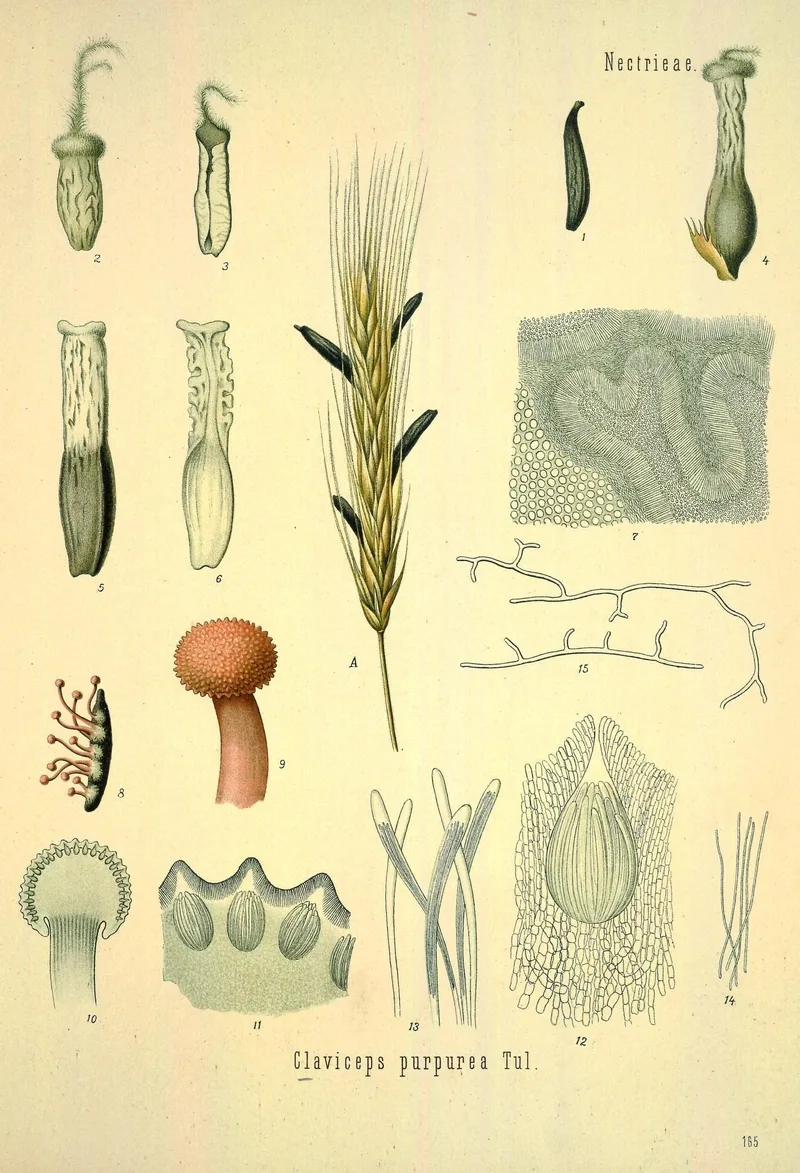
Claviceps purpurea Tul. as a medicinal drug: a rye ear with sclerotia (A), the ripe sclerotium (1), infected ovaries and the forming sclerotium in section (2–6), and its fruiting bodies and microscopy · Köhler's Medizinal-Pflanzen, plate 165 · Public domain · Wikimedia Commons ↗
Retrospective diagnoses and their limits
Salem, 1692
Caporael proposed that ergot-contaminated rye caused the accusers’ symptoms. Spanos and Gottlieb argued that symptom distribution, duration and social performance fit a single toxic epidemic poorly. The hypothesis remains culturally influential and historically unproven (Caporael, 1976; Spanos and Gottlieb, 1976).
Pont-Saint-Esprit, 1951
Gabbai and colleagues diagnosed ergot poisoning after a bread-associated outbreak with gastrointestinal, vascular and hallucinatory crises. Later analyses proposed mercury-treated seed, other mycotoxins or adulteration. It is a major modern account of “cursed bread,” but its agent remains disputed (Gabbai, Lisbonne and Pourquier, 1951; Kaplan, 2008).
Witchcraft generally
Ergotism can produce states that observers might interpret through witchcraft or possession. Explaining heterogeneous accusations, trials and religious movements this way needs local dietary, climatic and symptom evidence.
04Cosmology & key terms
Grain, death and return
Eleusinian cosmology is agricultural, and more than agricultural. Persephone passes between the upper world and Hades; Demeter’s withdrawal suspends fertility; negotiated return restores grain and establishes ritual. Barley meal in the kykeon, first fruits offered to the goddesses and the grain ear shown in later testimonia made cultivation a medium for thinking about bereavement, continuity and death. The ergot hypothesis gains symbolic force because the fungus becomes a dark body in place of grain, but no ancient source states that this substitution was itself a cultic metaphor. That interpretation is modern (Foley, 1994; Clinton, 2007).
Fire, saint and diseased body
In Latin-Christian Europe, burning pain became ignis sacer and later St Anthony’s fire. Anthony the Great—desert ascetic, adversary of demons and patron of sufferers—offered a cosmological frame for spasms, altered perception and bodily disintegration. Antonine houses made that frame architectural and practical. The sick encountered reliquaries, the Tau sign, bells and pigs as well as beds, food and surgery. Anthony’s cult supplied a patron, institutions and an image-world through which affliction could be endured and treated (Grzybowski et al., 2021).
Art made for the afflicted
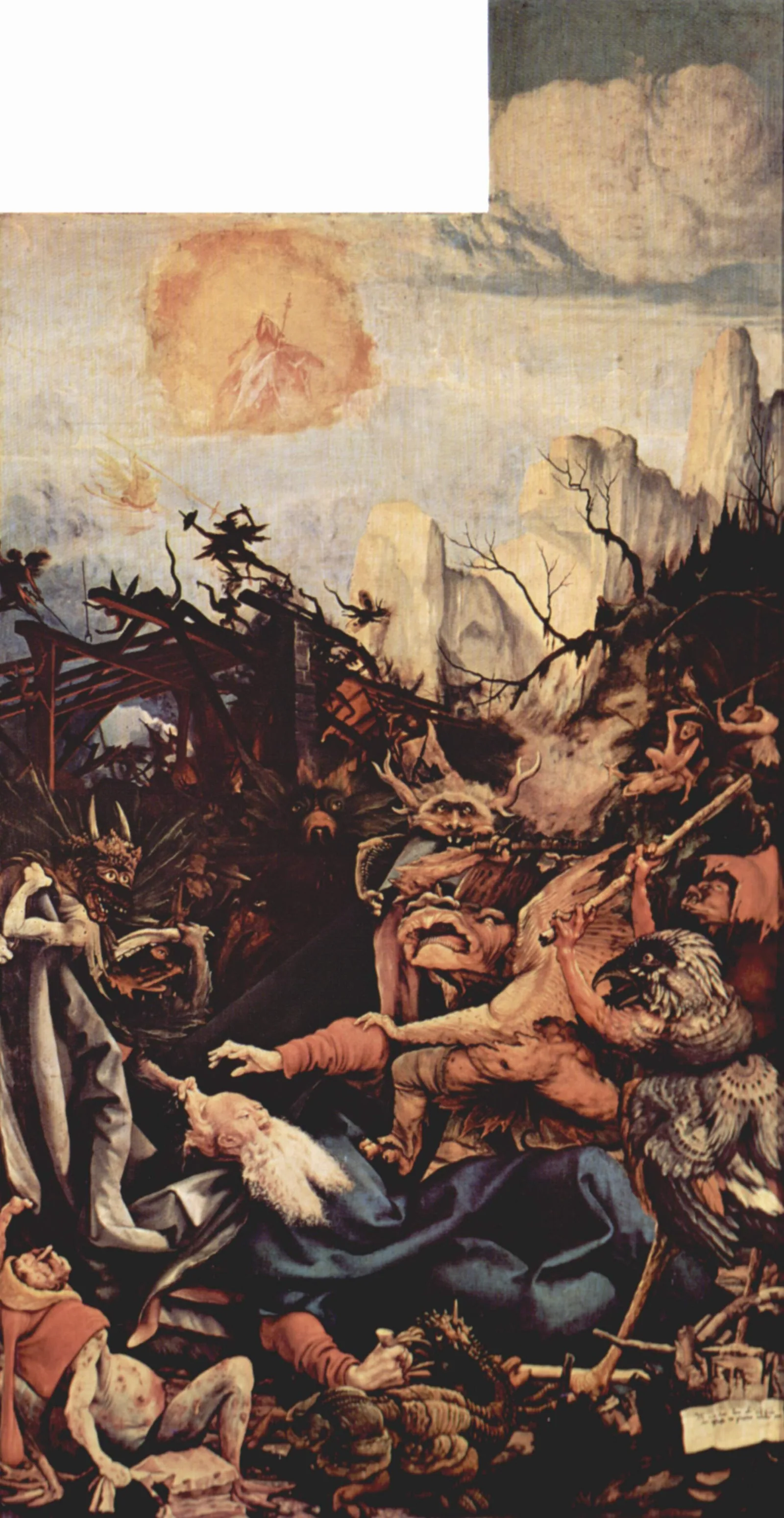
Matthias Grünewald’s Isenheim Altarpiece was commissioned for the Antonine hospital at Isenheim and addressed viewers living with severe disease. Its crucified Christ bears a tormented, marked body; the Temptation of Saint Anthony crowds the saint with hybrid attackers and includes a swollen, ulcerated figure. Art historians relate these bodies to the hospital’s patients and its healing programme, while cautioning that the imagery combines several diseases, scriptural exegesis and monstrous convention. Opened and closed around the liturgical calendar, the altarpiece transformed pain into an itinerary of Passion, temptation, music, resurrection and hoped-for restoration.
Plate 04 · Isenheim Altarpiece · deep view
Grünewald, Temptation of Saint Anthony, Isenheim Altarpiece, 1512–16 · public domain ↗
“I have fasted; I have drunk the kykeon.”
Initiatory formula reported by Clement of Alexandria; evidence for ritual sequence, not for the drink’s hidden ingredient (Mylonas, 1961).
Material lexicon
Ergot sclerotium
A horn, spur, tooth, abnormal grain and pharmacological raw material; the same object entered mill, apothecary, herbarium and later fermentation laboratory.
Kykeon vessel
Cup or mixed drink within a ritual sequence. The Mas Castellar vessel is the strongest published cult-context association with ergot; it comes from Iberia, and Eleusis has yielded no residue sample.
Antonine Tau
T-shaped cross worn and displayed by the order; a marker of saintly patronage and institutional care.
Pig and bell
Antonine pigs enjoyed privileges in some towns and helped support hospitals; bells marked them and also entered the order’s iconography.
Isenheim Altarpiece
A polyptych built for an Antonine hospital, joining liturgical transformation to bodies scarred by disease. Its medical relevance is contextual.
05Visionary phenomenology
Ergot produces many experiences. Alkaloid profile, dose, repeated exposure, nutrition and vascular susceptibility divide the historical record into gangrenous, convulsive and mixed syndromes. Much evidence concerns populations eating contaminated staples over days or weeks. Pharmaceutical exposure and the hypothetical LSA-rich kykeon are still different states. Raw ergot is a different substance from LSD (Eadie, 2003; Schiff, 2006).
Gangrenous ergotism
Burning · constriction · bodily loss
Cold extremities, pallor or cyanosis, tingling and crawling sensations, loss of peripheral pulse and severe burning pain may progress to dry gangrene, a line of demarcation and auto-amputation. The “fire” is simultaneously sensory and vascular; its phenomenology is of a body becoming painfully alien, rigid, blackened or absent.
Convulsive ergotism
Spasm · delirium · visions
Nausea and vertigo can precede tremor, painful tonic spasms, opisthotonus, seizures, confusion, agitation and hallucinations. Reports include animal presences, persecutory or religious scenes, fugues and impaired reality-testing. These occur within a toxic neurological syndrome.
Mixed and cumulative exposure
No standard duration
Symptoms can build with repeated contaminated meals and persist for days; vascular injury may be permanent. Regional contrasts between “gangrenous” western and “convulsive” eastern European outbreaks are useful historical patterns, with much overlap.
Hypothetical processed lysergamide
Ancient phenomenology unrecoverable
If an alkaline process generated LSA/iso-LSA, a multi-hour visionary state is chemically conceivable. No ancient dose, concentration, first-person visual description or preparation survives, so duration and intensity are beyond reconstruction from the Eleusinian testimonia.
Phenomenological profile
The profile lists effects the sources report, for each preparation separately, grouped by domain. Each row gives the grade, how often the sources say the effect occurs (only where they say so; most do not) and the kinds of source behind it. A chip naming a compound, such as “Trial · psilocybin”, means the evidence comes from studies of that compound rather than of the preparation itself; “partial” means the route, purity or dose differs from the traditional preparation, so the row cannot be graded above supported. The line under each preparation says which domains have evidence entered here. A domain with nothing entered has not yet been assessed in this profile; that is not a finding that the literature is silent, and the article may discuss it. Open a row for the note and the sources.
Contaminated graineaten over days or weeks
Evidence entered for 3 of 8 domains. Not yet entered: visual, other senses, self and unity, affect, relation to other beings. Discussed in the article above but not yet entered: visual.
The evidence is epidemic poisoning, not a preparation taken for its effects. Alkaloid profile, dose and repeated exposure divide it into gangrenous and convulsive syndromes (Eadie, 2003; Schiff, 2006); a processed lysergamide drink, if it existed, would be a different state.
Body
Tremor and motor slowingTrembling, impaired coordination or slowed movement.SupportedHistory
Muscle twitching and spasms are among the clinical features of the convulsive ergotism epidemics recorded east of the Rhine between 1085 and 1927 (Eadie, 2003).
Cognition
Loss of ordinary awarenessOrdinary sense, orientation or self-control is lost or overwhelmed.SupportedHistory
Changes in mental state and hallucinations, with sweating and fever lasting several weeks, also mark convulsive ergotism (Eadie, 2003).
States of consciousness
Dreamlike statesOneiric experience: dream formation, dreamlike sequences or a waking state resembling dreaming.UnresolvedHistory
The Pont-Saint-Esprit clinicians described episodes of “dreamy delirium” with animal hallucinations and mystical or macabre themes (Gabbai, Lisbonne and Pourquier, 1951); the outbreak’s toxic agent is disputed, so the attribution to ergot is unresolved.
SupportedUnresolvedHistoryhistorical sources
Accounts and interpretive caution
The 1951 Pont-Saint-Esprit clinicians described episodes of “dreamy delirium” with animal hallucinations and mystical or macabre themes, alongside agitation, bodily symptoms and dangerous behaviour (Gabbai, Lisbonne and Pourquier, 1951). Because the outbreak’s toxic agent is disputed, these accounts are phenomenologically salient and uncertain as C. purpurea observations. Medieval chronicles are even harder to translate into modern categories: demonic encounter, sacred fire, convulsion and vision name experiences within theological worlds.
“Dreamy delirium … with animal hallucinations.”
Gabbai, Lisbonne and Pourquier’s clinical description of Pont-Saint-Esprit (1951); causation remains disputed.
Comparative profile
Onset
Dietary ergotism may accumulate across repeated meals; acute symptoms can emerge within hours. No historically secure onset is known for an ergot-containing kykeon.
Duration
Neurological crises may last hours to days; recurrent exposure prolongs illness; ischaemic damage can be permanent. The epidemic evidence fits no discrete 6–12 hour “trip”.
Intensity
Ranges from nausea, tingling and anxiety to catastrophic vasospasm, convulsions, delirium, psychosis, gangrene and death, depending on mixture and exposure.
Vision form
Complex scenes, animals, persecutors, religious or macabre content and dreamlike confusion are reported in convulsive/toxic states. Eleusinian sources instead emphasise blessedness and knowledge concerning death without giving a visual pharmacography.
Salient distinction
Ergotism is a multi-receptor toxic syndrome. LSD is a defined synthetic compound; LSA is a simpler lysergamide; Eleusinian initiation was a ritual institution. Chemical kinship joins them; the experiences differ.
06Contemporary status
Conservation, agriculture and economies
C. purpurea is abundant and unlisted by the IUCN. Its contemporary economy is divided between exclusion and cultivation: grain systems spend on resistant or pollen-rich cultivars, crop rotation, mowing of grass margins, tillage, cleaning, optical sorting and chemical analysis, while pharmaceutical biotechnology maintains selected ergot strains for alkaloid production in controlled fermentation. The global costs attributable to this species alone are hard to separate from other ergots, livestock losses and quality downgrades. Climate-sensitive flowering synchrony and wet weather continue to make rye, hybrid rye, wheat, triticale and grass-seed systems vulnerable (Miedaner and Geiger, 2015).
Food and precursor regulation
European Union food law
Regulation (EU) 2023/915 sets maximum levels for visible ergot sclerotia and for the lower-bound sum of six principal alkaloids plus their epimers in specified cereal foods. Regulation (EU) 2024/1808 amended application dates for lower levels in rye and some milling products. These are contaminant limits, separate from drug scheduling (European Commission, 2023; 2024).
EFSA health values
The 2012 CONTAM opinion established a group acute reference dose of 1 μg/kg body weight and a group tolerable daily intake of 0.6 μg/kg for ergot alkaloids. A 2024 update reassessed risks in animal feed and retained concern for several livestock groups (EFSA CONTAM Panel, 2012; 2024).
International precursor control
Ergometrine, ergotamine and lysergic acid are Table I substances under the 1988 UN Convention against Illicit Traffic. The control addresses diversion into illicit synthesis; the fungus itself is unscheduled (INCB, 2025).
United States
Ergonovine/ergometrine, ergotamine and ergocristine are DEA List I chemicals. Lysergic acid and lysergic acid amide are Schedule III controlled substances; LSD is Schedule I. The species and ordinary cereal infection are unscheduled (eCFR, 2026).
Pharmaceutical afterlives
Ergot-derived and ergoline medicines have included ergotamine and dihydroergotamine for migraine, ergometrine or methylergometrine in obstetrics, bromocriptine and cabergoline as dopamine agonists, and other semi-synthetic agents. Their legal availability and preferred clinical roles differ by jurisdiction and have changed as newer drugs emerged. This is an economy of isolated molecules, semi-synthesis and fermentation (Haarmann et al., 2009).
Patents and intellectual property
Process claims
Twentieth-century Sandoz and successor patents claimed alkaloid isolation, derivatives, fermentation strains, syntheses and therapeutic compositions. Patentable subject matter lies in processes, compounds, strains and uses; C. purpurea as a naturally occurring species and ancient Eleusinian tradition lie outside it.
LSD lineage
Historic patents around lysergic acid derivatives belong to modern medicinal chemistry, and say nothing about whether LSD occurs naturally or whether an ancient culture possessed it.
Traditional-knowledge interface
Unlike clearly continuous Indigenous plant traditions, the ergot–kykeon claim lacks a living lineage able to supply a transmitted recipe. Contemporary experimental reconstructions are scholarly hypotheses.
Latest research
2026
Experimental kykeon chemistry
UHPLC/Q-TOF-HRMS and NMR showed formation of LSA and iso-LSA during alkaline hydrolysis of modern sclerotia. The study materially advances chemical feasibility while leaving historical use unresolved (Antonopoulos et al., 2026).
2024
Food-chain and epimer research
EFSA updated livestock risk assessment; analytical reviews continued to clarify the biological activity and instability of C-8-S “-inine” epimers (EFSA CONTAM Panel, 2024; Cherewyk et al., 2024).
2022–23
Pangenome and chromosome architecture
Long-read and comparative assemblies identified a large accessory genome, high recombination and chromosomal rearrangements that help explain the pathogen’s adaptive breadth (Wyka et al., 2022; Witte et al., 2023).
2021
Divergent alkaloid clusters
Comparative analysis linked biosynthetic-gene-cluster evolution to distinct sclerotial toxin profiles, tightening the connection between fungal lineage and food toxicology (Hicks et al., 2021).
Open questions on this entry
Safety and law
07Cross-correlations
Eleusinian Kykeon–Mystery Complex
Ceremonial complex page: Demeter and Persephone, initiation, kykeon, priesthood, archaeology and competing pharmacological hypotheses. CONTESTED RITUAL ASSOCIATION
Peganum harmala
Species monograph: another “ergoline-adjacent” historical candidate only by modern comparison; β-carboline pharmacology and Haoma debates are distinct from ergot. COMPARATIVE HYPOTHESIS
Amanita muscaria
Species monograph: alternative candidate in some reconstructions of ancient Eurasian sacraments; isoxazole chemistry is unrelated to ergot alkaloids. COMPARATIVE ENTHEOGEN
Papaver somniferum
Species monograph: poppy imagery intersects Demeter cult and ancient medicine, but opiate sedation supplies a different pharmacological and evidential problem. ELEUSINIAN ICONOGRAPHIC ASSOCIATE
Secale cereale
Rye is the principal agricultural host and the staple through which European ergotism became historically consequential. HOST PLANT
Hordeum vulgare
Barley is named in the Eleusinian kykeon and can host ergot, though less readily than rye. Its ritual presence is documented; ergot contamination is hypothetical at Eleusis. HOST / RITUAL CEREAL
LSD and neo-psychedelics
Modern synthetic history emerging from Sandoz ergot chemistry. LSD’s pharmacology and twentieth-century cultures belong to their own period, apart from raw ergot and medieval epidemics. CHEMICAL DESCENDANT / MODERN COMPLEX
Ipomoea corymbosa
Species monograph: ololiuhqui, a Mexican morning glory whose ergoline alkaloids are made by a seed-borne symbiont of the same fungal family, Periglandula; shared chemistry, a different ecology, and a divinatory history where ergot’s is epidemic. FUNGAL KIN
08Bibliography
42 sources in 6 threads · 41 with a working locator · Harvard (Cite Them Right) · status and kind are recorded per source, not assumed
How to read the labels on each source
Source type
What kind of work it is: journal article, book, legislation, patent application, database record and so on. A word after the dot (ethnography, protologue, primary source) keeps the genre the entry was first filed under. “Unclassified” means the citation does not say enough to tell.
Peer review
Recorded for each work separately, and only where it has been confirmed for that work. It is never inferred from a DOI, a publisher or a journal, since journals also publish editorials, letters and commentaries. Where it has not been confirmed, the entry records it as not established. It does not apply to legislation, court decisions, treaties, patents, datasets, database and collection records, historical texts, films, talks, press releases or web pages.
Check
What was checked when the entry was added. DOI checked: the DOI’s registry record (Crossref) matched the citation’s title, first author and year. Verified: the record itself was opened and matched the citation: a library catalogue record for a book, or the page itself for a database entry, law, patent or archive document. “Verified (abstract)” and “(summary)” mean only the abstract or a summary was read. Located: a record was found but not fully matched. Bibliographic record and Stable record (in essays): a catalogue or stable web record exists; what was checked against it is not recorded. Unverified: no check is recorded. No locator found: a search found no record. Secondary: read through another source.
What the labels do not say
None of them means the source supports a particular sentence. Where a sentence is graded, its evidence note names its sources and whether each supports it, disputes it or gives context. Dates and reviewers of checks are not recorded for each entry; the version note at the foot of a graded page dates its last review.
Botany, taxonomy & genetics
Dung, J.K.S., Alderman, S.C., Kaur, N. and Walenta, D.L. (2021) ‘Ergot of grasses: disease biology and management’, Phytopathology, 111(10), pp. 1727–1737. Available at: https://doi.org/10.1094/PHYTO-07-20-0289-R.
DOI checkedJournal articlePeer review not establishedOpen record ↗cited 1× in this record
Miedaner, T. and Geiger, H.H. (2015) ‘Biology, genetics, and management of ergot (Claviceps spp.) in rye, sorghum, and pearl millet’, Toxins, 7(3), pp. 659–678. Available at: https://doi.org/10.3390/toxins7030659.
DOI checkedJournal articlePeer review not establishedOpen record ↗cited 3× in this record
Pažoutová, S., Pešicová, K., Chudíčková, M., Šrůtka, P. and Kolařík, M. (2015) ‘Delimitation of cryptic species inside Claviceps purpurea’, Fungal Biology, 119(1), pp. 7–26. Available at: https://doi.org/10.1016/j.funbio.2014.10.003.
DOI checkedJournal articlePeer review not establishedOpen record ↗cited 2× in this record
Píchová, K., Pažoutová, S., Kostovčík, M., Chudíčková, M., Stodůlková, E., Novák, P., Flieger, M., van der Linde, E. and Kolařík, M. (2018) ‘Evolutionary history of ergot with a new infrageneric classification (Hypocreales: Clavicipitaceae: Claviceps)’, Molecular Phylogenetics and Evolution, 123, pp. 73–87. Available at: https://doi.org/10.1016/j.ympev.2018.02.013.
DOI checkedJournal articlePeer review not establishedOpen record ↗cited 1× in this record
Wyka, S.A. et al. (2022) ‘A large accessory genome and high recombination rates may contribute to the success of Claviceps purpurea as an agricultural pathogen’, PLOS ONE, 17(2), e0263496. Available at: https://doi.org/10.1371/journal.pone.0263496.
DOI checkedJournal articlePeer review not establishedOpen record ↗cited 2× in this record
Witte, T.E. et al. (2023) ‘Chromosome-level draft genome sequences of three isolates of the toxigenic fungus Claviceps purpurea showing structural rearrangements’, Microbiology Resource Announcements, 12(10), e00234-23. Available at: https://doi.org/10.1128/mra.00234-23.
DOI checkedJournal articlePeer review not establishedOpen record ↗cited 2× in this record
Chemistry, biosynthesis & pharmacology
Antonopoulos, R.K. et al. (2026) ‘Investigating the psychedelic hypothesis of kykeon, the sacred elixir of the Eleusinian Mysteries’, Scientific Reports, 16, 8757. Available at: https://doi.org/10.1038/s41598-026-39568-3.
DOI checkedJournal articlePeer review not establishedOpen record ↗cited 7× in this record
Cherewyk, J.E. et al. (2024) ‘The C-8-S-isomers of ergot alkaloids—a review of biological and toxicological activity’, Mycotoxin Research, 40, pp. 1–19. Available at: https://doi.org/10.1007/s12550-023-00507-0.
DOI checkedJournal articlePeer review not establishedOpen record ↗cited 3× in this record
Flieger, M., Stodůlková, E., Wyka, S.A. and Kolařík, M. (2019) ‘Ergochromes: heretofore neglected side of ergot toxicity’, Toxins, 11(8), 439. Available at: https://doi.org/10.3390/toxins11080439.
DOI checkedJournal articlePeer review not establishedOpen record ↗cited 1× in this record
Florea, S., Panaccione, D.G. and Schardl, C.L. (2017) ‘Ergot alkaloids of the family Clavicipitaceae’, Phytopathology, 107(5), pp. 504–518. Available at: https://doi.org/10.1094/PHYTO-12-16-0435-RVW.
DOI checkedJournal articlePeer review not establishedOpen record ↗cited 2× in this record
Hicks, C. et al. (2021) ‘Evolution of the ergot alkaloid biosynthetic gene cluster results in divergent mycotoxin profiles in Claviceps purpurea sclerotia’, Toxins, 13(12), 861. Available at: https://doi.org/10.3390/toxins13120861.
DOI checkedJournal articlePeer review not establishedOpen record ↗cited 2× in this record
Schiff, P.L. Jr (2006) ‘Ergot and its alkaloids’, American Journal of Pharmaceutical Education, 70(5), 98. Available at: https://doi.org/10.5688/aj700598.
DOI checkedJournal articlePeer review not establishedOpen record ↗cited 3× in this record
DOI checkedJournal articlePeer review not establishedOpen record ↗cited 1× in this record
Clinton, K. (2007) ‘The Mysteries of Demeter and Kore’, in Ogden, D. (ed.) A Companion to Greek Religion. Oxford: Blackwell, pp. 342–356. Available at: https://doi.org/10.1002/9780470996911.ch23.
DOI checkedBook chapterPeer review not establishedOpen record ↗cited 1× in this record
Foley, H.P. (ed.) (1994) The Homeric Hymn to Demeter: Translation, Commentary, and Interpretive Essays. Princeton, NJ: Princeton University Press. Available at: https://doi.org/10.1515/9781400849086.
DOI checkedBookPeer review not establishedOpen record ↗cited 2× in this record
Grzybowski, A., Żaba, R., Żaba, C. and Żaba, Z. (2021) ‘Ergotism and Saint Anthony’s fire’, Clinics in Dermatology, 39(6), pp. 1088–1094. Available at: https://doi.org/10.1016/j.clindermatol.2021.07.009.
DOI checkedJournal articlePeer review not establishedOpen record ↗cited 3× in this record
Haarmann, T., Rolke, Y., Giesbert, S. and Tudzynski, P. (2009) ‘Ergot: from witchcraft to biotechnology’, Molecular Plant Pathology, 10(4), pp. 563–577. Available at: https://doi.org/10.1111/j.1364-3703.2009.00548.x.
DOI checkedJournal articlePeer review not establishedOpen record ↗cited 1× in this record
Hofmann, A. (1980) LSD: My Problem Child—Reflections on Sacred Drugs, Mysticism, and Science. Translated by J. Ott. New York: McGraw-Hill.
VerifiedBookPeer review not establishedOpen record ↗
Kaplan, S.L. (2008) Le Pain maudit: Retour sur la France des années oubliées, 1945–1958. Paris: Fayard.
VerifiedBookPeer review not establishedOpen record ↗cited 1× in this record
Lee, M.R. (2009a) ‘The history of ergot of rye (Claviceps purpurea) I: from antiquity to 1900’, Journal of the Royal College of Physicians of Edinburgh, 39(2), pp. 179–184. Available at: https://doi.org/10.1177/1478271520093902021.
DOI checkedJournal articlePeer review not establishedOpen record ↗cited 3× in this record
Lee, M.R. (2009b) ‘The history of ergot of rye (Claviceps purpurea) II: 1900–1940’, Journal of the Royal College of Physicians of Edinburgh, 39(4), pp. 365–369. Available at: https://doi.org/10.4997/JRCPE.2009.416.
DOI checkedJournal articlePeer review not establishedOpen record ↗cited 2× in this record
Mylonas, G.E. (1961) Eleusis and the Eleusinian Mysteries. Princeton, NJ: Princeton University Press.
DOI checkedBookPeer review not establishedOpen record ↗cited 2× in this record
Smakosz, A., Kurzyna, W., Rudko, M. and Dasal, M. (2021) ‘The usage of ergot (Claviceps purpurea (Fr.) Tul.) in obstetrics and gynecology: a historical perspective’, Toxins, 13(7), 492. Available at: https://doi.org/10.3390/toxins13070492.
DOI checkedJournal articlePeer review not establishedOpen record ↗cited 2× in this record
Spanos, N.P. and Gottlieb, J. (1976) ‘Ergotism and the Salem Village witch trials’, Science, 194(4272), pp. 1390–1394. Available at: https://doi.org/10.1126/science.795029.
DOI checkedJournal articlePeer review not establishedOpen record ↗cited 1× in this record
van Dongen, P.W.J. and de Groot, A.N.J.A. (1995) ‘History of ergot alkaloids from ergotism to ergometrine’, European Journal of Obstetrics & Gynecology and Reproductive Biology, 60(2), pp. 109–116. Available at: https://doi.org/10.1016/0028-2243(95)02034-Z.
DOI checkedJournal articlePeer review not establishedOpen record ↗
Wasson, R.G., Hofmann, A. and Ruck, C.A.P. (1978) The Road to Eleusis: Unveiling the Secret of the Mysteries. New York: Harcourt Brace Jovanovich.
VerifiedBookPeer review not establishedOpen record ↗cited 3× in this record
Phenomenology & toxicology
Eadie, M.J. (2003) ‘Convulsive ergotism: epidemics of the serotonin syndrome?’, The Lancet Neurology, 2(7), pp. 429–434. Available at: https://doi.org/10.1016/S1474-4422(03)00439-3.
DOI checkedJournal articlePeer review not establishedOpen record ↗cited 5× in this record
Gabbai, Lisbonne and Pourquier (1951) ‘Ergot poisoning at Pont St. Esprit’, British Medical Journal, 2(4732), pp. 650–651. Available at: https://doi.org/10.1136/bmj.2.4732.650.
DOI checkedJournal articlePeer review not establishedOpen record ↗cited 4× in this record
Klotz, J.L. (2015) ‘Activities and effects of ergot alkaloids on livestock physiology and production’, Toxins, 7(8), pp. 2801–2821. Available at: https://doi.org/10.3390/toxins7082801.
DOI checkedJournal articlePeer review not establishedOpen record ↗
Food safety, contemporary research & law
EFSA CONTAM Panel (2012) ‘Scientific opinion on ergot alkaloids in food and feed’, EFSA Journal, 10(7), 2798. Available at: https://doi.org/10.2903/j.efsa.2012.2798.
DOI checkedJournal articlePeer review not establishedOpen record ↗cited 1× in this record
EFSA CONTAM Panel (2024) ‘Risks for animal health related to the presence of ergot alkaloids in feed’, EFSA Journal, 22(1), 8496. Available at: https://doi.org/10.2903/j.efsa.2024.8496.
DOI checkedJournal articlePeer review not establishedOpen record ↗cited 2× in this record
European Commission (2023) ‘Commission Regulation (EU) 2023/915 of 25 April 2023 on maximum levels for certain contaminants in food’, Official Journal of the European Union, L119, pp. 103–157. Available at: EUR-Lex (Accessed: 7 August 2026).
UnverifiedLegislation or regulationPeer review not applicableOpen record ↗cited 1× in this record
European Commission (2024) ‘Commission Regulation (EU) 2024/1808 amending Regulation (EU) 2023/915 as regards the application date of lower maximum levels for ergot sclerotia and ergot alkaloids in food’. Available at: EUR-Lex (Accessed: 7 August 2026).
UnverifiedLegislation or regulationPeer review not applicableOpen record ↗cited 1× in this record
Electronic Code of Federal Regulations (eCFR) (2026) ‘21 CFR §1308.13 and §1310.02: Schedule III substances and List I chemicals’. Available at: ecfr.gov (Accessed: 7 August 2026).
VerifiedLegislation or regulationPeer review not applicableOpen record ↗cited 1× in this record
International Narcotics Control Board (INCB) (2025) Red List: List of Precursors and Chemicals Frequently Used in the Illicit Manufacture of Narcotic Drugs and Psychotropic Substances, 23rd edn. Vienna: United Nations. Available at: incb.org.
UnverifiedDatabase recordPeer review not applicableOpen record ↗cited 1× in this record
Primary nomenclatural, archaeological & image records
GBIF.org (2026) ‘Occurrence search: C. purpurea, records with coordinates’, Global Biodiversity Information Facility, accessed 12 October 2026.
VerifiedDatasetPeer review not applicableOpen record ↗cited 1× in this record
Tulasne, L.-R. (1853) ‘Mémoire sur l’ergot des Glumacées’, Annales des Sciences Naturelles, Botanique, series 3, 20, pp. 5–56.
VerifiedHistorical text · protologuePeer review not applicableOpen record ↗cited 1× in this record
MycoBank (2026) ‘Claviceps purpurea (Fr.) Tul., MycoBank 162059’. Available at: mycobank.org (Accessed: 7 August 2026).
UnverifiedDatabase recordPeer review not applicableOpen record ↗cited 1× in this record
Juan-Tresserras, J. (2002) ‘La arqueología de las drogas en la Península Ibérica: una síntesis de las recientes investigaciones arqueobotánicas’, in Fábregas Valcarce, R. (ed.) Os alucinóxenos e a arqueoloxía. Santiago de Compostela: Universidade de Santiago de Compostela, pp. 101–121.
No locator foundBook chapterPeer review not establishedcited 2× in this record
Malmberg, K. (2019) ‘Rye ergot (Claviceps purpurea)’, photograph via iNaturalist and Wikimedia Commons. CC BY 4.0.
VerifiedImage or photographPeer review not applicableOpen record ↗
Jacquin, O. (2009) ‘Stromata germinating from a sclerotium of Claviceps purpurea’, photograph via Wikimedia Commons. CC BY-SA 3.0.
VerifiedImage or photographPeer review not applicableOpen record ↗
Grünewald, M. (1512–1516) The Temptation of Saint Anthony, Isenheim Altarpiece. Colmar: Musée Unterlinden. Public-domain reproduction via Wikimedia Commons.
VerifiedHistorical textPeer review not applicableOpen record ↗