Mirante, D. (ed.) (2026) Ayahuasca Complex. Entheocene, version 1.0. Available at: https://entheocene.com/complex-ayahuasca.html (Accessed: 17 October 2026).
DOI: not yet minted.
Introduction
Ayahuasca is a vine and a family of preparations; a diagnostic instrument, teacher, medicine and visionary technology ; a discipline of songs, diets, breath, pattern and bodily ordeal; a medium of interethnic diplomacy and conflict; and, since the twentieth century, the Eucharist of Brazilian religions and a global therapeutic–spiritual economy. “Ayahuasca” is now a Quechuan regional term now made planetary. Siona yajé, A’ingae yagé, Shuar natem, Shipibo-Konibo oni, Huni Kuin nixi pae, Santo Daime Daime and União do Vegetal Hoasca all name differing relations among particular plants, persons, territories, songs, beings and regimes of authority. PHARMAKON treats the Ayahuasca Complex as a braided historical field: north-western Amazonian yagé traditions, western-Amazonian ayawaska and vegetalismo, Brazilian Daime–Hoasca religions, and a contemporary vehicle of self-enquiry and psychonautic exploration in the contemporary world (Langdon, 2017; Labate and Cavnar, 2014; Gearin and Calavia Sáez, 2021; Favaron, Williams and Bédard, 2026).
Contents
01Constituents & preparation
Deep Time
ASSOCIATIONHarmine + DMT in Bolivian ritual bundle, c. 905–1170 CE
WRITTEN RECORDJesuit reports, western Amazon, 17th century
RELIGIOUS FORMATIONSanto Daime, 1930s · UDV, 1961
The common botanical architecture
The globally dominant vine–leaf pairing is shown at full scale. Smaller cards indicate regional co-principals, occasional admixtures and medicines belonging to the surrounding ritual pharmacopoeia.
The vine has pharmacological, experiential and cultural activity beyond enabling oral DMT. In many traditions it is the medicine, teacher or organising intelligence itself; the term “ayahuasca” may name the vine before it names the finished preparation.
Primary role
Vine · foundation of the preparation
Compounds
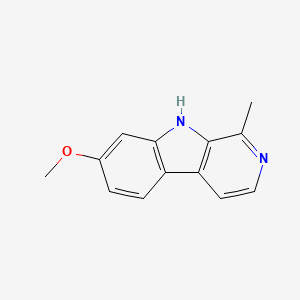
Harmine · tetrahydroharmine · harmaline
Distribution
North-western and western Amazon; cultivated far beyond its probable domestication centres
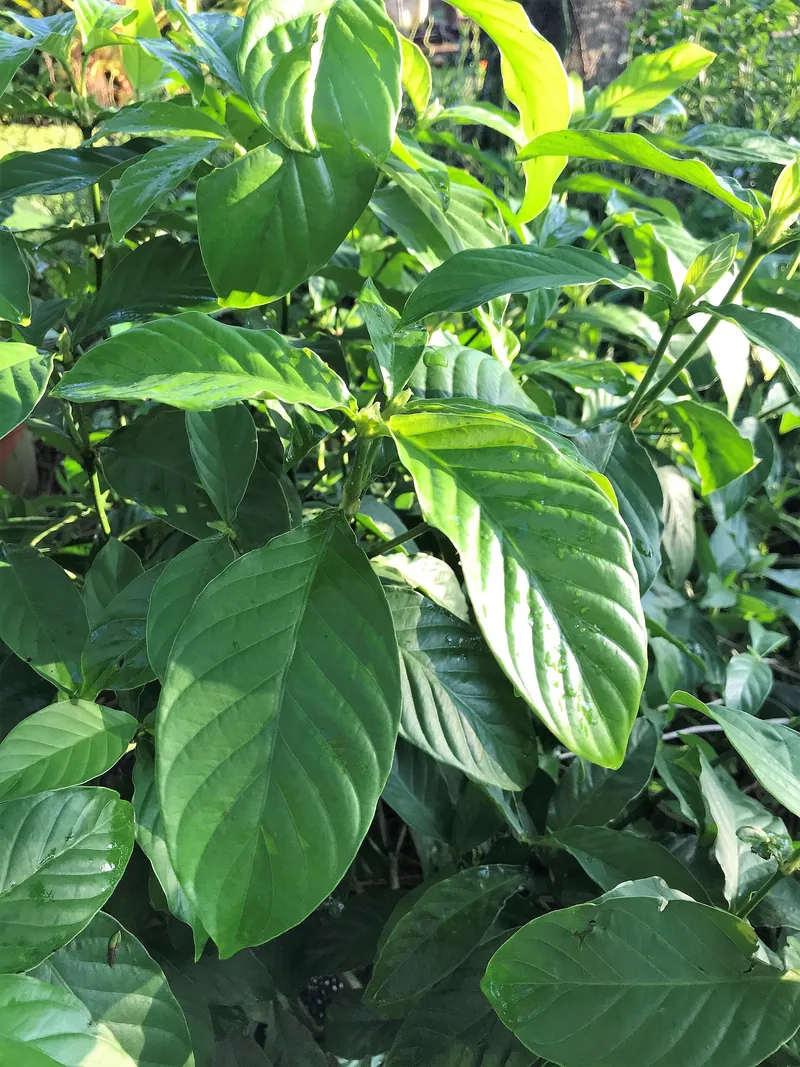
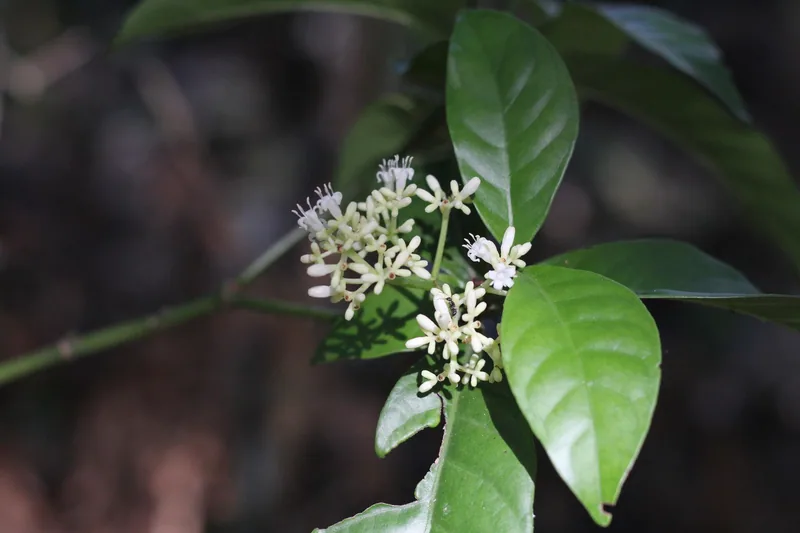
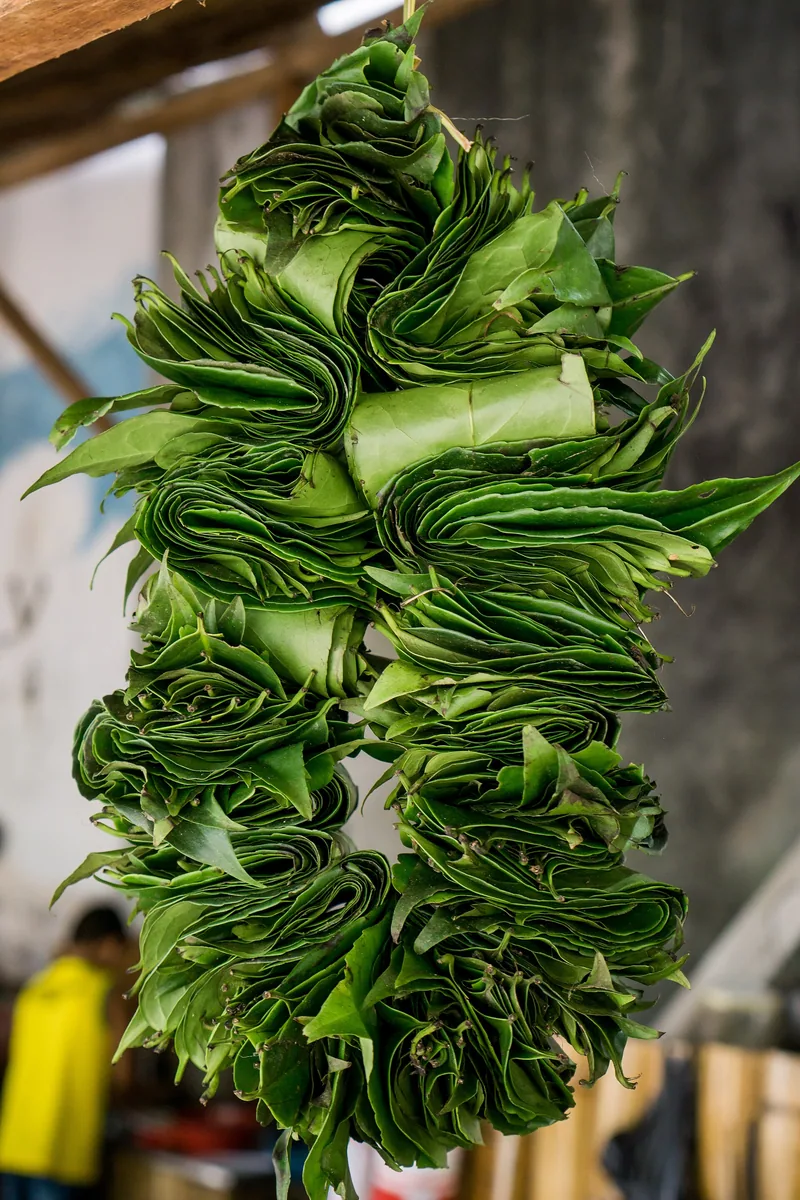
The principal companion leaf across much of Peru, Brazil and the global diaspora, and especially central to western-Amazonian preparations and the Brazilian churches. Some yagé traditions use other leaves.
Primary role
Leaf · visionary companion to caapi
Compound
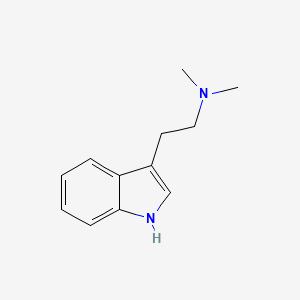
N,N-dimethyltryptamine (DMT)
Prominence
Ayawaska / oni · Santo Daime · Barquinha · União do Vegetal · global ceremonies
Caffeine-rich Amazonian holly used for waking, emesis and cleansing; its place varies between everyday social drink, preparation and ritual sequence.
Dieta medicine · healing associate
Calliandra angustifolia
bobinsana
Plate — awaiting commission
A master-plant medicine associated with diets, song and emotional or social healing; it is dieted alongside ayahuasca, and only sometimes goes into the pot.
Scale indicates frequency and structural importance within the wider complex; pharmacological potency is another matter. A “secondary” plant may matter greatly to a culture, and an “associated” one may never be brewed.
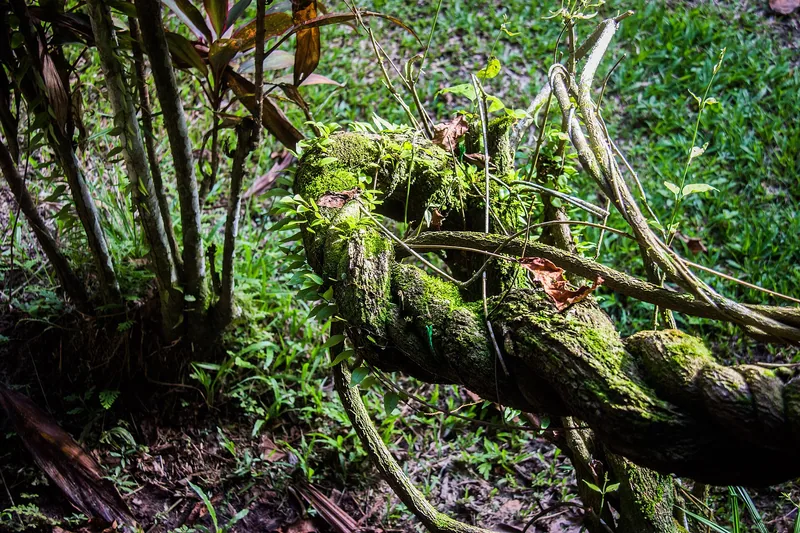
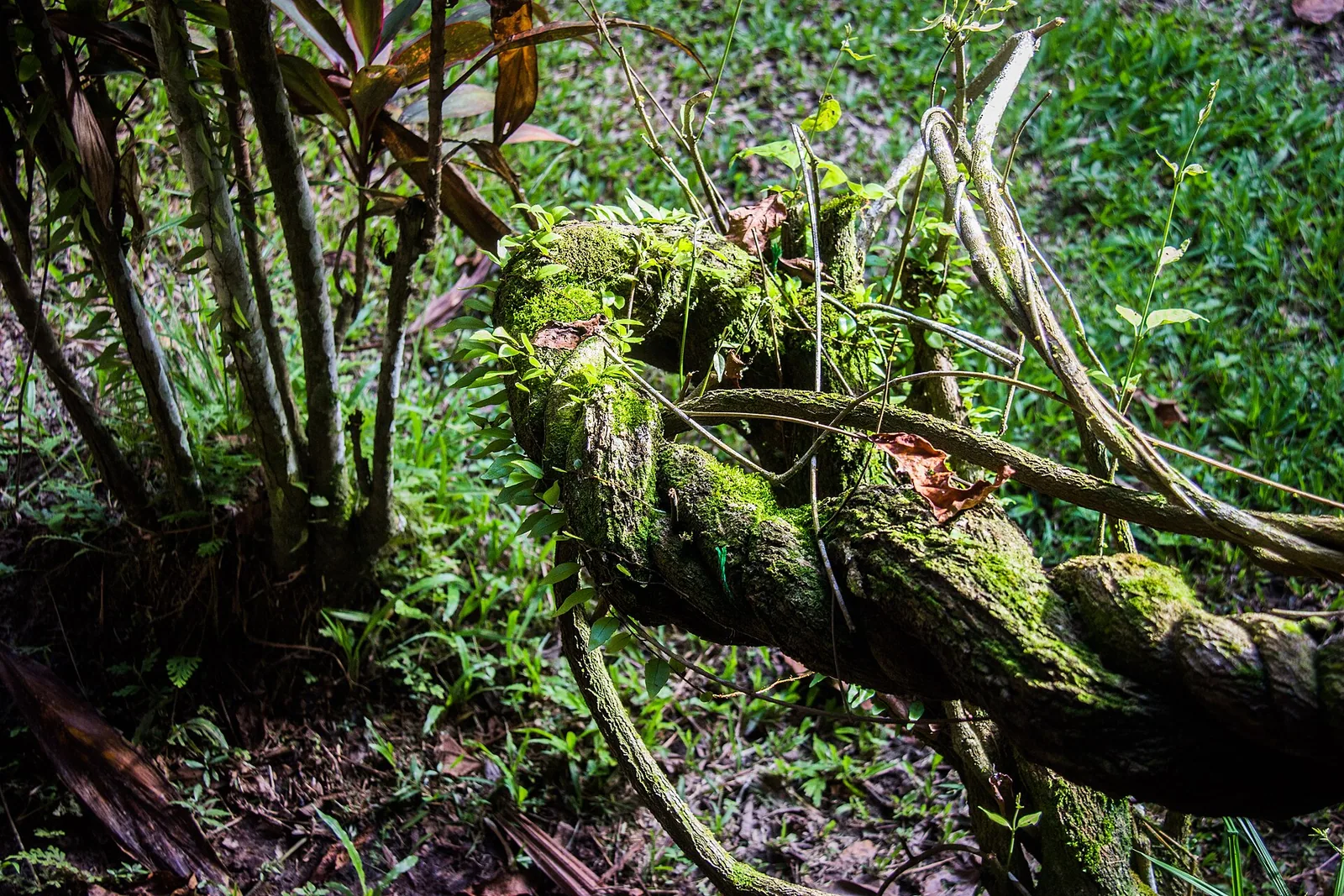
Plate 01 · Banisteriopsis caapi · deep view
Banisteriopsis caapi, Iquitos, Peru · Apollo, 2015 · CC BY 2.0 ↗
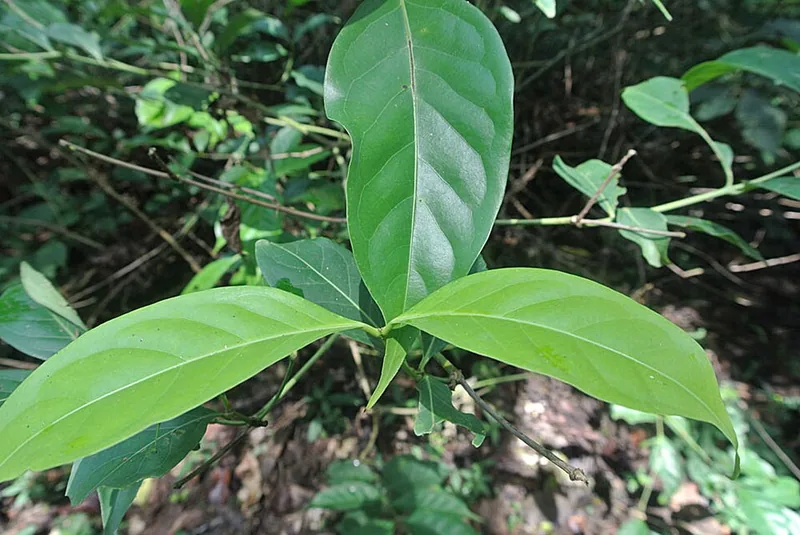
Banisteriopsis caapi is the principal vine and the plant most consistently named as the medicine itself. Psychotria viridis is the most widespread companion leaf, while Diplopterys cabrerana is a regional co-principal in north-western Amazonian yagé. A DMT-bearing leaf is common, though some traditions brew without one (Rivier and Lindgren, 1972; McKenna, Towers and Abbott, 1984; Kew Science, 2026a–c).
Associated compounds
Caapi supplies the β-carbolines harmine, tetrahydroharmine and usually lower concentrations of harmaline. Chacruna and chagropanga supply N,N-dimethyltryptamine (DMT); minor alkaloids and concentrations vary with taxon, cultivar, tissue, provenance and preparation (Callaway, Brito and Neves, 2005; Santos et al., 2020; Rodríguez et al., 2022).
Regional names
Ayawaska / ayahuasca (Quechuan); yagé / yajé (Colombia–Ecuador); natem (Shuar and related Jivaroan languages); oni (Shipibo-Konibo); nixi pae (Huni Kuin); uni (Yawanawá and related Panoan use); kamarampi (Asháninka); caapi (Rio Negro usage); Daime (Santo Daime); Hoasca or Vegetal (UDV). Translations such as “vine of the soul” are suggestive; the local names come first.
Defining preparation
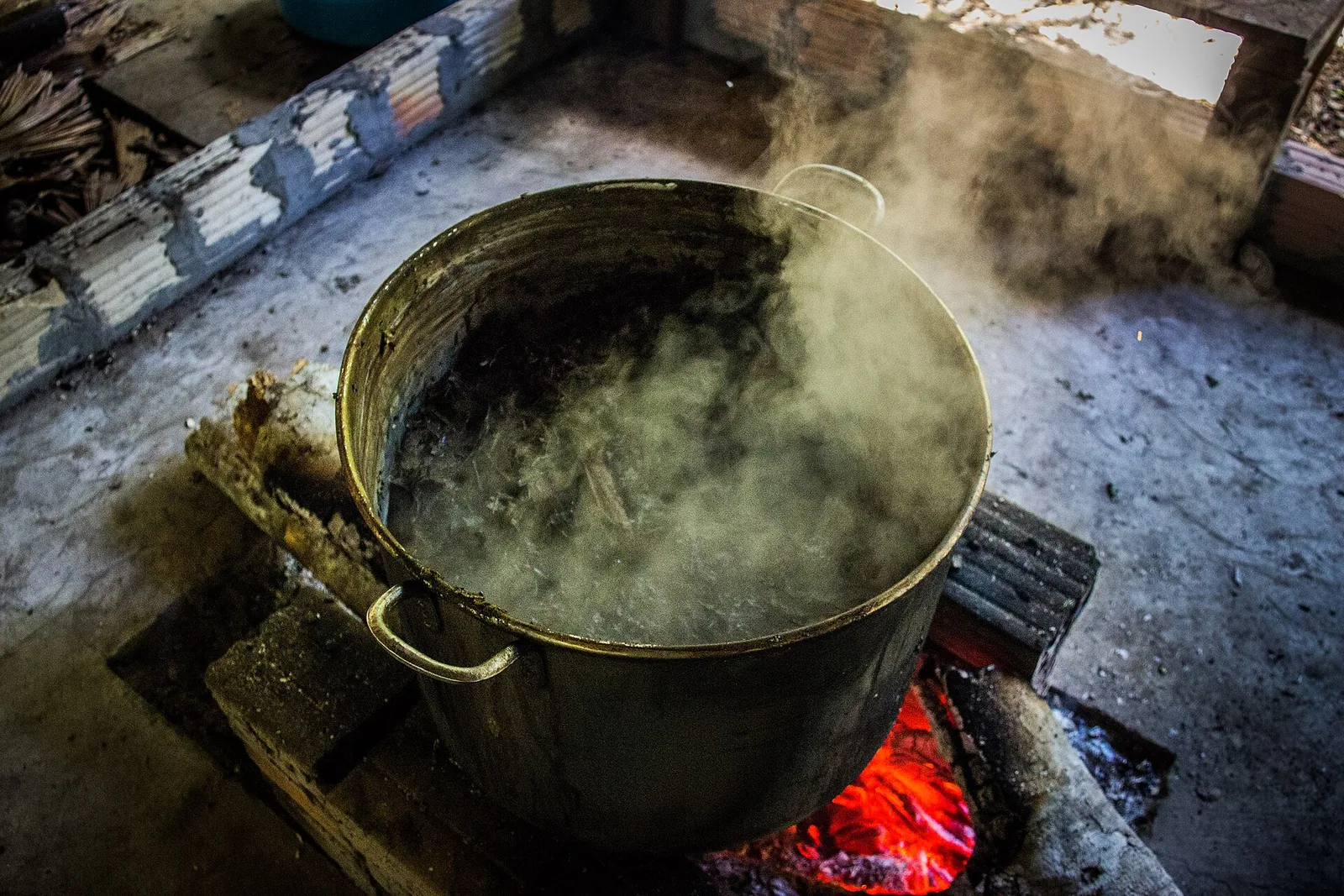
Vine and companion foliage are selected, cleaned, comminuted and repeatedly decocted under rules that may regulate who harvests, pounds, tends the fire, sings, prays and serves. Santo Daime feitio, UDV preparation and Indigenous or vegetalista cooking are distinct collective technologies, each with its own rules.
Boundary of the complex
The complex includes vine-only medicines, DMT-bearing vine–leaf preparations, wider medicinal admixture systems and the ceremonial institutions that make them intelligible. Preparations using rue, Acacia, Mimosa or isolated compounds belong primarily to the linked Ayahuasca Analogues Complex.
Often caapi with P. viridis, embedded in larger pharmacopoeias of tobacco, purgatives, perfumes and master-plant diets.
Song is an operative technology: rao bewa, ikaros, breath, smoke, whistling and leaf-bundle rhythm shape diagnosis and healing.
Vegetalismo is an interethnic Amazonian formation, with its own history and lineages (Luna, 1986; Beyer, 2009).
Daime, Hoasca and Vegetal
Santo Daime · Barquinha · União do Vegetal
Founded among rubber-frontier workers, Afro-Brazilian and migrant communities in Acre and Rondônia during the twentieth century.
Caapi becomes jagube/mariri; chacruna becomes rainha/chacrona; the drink becomes a Christian–Spiritist sacrament.
Hymn, doctrine, uniform, dance, hierarchy and collective concentration create experiences distinct from vegetalista curing (Labate, Rose and Santos, 2009).
Preparation families and their social logic
Preparation family
Typical botanical emphasis
Ritual and interpretive emphasis
North-western yagé
Caapi types with D. cabrerana; regional plants may differentiate preparations.
Training graded through strength and colour; pinta, jaguar power, diagnosis, communal protection and political–territorial authority.
Peruvian ayawaska / oni
Caapi with P. viridis, within a much larger plant-medicine system.
Caapi-based preparations, composition varying with local practice and purpose.
Vision, ancestral encounter, warfare/history, diagnosis and the acquisition or interpretation of power.
Santo Daime
Jagube + rainha, collectively prepared in the feitio.
Hymns, miração, geometrical dancing, uniforms, prayer, firmness and the “Empire of Juramidam.”
Barquinha
Daime within a highly elaborated Afro-Brazilian, Catholic and Spiritist cosmology.
Marine navigation, charitable healing, mediumship, entities, altars and visionary “works.”
União do Vegetal
Mariri + chacrona = Hoasca / Vegetal.
Seated, hierarchical sessão; spoken doctrine, questions, calls and disciplined burracheira, with no general demand for spectacular vision.
Admixture is pharmacopoeia, not garnish
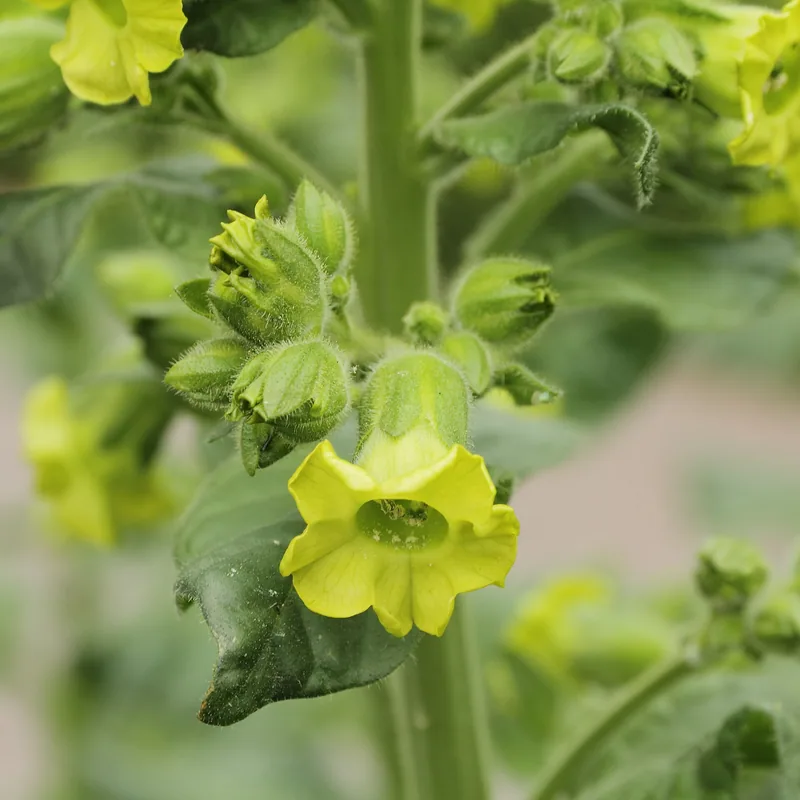
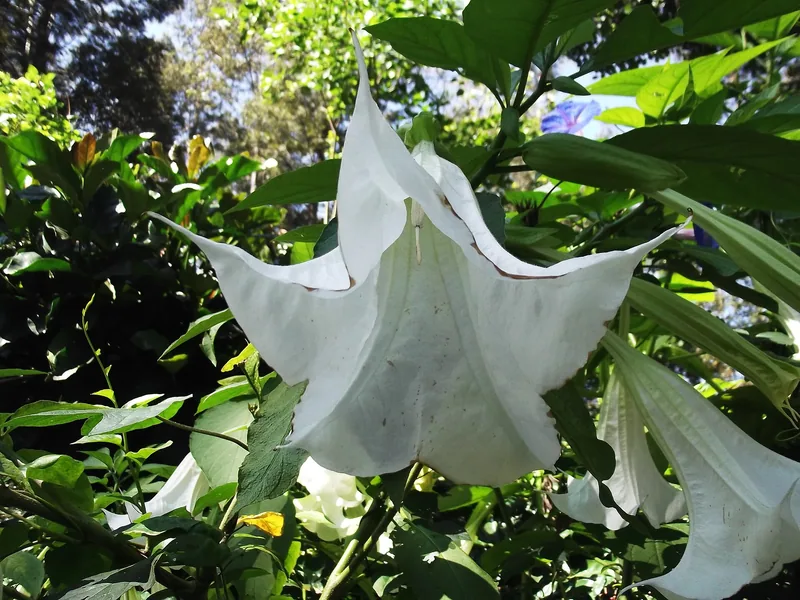
Tobacco commonly cleans, protects and carries prayer; Brugmansia may intensify or radically alter a preparation but introduces dangerous tropane pharmacology; guayusa can modify wakefulness; bobinsana, chiric sanango, ajo sacha and many other plants may enter diets or healing sequences without necessarily entering the pot. Ethnobotanical lists that flatten every associated plant into an “ingredient” erase the distinction between brew, dieta, bath, perfume, smoke, purge and protective charm (Luna, 1986; Beyer, 2009).
Combination pharmacology
DMT taken orally is rapidly metabolised by monoamine oxidase-A. Harmine and harmaline reversibly inhibit MAO-A, increasing DMT bioavailability; DMT then acts chiefly as a serotonergic psychedelic, including partial agonism at 5-HT2A receptors. THH has a different pharmacological profile, and the β-carbolines do more than unlock DMT: caapi has central, experiential and potentially neurobiological effects of its own (McKenna, Towers and Abbott, 1984; Riba et al., 2003; Santos et al., 2022).
SAFETY
Composition varies substantially. Ayahuasca may interact dangerously with serotonergic, sympathomimetic or MAO-active medicines and drugs; Brugmansia admixture adds anticholinergic toxicity. Cardiovascular and psychiatric screening, informed consent, sober support and emergency planning cannot be replaced by claims of “traditional authenticity” (Bouso et al., 2022; dos Santos and Hallak, 2025).
02Culture
Peoples and territories
Ayahuasca knowledge crosses language families and political borders. The following territories are nodes in a much wider and historically mobile field; none is a complete list of “ayahuasca tribes,” and participation inside each people varies by generation, gender, community and historical moment.
Putumayo–Caquetá–Napo
Siona · A’ingae / Cofán · Inga · Kamsá · Secoya
Yagé mediates healing, shamanic apprenticeship, interethnic relations and contemporary political revival. Among Siona, visionary narratives and performance reproduce a specifically Siona shamanic world, even as taitas enter national and global circuits (Langdon, 2017).
Ucayali and middle Amazon
Shipibo-Konibo-Xetebo · neighbouring Panoan and riverine communities
Oni sits inside systems of rao plant knowledge, dieting, song, kinship and design. Women are central creators and transmitters of kené; male and female onanyabo practise healing, despite tourist stereotypes of the exclusively male shaman (Gonzalez et al., 2021; Favaron, Williams and Bédard, 2026).
Peruvian upper Amazon
Kichwa / Lamista · Cocama · mestizo and urban curanderismo
Vegetalismo developed through Indigenous knowledge, missionisation, rubber-era mobility and town–forest exchange. The healer’s power comes through relations with plants established in diets; drinking ayahuasca is one part of it (Luna, 1986; Beyer, 2009).
Pastaza–Marañón
Shuar · Achuar · Shiwiar · Kichwa
Natem and related visionary practices concern ancestral power, diagnosis, conflict, hunting and life-course formation, each with its own history.
Acre–Purus–Juruá
Huni Kuin · Yawanawá · Asháninka · Shawãdawa · Katukina and others
Indigenous revitalisation has made nixi pae/uni ceremonies, songs and visual languages prominent in Brazil and abroad. Global alliances can generate resources and political visibility while also producing pressure to perform recognisable “ancestral spirituality.”
Mestre Irineu’s Santo Daime, Mestre Daniel’s Barquinha and Mestre Gabriel’s UDV transformed forest drink into organised religions with different doctrines, musical systems, hierarchies and international legal histories (Labate, Rose and Santos, 2009; Dawson, 2013).
Caapi enters initiation, recitation, dance, male ceremonial knowledge and return to ancestral routes. Ritual work may be divided among kumu, bayá and yai specialists (Reichel-Dolmatoff, 1971; Hugh-Jones, 1979; Cayón, 2020).
Upper Orinoco
Piaroa / Wõthïhã and neighbouring peoples
Caapi may be prepared from cambium without a DMT-bearing leaf. Named vine kinds support shamanic training, hunting, empathy and specialist perception, demonstrating that the complex includes active vine-only formations as well as synergistic brews (Rodd, 2008).
Central Peruvian Amazon
Asháninka and neighbouring Arawakan peoples
Kamarampi belongs to histories of kinship, curing, warfare and hunting and has travelled through interethnic networks. Its meanings come from Asháninka language and practice.
The shamanic traditions of six of these peoples — Shipibo-Konibo, Siona, Huni Kuin, Yawanawa, the Jivaroan Achuar and Shuar, and the Yanomami — are treated as a complex of their own in Indigenous Amazonian Shamanisms.
History and evidence
c. 905–1170 CE
Cueva del Chileno ritual bundle A leather pouch from south-western Bolivia contained chemical traces of harmine, DMT, bufotenine, cocaine and benzoylecgonine. The assemblage demonstrates long-distance acquisition and specialist knowledge of several psychoactive plants; whether caapi and a DMT-bearing plant were brewed together is unknown (Miller et al., 2019; Greco et al., 2024).
Pre-Columbian periods
Archaeochemical exposures Harmine or harmaline reported from hair and nails at Andean sites indicates β-carboline exposure. The compounds occur in several species, and burial chemistry, dyes and analytical limits make it hard to identify B. caapi or a complete ayahuasca drink from them.
Seventeenth–eighteenth centuries
Missionary descriptions Jesuit and other missionary texts describe bitter lianas, divinatory drinks, nocturnal ceremony and practices condemned as sorcery. Juan Magnin named ayahuasca in 1740; Franz Xaver Veigl described a related liana preparation in 1768. Botanical identities remain uneven because no vouchers were collected (Lima and Marinho, 2023).
1851–1858
Botanical and travel record Richard Spruce collected and described Banisteria caapi on the Rio Vaupés in 1851. Manuel Villavicencio’s 1858 Ecuadorian account described ayahuasca and vivid altered perception, establishing an early named written record while leaving recipe composition partly unresolved (Villavicencio, 1858; Spruce, 1908).
Late nineteenth–early twentieth centuries
Missions, rubber and river mobility Displacement, debt peonage, mission settlements, trade and multilingual river towns reorganised Indigenous populations and plant knowledge. Contemporary vegetalismo and some Ucayali ceremonial forms emerged through this history of continuity, violence and interethnic synthesis (Gow, 1994; Brabec de Mori, 2011; Suárez-Álvarez, 2023).
1930s–1961
Brazilian religious formations Raimundo Irineu Serra’s Santo Daime took form in Acre during the 1930s; Daniel Pereira de Mattos established Barquinha in 1945; José Gabriel da Costa founded União do Vegetal in 1961. Each transformed Amazonian drink, frontier society, Christianity, Spiritism and Afro-Brazilian practice into a distinct institution (Labate, Rose and Santos, 2009; Dawson, 2013).
1960s–1990s
Literature, anthropology and countercultureThe Yage Letters, experiential anthropology, core shamanism, Terence McKenna’s “Archaic Revival”, Botanical Dimensions and analogue literature brought yagé into Beat, psychedelic, ecological and cybercultural networks (Burroughs and Ginsberg, 1963; Harner, 1980; McKenna, 1991; Ott, 1994).
1990s–present
Diaspora, revival and clinical translation Indigenous delegations, Brazilian churches, retreat centres, online forums, films, museums and clinical studies made ayahuasca a global object. These circuits also enabled Indigenous political revival, new economies, contested authority and category slippage among whole rites, botanical brews and isolated compounds.
The earliest evidence has several distinct thresholds: ancient use of psychoactive plants; ancient β-carboline exposure; co-presence of harmine- and DMT-bearing materials; a demonstrable combined oral preparation; a historically named drink; and a botanically vouchered species. The Bolivian bundle securely establishes the third threshold; the fourth is still unmet. Decorated vessels, snuffing equipment and feline or serpent iconography identify ayahuasca only with residue, botanical or contextual evidence that excludes other substances (Miller et al., 2019; Greco et al., 2024).
The geographical age of individual ceremonial systems remains debated. A practice can be transformed by history and still be old in its parts, and present continuity is compatible with great change since pre-Columbian times. Research on the Ucayali basin, for example, differs over the antiquity and diffusion of onanya ayahuasca practice while agreeing that missions, rubber-frontier movement and interethnic exchange altered its institutions (Brabec de Mori, 2011; Suárez-Álvarez, 2023).
Speculative Hypothesis for Discovery of a rare Synergy
No surviving evidence records the first occasion on which caapi was combined with Psychotria viridis, Diplopterys cabrerana or another DMT-bearing plant. Archaeochemistry can demonstrate that harmine- and DMT-bearing materials were present in the same ritual assemblage by the eleventh century; whether the Cueva del Chileno materials were brewed together, taken by the same route or used according to a later ayahuasca pharmacology is unknown. Origin narratives, historical linguistics, present-day recipes and plant distributions offer partial constraints; the scene of invention itself is lost (Miller et al., 2019; Greco et al., 2024).
The apparent discovery problem is often framed combinatorially: among tens of thousands of Amazonian plant species, how could two plants with complementary alkaloids have been selected when DMT is rapidly metabolised if its leaf source is swallowed alone? This formulation treats discovery as a blind draw from the entire flora and assumes that each component gave no useful feedback before the final pairing. Daniel Mirante’s “On the Origins of Ayahuasca” proposes a composite alternative involving parallel medicinal use, convergence through admixture practice, metabolic variation, attention to animal behaviour and Indigenous accounts of instruction from plants. Recast as an ethnobotanical hypothesis, the relevant search was culturally directed, cumulative and distributed across generations and intercommunity networks (Mirante, 2025).
The first component of this model is the independent salience of caapi. Vine-only preparations have bodily, emetic, auditory, dreamlike and attentional effects, and caapi has been used for divination, hunting, diagnosis and shamanic training without a DMT-bearing leaf. A pharmacologically active vine gives immediate sensory feedback and can become a stable ritual platform into which other plants are introduced. In vegetalismo and related Amazonian pharmacopoeias, a medicine may be combined with a teacher plant so that its properties, owner, song, danger or therapeutic direction can be perceived. Repeated admixture is an empirical procedure embedded in ritual relations, a directed search (Luna, 1984; Rodd, 2008; Jauregui et al., 2011).
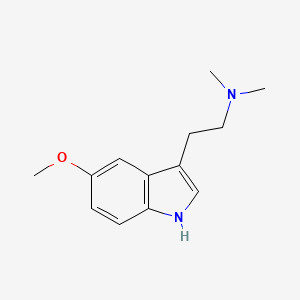
The second component is parallel knowledge of companion plants. The Rubiaceae contain many conspicuous medicines, including the emetic and gastrointestinal ipecac plant Carapichea ipecacuanha, historically classified as Psychotria ipecacuanha; Mirante’s essay proposes that P. viridis or a related leaf may already have been handled as a purgative, intestinal medicine or sensory aid before its combination with caapi. There is no direct historical evidence for a pre-ayahuasca purgative use of P. viridis, so the argument is a search-path hypothesis. Its broader premise is ethnobotanically credible: plants enter experimentation through taste, smell, toxicity, emesis, animal association, resemblance to known medicines, prior household use and taxonomic analogy. Diplopterys cabrerana presents another possible route because it is a DMT-bearing liana in the same botanical family as caapi, although no evidence identifies morphological analogy as the event that led to its use (Mirante, 2025; Rosales-López, Muñoz-Arrieta and Abdelnour-Esquivel, 2020).
Under a parallel-use model, discovery becomes convergence. A caapi lineage already used alone could encounter a medicinal leaf through treatment, cultivation, exchange or migration. The first mixed decoctions may have been weak and irregular by modern standards. Low leaf quantities, short cooking, variable vine chemotypes and successive adjustments could have produced graded changes in colour, dream formation, purging, duration and visionary intensity. Once an unusual effect was recognised, proportions and preparation could be refined through repeated sessions, apprenticeship and collective comparison.
The synergy is also less binary at the level of human response than the phrase “orally inactive DMT” suggests. DMT exposure depends on plant concentration, extraction, sequence and timing, the degree and duration of MAO-A inhibition, gastrointestinal transit and individual metabolism. Pharmacokinetic research has identified relatively fast and slow harmine metabolisers within a small group of hoasca drinkers. Such variation permits a limited historical inference: an initially weak recipe might have been more conspicuous in some drinkers than in others, supplying a signal for further experimentation (Callaway, 2005).
Mirante’s original essay extends this possibility into a population hypothesis: early forest peoples may have possessed lower MAO-A activity or greater tryptamine sensitivity because of diet and lifeway. No population-genetic, biochemical or archaeological evidence currently supports that claim, and dietary exposure to fermented or protein-rich foods says nothing yet about the evolution of a weak or strong MAO-A system. Interindividual metabolic variation is documented; an ancestral Amazonian “low MAO-A phenotype” remains conjectural. Keeping the two apart stops an observed pharmacokinetic range from becoming an unsupported account of population difference.
Discovery may also have been spread across communities. Amazonian peoples have long exchanged plants, spouses, songs, ritual objects, languages and specialist knowledge through river travel, regional ceremonial systems, alliance, captivity and warfare. The Cueva del Chileno bundle joins substances whose likely botanical sources came from different ecological zones, demonstrating long-distance acquisition, though it is silent on ayahuasca brewing. Later missions, river settlements, extractive economies and Indigenous mobility intensified some routes while disrupting others. A combination recognised in one network could spread quickly, acquire new names and companion plants, and be retrospectively narrated as ancestral to each receiving tradition (Miller et al., 2019; Suárez-Álvarez, 2023).
The “jaguar hypothesis” supplies an ethnozoological variant. Amazonian iconography and oral traditions frequently associate jaguars with caapi, predatory acuity and shamanic transformation, and popular accounts claim that jaguars chew the vine to heighten hunting sensitivity. Animal self-medication is a documented field: primates and other animals select plants with antiparasitic or pharmacologically active properties, and close observation of such behaviour can inform human plant knowledge (Huffman, 2003). Evidence for intentional jaguar consumption of B. caapi for visionary or hunting effects is anecdotal, however. The jaguar claim is best kept as an Indigenous and popular hypothesis about ecological observation, consistent with zoopharmacognosy in general and awaiting a species-specific behavioural study.
The final component takes Indigenous testimony as an account of method. Vegetalistas and Indigenous specialists report that plants, their mothers, owners or associated beings disclose combinations through dreams, dieta, song, vision and direct instruction. Within these knowledge systems, a plant is an interlocutor whose capacities become perceptible through disciplined bodily relations. This explanation differs from a random-search model because information is sought through seclusion, ingestion, abstinence, attention to dream and repeated ceremonial testing. The ethnographic fact is the presence and practical consequence of plant-instruction accounts; deciding whether their source is an autonomous nonhuman person, tacit sensory integration, dream cognition or another process belongs to a separate ontological and philosophical inquiry (Luna, 1984; Jauregui et al., 2011; Shepard and Daly, 2022).
Mirante calls the broadest version “resonant information”: organisms are nested within ecological relations and may register patterned information that a subject–object model overlooks. His essay draws upon process philosophy and theories of biological coherence to imagine intuition as organism–environment participation. In academic terms this is a metaphysical interpretation; no experiment has demonstrated such a channel for the recipe. Its analytical value lies in reopening sensitivity, dream, skilled attention and more-than-human relation as components of discovery while keeping claims about quantum or planetary information distinct from established pharmacology.
The most economical reconstruction is a cumulative convergence model. Caapi supplied a psychoactive and culturally interpretable base; medicinal knowledge reduced the range of likely admixtures; embodied and ceremonial testing detected graded interactions; metabolic diversity may have made weak combinations perceptible; trade and kinship distributed results; and relational theories of plant instruction organised how successful knowledge was received and authorised. The model names no date, people or single inventor. It replaces the image of one astronomically improbable accident with a history of parallel plant use, guided experimentation and regional transmission, and leaves the first combination unresolved.
SUPPORTED
The vine supplied feedback. Caapi-only use and β-carboline psychoactivity make the discovery problem different from combining two silent ingredients.
PLAUSIBLE
Parallel use and convergence. Existing medicinal knowledge and systematic admixture practice could have brought separately valued plants into the same preparation; the actual sequence is undocumented.
LIMITED EVIDENCE
Metabolic variation. Fast and slow harmine metabolism occurs among individuals, but no evidence establishes an ancestral Amazonian low-MAO-A population.
ANECDOTAL
The jaguar as plant guide. Animal self-medication is documented generally; intentional jaguar use of caapi for hunting or visionary effects is undemonstrated.
ETHNOGRAPHIC AND PHILOSOPHICAL
Instruction from plants. Plant-teacher accounts are central to Amazonian practice. “Resonant information” is one metaphysical interpretation of those accounts; pharmacology has not tested it.
Ritual practice: recurrent operations, different institutions
Preparation and disposition
Plant diets, fasting, sexual or behavioural restrictions, confession, prayer or doctrinal study reorganise the participant before drinking. Each discipline has its own local meaning.
Opening the protected space
Tobacco smoke, prayer, perfumes, candles, a cross, maraca, leaf-bundle rhythm or spoken calls establish who and what may enter. The ceremony is an engineered social and more-than-human boundary.
Serving and rising force
The medicine is distributed according to lineage, hierarchy, diagnosis or congregation. Bitter taste, nausea, cold, heat and trembling may be read as force, cleansing, danger or resistance.
Song, word and collective entrainment
Onanya songs, ikaros, yagé chants, UDV chamadas or Daime hymns organise attention and relation. Song may summon a plant, diagnose, protect, guide a vision, teach doctrine or coordinate dancing bodies.
Healing and ordeal
Blowing, sucking, massage, tobacco, vomiting, crying, confession, mediumship or visionary intervention may remove pathogenic objects, restore relations or moralise suffering. The theory of cure varies with the institution.
Closure and social return
A healer closes the field, a church completes prayers and hymns, or a group shares food and testimony. Integration reaches beyond private interpretation: changed obligations to kin, community, doctrine and territory may be the decisive outcome.
A dieta establishes a prolonged relation with one or more plants through ingestion, bathing, seclusion and restrictions on salt, sugar, fat, spice, alcohol, sexual contact and ordinary sociality. Reopening the diet may require further rules and observation. Dietas train curing, hunting, artistic, obstetric and practical capacities and may occur without ayahuasca. Their relational object can be the plant’s owner, mother, song, fragrance, dream-image or embodied disposition, acquired over days, months or repeated periods of apprenticeship (Luna, 1984; Jauregui et al., 2011; O’Shaughnessy and Berlowitz, 2021).
Who drinks also varies. In some Shipibo-Konibo curing documented ethnographically, the specialist drinks to open perception while the patient remains sober. In Santo Daime and UDV the congregation receives the sacrament under institutional rules; in tourist and neoshamanic circles every participant commonly drinks. These arrangements distribute perception, vulnerability and interpretive authority differently. A ceremony in which the healer sees for the patient is a different social event from a group of individual visionaries sharing one room (Brabec de Mori, 2021).
Song is an operative technology. An ikaro, Shipibo-Konibo bewá, Huni Kuin huni meka, yagé chant, Daime hymn or UDV chamada can summon, diagnose, protect, direct imagery, lower intensity, transmit doctrine or coordinate collective bodies. Melody, timbre, breath, lexical content, repetition and the singer’s acquired relations all matter. Yaminahua “twisted language” establishes analogies among beings; Shipibo songs name paths, fragrances, weapons and allies; Daime hymnaries organise hours of standing concentration and geometrical dance (Townsley, 1993; Brabec de Mori, 2012; Mattos and Huni Kuin, 2017).
The ceremonial sensorium extends through darkness, silence, tobacco smoke, floral waters, bodily proximity, leaf bundles, rattles, candles, uniforms, altar geometry and the acoustics of a house or forest clearing. These media alter sensory threshold and identify agencies according to local theory. Darkness can heighten faint imagery and breath; perfume can mark protection or attraction; a hymn may hold a congregation in ordered motion. “Set and setting” describes part of this organisation; the local accounts explain how voice, smoke, fragrance, posture and place act.
Mythology and cosmology
Yagé and the Jaguar Mother. In Siona narratives, apprenticeship passes through fear, death-like transformation and jaguar kinship. Vision helps make the shamanic person capable of travelling, seeing pathogenic agencies and defending the collective (Langdon, 2017).
Vaupés ancestral routes and layered worlds. Tukanoan narratives connect the ancestral anaconda-canoe, river travel, exogamous groups, longhouse organisation and vertically differentiated cosmic domains. Caapi can return participants to the routes and transformations through which humans, names and ritual prerogatives entered the world. Kumu recitation and collective ceremony renew relations among ancestry, territory and seasonal vitality (Reichel-Dolmatoff, 1971; Hugh-Jones, 1979).
Oni, rao and patterned vitality. Shipibo-Konibo worlds are crossed by paths, designs, fragrances, songs and plant agencies. Popular accounts often say kené is simply “seen on ayahuasca” or that a design can literally be sung; Shipibo scholars and ethnomusicologists caution that the relations among design, female artistry, song and healing are more historically variable and gendered (Brabec de Mori and Mori Silvano de Brabec, 2009; Belaunde, 2016).
Nixi pae and anaconda song paths. Huni Kuin narratives connect the origin of nixi pae to the anaconda people and to the acquisition of songs needed to enter, sustain and leave the medicine’s force. Bodies of huni meka regulate the event while carrying historical, ecological and relational knowledge. Contemporary MAHKU painting develops from research into these song-images (Mattos and Huni Kuin, 2017; Lagrou, 2018).
Plant teachers and ambivalent power. In vegetalismo, diets create relations with plants that may appear as owners, doctors, beautiful cities, animals or human-like teachers. The same trained power can protect, attract, heal or attack. Global “Mother Ayahuasca” imagery commonly narrows this field by foregrounding maternal benevolence over sorcery, rivalry, jealousy and defence (Luna, 1986; Beyer, 2009; Peluso, 2014).
Juramidam and the Queen of the Forest. Santo Daime places Amazonian revelation inside Christian, Marian, Spiritist, esoteric and Afro-Brazilian worlds. Hymns are understood as received teachings; the dancing congregation becomes the disciplined Empire of Juramidam. Barquinha develops its own marine, charitable and mediumistic cosmos.
Hoasca as doctrinal light. UDV cosmology is transmitted through a hierarchical oral doctrine, biblical and reincarnationist narratives, chamadas and question–answer exchange. The burracheira is valued as clarity and communion with higher knowledge as much as for what is seen.
The words commonly translated as “owner”, “master” or “mother” describe an asymmetric social relation. Amazonian owners may feed, protect, discipline and represent a multiplicity: an animal species, forest site, crop, medicine or class of beings. A plant can have an owner, appear as a magnified person, provide access to a society and materialise its agency through bitterness, resin, fragrance, dream or song. Learning from it entails entry into an existing field of authority (Fausto, 2008; Shepard and Daly, 2022).
In mestizo speech a plant’s madre, dueño, espíritu or doctor may be differentiated from the botanical organism while remaining joined to it in practice. Shipibo-Konibo vocabularies of rao, ibo and yoshin organise partly different relations. “Plant spirit” compresses botanical body, medicinal preparation, species collective, owner and accessible knowledge into one English expression. The relational vocabulary explains why a dieta concerns address, restraint, reciprocity and character formation as well as ingestion (Luna, 1984; Watanabe, 2025).
Origin myths place medicines within histories of transformation. Plants may be former people, substances issuing from an ancestor’s body, gifts acquired through marriage with nonhuman beings or dangerous powers captured and domesticated. Serpents, jaguars, birds and aquatic people recur as mediators of perspective and movement between domains. Their significance lies in named narratives and ritual histories.
Shamans transform into jaguars when they drink yagé.Langdon (1992), describing a Siona initiatory complex in which jaguar transformation, fear, death and rebirth are cultivated forms of knowledge—not decorative symbolism.
Shamanism, diagnosis and healing
The titles taita, onanya, uwishin, vegetalista, curandero/a, mestre and church officer each name something different. Amazonian vocabularies classify specialists by source of knowledge, technical medium, field of action, degree of mastery, ritual responsibility and reputation. Some terms name broad vocations, some identify a plant or technique, some indicate seniority, and others divide curing, sorcery, blessing, protection, dance leadership or the government of collective ritual.
Across the Spanish-speaking Upper Amazon, curandero/a, médico/a and maestro/a are broad relational titles. In Peruvian mestizo vegetalismo, a vegetalista acquires knowledge through plants, dieta, dream, song and apprenticeship. More specific names foreground a medium or teacher: ayahuasquero or purguero for ayahuasca; tabaquero for tobacco; palero for large trees and woody medicines; perfumero for fragrant plants and perfumes; toero for toé; catahuero for catahua; camalonguero for camalonga; and traguero for cane alcohol preparations. These specialisms overlap, and a practitioner may be described as an ayahuasquero palero or hold several repertoires (Luna, 1984; Luna, 1986; Beyer, 2009).
Banco is a grade of mastery. In northern Peruvian mestizo usage, a banco ayahuasquero is credited with unusual stability, knowledge and command: remaining seated amid dangerous encounters, receiving voices or spirits, diagnosing concealed causes and protecting a session. The title arises through reputation among patients, peers and communities, and is judged case by case (Luna, 1986; Beyer, 2009; Marcus, 2023).
Shipibo-Konibo sources use onanya, also written onaya, for a knowledgeable healer and meraya for a specialist associated with encounter across ordinarily separated domains. Napo Runa and other Ecuadorian Kichwa speakers use yachak, “one who knows” or “one with power”, for women as well as men. Achuar and Shuar uwishin work through natem, song, helper beings and tsentsak darts; their capacities can cure, defend or attack and are evaluated through conduct, alliances and case histories (Taylor, 2014; Uzendoski and Calapucha-Tapuy, 2012; Watanabe, 2025).
Pajé in Brazilian Portuguese and payé in parts of Colombia and Venezuela are supra-local titles historically related to Tupi usage. Among the Siona, the Quechua-derived curaca has named a recognised yagé specialist and community authority, while rau names embodied power used in negotiation with human and nonhuman agents. Eastern Tukanoan societies distinguish a kumu who recites, blesses and coordinates ritual, a bayá who leads dance-song and handles ceremonial regalia, and yai specialists associated with diagnosis, suction, defence and attack. These offices can be combined by one person or divided among complementary specialists (Hugh-Jones, 1979; Langdon, 2017; Cayón, 2020).
A Siona or A’ingae taita may carry political and territorial authority; a Shipibo-Konibo onanya acquires songs and plant relations through long dieting; a mestizo vegetalista works among plant teachers, spirit doctors and pathogenic darts; a Daimista maintains firmness inside a collective hymnary; a UDV mestre teaches doctrine through speech. Comparative “shamanism” can place these forms in relation; how each office is acquired, judged or transmitted has to be learned from each.
Healing may mean identifying social conflict, extracting a pathogenic object, retrieving or strengthening a person, reordering family relations, treating addiction, converting suffering into Christian moral work, or producing psychological insight. Western outcome scales capture only some of these. Tradition is also no guarantee of beneficence: ayahuasca worlds include rivalry, fear, coercion and gendered power, while contemporary settings have documented exploitation and sexual abuse (Peluso, 2014; Fotiou, 2016; Marcus, 2023).
Art and material culture
Kené and women’s visual knowledge
Textile · ceramics · body · architecture · contemporary art
Shipibo-Konibo women draw, paint and embroider nonlinear path systems that organise beauty, identity and vitality. Kené now moves through urban muralism, fashion and gallery art while remaining a field of women’s labour, innovation and economic agency (Belaunde, 2016).
Song as operative form
Rao bewa · ikaro · yagé chant · chamada · hymn
Ayahuasca art acts more than it depicts. Breath, melody, text, rhythm and vocal timbre act on bodies and beings. A song can protect, call, diagnose, steer, teach doctrine or coordinate a congregation.
Visionary painting
Pablo Amaringo · Usko-Ayar · Indigenous and mestizo successors
Amaringo’s densely inhabited worlds translated vegetalista cosmology into a global pictorial idiom: luminous cities, doctors, serpents, spacecraft, mermaids and plant beings coexist as elements of narrated medicinal and cosmological worlds (Luna and Amaringo, 1991).
Leaf bundles mark pulse and direction; smoke and fragrance carry protection; benches, crowns and feather regalia materialise rank and transformation. All of them are instruments.
White or blue uniforms, the fardado star, maracás, hymnals and ordered dance make doctrine visible and kinesthetic. The artwork is the synchronised congregation maintaining firmeza through a long work.
Barquinha and UDV material worlds
Altars · ships · portraits · uniforms · salon hierarchy
Barquinha’s marine and Afro-Brazilian imagery and UDV’s restrained institutional space produce very different sensory politics, and the candlelit retreat altar a third.
MAHKU and Huni Kuin image-song
Drawing · painting · mural · film · collective authorship
The Huni Kuin Artists Movement developed from Ibã Sales Huni Kuin’s research with elders and younger artists into huni meka. Its images “put into sense” song paths, anaconda narratives and forest relations while creating cultural transmission and territorial visibility (Mattos and Huni Kuin, 2017; Goulart, 2023).
Contemporary institutions
Sara Flores · White Cube · Quai Branly · Venice Biennale
Named Indigenous artists and ayahuasca-linked art now enter blue-chip galleries, biennials and national museums. These settings foreground authorship and formal innovation while altering scale, exchange value and the visibility of collective plant and kinship knowledge.
Kené names Shipibo-Konibo systems of geometric design applied to textiles, ceramics, bodies, paddles, architecture and contemporary surfaces. Designs participate in beauty, identity, bodily formation and ordered relation. Gebhart-Sayer’s influential “aesthetic therapy” connected healing songs, visionary geometry and designs placed upon a patient. Later work by Laida Mori Silvano and Bernd Brabec de Mori showed that there is no general one-to-one code through which every design can be read as a melody. Visual and sonic ordering may correspond through analogy and embodied practice without becoming interchangeable notation (Gebhart-Sayer, 1985; Brabec de Mori and Mori Silvano de Brabec, 2009; Belaunde, 2016).
Women’s expertise in drawing, painting, ceramics and embroidery is central to the continuity of kené. Ayahuasca-related accounts form one strand within a wider practice transmitted through kinship, work, dreams, commerce, horticulture and collective memory. Urban murals, fashion and gallery works extend this system into new economic and political environments. Attribution to named artists can correct the anonymous category of “tribal craft”, while the gallery object can make collaborative labour and plant knowledge less visible.
Pablo Amaringo’s paintings assemble the visual, social and technical worlds of mestizo vegetalismo. Serpents, aquatic cities, celestial doctors, spirits, machines, Catholic beings, Indigenous figures, extraterrestrials and medicinal plants occupy simultaneous zones connected by colour and directional movement. Amaringo painted afterwards, from memory: each composition draws on remembered visions, songs and teachings, on iconographic sources, and on the explanatory collaboration through which Luis Eduardo Luna presented them (Luna and Amaringo, 1991).
The Shipibo-Konibo artist Sara Flores (Soi Biri) brings matrilineally transmitted kené into contemporary fine art through vegetal dyes and pigments on hand-woven wild-cotton cloth. White Cube presented her in Paris in 2023–24, London in 2025 and New York in 2026; her selection to represent Peru at the 61st Venice Biennale marked the first time an Indigenous artist represented the country. The institutional shift recognises autonomous authorship and technical refinement while intensifying questions about interpretation, market value and custodianship (White Cube, 2023; 2025; 2026a; 2026b).
The Musée du quai Branly — Jacques Chirac exhibition Visions chamaniques: Arts de l’Ayahuasca en Amazonie péruvienne (2023–24) placed Shipibo-Konibo kené, urban Amazonian visionary painting and Western ayahuasca-related art in one historical sequence. It included Sara Flores and Pablo Amaringo, the Dreamachine associated with Brion Gysin and William Burroughs, and Western artists including Martina Hoffmann, Laurence Caruana and Daniel Mirante. The exhibition made visible a century of translation among ceremony, ethnography, technology, psychedelic culture and fine art while retaining their different historical conditions (Dupuis, 2023; Musée du quai Branly — Jacques Chirac, 2023).
Such adjacency can encourage a transcription model in which every geometric design or visionary painting becomes a direct record of drug imagery. Material, gendered, musical and ceremonial histories resist that compression. Kené, Amaringo’s narrative panoramas, the Dreamachine’s stroboscopic closed-eye effects and Western studio painting enter relation through exhibition, but they remain different practices with different sources of authority.
Amaringo’s life as a vegetalista, his painting and the Usko Ayar school are treated, with the mestizo medicine he came from, in the Vegetalismo and Pajelança Healing Complex.
03Visionary phenomenology
Ayahuasca phenomenology is co-produced by brew, body, song, social expectation and ontological training. The same visual event may be interpreted as neurological imagery, pinta, a plant’s design, moral teaching, spirit encounter or miração. Comparing accounts is valuable only when the interpretive frame is preserved.
Most detailed phenomenological corpora and controlled human studies concern mixed preparations containing caapi β-carbolines and DMT, commonly from Psychotria viridis. Vine-only traditions establish that caapi has dreamlike, auditory, bodily, emetic and affective effects of its own, but direct human evidence isolating those effects remains limited. The spectacular geometry and immersive scenes associated with “ayahuasca” come from the mixture, and the mixed drink differs from long-duration oral DMT. Route, β-carbolines, nausea, song, expectation and social authority create a distinct trajectory.
Three culturally organised modes of seeing
Siona yagé · pinta and transformation
Colour and patterned clarity arrive in graded worlds populated by masters, animals and dangerous agencies. Beyond having visions, the novice learns to withstand fear, recognise beings and acquire a stable shamanic perspective (Langdon, 1992; 2017).
Shipibo-Konibo oni · song-pattern-body
Geometric and scenic visions may entwine with song, bodily sensation and plant relation. Yet the claim that every kené motif is an ayahuasca transcription is too simple; art also follows gendered training, memory, piri-piri practice and aesthetic innovation (Brabec de Mori and Mori Silvano de Brabec, 2009).
Daime / Hoasca · miração and burracheira
In Santo Daime, mirações unfold within hymns, Christian–esoteric narratives and disciplined dance. In UDV, burracheira may emphasise clarity, recollection and doctrinal comprehension, and carries religious force without spectacular imagery.
Duration, intensity and social form
Temporal phase
Common experiential features
Cultural modulation
Onset · often 20–60 min
Bitter aftertaste, yawning, cold, heat, abdominal movement, tremor, apprehension and first visual patterning.
Can be named mareación, force, arrival of the medicine, cleansing or the beginning of burracheira; repeated servings change the arc.
Intensification · c. 1–2 h
Nausea, vomiting, bodily dissolution, sound–vision coupling, fear, autobiographical material and rapidly elaborating imagery.
Song and healer intervention may be experienced as visibly restructuring the field; group dance or calls can stabilise attention.
Visionary plateau · c. 1–4 h
Geometric networks, coherent landscapes, architectures, animals, ancestors, autonomous beings, moral scenes and radical noetic conviction.
A taita may read pinta; an onanya diagnoses; a vegetalista negotiates with doctors or owners; a Daimista receives a miração.
Return · c. 3–6+ h
Relief, lucidity, fatigue, after-images, emotional openness and urgency to interpret.
Closing songs, prayers, food, testimony and ongoing communal discipline decide what the event becomes. Long church works may extend beyond the pharmacological peak.
World-formation rather than “visual effects”
01 · Pattern becomes environment
Entoptic grids, zigzags, spirals and filigree can thicken into surfaces, textiles, skin, pathways and architectures. Geometry may itself carry identity, health and agency.
02 · The body becomes permeable
Vomiting, shaking, sweating and changes of scale can be experienced as expulsion, death, birth, penetration or reassembly. Bodily events participate directly in knowledge, diagnosis and transformation.
03 · Autonomous inhabitants
Serpents, jaguars, birds, ancestors, doctors, plant persons, celestial beings, machines and strangers may behave independently and communicate. Their apparent autonomy contributes strongly to ontological weight.
04 · Biographical and moral revelation
Childhood scenes, grief, kinship failures, addiction and responsibility may appear with panoramic certainty. Therapeutic “insight” and religious judgment can describe overlapping events without being identical.
05 · Song becomes visible action
Melody may appear as coloured line, armour, path or moving architecture. Participants can feel a song extracting, opening or ordering them—an experience inseparable from trust in the singer.
06 · Noesis, ambiguity and aftermath
Encounters often feel more discovered than imagined. That certainty may reorganise a life, but it can also harden suggestion, grandiosity or fear. Cultural interpretation and integration remain part of the phenomenology.
Benny Shanon’s The Antipodes of the Mind remains the most extensive effort to chart ayahuasca experience as a comparative phenomenology. His archive combined structured and unstructured interviews with 178 drinkers, published testimony and more than 130 of his own sessions. The widely cited total of approximately 2,500 experiences counts sessions represented in the corpus, drawn from far fewer than 2,500 people. Indigenous and mixed-race Amazonian participants, urban South Americans and drinkers outside South America entered the same descriptive project, giving it unusual range but also combining testimony produced through different languages, levels of experience and relations to ceremony (Shanon, 2002).
Shanon separates the structure of a visualisation from its content. His structural sequence includes forms without stable semantic content, primitive figurative elements, independent images, scenes, immersive “virtual reality” and visions of light. These are analytic types. They can overlap, recur and arrive in any order. The distinction explains why seeing a serpent against darkness differs from inhabiting a spatial world in which a serpent approaches, speaks and changes the drinker’s bodily orientation, even when both reports contain the same animal.
At one end are puffs, sparks, stars, bead-like units and fields of moving light. Lattices, honeycombs, tunnels, funnels, concentric figures, zigzags and spirals resemble Heinrich Klüver’s form constants and entoptic structures reported with other psychedelics, migraine aura and altered visual input. Repetition of discrete elements differs from an organised two-dimensional arabesque or an apparent three-dimensional polyhedral lattice. Geometry may cover the field like an animated textile, stand within it as an object, pulse with music, fold into depth or appear to extend beyond ordinary Euclidean space (Shanon, 2002; Winkelman, 2017).
“Without semantic content” is a formal description; geometry may still carry cultural meaning. A cognitive account may analyse a grid as an event in visual processing, while a Tukanoan, Shipibo-Konibo or Huni Kuin setting may recognise a path, skin, design, ancestral mark or sign of a named being. Reichel-Dolmatoff’s Desana drawings linked luminous motifs to houses, animals, reproduction, social order and layers of the universe. They were elicited and interpreted inside an existing cosmological system, which shaped them as much as the retina did (Reichel-Dolmatoff, 1978).
Primitive figurative elements form where pattern repeatedly approaches recognisable figure. Nebulous colour may become a face, bird, insect, feline or human body and dissolve before stabilising. Repeated figures may remain embedded in an arabesque, as though a patterned field were generating eyes, lizards or dancers. Independent images acquire greater stability without constituting an environment: a face, plant, animal or artefact appears in isolation, moves in a kaleidoscopic procession or enters a rapid series. Metamorphosis often preserves contour, rhythm or felt identity while vine becomes serpent, serpent becomes woman, ornament becomes architecture or body becomes animal.
Scenes add spatial and temporal organisation. Shanon distinguishes a brief tableau or snapshot, a glimpse into an apparently remote place or period, and a developed scene that persists like theatre or film. At greater intensity, the spectator position can collapse into immersive “virtual reality”: the drinker is located within an alternate environment, turns, travels, converses or performs an action while the ceremonial body remains seated or reclining. The ordinary room may disappear, remain as a faint simultaneous layer or return abruptly when attention changes (Shanon, 2002).
The movement from image to inhabited environment changes agency. Some scenes unfold autonomously; some feel guided along a route; others permit limited intervention without allowing the drinker to generate their contents at will. Experienced specialists may learn to stabilise an image, redirect attention, call an ally, resist an attack or follow a song through changing space. Vividness and competence are separate variables. A novice can undergo overwhelming immersion without the categories, bodily control or ritual relations through which a taita, onanya, yachak or vegetalista interprets and acts.
Shanon’s reports repeatedly describe chromatic saturation, microscopic articulation, ornament, symmetry, translucence and materials luminous from within. Gold, crystal, jewels, polished stone, white fabric and filaments of light recur with vegetal surfaces, machines and immense architecture. Some worlds are hyper-real and sharply differentiated; others are aqueous, smoky or woven. Darkness can feel substantial, a generative field from which beings emerge. At another limit lies luminosity without ordinary objecthood, accompanied by religious affect or a sense that vision has reached its source (Shanon, 1998; 2002).
Content ranges across autobiography, natural environments, human cultures, mythic and religious domains and apparently impossible worlds. Serpents, jaguars and other large cats, birds, insects, fish, forests, rivers and open landscapes recur. Processions, markets, rites, garments, artworks, ships, machines, temples, palaces and ancient or futuristic cities introduce social and historical space. Healers, ancestors, royal figures, priests, warriors, dancers, deities, hybrid beings and inhabitants of celestial or subterranean worlds act within it. Shanon regarded some recurrences across people and cultures as possible regularities of ayahuasca content, a stronger and more contestable proposition than recurrence of geometric form.
Serpent, feline and bird imagery shows why perceptual propensity and cultural history are difficult to separate. Curving or tessellating contours can stabilise as snakes; bilateral eyes and faces readily recruit animal forms; bodily sensations of constriction, flight or predation can shape imagery. Amazonian traditions also teach serpent, anaconda, jaguar and bird relations through myth, song, regalia, hunting and specialist apprenticeship. The image arises where nervous-system dynamics, ecological familiarity, narrative expectation and the interpreted agency of the drink meet.
Pablo Amaringo’s paintings offer a visual archive that intersects with Shanon’s catalogue while exceeding an itemised inventory. Multiple scales, diagnostic scenes, historical figures, plants, spirit doctors, celestial cities and protective actions occur simultaneously. Their spatial relations and colour pathways organise knowledge that was reconstructed after ceremonies through painting and explanation. Shanon’s typology can describe whether these are figures, scenes or immersive worlds; the vegetalista relations that make a doctor, weapon, fragrance or song effective need the painter’s own account (Luna and Amaringo, 1991).
Neuroscience currently explains enabling conditions of imagery more securely than particular narratives. Models connect lattices, spirals and tunnels to excitation dynamics and cortical organisation in early visual systems. Serotonergic psychedelics also alter the weighting of sensory input and activity from visual-association regions, allowing eyes-closed imagery to acquire perceptual vividness. Why one person sees a jaguar, grandmother, surgical theatre or jewelled city is another question. Biography, ritual direction, cultural priors, current concerns and spontaneous neural dynamics remain jointly involved (Winkelman, 2017; Stoliker et al., 2025).
Voice and music reorganise this field. Sounds can acquire spatial location, voices can appear internally or as external agents, and melody can seem to generate colour, movement or architecture. Cross-modal effects include bodily pressure changing with vocal register, visual pattern tightening with rhythm, fragrance acquiring moral or personal character and a song appearing to open or close a route. In ceremony the coupling is interactive: a singer observes posture, breathing, crying and movement and modifies repertoire or intensity. The perceived source may be the human singer, a plant, a spirit or the medicine itself.
Somatic experience includes heat, cold, vibration, pressure, heaviness, currents, altered balance, tremor, salivation, sweating and strong gastrointestinal activity. Purging can dominate the event and be interpreted as evacuation of pathogenic matter, emotional burden, sorcery or moral obstruction. Biomedical description identifies emetic, serotonergic and autonomic processes. These accounts concern different aspects of the same event and may coexist for participants and researchers.
Affective trajectories range from dread, grief and perceived death to tenderness, humour, gratitude and ecstatic beauty. Autobiographical scenes may arrive with unusual vividness and moral force; other sessions centre on a practical diagnosis, remembered relation, melody or social decision. The acute sense of certainty or noesis can make an event feel revealed. Traditions test such knowledge through repetition, apprenticeship, consequence and the judgement of others; intensity alone verifies nothing.
Memory and report transform the experience after it occurs. Sessions that feel comprehensive may resist chronological recall, while a brief image or phrase remains influential for years. Prayer, integration, conversation, artistic transcription and subsequent ceremonies reconstruct what the event “was”. Shanon’s corpus also reflects these conditions: experienced drinkers and spectacular scenes are overrepresented; translation favours what can be named; visual report can eclipse smell, hunting knowledge, bodily efficacy and controlled specialist action. His map is a precise vocabulary of possible forms within those limits (Shanon, 2002; Gearin and Calavia Sáez, 2021).
Pattern becomes path, relation and inhabited world.Editorial synthesis of recurrent Shipibo-Konibo interpretations in the ethnographic literature; path, design and agency are linked without reducing kené to a chemical visual trace (Belaunde, 2016; Favaron, Williams and Bédard, 2026).
CAUTION
“Ayahuasca visions” span many kinds of content. Brew chemistry, prior knowledge, songs, darkness, repeated use, language, congregation and the authority of guides shape what becomes salient and memorable. Laboratory scales are useful, but they often measure intensity after removing the relations that make a vision culturally intelligible.
04Contemporary transformations
20th & 21st Century Interest
Modern Euro-American interest in ayahuasca accumulated through tropical botany, pharmacology, anthropology, psychical research, avant-garde literature and travel. The provisional name telepathine condensed these domains. Rafael Zerda Bayón proposed it for yagé’s unknown active principle after reports of distant seeing and thought communication; Guillermo Fischer Cárdenas later used the term for an alkaloid isolated from the vine. Chemical comparison established that telepathine, yagéine and banisterine referred to harmine, already known from Peganum harmala. The discarded name survived as a cultural image of yagé as communication beyond ordinary distance.
Richard Evans Schultes’s Amazonian work helped establish ethnobotany as a field where Indigenous classification, botanical voucher, chemistry and direct observation met. His publications and Harvard networks carried yagé into a wider intelligentsia interested in psychoanalysis, comparative religion and altered consciousness. Schultes remained more taxonomic and empirically restrained than many later interpreters, but his work gave writers and seekers an authoritative route into the botanical and cultural complexity of the drink (Schultes and Raffauf, 1992; Sheldrake, 2020).
William S. Burroughs travelled through Colombia, Ecuador and Peru in 1953 seeking yagé as a possible treatment for opiate dependence and a technology of telepathic perception. Allen Ginsberg encountered the drink in Peru in 1960. City Lights assembled their letters, notebooks, prose episodes and earlier little-magazine publications as The Yage Letters in 1963. The book inserted yagé into Beat itinerancy, addiction, sexual and political revolt, cut-up aesthetics and fantasies of direct mind-to-mind communication. For many anglophone readers it became the first memorable literary account of the Amazonian brew. Oliver Harris’s critical reconstruction shows the published volume to be a deliberately assembled literary object (Burroughs and Ginsberg, 1963; Harris, 2006).
During the following decades LSD, mescaline and psilocybin occupied more central positions in psychedelic culture, while ayahuasca persisted through narrower botanical, anthropological, religious and literary channels. Michael Harner’s comparison of South American yagé motifs—serpents, jaguars, flight, distant vision and death-rebirth—circulated through Hallucinogens and Shamanism. The Way of the Shaman later translated selected techniques into “core shamanism”. His reported Conibo initiation gave the project Amazonian experiential authority, although the exported method generally relied upon repetitive drumming in place of psychoactive plants. Core shamanism made spirit travel, altered states and healing available as teachable Western practices outside church or clinic. It also detached selected techniques from particular languages, territories and systems of specialist accountability, becoming both an important conduit for later ayahuasca interest and a recurrent object of anthropological criticism (Harner, 1973; 1980).
Terence and Dennis McKenna connected this revival more explicitly to psychoactive plants. Their 1971 expedition to La Chorrera informed The Invisible Landscape and True Hallucinations. Through lectures, cassettes, radio, books and performances during the 1980s and 1990s, Terence McKenna joined DMT, ayahuasca, psilocybin, plant intelligence, cyberculture and ecological crisis into one countercultural cosmology. The Archaic Revival proposed that technocratic modernity might renew itself through ecstatic and shamanic capacities excluded by dominant institutions. McKenna’s synthesis was culturally influential and frequently speculative, and is best read as cultural history (McKenna and McKenna, 1975; McKenna, 1991; 1992; 1993; St John, 2015).
McKenna’s recorded voice circulated through electronic music and the early internet, allowing the archaic and futuristic to become mutually reinforcing styles. Ayahuasca could signify an Amazonian ritual complex, a botanical interface with planetary intelligence, an ecological corrective to industrial modernity and a precursor of immersive virtual worlds. These propositions shaped psychedelic subculture and visionary art while remaining distinct from botanical, archaeological and anthropological demonstration (St John, 2015).
Botanical Dimensions gave a material form to this current. Kathleen Harrison and Terence McKenna founded the organisation in 1985 around an ethnobotanical forest-garden in Hawaiʻi, collecting, propagating and documenting culturally significant plants and associated knowledge. Kathleen Harrison directed the organisation and continued its conservation and educational work after Terence’s departure in 1992. Its importance lies in living collections, ex-situ cultivation and long-term ethnobotanical teaching as well as its association with McKenna’s public persona (Botanical Dimensions, 2026).
Two books published in 1994 made specialist and oral countercultural knowledge increasingly reproducible. Jim DeKorne’s Loompanics title Psychedelic Shamanism joined cultivation and preparation information to an esoteric theory of consciousness. Jonathan Ott’s Ayahuasca Analogues: Pangaean Entheogens argued that β-carboline and tryptamine combinations could be assembled from plants beyond Amazonia. “Ayahuasca analogue” became both a pharmacological category and a cognitive-libertarian proposition: visionary plant combinations could be had anywhere, outside any institution (DeKorne, 1994; Ott, 1994).
Analogue literature lowered botanical and geographical barriers while changing the object transmitted. A preparation made from Peganum harmala, Mimosa tenuiflora, Acacia or isolated compounds may reproduce MAO inhibition plus oral DMT without reproducing caapi, a dieta, an ikaro, a Shipibo-Konibo polity, Santo Daime doctrine or the social authority through which a vision becomes knowledge. The analogue category identifies chemical comparison and leaves ritual form, custodianship and cultural authority as separate questions. Its spread intensified home horticulture, seed exchange and vernacular experimentation, moving ayahuasca lore from rare travel narrative towards a distributed technical subculture.
The early web accelerated this distribution. Deoxy.org, Erowid, the Lycaeum and Entheogen.com gathered pharmacological papers, ethnobotanical writing, trip reports and underground manuals into searchable archives. Ayahuasca.com became a major discussion hub during the 2000s, alongside later communities such as DMT-Nexus. Participants compared plant identities, recipes, cultivation, experiences, ceremonial lineages, legal developments and adverse reactions across years-long threads. This was decentralised vernacular experimentation: observations and failures accumulated outside laboratories, accompanied by plant misidentification, anecdotal pharmacology and claims that resisted correction (Halpern and Pope, 2001; Hudson, 2011).
Forums also created reputations, connected travellers with practitioners, enabled seed and cutting exchange and stabilised a vocabulary of “medicine”, “integration”, “the vine” and “the work”. Knowledge that had circulated through personal correspondence, specialist books and rare field travel entered everyday countercultural life. Later social media made testimony and advertising more immediate while reducing the archival continuity and specialist moderation found in some long-form forums.
These forums constituted an empirical archive in a vernacular and decentralised sense: participants accumulated observations, compared recipes and failures and revised informal safety norms outside laboratories. The same openness distributed plant misidentification, anecdotal pharmacology, unsafe combinations and claims resistant to correction. Technical exchange, ceremonial testimony, commerce and myth-making occupied the same threads, and the early web helped construct contemporary ayahuasca as much as it transmitted it.
During the 1990s and 2000s these networks intersected with travel, rave, psytrance, ecological gatherings and transformational festivals. Visitors sought ceremonies in Iquitos, Pucallpa and Tarapoto; Indigenous and mestizo specialists travelled to national and foreign cities; Brazilian churches established diasporic congregations; retreat centres combined vegetalismo with psychotherapy, yoga, bodywork and integration discourse. Lectures, music, visionary-art exhibitions, films and informal testimony turned festivals into contact zones for new medicine circles (Tupper, 2008; Labate and Cavnar, 2014; Marcus, 2023).
Transnational circle culture often draws upon two principal ritual templates. Peruvian vegetalismo contributes the darkened room, healer-directed singing, tobacco smoke, perfume, purging, dieta language and individually responsive ikaros. Santo Daime contributes the trabalho, collective sacramental discipline, repeated servings, hymn sequences, ordered spatial formations and standing dance. Facilitators combine these with guitar songs, kirtan, meditation, psychotherapy, sharing circles and festival aesthetics. Such ceremonies are newly composed forms even when participants understand them as faithful transmission; authorisation by a vegetalista lineage or Daime church is a separate matter from resemblance (Fotiou, 2016; Gearin and Calavia Sáez, 2021; Marcus, 2023).
Cinema gave mass audiences a parallel visual education. Jan Kounen’s Blueberry, released in some territories as Renegade, placed ayahuasca-informed ceremony and extended digital visions inside an acid Western; his documentary D’autres mondes addressed Shipibo healing and the brew directly. Darren Aronofsky’s Noah included a vision-inducing tea administered by Methuselah; the film never names ayahuasca, although the scene has been interpreted through ayahuasca and shamanic frames. Ciro Guerra’s El abrazo de la serpiente made yagé, botanical exploration, missionisation, extractive violence and Indigenous memory central to internationally acclaimed cinema (Kounen, 2004a; 2004b; Aronofsky, 2014; Moore and Ruah-Midbar Shapiro, 2018; Guerra, 2015).
Documentaries and features including Vine of the Soul, Icaros: A Vision, The Last Shaman and The Medicine extended a repertoire of jungle journey, healer, purge, serpent, song and visionary rebirth. They also documented different phases of the transnational field: early testimony and ethnobotanical explanation, the emergence of purpose-built retreats, therapeutic expectation and the conversion of ayahuasca into an internationally legible narrative of personal crisis and repair (Meech, 2010; Caraballo and Norzi, 2016; Degan, 2016; Toussi, 2019).
These films influence how future drinkers, retreat promoters and visionary artists imagine ceremony, danger and revelation. Blueberry relocates Amazonian-derived imagery to the North American Southwest, making the complex a mobile sign of shamanic initiation. Embrace of the Serpent uses the search for sacred botanical knowledge to examine colonial destruction and archival capture. They share yagé imagery and differ widely in historical and cultural accountability.
Fine-art circulation followed a related movement from ethnographic collections, illustrated books, small galleries and psychedelic festivals into national museums, biennials and international commercial galleries. Earlier circuits frequently blurred distinctions among Indigenous design, Amazonian visionary painting and Euro-American “visionary art”. Twenty-first-century institutional presentation increased recognition of named Indigenous artists and the formal authority accorded to their work while exposing living ceremonial and communal knowledge to the classificatory habits and exchange values of the global art system.
The career of the Shipibo-Konibo artist Sara Flores (Soi Biri) makes this transition especially legible. Flores works in kené with vegetal dyes and pigments on hand-woven wild-cotton cloth. Her highly refined compositions remain connected to matrilineal teaching and collaborative production with her daughters. White Cube presented her first European solo exhibition in Paris in 2023–24, followed by Bakish Mai at Bermondsey, London, in 2025 and Akinananti in New York in 2026. Monumental works such as Non Nete (A flag for the Shipibo Nation) entered a blue-chip gallery context as autonomous contemporary artworks by a named artist (White Cube, 2023; 2025; 2026a).
The gallery frame changes the conditions under which kené is encountered. Scale, singular authorship, formal interpretation and exchange value move forward; the collective labour, plant knowledge and relations among women through which the work is made can become less visible. Flores’s selection to represent Peru at the 61st Venice Biennale—the first Indigenous artist to represent the country—marked the extent of this institutional reclassification while intensifying questions about interpretation, representation and benefit (White Cube, 2026b).
The Musée du quai Branly — Jacques Chirac presented a broader historical synthesis in Visions chamaniques: Arts de l’Ayahuasca en Amazonie péruvienne (14 November 2023–26 May 2024), curated by anthropologist David Dupuis with art historian Élise Grandgeorge. Its sequence moved from Shipibo-Konibo arts and kené, through the emergence of visionary painting in Peruvian Amazonian cities, to the effects of ayahuasca’s globalisation on Western art. Sara Flores’s Untitled (Tañan Kené) (2021) appeared on the visitor guide, while works by Pablo Amaringo represented the genre developed through his painting and explanatory collaboration with Luis Eduardo Luna (Dupuis, 2023; Musée du quai Branly — Jacques Chirac, 2023).
The exhibition extended this genealogy into Beat and post-psychedelic culture. It included the Dreamachine, conceived by Brion Gysin with Ian Sommerville in 1960 and associated with Gysin’s collaborator William S. Burroughs, alongside Western visionary artists including Martina Hoffmann, Laurence Caruana and Daniel Mirante and audiovisual environments by Jan Kounen. The adjacency of stroboscopically induced closed-eye imagery, Amaringo’s narrated cosmologies, Western studio painting and Shipibo kené made visible a century of translation among technology, intoxication, ethnography, spirituality and art (Centre Pompidou, n.d.; Dupuis, 2023).
Such adjacency can encourage a transcription model in which every geometric design or visionary painting is treated as a direct record of drug imagery. Bodily ornament, women’s knowledge, healing song, urban Amazonian painting, optical technology and Western studio practice have different histories and sources of authority. The exhibition’s inclusion of audition, song, purging, diagnosis and relations with human and nonhuman beings placed visual art within a wider ceremonial sensorium. It also made the museum a site where the categories of artist and informant, artwork and artefact, tradition and innovation, and influence and appropriation could be examined.
Twenty-first-century interest now spans Indigenous cultural resurgence, churches, underground circles, commercial retreats, online networks, conservation projects, celebrity testimony, visual art and clinical research. Together they make a contested ecology in which Amazonian peoples, scientists, churches, writers, entrepreneurs, patients, artists and seekers continually redefine ayahuasca. Propagation occurs botanically through vines and gardens and culturally through stories, practices, images and legal claims.
COUNTERCULTURE
Telepathine, Beat literature, experiential anthropology and the Archaic Revival made yagé available to successive Western publics under different claims about mind and knowledge.
PRINT
DeKorne and Ott helped convert geographically specialised knowledge into portable cultivation, preparation and analogue discourse.
NETWORK
Deoxy.org, Ayahuasca.com and related forums became distributed archives of texts, experiments, plants, reputations and travel routes before social media centralised this traffic.
RITUAL FORM
Contemporary medicine circles commonly combine features of vegetalismo and Santo Daime with psychotherapy, popular music and festival spirituality.
MEDIA
Films and fine-art institutions gave global audiences recognisable images of ayahuasca while differing sharply in historical specificity and custodial relation.
Indigenous revival, heritage and refusal
Ayahuasca globalisation includes Indigenous initiative as well as extraction by outsiders. Indigenous organisations and artists use ceremonies, festivals and international alliances to fund land defence, revitalise songs and languages, and produce political recognition. Siona taitas, for example, have reconstituted yagé authority after missionisation, extractive violence and armed conflict (Langdon, 2017). Their participation is strategic and conditional: communities may restrict photography, recording, noise, outsider access or the circulation of sacred knowledge. The right to share includes the right to withhold.
Tourism, diaspora and neoshamanism
Retreat centres and travelling ceremonies have created livelihoods and intercultural apprenticeships, but also branded a generic “Amazonian shamanism” around individual healing, trauma and Mother Ayahuasca. This can erase Indigenous histories of collective defence, sorcery, kinship and territory (Fotiou, 2016). Credentials are difficult to evaluate across borders; sexual abuse, coercive touch, medication failures and inadequate emergency planning are documented concerns. Ethical practice requires transparent lineage claims, safeguarding, referral pathways and Indigenous participation that is more substantial than decorative legitimacy (Peluso, 2014; Marcus, 2023).
Commercial centres range from Indigenous-owned initiatives and long-standing local clinics to foreign-owned resorts, improvised guesthouses and travelling facilitators without stable institutional oversight. Their economic forms affect who controls plant supply, images, songs, participant data, land and emergency decisions. A centre may support local employment and forest protection while concentrating ownership elsewhere; “community benefit” is shown by contracts, decision-making and durable transfer, and symbolic affiliation shows little.
The language of integration has become a professional field of therapists, coaches, peer groups and online programmes. It can support reflection, harm recognition and referral, but it also creates authority over experiences whose ceremonial and cultural sources lie elsewhere. Competence includes the ability to distinguish ordinary post-session sensitivity from mania, psychosis, trauma activation or medical emergency and to avoid reinforcing grandiose or persecutory interpretations.
Economies and conservation
A transnational sacrament economy
Retreats · churches · travelling delegations · vendors · training
Value now accumulates around access to healers, protected land, translation, accommodation, integration and religious membership as well as the brew. Revenue can support communities, but ownership and risk are often unevenly distributed.
Caapi is not formally assessed
Conservation uncertainty
B. caapi is accepted and widespread in southern tropical America, but no formal IUCN Red List assessment was located in this research pass. Local depletion near commercial centres can occur within a wide global range (Kew Science, 2026a).
Cultivation versus mature-vine harvest
Gardens · church plantations · retreat supply chains
Cultivation in agroforestry and religious communities can reduce wild pressure. Demand for old, thick vine and secrecy about provenance can incentivise destructive or distant harvesting. Sustainability must be assessed locally.
Knowledge and benefit
Indigenous custodians · researchers · companies
Clinical and commercial fields derive value from a relation first made intelligible by Amazonian peoples. Benefit-sharing concerns authorship, protocol design, land and institutions, as well as royalty from a molecule.
Law and religious freedom
Jurisdiction
Current position and cultural consequence
International
DMT is Schedule I under the 1971 Psychotropic Convention. The INCB has stated that the treaty leaves plants and plant preparations unscheduled, but national law may control the brew, extraction, import or possession (United Nations, 1971; INCB, 2012).
Brazil
CONAD Resolution No. 1/2010 recognises and regulates religious ayahuasca use, prohibiting commercial exploitation and therapeutic advertising while protecting ritual practice. Debate continues over regulation, Indigenous autonomy and groups outside the three established religions (CONAD, 2010; Krause, 2025).
Peru
National Directorial Resolution No. 836/INC (2008) declared traditional ayahuasca knowledge and uses Cultural Heritage of the Nation. Clinical regulation and protection from commercial appropriation would need further measures.
United States
Gonzales v. O Centro Espírita Beneficente União do Vegetal (2006) protected a specific UDV claimant under the Religious Freedom Restoration Act. Later church settlements are case-specific; there is no general legalisation of ayahuasca.
Canada
Health Canada has granted time-limited religious exemptions to named Santo Daime and UDV congregations. The exemption belongs to the authorised institution; personal possession in general remains controlled.
United Kingdom / much of Europe
DMT is tightly controlled and courts may treat brewed ayahuasca as a DMT preparation. Religious and human-rights arguments have produced uneven national outcomes; cross-border transport remains especially risky.
Legal information changes and is not legal advice. The difference between plant, brew, isolated DMT, import, church sacrament and research material is jurisdiction-specific.
The “Da Vine” patent and biopiracy
US Plant Patent 5,751 was granted in 1986 to Loren Miller for a cultivated caapi variety named “Da Vine.” COICA and allies challenged it as a violation of Indigenous sacred knowledge. The USPTO cancelled claims during re-examination in 1999, later reinstated the patent on procedural and novelty grounds, and the patent expired in 2003. The case remains an emblem of biopiracy, but recent legal analysis cautions against repeating the simplified claim that Indigenous organisations permanently “won revocation.” The deeper asymmetry remains: a plant can be made proprietary through botanical distinctness while Indigenous ceremonial arts and collective knowledge receive weak protection (Bosse, 2024; Press, 2022).
Clinical and neuroscientific translation
Study / field
Contribution
Limit
Palhano-Fontes et al. (2019)
A randomised placebo-controlled trial reported rapid antidepressant effects in treatment-resistant depression.
Small sample; strong sensory unblinding; clinical response and Indigenous healing are different measures.
Gonzalez et al. (2021)
Observed Shipibo-led ceremonies and found improvements in several wellbeing measures, keeping a living ceremonial context in view.
Observational design leaves pharmacology, selection and expectancy effects entangled.
Pagni et al. (2025)
Sixty-six first-time naturalistic participants were followed for up to twelve months; associations differed by prior diagnosis and time.
No randomised control; outcomes belong to heterogeneous neoshamanic settings.
Andión et al. (2025)
Reanalysis of the Global Ayahuasca Survey found adverse states related to mental-health history, setting and acute reaction.
Self-report survey; “difficult” and “harmful” experiences overlap only in part.
Soares et al. (2026)
A crossover multiple-dose fMRI study reported altered connectivity involving visual and social-perception pathways, correlated with perspective-taking.
Network findings are preliminary and leave culturally specific beings, songs or cosmologies unexplained.
Favaron, Williams and Bédard (2026)
Challenges Western universalism by centring Shipibo-Konibo concepts and the crisis produced when ayawaska is translated into a context-free psychedelic.
Its intervention is conceptual and decolonial; it tests no clinical efficacy.
The most important research distinction is between whole-rite ayahuasca, standardised botanical brew, DMT–harmine formulation and isolated DMT. Results from one need separate evidence before they apply to another. A 2026 scoping review found 26 registered interventional studies across ayahuasca, DMT and DMT–harmine, evidence of rapid expansion but also of category slippage (Stojanović et al., 2026).
05Linked species
Core plants, companion leaves and medicines that enter preparation, dieta, smoke, purge or healing practice. Each has its own place: some are brewed, some dieted, some smoked, and they are neither interchangeable nor uniformly safe.
Bobinsana; a western-Amazonian medicine associated with diets, songs and emotional/social healing.
Stimulant and emetic associate
Ilex guayusa
Guayusa; caffeine-rich Amazonian holly used in waking, cleansing and regional preparations.
Master-plant dieta
Brunfelsia grandiflora
Chiric sanango; a potent medicine with a dieta relation of its own.
Aromatic ritual associate
Justicia pectoralis
Aromatic herb with distinct north-Amazonian snuff histories and some reported ayahuasca associations.
06Bibliography
121 sources in 6 threads · 89 with a working locator · Harvard (Cite Them Right) · status and kind are recorded per source, not assumed
How to read the labels on each source
Source type
What kind of work it is: journal article, book, legislation, patent application, database record and so on. A word after the dot (ethnography, protologue, primary source) keeps the genre the entry was first filed under. “Unclassified” means the citation does not say enough to tell.
Peer review
Recorded for each work separately, and only where it has been confirmed for that work. It is never inferred from a DOI, a publisher or a journal, since journals also publish editorials, letters and commentaries. Where it has not been confirmed, the entry records it as not established. It does not apply to legislation, court decisions, treaties, patents, datasets, database and collection records, historical texts, films, talks, press releases or web pages.
Check
What was checked when the entry was added. DOI checked: the DOI’s registry record (Crossref) matched the citation’s title, first author and year. Verified: the record itself was opened and matched the citation: a library catalogue record for a book, or the page itself for a database entry, law, patent or archive document. “Verified (abstract)” and “(summary)” mean only the abstract or a summary was read. Located: a record was found but not fully matched. Bibliographic record and Stable record (in essays): a catalogue or stable web record exists; what was checked against it is not recorded. Unverified: no check is recorded. No locator found: a search found no record. Secondary: read through another source.
What the labels do not say
None of them means the source supports a particular sentence. Where a sentence is graded, its evidence note names its sources and whether each supports it, disputes it or gives context. Dates and reviewers of checks are not recorded for each entry; the version note at the foot of a graded page dates its last review.
Ethnohistory & archaeology
Brabec de Mori, B. (2011) ‘Tracing hallucinations: contributing to a critical ethnohistory of ayahuasca usage in the Peruvian Amazon’, in Labate, B.C. and Jungaberle, H. (eds.) The Internationalization of Ayahuasca. Zürich: Lit Verlag, pp. 23–47.
UnverifiedBook chapterPeer review not established
Greco, E., Rivier, L., Samorini, G. and D’Arienzo, A. (2024) ‘Archaeology of psychotropic substances: the problem of analytical detection of ayahuasca’, Archaeometry, 66(6), pp. 1328–1342. Available at: https://doi.org/10.1111/arcm.12965.
DOI checkedJournal articlePeer review not establishedOpen record ↗cited 3× in this record
Highpine, G. (2012) ‘Unraveling the mystery of the origin of ayahuasca’, Ayahuasca.com. Available at: ayahuasca.com (Accessed: 29 July 2026).
UnverifiedWeb pagePeer review not applicableOpen record ↗
Lima, V.M. and Marinho, M.G.S.M.C. (2023) ‘Reports by explorers and travelers and the first scientific studies on ayahuasca (dating from 1850 to 1950) within the current debate on the “psychedelic renaissance”’, História, Ciências, Saúde–Manguinhos, 30, e2023023. Available at: https://doi.org/10.1590/S0104-59702023000100023.
DOI checkedJournal articlePeer review not establishedOpen record ↗cited 1× in this record
Mirante, D. (2025) ‘On the origins of ayahuasca’. Available at: danielmirante.com (Accessed: 10 August 2026).
UnverifiedWeb pagePeer review not applicableOpen record ↗cited 2× in this record
Miller, M.J., Albarracin-Jordan, J., Moore, C. and Capriles, J.M. (2019) ‘Chemical evidence for the use of multiple psychotropic plants in a 1,000-year-old ritual bundle from South America’, Proceedings of the National Academy of Sciences, 116(23), pp. 11207–11212. Available at: https://doi.org/10.1073/pnas.1902174116.
DOI checkedJournal articlePeer review not establishedOpen record ↗cited 4× in this record
Naranjo, P. (1986) ‘El ayahuasca en la arqueología ecuatoriana’, América Indígena, 46(1), pp. 117–127.
UnverifiedJournal articlePeer review not established
Schultes, R.E. (1986) ‘The history of a malpighiaceous plant of the Northwest Amazon’, Botanical Museum Leaflets, Harvard University, 30(2), pp. 135–141.
UnverifiedJournal articlePeer review not established
Schultes, R.E. and Raffauf, R.F. (1992) Vine of the Soul: Medicine Men, Their Plants and Rituals in the Colombian Amazonia. Oracle, AZ: Synergetic Press.
UnverifiedBookPeer review not establishedcited 1× in this record
Spruce, R. (1908) Notes of a Botanist on the Amazon and Andes, ed. A.R. Wallace. 2 vols. London: Macmillan.
UnverifiedHistorical textPeer review not applicablecited 1× in this record
Suárez-Álvarez, C. (2023) ‘The age of the onanya: regarding the spread of ayahuasca use throughout the Ucayali basin’, Tipití: Journal of the Society for the Anthropology of Lowland South America, 19(2), article 7. Available at: digitalcommons.trinity.edu.
UnverifiedJournal articlePeer review not establishedOpen record ↗cited 3× in this record
Villavicencio, M. (1858) Geografía de la República del Ecuador. New York: Robert Craighead.
VerifiedHistorical textPeer review not applicableOpen record ↗
Regional anthropology
Beyer, S.V. (2009) Singing to the Plants: A Guide to Mestizo Shamanism in the Upper Amazon. Albuquerque, NM: University of New Mexico Press.
VerifiedBookPeer review not establishedOpen record ↗cited 6× in this record
Brabec de Mori, B. (2012) ‘About magical singing, sonic perspectives, ambient multinatures, and the conscious experience’, Indiana, 29, pp. 73–101. Available at: https://doi.org/10.18441/ind.v29i0.73-101.
DOI checkedJournal articlePeer review not establishedOpen record ↗
Brabec de Mori, B. (2021) ‘The power of social attribution: perspectives on the healing efficacy of ayahuasca’, Frontiers in Psychology, 12, 748131. Available at: https://doi.org/10.3389/fpsyg.2021.748131.
DOI checkedJournal articlePeer review not establishedOpen record ↗
Brabec de Mori, B. and Mori Silvano de Brabec, L.E. (2009) ‘La corona de la inspiración. Los diseños geométricos de los Shipibo-Konibo y sus relaciones con cosmovisión y música’, Indiana, 26, pp. 105–134.
UnverifiedJournal articlePeer review not established
Cayón, L. (2020) ‘Fraternal disputes and two-headed leadership: hierarchy and heterarchy in the Upper Rio Negro’, Revista de Antropologia, 63(2), e151160. Available at: https://doi.org/10.11606/2179-0892.ra.2020.171366.
DOI checkedJournal articlePeer review not establishedOpen record ↗cited 2× in this record
DOI checkedJournal articlePeer review not establishedOpen record ↗cited 1× in this record
Gearin, A.K. and Calavia Sáez, O. (2021) ‘Altered vision: ayahuasca shamanism and sensory individualism’, Current Anthropology, 62(2), pp. 138–163. Available at: https://doi.org/10.1086/713737.
DOI checkedJournal articlePeer review not establishedOpen record ↗cited 2× in this record
Gow, P. (1994) ‘River people: shamanism and history in western Amazonia’, in Thomas, N. and Humphrey, C. (eds.) Shamanism, History and the State. Ann Arbor, MI: University of Michigan Press, pp. 90–113.
UnverifiedBook chapterPeer review not establishedcited 1× in this record
Harner, M.J. (1972) The Jívaro: People of the Sacred Waterfalls. Garden City, NY: Anchor Press/Doubleday.
VerifiedBookPeer review not establishedOpen record ↗
Huffman, M.A. (2003) ‘Animal self-medication and ethno-medicine: exploration and exploitation of the medicinal properties of plants’, Proceedings of the Nutrition Society, 62(2), pp. 371–381. Available at: https://doi.org/10.1079/PNS2003257.
DOI checkedJournal articlePeer review not establishedOpen record ↗cited 1× in this record
Hugh-Jones, S. (1979) The Palm and the Pleiades: Initiation and Cosmology in Northwest Amazonia. Cambridge: Cambridge University Press.
UnverifiedBookPeer review not establishedcited 3× in this record
Jauregui, X., Clavo, Z.M., Jovel, E.M. and Pardo-de-Santayana, M. (2011) ‘“Plantas con madre”: plants that teach and guide in the shamanic initiation process in the East-Central Peruvian Amazon’, Journal of Ethnopharmacology, 134(3), pp. 739–752. Available at: https://doi.org/10.1016/j.jep.2011.01.042.
DOI checkedJournal articlePeer review not establishedOpen record ↗cited 3× in this record
Langdon, E.J.M. (1992) ‘Shamans and jaguars: a study of Siona medicine’, in Langdon, E.J.M. and Baer, G. (eds.) Portals of Power: Shamanism in South America. Albuquerque, NM: University of New Mexico Press, pp. 41–62.
UnverifiedBook chapterPeer review not establishedcited 1× in this record
Langdon, E.J.M. (2017) ‘From rau to sacred plants: transfigurations of shamanic agency among the Siona Indians of Colombia’, Social Compass, 64(3), pp. 343–359. Available at: https://doi.org/10.1177/0037768617713654.
DOI checkedJournal articlePeer review not establishedOpen record ↗cited 5× in this record
Luna, L.E. (1984) ‘The concept of plants as teachers among four mestizo shamans of Iquitos, northeastern Peru’, Journal of Ethnopharmacology, 11(2), pp. 135–156. Available at: https://doi.org/10.1016/0378-8741(84)90036-9.
DOI checkedJournal articlePeer review not establishedOpen record ↗cited 5× in this record
Luna, L.E. (1986) Vegetalismo: Shamanism among the Mestizo Population of the Peruvian Amazon. Stockholm: Almqvist & Wiksell International.
UnverifiedBookPeer review not establishedcited 6× in this record
O’Shaughnessy, D.M. and Berlowitz, I. (2021) ‘Amazonian medicine and the psychedelic revival: considering the “dieta”’, Frontiers in Pharmacology, 12, 639124. Available at: https://doi.org/10.3389/fphar.2021.639124.
DOI checkedJournal articlePeer review not establishedOpen record ↗cited 1× in this record
Reichel-Dolmatoff, G. (1971) Amazonian Cosmos: The Sexual and Religious Symbolism of the Tukano Indians. Chicago, IL: University of Chicago Press.
VerifiedBookPeer review not establishedOpen record ↗cited 2× in this record
Reichel-Dolmatoff, G. (1975) The Shaman and the Jaguar: A Study of Narcotic Drugs among the Indians of Colombia. Philadelphia, PA: Temple University Press.
UnverifiedBookPeer review not established
Rodd, R. (2008) ‘Reassessing the cultural and psychopharmacological significance of Banisteriopsis caapi: preparation, classification and use among the Piaroa of Southern Venezuela’, Journal of Psychoactive Drugs, 40(3), pp. 301–307. Available at: https://doi.org/10.1080/02791072.2008.10400645.
DOI checkedJournal articlePeer review not establishedOpen record ↗cited 2× in this record
Shepard, G.H. Jr and Daly, L. (2022) ‘Sensory ecologies, plant-persons, and multinatural landscapes in Amazonia’, Botany, 100(2), pp. 83–96. Available at: https://doi.org/10.1139/cjb-2021-0107.
DOI checkedJournal articlePeer review not establishedOpen record ↗cited 2× in this record
Taylor, A.C. (2014) ‘Healing translations: moving between worlds in Achuar shamanism’, HAU: Journal of Ethnographic Theory, 4(2), pp. 95–118. Available at: https://doi.org/10.14318/hau4.2.005.
DOI checkedJournal articlePeer review not establishedOpen record ↗cited 1× in this record
Townsley, G. (1993) ‘Song paths: the ways and means of Yaminahua shamanic knowledge’, L’Homme, 33(126–128), pp. 449–468. Available at: https://doi.org/10.3406/hom.1993.369649.
DOI checkedJournal articlePeer review not establishedOpen record ↗cited 1× in this record
Uzendoski, M.A. and Calapucha-Tapuy, E.F. (2012) The Ecology of the Spoken Word: Amazonian Storytelling and Shamanism among the Napo Runa. Urbana, IL: University of Illinois Press.
UnverifiedBook · ethnographyPeer review not establishedcited 1× in this record
Watanabe, Y. (2025) ‘How an onaya dreams: a healer’s affinal relationship with plants’, Anthropology of Consciousness, 36(2), e70008. Available at: https://doi.org/10.1111/anoc.70008.
DOI checkedJournal articlePeer review not establishedOpen record ↗cited 2× in this record
Religion, art & globalisation
Belaunde, L.E. (2016) ‘Kené: Shipibo-Konibo design and the aesthetics of Amazonian sociality’, in Santos-Granero, F. (ed.) Images of Public Wealth or the Anatomy of Well-Being in Indigenous Amazonia. Tucson, AZ: University of Arizona Press, pp. 190–211.
UnverifiedBook chapterPeer review not establishedcited 4× in this record
Botanical Dimensions (2026) ‘Who we are’. Available at: botanicaldimensions.org (Accessed: 10 August 2026).
UnverifiedWeb pagePeer review not applicableOpen record ↗
Burroughs, W.S. and Ginsberg, A. (1963) The Yage Letters. San Francisco, CA: City Lights.
VerifiedBook · primary sourcePeer review not establishedOpen record ↗cited 2× in this record
Centre Pompidou (n.d.) “Dreamachine (Machine × rêver)”, Brion Gysin, 1960/1976. Available at: centrepompidou.fr.
UnverifiedWeb pagePeer review not applicableOpen record ↗
Dawson, A. (2013) Santo Daime: A New World Religion. London: Bloomsbury.
DOI checkedBookPeer review not establishedOpen record ↗cited 2× in this record
DeKorne, J. (1994) Psychedelic Shamanism: The Cultivation, Preparation, and Shamanic Use of Psychotropic Plants. Port Townsend, WA: Loompanics Unlimited.
UnverifiedBookPeer review not establishedcited 1× in this record
Dupuis, D. (ed.) (2023) Visions chamaniques: Arts de l’Ayahuasca en Amazonie péruvienne. Paris: Musée du quai Branly — Jacques Chirac / Réunion des musées nationaux — Grand Palais. Available at: quaibranly.fr.
UnverifiedBookPeer review not establishedOpen record ↗cited 3× in this record
Fotiou, E. (2016) ‘The globalization of ayahuasca shamanism and the erasure of Indigenous shamanism’, Anthropology of Consciousness, 27(2), pp. 151–179. Available at: https://doi.org/10.1111/anoc.12056.
DOI checkedJournal articlePeer review not establishedOpen record ↗cited 3× in this record
Gebhart-Sayer, A. (1985) ‘The geometric designs of the Shipibo-Conibo in ritual context’, Journal of Latin American Lore, 11(2), pp. 143–175.
UnverifiedJournal article · ethnographyPeer review not establishedcited 1× in this record
Goulart, S.L. (2023) ‘The expressive forms of Amazonian Indigenous peoples and ayahuasca: the Huni Kuin and other Pano groups’, Anthropology of Consciousness. Available at: https://doi.org/10.1111/anoc.12179.
DOI checkedJournal articlePeer review not establishedOpen record ↗cited 1× in this record
Halpern, J.H. and Pope, H.G. Jr (2001) ‘Hallucinogens on the Internet: a vast new source of underground drug information’, American Journal of Psychiatry, 158(3), p. 481. Available at: https://doi.org/10.1176/appi.ajp.158.3.481.
DOI checkedJournal articlePeer review not establishedOpen record ↗cited 1× in this record
Harner, M.J. (1973) ‘Common themes in South American Indian yagé experiences’, in Harner, M.J. (ed.) Hallucinogens and Shamanism. New York: Oxford University Press, pp. 155–175.
VerifiedBook chapter · ethnographyPeer review not establishedOpen record ↗cited 1× in this record
Harner, M.J. (1980) The Way of the Shaman: A Guide to Power and Healing. New York: Harper & Row.
UnverifiedBook · primary sourcePeer review not establishedcited 1× in this record
Harris, O. (ed.) (2006) The Yage Letters Redux. San Francisco, CA: City Lights.
UnverifiedBookPeer review not establishedcited 1× in this record
Hudson, J.H. (2011) Ayahuasca and Globalization. Undergraduate honours thesis. Boulder, CO: University of Colorado, Department of Anthropology. Available at: scholar.colorado.edu.
UnverifiedThesisPeer review not establishedOpen record ↗cited 1× in this record
Lagrou, E. (2018) ‘Anaconda-becoming: Huni Kuin image-songs, an Amerindian relational aesthetics’, Horizontes Antropológicos, 24(51), pp. 17–49. Available at: https://doi.org/10.1590/S0104-71832018000200002.
DOI checkedJournal articlePeer review not establishedOpen record ↗cited 1× in this record
Labate, B.C. and Cavnar, C. (eds.) (2014) Ayahuasca Shamanism in the Amazon and Beyond. New York: Oxford University Press.
DOI checkedBookPeer review not establishedOpen record ↗cited 1× in this record
Labate, B.C., Rose, I.S. and Santos, R.G. (2009) Ayahuasca Religions: A Comprehensive Bibliography and Critical Essays. Santa Cruz, CA: Multidisciplinary Association for Psychedelic Studies.
UnverifiedBookPeer review not establishedcited 3× in this record
Labate, B.C., Santos, R.G., Anderson, B.T., Mercante, M.S. and Barbosa, P.C.R. (2012) ‘The treatment and handling of substance dependence with ayahuasca: reflections on current and future research’, Journal of Psychoactive Drugs, 44(3), pp. 229–239. Available at: https://doi.org/10.1080/02791072.2012.704590.
DOI checkedJournal articlePeer review not establishedOpen record ↗
Luna, L.E. and Amaringo, P. (1991) Ayahuasca Visions: The Religious Iconography of a Peruvian Shaman. Berkeley, CA: North Atlantic Books.
UnverifiedBookPeer review not establishedcited 3× in this record
Mattos, A.P. and Huni Kuin, I. (2017) ‘Why MAHKU — Movimento dos Artistas Huni Kuin — sing?’, GIS — Gesture, Image and Sound — Anthropology Journal, 2(1), pp. 61–82. Available at: revistas.usp.br.
UnverifiedJournal articlePeer review not establishedOpen record ↗cited 3× in this record
McKenna, T. (1991) The Archaic Revival. San Francisco, CA: HarperSanFrancisco.
VerifiedBook · primary sourcePeer review not establishedOpen record ↗cited 2× in this record
McKenna, T. (1992) Food of the Gods. New York: Bantam.
VerifiedBookPeer review not establishedOpen record ↗
McKenna, T. (1993) True Hallucinations. San Francisco, CA: HarperSanFrancisco.
VerifiedBookPeer review not establishedOpen record ↗
McKenna, T. and McKenna, D. (1975) The Invisible Landscape: Mind, Hallucinogens and the I Ching. New York: Seabury Press.
UnverifiedBook · primary sourcePeer review not establishedcited 1× in this record
Musée du quai Branly — Jacques Chirac (2023) ‘Visions chamaniques: Arts de l’Ayahuasca en Amazonie péruvienne’, exhibition, Paris, 14 November 2023–26 May 2024. Available at: quaibranly.fr.
UnverifiedLegislation or regulationPeer review not applicableOpen record ↗
Ott, J. (1994) Ayahuasca Analogues: Pangaean Entheogens. Kennewick, WA: Natural Products Company.
VerifiedBookPeer review not establishedOpen record ↗cited 2× in this record
Peluso, D.M. (2014) ‘Ayahuasca’s attractions and distractions: examining sexual seduction in shaman-participant interactions’, in Labate, B.C. and Cavnar, C. (eds.) Ayahuasca Shamanism in the Amazon and Beyond. New York: Oxford University Press, pp. 231–255. Available at: https://doi.org/10.1093/acprof:oso/9780199341191.003.0011.
DOI checkedBook chapterPeer review not establishedOpen record ↗cited 3× in this record
Sheldrake, M. (2020) ‘The “enigma” of Richard Schultes, Amazonian hallucinogenic plants, and the limits of ethnobotany’, Social Studies of Science, 50(3), pp. 345–376. Available at: https://doi.org/10.1177/0306312720920362.
DOI checkedJournal articlePeer review not establishedOpen record ↗cited 1× in this record
St John, G. (2015) Mystery School in Hyperspace: A Cultural History of DMT. Berkeley, CA: North Atlantic Books.
VerifiedBookPeer review not establishedOpen record ↗
Tupper, K.W. (2008) ‘The globalization of ayahuasca: harm reduction or benefit maximization?’, International Journal of Drug Policy, 19(4), pp. 297–303. Available at: https://doi.org/10.1016/j.drugpo.2006.11.001.
DOI checkedJournal articlePeer review not establishedOpen record ↗cited 1× in this record
Tupper, K.W. (2009) ‘Ayahuasca healing beyond the Amazon: the globalization of a traditional Indigenous entheogenic practice’, Global Networks, 9(1), pp. 117–136. Available at: https://doi.org/10.1111/j.1471-0374.2009.00245.x.
DOI checkedJournal articlePeer review not establishedOpen record ↗
White Cube (2023) ‘Sara Flores’, Paris, 13 December 2023–13 January 2024. Available at: whitecube.com.
UnverifiedLegislation or regulationPeer review not applicableOpen record ↗
White Cube (2025) ‘Sara Flores: Bakish Mai’, Bermondsey, London, 9 July–7 September 2025. Available at: whitecube.com.
UnverifiedLegislation or regulationPeer review not applicableOpen record ↗
White Cube (2026a) ‘Sara Flores: Akinananti’, New York, 25 June–14 August 2026. Available at: whitecube.com.
UnverifiedLegislation or regulationPeer review not applicableOpen record ↗
White Cube (2026b) ‘Sara Flores to represent Peru at the 61st Venice Biennale’, 12 February 2026. Available at: whitecube.com.
UnverifiedLegislation or regulationPeer review not applicableOpen record ↗
Aronofsky, D. (dir.) (2014) Noah [feature film]. United States: Paramount Pictures.
UnverifiedFilm, broadcast or podcastPeer review not applicablecited 1× in this record
Caraballo, L. and Norzi, M. (dirs) (2016) Icaros: A Vision [feature film]. United States / Peru: Conibo Productions.
UnverifiedBookPeer review not establishedcited 1× in this record
Degan, R. (dir.) (2016) The Last Shaman [documentary film]. United States: Appian Way / Sumatra Films.
UnverifiedFilm, broadcast or podcastPeer review not applicablecited 1× in this record
Guerra, C. (dir.) (2015) El abrazo de la serpiente [feature film]. Colombia: Ciudad Lunar Producciones.
UnverifiedFilm, broadcast or podcastPeer review not applicablecited 1× in this record
Kounen, J. (dir.) (2004a) Blueberry [feature film]. France: UGC Fox Distribution.
UnverifiedFilm, broadcast or podcastPeer review not applicable
Kounen, J. (dir.) (2004b) D’autres mondes [documentary film]. France: A.J.O.Z. Films / Tawak Pictures.
UnverifiedFilm, broadcast or podcastPeer review not applicable
Meech, R. (dir.) (2010) Vine of the Soul: Encounters with Ayahuasca [documentary film]. Canada: Meech Grant Productions.
UnverifiedFilm, broadcast or podcastPeer review not applicablecited 1× in this record
Moore, L. and Ruah-Midbar Shapiro, M. (2018) ‘Humanity’s second chance: Darren Aronofsky’s Noah (2014) as an environmental cinematic midrash’, Journal of Religion & Film, 22(1), article 35. Available at: https://doi.org/10.32873/uno.dc.jrf.22.01.35.
DOI checkedJournal articlePeer review not establishedOpen record ↗cited 1× in this record
Toussi, F. (dir.) (2019) The Medicine [documentary film]. United States: Alma Media / Aperture Media Productions.
UnverifiedFilm, broadcast or podcastPeer review not applicablecited 1× in this record
DOI checkedJournal articlePeer review not establishedOpen record ↗cited 2× in this record
Callaway, J.C., Brito, G.S. and Neves, E.S. (2005) ‘Phytochemical analyses of Banisteriopsis caapi and Psychotria viridis’, Journal of Psychoactive Drugs, 37(2), pp. 145–150. Available at: https://doi.org/10.1080/02791072.2005.10399895.
DOI checkedJournal articlePeer review not establishedOpen record ↗
Kew Science (2026a) Banisteriopsis caapi (Spruce ex Griseb.) C.V.Morton. Plants of the World Online. Available at: powo.science.kew.org (Accessed: 29 July 2026).
UnverifiedDatabase recordPeer review not applicableOpen record ↗
Kew Science (2026b) Psychotria viridis Ruiz & Pav. Plants of the World Online. Available at: powo.science.kew.org (Accessed: 29 July 2026).
UnverifiedDatabase recordPeer review not applicableOpen record ↗
Kew Science (2026c) Diplopterys cabrerana (Cuatrec.) B.Gates. Plants of the World Online. Available at: powo.science.kew.org (Accessed: 29 July 2026).
UnverifiedDatabase recordPeer review not applicableOpen record ↗
McKenna, D.J., Towers, G.H.N. and Abbott, F. (1984) ‘Monoamine oxidase inhibitors in South American hallucinogenic plants: tryptamine and β-carboline constituents of ayahuasca’, Journal of Ethnopharmacology, 10(2), pp. 195–223. Available at: https://doi.org/10.1016/0378-8741(84)90003-5.
DOI checkedJournal articlePeer review not establishedOpen record ↗cited 1× in this record
Rivier, L. and Lindgren, J.-E. (1972) ‘“Ayahuasca,” the South American hallucinogenic drink: an ethnobotanical and chemical investigation’, Economic Botany, 26(2), pp. 101–129. Available at: https://doi.org/10.1007/BF02860772.
DOI checkedJournal articlePeer review not establishedOpen record ↗
Riba, J., Rodríguez-Fornells, A., Urbano, G., Morte, A., Antonijoan, R., Montero, M., Callaway, J.C. and Barbanoj, M.J. (2001) ‘Subjective effects and tolerability of the South American psychoactive beverage ayahuasca in healthy volunteers’, Psychopharmacology, 154(1), pp. 85–95. Available at: https://doi.org/10.1007/s002130000606.
DOI checkedJournal articlePeer review not establishedOpen record ↗
Riba, J., Valle, M., Urbano, G., Yritia, M., Morte, A. and Barbanoj, M.J. (2003) ‘Human pharmacology of ayahuasca: subjective and cardiovascular effects, monoamine metabolite excretion, and pharmacokinetics’, Journal of Pharmacology and Experimental Therapeutics, 306(1), pp. 73–83. Available at: https://doi.org/10.1124/jpet.103.049882.
DOI checkedJournal articlePeer review not establishedOpen record ↗cited 1× in this record
Rodríguez, C., Rolland, A., O’Neill, B., Dansereau, C. and López, V. (2022) ‘Chemical profiling and comparison of ayahuasca samples’, ACS Omega, 7(14), pp. 12301–12311. Available at: https://doi.org/10.1021/acsomega.2c00795.
DOI checkedJournal articlePeer review not establishedOpen record ↗cited 1× in this record
Rosales-López, C., Muñoz-Arrieta, R. and Abdelnour-Esquivel, A. (2020) ‘Emetine and cephaeline content in plants of Psychotria ipecacuanha in Costa Rica’, Revista Colombiana de Química, 49(2), pp. 18–22. Available at: https://doi.org/10.15446/rev.colomb.quim.v49n2.78347.
DOI checkedJournal articlePeer review not establishedOpen record ↗cited 1× in this record
Santos, B.W.L., Oliveira, R.C., Sonsin-Oliveira, J., Fagg, C.W., Barbosa, J.B.F., Caldas, E.D. and Sampaio, S.V. (2020) ‘Biodiversity of β-carboline profile of Banisteriopsis caapi and ayahuasca, a plant and a brew with neuropharmacological potential’, Plants, 9(7), 870. Available at: https://doi.org/10.3390/plants9070870.
DOI checkedJournal articlePeer review not establishedOpen record ↗cited 1× in this record
Santos, B.W.L., Moreira, D.C., Borges, T.K.S. and Caldas, E.D. (2022) ‘Components of Banisteriopsis caapi, a plant used in the preparation of the psychoactive ayahuasca, induce anti-inflammatory effects in microglial cells’, Molecules, 27(8), 2500. Available at: https://doi.org/10.3390/molecules27082500.
DOI checkedJournal articlePeer review not establishedOpen record ↗cited 1× in this record
Phenomenology & health
Andión, Ó., Bouso, J.C., Sarris, J.J., Tófoli, L.F., Opaleye, E.S. and Perkins, D. (2025) ‘A new insight into ayahuasca’s adverse effects: reanalysis and perspectives on its mediating role in mental health from the Global Ayahuasca Survey (GAS)’, PLOS Mental Health, 2(4), e0000097. Available at: https://doi.org/10.1371/journal.pmen.0000097.
DOI checkedJournal articlePeer review not establishedOpen record ↗
Bouso, J.C., Andión, Ó., Sarris, J., Scheidegger, M., Tófoli, L.F., Opaleye, E.S., Schubert, V., Perkins, D. and Sánchez-Avilés, C. (2022) ‘Adverse effects of ayahuasca: results from the Global Ayahuasca Survey’, PLOS Global Public Health, 2(11), e0000438. Available at: https://doi.org/10.1371/journal.pgph.0000438.
DOI checkedJournal articlePeer review not establishedOpen record ↗cited 1× in this record
Favaron, P., Williams, K. and Bédard, A.-A. (2026) ‘Oni pae mera: Ayawaska among the Shipibo-Konibo and the crisis of western universalism’, Journal of Psychedelic Studies, 10(2), pp. 173–184. Available at: https://doi.org/10.1556/2054.2025.00497.
DOI checkedJournal articlePeer review not establishedOpen record ↗cited 2× in this record
Gonzalez, D., Cantillo, J., Perez, I., Carvalho, M., Aronovich, A., Farre, M., Feilding, A., Obiols, J.E. and Bouso, J.C. (2021) ‘The Shipibo ceremonial use of ayahuasca to promote well-being: an observational study’, Frontiers in Pharmacology, 12, 623923. Available at: https://doi.org/10.3389/fphar.2021.623923.
DOI checkedJournal articlePeer review not establishedOpen record ↗cited 1× in this record
Pagni, B.A., Halman, A., Sarris, J., Chenhall, R., Bogenschutz, M.P. and Perkins, D. (2025) ‘Long-term mental health and wellbeing outcomes associated with naturalistic ayahuasca consumption’, Journal of Psychoactive Drugs. Advance online publication. Available at: https://doi.org/10.1080/02791072.2025.2465800.
DOI checkedJournal articlePeer review not establishedOpen record ↗
Palhano-Fontes, F., Andrade, K.C., Tofoli, L.F., Santos, A.C., Crippa, J.A.S., Hallak, J.E.C., Ribeiro, S. and de Araujo, D.B. (2015) ‘The psychedelic state induced by ayahuasca modulates the activity and connectivity of the default mode network’, PLOS ONE, 10(2), e0118143. Available at: https://doi.org/10.1371/journal.pone.0118143.
DOI checkedJournal articlePeer review not establishedOpen record ↗
Palhano-Fontes, F., Barreto, D., Onias, H., Andrade, K.C., Novaes, M.M., Pessoa, J.A., Mota-Rolim, S.A., Osório, F.L., Sanches, R., dos Santos, R.G., Tófoli, L.F., de Oliveira Silveira, G., Yonamine, M., Riba, J., Santos, F.R., Silva-Junior, A.A., Alchieri, J.C., Galvão-Coelho, N.L., Lobão-Soares, B., Hallak, J.E.C., Arcoverde, E., Maia-de-Oliveira, J.P. and Araújo, D.B. (2019) ‘Rapid antidepressant effects of the psychedelic ayahuasca in treatment-resistant depression: a randomized placebo-controlled trial’, Psychological Medicine, 49(4), pp. 655–663. Available at: https://doi.org/10.1017/S0033291718001356.
DOI checkedJournal articlePeer review not establishedOpen record ↗
Perkins, D., Opaleye, E.S., Simonova, H., Bouso, J.C., Tófoli, L.F., Galvão-Coelho, N.L., Sarris, J. and Liknaitzky, P. (2021) ‘Associations between ayahuasca consumption in naturalistic settings and current alcohol and drug use: results of a large international cross-sectional survey’, Frontiers in Pharmacology, 12, 623979. Available at: https://doi.org/10.3389/fphar.2021.623979.
DOI checkedJournal articlePeer review not establishedOpen record ↗
Reichel-Dolmatoff, G. (1978) Beyond the Milky Way: Hallucinatory Imagery of the Tukano Indians. Los Angeles, CA: UCLA Latin American Center Publications.
UnverifiedBook · ethnographyPeer review not establishedcited 1× in this record
Shanon, B. (1998) ‘Ideas and reflections associated with ayahuasca visions’, MAPS Bulletin, 8(3), pp. 18–21. Available at: maps.org.
UnverifiedJournal articlePeer review not establishedOpen record ↗cited 1× in this record
Shanon, B. (2002) The Antipodes of the Mind: Charting the Phenomenology of the Ayahuasca Experience. Oxford: Oxford University Press.
UnverifiedBookPeer review not establishedcited 4× in this record
Soares, C., Lima, G., Teixeira, M., André, R., Rijo, P., Cabral, C. and Castelo-Branco, M. (2026) ‘Ayahuasca enhances functional connectivity in the third visual pathway and mirror neuron networks: a crossover, multiple-dose functional MRI study’, Social Cognitive and Affective Neuroscience, 21(1), nsag004. Available at: https://doi.org/10.1093/scan/nsag004.
DOI checkedJournal articlePeer review not establishedOpen record ↗
Stojanović, T., Nilsson, K.W., Fredriksson, R., Schiöth, H.B. and Moulin, T.C. (2026) ‘Registered clinical trials of ayahuasca and DMT: a scoping review’, Clinical Pharmacology & Therapeutics, 120(1), pp. 94–108. Available at: https://doi.org/10.1002/cpt.70311.
DOI checkedJournal articlePeer review not establishedOpen record ↗cited 1× in this record
Stoliker, D., Preller, K.H., Novelli, L., Anticevic, A., Egan, G.F., Vollenweider, F.X. and Razi, A. (2025) ‘Neural mechanisms of psychedelic visual imagery’, Molecular Psychiatry, 30(4), pp. 1259–1266. Available at: https://doi.org/10.1038/s41380-024-02632-3.
DOI checkedJournal articlePeer review not establishedOpen record ↗cited 1× in this record
Winkelman, M.J. (2017) ‘The mechanisms of psychedelic visionary experiences: hypotheses from evolutionary psychology’, Frontiers in Neuroscience, 11, 539. Available at: https://doi.org/10.3389/fnins.2017.00539.
DOI checkedJournal articlePeer review not establishedOpen record ↗cited 2× in this record
dos Santos, R.G. and Hallak, J.E.C. (2025) ‘Ayahuasca: pharmacology, safety, and therapeutic effects’, CNS Spectrums, 30(1), e2. Available at: https://doi.org/10.1017/S109285292400213X.
DOI checkedJournal articlePeer review not establishedOpen record ↗
Law, ethics & conservation
Bosse, M. (2024) ‘The “Da Vine” patent: ayahuasca, biopiracy and the limits of plant patent law’, Intellectual Property Quarterly, 2, pp. 136–162.
UnverifiedLegislation or regulationPeer review not applicablecited 1× in this record
Brazil, Conselho Nacional de Políticas sobre Drogas (CONAD) (2010) Resolução No. 1, de 25 de janeiro de 2010. Brasília: Diário Oficial da União.
VerifiedLegislation or regulationPeer review not applicableOpen record ↗
Gonzales v. O Centro Espírita Beneficente União do Vegetal, 546 U.S. 418 (2006). Available at: supreme.justia.com (Accessed: 29 July 2026).
UnverifiedCourt decisionPeer review not applicableOpen record ↗
International Narcotics Control Board (INCB) (2012) Report of the International Narcotics Control Board for 2012. New York: United Nations, para. 329. Available at: incb.org (Accessed: 29 July 2026).
UnverifiedInstitutional report or publicationPeer review not establishedOpen record ↗cited 1× in this record
Krause, F. (2025) ‘Reassessing ayahuasca regulation in Brazil: strategic framing and cumulative gains’, Drugs: Education, Prevention and Policy, 32(4), pp. 380–391. Available at: https://doi.org/10.1080/09687637.2024.2415319.
DOI checkedJournal articlePeer review not establishedOpen record ↗cited 1× in this record
Marcus, O. (2023) ‘“Everybody’s creating it along the way”: ethical tensions among globalized ayahuasca shamanisms and therapeutic integration practices’, Interdisciplinary Science Reviews, 48(3), pp. 455–472. Available at: https://doi.org/10.1080/03080188.2022.2075201.
DOI checkedJournal articlePeer review not establishedOpen record ↗cited 5× in this record
Peru, Instituto Nacional de Cultura (2008) Resolución Directoral Nacional No. 836/INC: Declaran Patrimonio Cultural de la Nación los conocimientos y usos tradicionales del ayahuasca practicados por comunidades nativas amazónicas. Lima: Instituto Nacional de Cultura.
UnverifiedLegislation or regulationPeer review not applicable
Press, E. (2022) ‘Ayahuasca on trial’, The New Yorker, 12 September. Available at: newyorker.com (Accessed: 29 July 2026).
UnverifiedLegislation or regulationPeer review not applicableOpen record ↗cited 1× in this record
United Nations (1971) Convention on Psychotropic Substances. Vienna: United Nations. Available at: unodc.org (Accessed: 29 July 2026).
UnverifiedTreaty or conventionPeer review not applicableOpen record ↗
United States Patent and Trademark Office (1986) Banisteriopsis caapi (cv.) ‘Da Vine’, US Plant Patent 5,751. Available at: USPP5751P (Accessed: 29 July 2026).
UnverifiedGranted patentPeer review not applicableOpen record ↗