Introduction
Strong tobacco, Nicotiana rustica, is an Andean allotetraploid annual, native to Peru by Kew’s account and carried before European contact across the Andes, Amazonia, Mesoamerica and North America. Its leaves carry far more nicotine than ordinary tobacco. Smoked, snuffed, licked or drunk, it is a master plant of South American shamanism, entered Nahua healing as picietl, and remains a ceremonial plant in North America. The earliest evidence of human tobacco use, seeds of about 12,300 years ago, is of the genus, not this species.
All sections
| Botanical name | Nicotiana rustica |
|---|---|
| Taxa | Solanaceae · Solanales · Angiosperms |
| Traditional names | mapacho · picietl · sairi · apooke · makhorka · thuốc lào · strong tobacco |
| Regions | Kew circumscribes the native range as Peru and the life form as a subtropical annual. |
| Ethnographic entheogenic use | Strong tobacco is a master plant across much of the Indigenous Americas: smoked, snuffed, licked or drunk, it carries breath and spirit in South American shamanism, entered Nahua healing as picietl, and remains a ceremonial plant in North America (Wilbert, 1987; Elferink, 1983; Gibson et al., 2022). |
01Ethnobotany of Nicotiana rustica
Botanical Info
| Accepted name | Nicotiana rustica L. Linnaeus published the name in Species Plantarum 1:180 on 1 May 1753; it remains accepted by Kew (IPNI, 2026; POWO, 2026). |
|---|---|
| Family | Solanaceae · nightshade family. |
| Order | Solanales. |
| Native range | Kew circumscribes the native range as Peru and the life form as a subtropical annual. Cultivation, naturalisation and pre-Columbian movement produced a much wider historical distribution across the Andes, Amazonia, Mesoamerica and North America; later introductions extend through Europe, Africa and Asia (POWO, 2026; Sierro et al., 2018). |
| Habitat | Open, disturbed and cultivated ground from subtropical valleys to cool highland gardens. It tolerates colder conditions than many N. tabacum cultivars and persists readily around settlements, but most populations are anthropogenic or escaped from cultivation. |
| Local names | Mapacho in Peruvian and Amazonian Spanish; Nahuatl picietl/piciyetl; Quechua sairi/sayri; Powhatan apooke; Russian and Slavic makhorka; Vietnamese thuốc lào; English “Aztec,” “strong” and “rustic” tobacco. Colombian records include ambirá, tabaco sabanero and tabaco yuá (POWO, 2026). These names can denote landraces, preparations or tobacco generically, so species identification remains contextual. |
| Cytology | Allotetraploid, 2n = 4x = 48, with an approximately 5 Gb genome. Comparative genomics assigns about 41% to a paternal N. undulata lineage and 59% to a maternal lineage near the common ancestor of N. paniculata and N. knightiana (Sierro et al., 2018). |
Territories
- 1Hopi · “Hopi tobacco”, grown for ceremony, and its pollinators (Gibson et al., 2022)
- 2Peru · the native range in Kew’s circumscription (POWO, 2026)
- 3San Pedro de Atacama · residues in hair showing repeated tobacco exposure across pre-Hispanic periods (Echeverría and Niemeyer, 2013)
Deep Time
- c. 12,300 years agoCharred wild-tobacco seeds in a Utah hearth: the earliest evidence of human tobacco use, at genus level.
- By European contactStrong tobaccos cultivated from the Andes to North America; Nahua picietl, generally identified with N. rustica.
- 1753Linnaeus names Nicotiana rustica.
Morphology and life history
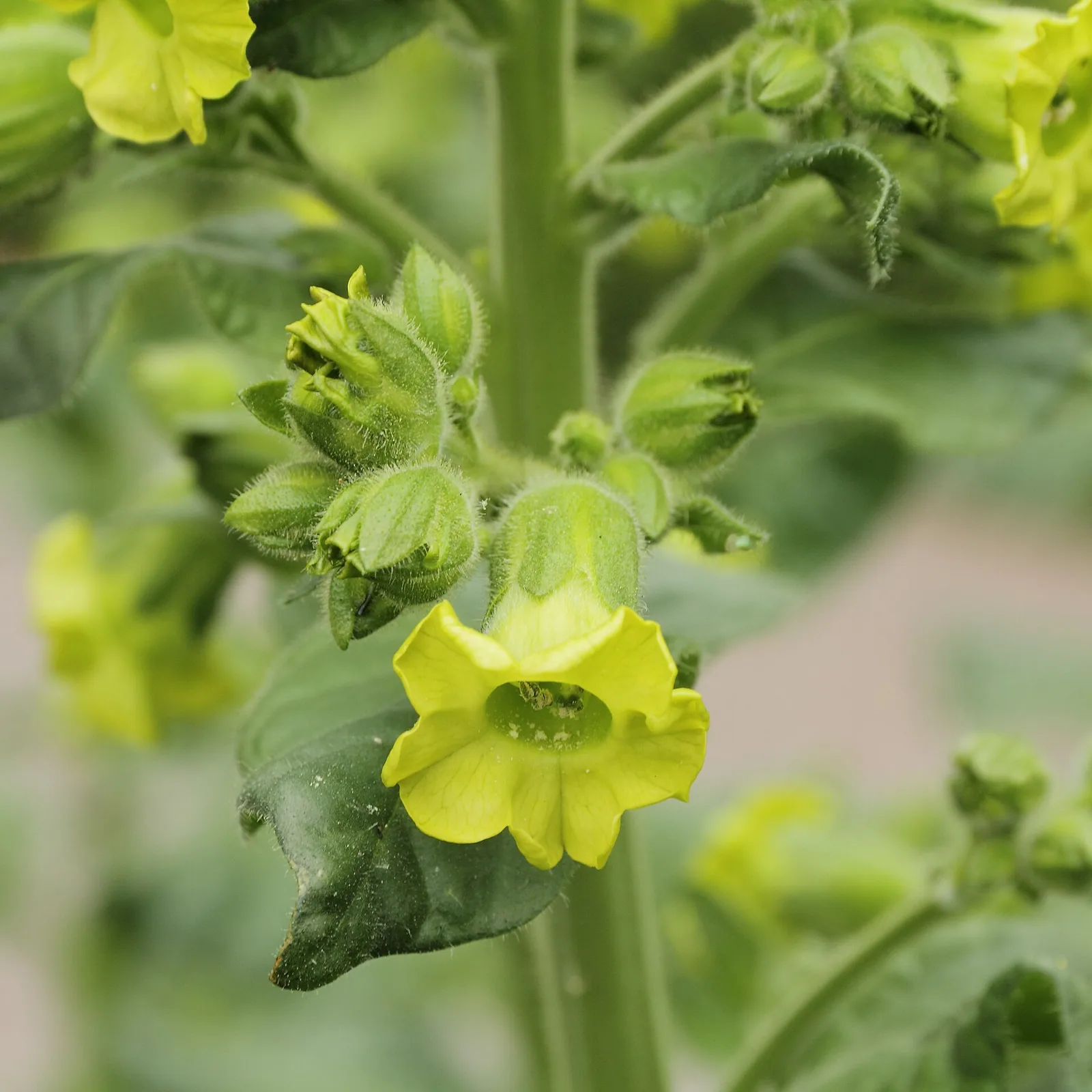
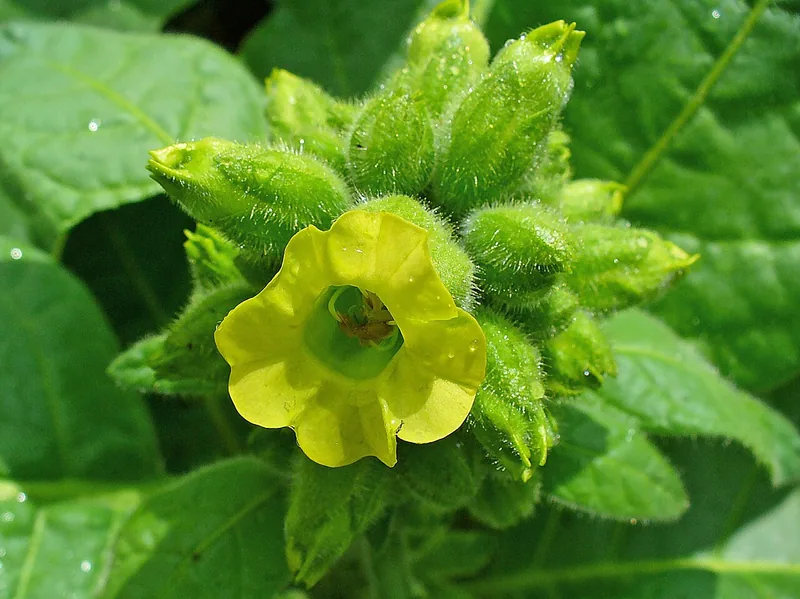
A viscid, glandular-hairy annual, commonly 40–120 cm tall and sometimes taller in favourable cultivation. The stout green stem branches above; broad, dark-green leaves are ovate to cordate, petiolate, entire or shallowly undulate and often 10–30 cm long. Compact branched inflorescences bear short, tubular greenish-yellow flowers with five rounded lobes. Ovoid capsules open to release numerous minute brown seeds. In contrast with the longer pink corollas and more elongated leaves of many N. tabacum forms, N. rustica usually presents a shorter, stockier architecture, broad leaves and short yellow-green corollas (WFO, 2026).
Glandular trichomes and leaf vacuoles accumulate defensive specialised metabolites. Nicotine is synthesised chiefly in roots and transported upward; the unusual abundance in N. rustica reflects both its combined progenitor genomes and comparatively active root-to-shoot transport. Self-compatibility and prolific seed facilitate landrace maintenance, while human selection has produced marked variation in leaf form, maturation, aroma and alkaloid concentration (Sierro et al., 2018).
Domestication and identification
- Genomic origin
The allotetraploid origin and Andean affinities are well supported, although the exact sequence and date of hybridisation remain unresolved (Sierro et al., 2018).
- Archaeobotany
Tobacco seeds and nicotine residues often resolve only to Nicotiana. Species-level claims require diagnostic macroremains, ancient DNA or securely associated historical evidence; residue alone leaves N. rustica, N. tabacum and wild tobaccos indistinguishable.
- Cultivated dispersal
The species was almost certainly moved far beyond Peru before European contact. Competing chronologies place its arrival in parts of North America within the last three millennia; the route and tempo remain debated (Winter, 2000; Tushingham et al., 2018).
02Chemistry
Pyridine alkaloids dominate the entheogenic chemistry.
Nicotine
Nornicotine
Anatabine
Anabasine
Biosynthesis, receptor action and preparation chemistry
The pyrrolidine half of nicotine derives from ornithine/arginine metabolism and the pyridine half from nicotinic-acid metabolism. Jasmonate signalling induced by herbivory activates root biosynthetic genes; transporters move nicotine to aerial tissues, where vacuolar sequestration creates a chemical defence. The N. rustica genome carries five active putrescine N-methyltransferase copies and an ABC-transporter expression pattern consistent with enhanced shoot accumulation (Sierro et al., 2018).
In humans nicotine opens pentameric nicotinic acetylcholine receptor channels, including high-affinity α4β2* and α7-containing receptors, then promotes subtype- and exposure-dependent desensitisation. Modulation of dopamine, glutamate, GABA, noradrenaline and acetylcholine supports attention, autonomic arousal, reinforcement and dependence. As exposure rises, the phenomenology can shift from alerting stimulation to dizziness, emesis, weakness, perceptual alteration and prostration; this biphasic profile underlies Wilbert’s pharmacological interpretation of tobacco trance (Wittenberg et al., 2020; Wilbert, 1987).
- Alkaline activation
Ashes or carbonates raise pH and increase the un-ionised fraction of nicotine available across nasal or oral membranes. Analysed rapé products ranged from 6.32 to 47.6 mg/g total nicotine, but botanical composition and pH varied markedly (Stanfill et al., 2015).
- Smoke β-carbolines
Harman and norharman inhibit monoamine oxidase in laboratory assays, but they are chiefly documented as smoke/pyrolysis constituents, products of burning more than of the living leaf (Herraiz and Chaparro, 2005).
- Curing products
Curing and fermentation alter alkaloid ratios and can generate tobacco-specific nitrosamines; combustion adds carbonyls, polycyclic aromatic hydrocarbons and carbon monoxide. Preparation is therefore chemically transformative (Stanfill et al., 2015).
03Tradition, ritual & cultural use
Oldest evidence and historical limits
At the Wishbone site in Utah, four charred wild-tobacco seeds from a hearth date to approximately 12,300 calibrated years BP—the earliest presently published evidence of human tobacco use. The seeds resemble N. attenuata; the find shows neither N. rustica nor smoking. It demonstrates a Pleistocene human relationship with the genus. Nicotine recovered from later North American pipes and smoking tubes documents use by at least the second millennium BCE, while residues in hair from San Pedro de Atacama show repeated tobacco exposure across pre-Hispanic periods; species needs more than these biomarkers to resolve (Duke et al., 2022; Carmody et al., 2018; Echeverría and Niemeyer, 2013).
By European contact, cultivated strong tobaccos were distributed from the Andes and Amazonia to Mesoamerica and parts of North America. Colonial Nahua sources describe picietl, generally identified with N. rustica, in healing, offerings, smoke, powders and compounded medicines. In other regions “tobacco” may instead denote N. tabacum or local wild species. A rigorous history therefore joins linguistic, botanical, archaeological and documentary evidence without assuming that every pipe contained the same taxon (Elferink, 1983; Winter, 2000).
Peoples, territories and ritual technologies
Hopi tobacco
N. rustica is grown across North America for ceremonial purposes and is known as Hopi tobacco; a study of its pollinators was undertaken to help keep this culturally significant plant in cultivation (Gibson et al., 2022).
The Columbia Plateau
Nicotine-positive residues show that hunter-gatherers of interior northwestern North America smoked tobacco long before Euro-American traders, who had been credited with introducing it; trade tobacco overtook and obscured the older Indigenous practice (Tushingham et al., 2018).
Highland Maya
Among the Tzeltal and Tzotzil Maya of Chiapas, the whole tobacco plant — here N. tabacum — is a primordial medicine and protector. Its commonest form is fresh leaf ground with slaked lime into an oral snuff, protective and therapeutic, now declining in favour of smoked tobacco (Groark, 2010).
The maestro tabaquero
In the Peruvian Amazon tobacco, especially N. rustica, is a potent medicine, applied to the skin or ingested. A tobacco specialist interviewed in depth named "problems of the mind", respiratory and parasitic illness, gout, and spiritual-energetic conditions among its uses (Berlowitz et al., 2020).
Preparation as cultural form
Preparation determines social relation as much as pharmacokinetics. A cigar or pipe can make smoke available for inhalation, fumigation and the directed breath of soplar; a liquid can be medicine, ordeal or initiatory test; a snuff may be independently tobacco-based or serve as an alkaline carrier and activator within Anadenanthera and Virola complexes. In Amazonian rapé/hapé, leaf powder is commonly combined with selected plant ashes, but composition, names and ritual protocols remain locally specific. Tobacco can open, order, protect and close ayahuasca work, or constitute the principal medicine in its own right (Wilbert, 1987; Berlowitz et al., 2020).
Tobacco is the chief medicinal plant in my work. Maestro tabaquero, quoted in Berlowitz et al. (2020)
Vegetalismo and pajelança
In the Iquitos vegetalismo that Luna recorded in 1981–1982, tobacco is “the king of all plants”: the first plant-teacher an initiate must know, a medicine in itself — taken by mouth or through the nose, applied to the body, smoked or as an enema — and the level at which many healers stop. Blown over any medicinal plant, its smoke “will purify the environment and will build a shield against evil powers” (Luna, 1984, p. 129). On the Pará coast of Brazil, the pajé of pajelança cabocla is handed lit cigarettes by his assistant while the encantados possess him (Maués, 2007, p. 14). The Vegetalismo and Pajelança Healing Complex sets the two traditions side by side.
Indigenous Amazonian shamanisms
Among the Panoan Yawanawa of Acre, apprentices drink tobacco juice, nawënë, to learn the healing song mëka, and take tobacco snuff, nawë; Pérez-Gil writes that in Panoan shamanism “os principais alucinógenos são a ayahuasca e o tabaco” (Pérez-Gil, 2001, pp. 336–337). The Huni Kuin take nixi pae with the tobacco snuff dume (Lagrou, 2018, p. 27). Neither source names the tobacco species. These traditions are treated in the Indigenous Amazonian Shamanisms.
04Cosmology & key terms
Tobacco cosmologies are plural but share recurring operations. Smoke makes breath visible; breath carries names, prayer and intention; aroma feeds or summons spirits; bitterness and pain index medicine’s force; emesis externalises pathogenic substance; cultivated tobacco materialises an intergenerational alliance between people, land and other-than-human persons. These operations organise who may cultivate, prepare, offer, receive and interpret the plant (Wilbert, 1987; Russell and Rahman, 2015).
- Master / teacher plant
- In Peruvian Amazonian vegetalismo, tobacco is a plant with agency, knowledge and a “mother” or owner. Dieta, dream, song and disciplined attention form a pedagogy through which a healer learns its capacities (Jauregui et al., 2011; Beyer, 2009).
- Smoke and breath
- Directed smoke may bless, seal, cleanse, diagnose or defend. The healer’s breath is simultaneously physiological vehicle, spoken intention and social agency; the visible plume marks a relation between bodies and otherwise invisible forces.
- Food for spirits
- Across several Amazonian systems, tobacco sustains spirit helpers and shamanic objects. The specialist consumes or offers what other beings desire, turning intoxication into reciprocal traffic (Wilbert, 1972, 1987).
- Pain, bitterness, power
- Matsigenka evaluations link the pain of strong tobacco with intoxication and the maker’s shamanic strength. Sensory violence can be a sign of potency and transformation, part of the visionary event itself (Shepard, 1998).
- Christian and Indigenous forms
- Colonial and contemporary practices may join crosses, saints, prayer and church calendars with plant persons and older ritual logics. Syncretism is historical practice, in which every layer is lived (Groark, 2010).
Shamanism, healing and visionary authority
The tobacco specialist often works through embodied control: tolerating doses that incapacitate others, directing smoke, singing or whistling, diagnosing through altered sensation and extracting or returning pathogenic agencies. Wilbert’s comparative synthesis treated tobacco as close to the institutional centre of South American shamanism because it joins pharmacological power to a disciplined social role. Among Matsigenka, an invisible spirit counterpart among the Saangariite may be cultivated through tobacco and other psychoactive plants; among Shuar, tobacco participates in visionary education, protection and relations with the forces that determine flourishing and death (Harner, 1972; Shepard, 1998; Rubenstein, 2012).
Art and material culture
Tobacco’s material archive includes stone, clay, wood and catlinite pipes; cigars and leaf rolls; gourds, shells and miniature flasks; snuff tubes and trays; ash mortars; tobacco bundles; embroidered pipe bags; healer’s cups, bottles and altars. Such objects encode rank, gender, diplomacy, exchange and cosmological design as well as ingestion. Ancient Maya flasks contain nicotine and other plant metabolites and sometimes carry texts or images identifying tobacco; North American effigy pipes turn animals and ancestors into conduits of smoke; Amazonian implements often remain intimate, perishable and embedded in household or healing practice (Winter, 2000; Zimmermann et al., 2021).
Contemporary visual economies extend from Indigenous beadwork, body painting and healer iconography to branded mapacho, retreat photography and globally traded rapé applicators. Juxtaposition is weak evidence of continuity. A museum pipe’s species needs establishing case by case, and a modern product’s Indigenous name is no record of its provenance.
05Visionary phenomenology
Tobacco has no single experiential signature independent of route, dose, tolerance, preparation and ritual interpretation. Ordinary smoking often produces brief alertness, sharpened attention, warmth, a head “rush,” appetite suppression and—especially in dependent users—relief of withdrawal. Concentrated N. rustica preparations can generate a more discontinuous sequence: burning and salivation; vertigo, auditory narrowing, sweating and nausea; vomiting, weakness or recumbency; then dreamlike imagery, dissociation, altered bodily scale, voices, spirit encounters or diagnostic insight. Ethnographers sometimes call this “hallucinogenic,” while pharmacology identifies a nicotinic mechanism, distinct from the serotonergic one (Janiger and Dobkin de Rios, 1976; Wilbert, 1987).
| Form / context | Onset | Principal phase | Reported experiential profile |
|---|---|---|---|
| Inhaled smoke | Seconds | Minutes; residual autonomic effects longer | Rapid head rush, vigilance, bodily warmth, narrowed focus; concentrated inhalation may bring vertigo, nausea, visual dimming and collapse. |
| Nasal snuff / rapé | Minutes | Often 20–60+ min | Intense nasal pain, lacrimation, pressure, auditory and bodily amplification, grounding or focus; strong preparations may progress to emesis, prostration and imagery. |
| Buccal quid / paste | Several minutes | Tens of minutes to hours | Slower, sustained stimulation and salivation; alkaline preparations can markedly increase nicotine absorption. |
| Liquid ingestion | Variable, often 10–30 min | Acute phase commonly 1–3 h; ritual retreat may frame days | Pronounced nausea and purging, autonomic fluctuation, weakness, altered consciousness, emotionally charged memory, existential or spirit-oriented insight (Berlowitz et al., 2023, 2024). |
| Directed smoke / soplar | Immediate sensory presence | Embedded in treatment sequence | The recipient may inhale little. Meaning centres on cleansing, sealing, protection and the healer’s directed breath. |
Phenomenological profile
The profile lists effects the sources report, for each preparation separately, grouped by domain. Each row gives the grade, how often the sources say the effect occurs (only where they say so; most do not) and the kinds of source behind it. A chip naming a compound, such as “Trial · psilocybin”, means the evidence comes from studies of that compound rather than of the preparation itself; “partial” means the route, purity or dose differs from the traditional preparation, so the row cannot be graded above supported. The line under each preparation says which domains have evidence entered here. A domain with nothing entered has not yet been assessed in this profile; that is not a finding that the literature is silent, and the article may discuss it. Open a row for the note and the sources.
Tobacco taken stronglydrunk, snuffed or smoked in healing
Evidence entered for 5 of 8 domains. Not yet entered: visual, self and unity, affect. Discussed in the article above but not yet entered: visual.
Nicotine acts on nicotinic receptors, not the serotonergic ones of the classic visionary plants (Janiger and Dobkin de Rios, 1976); route, dose and tolerance set the course, and the visionary sequence belongs to concentrated preparations.
Other senses
Intensified hearingHeightened acuity, salience or alteration of sound.SupportedEthnography
Concentrated preparations bring auditory narrowing and, later, voices (Wilbert, 1987; Janiger and Dobkin de Rios, 1976).
Body
Nausea and purgingNausea, vomiting or diarrhoea during the acute state.SupportedEthnographySurvey
In Amazonian healing, nausea and emesis can be the medicine’s work, enacting cleansing and expulsion (Berlowitz et al., 2023); 27 patients of a tobacco healer reported initial physical discomfort (Berlowitz et al., 2024).
Cognition
Autobiographical recallVivid re-experiencing or re-viewing of one’s own past, often recast from new positions.SupportedSurvey
Drunk tobacco is followed by emotionally charged memory (Berlowitz et al., 2024).
NoesisThe felt disclosure of knowledge: understanding that seems to arrive with what is perceived.SupportedSurvey
After the initial discomfort, patients reported psychologically or existentially and spiritually significant insights (Berlowitz et al., 2024).
Relation to other beings
Autonomous entitiesBeings experienced as acting, communicating or observing independently of the experiencer’s will.SupportedEthnography
Strong preparations may progress to spirit encounters (Wilbert, 1987). Read about the phenomenology of autonomous entities →
States of consciousness
Dreamlike statesOneiric experience: dream formation, dreamlike sequences or a waking state resembling dreaming.SupportedEthnography
After vomiting and weakness come dreamlike imagery and dissociation (Wilbert, 1987).
Recurring experiential motifs
- Biphasic force
Early stimulation can give way to heaviness, weakness and sensory withdrawal. Wilbert argued that repeated high nicotine exposure converts this physiological reversal into a culturally managed route to shamanic ecstasy (1987).
- Purging as event
Nausea and emesis can be the medicine’s work. In Amazonian healing they may enact cleansing, expulsion and diagnostic revelation, reorganising bodily distress within a therapeutic sequence (Berlowitz et al., 2020, 2023).
- Dream and audition
Darkness, recumbency and sensory narrowing favour internally generated scenes, voices, songs and encounters. Tobacco visions are often less kaleidoscopic than DMT or mescaline reports and more somatic, auditory, dreamlike and relational.
- Agency and diagnosis
A sensation or image becomes evidence through a learned interpretive system: spirit presence, pathogenic intrusion, a plant’s instruction, a hunting relation or the correct therapeutic action. “Vision” here includes practical knowledge as well as visual display.
- Tolerance and skill
Experienced specialists may remain articulate under exposures that cause novices profound sickness. Physiological tolerance, ritual training, expectation and social role jointly shape the state; no one factor exhausts the difference.
a faith-confirming, that is, life-ordaining, drug Wilbert (1987, p. 202)
06Contemporary status
Conservation and biocultural continuity
| Global assessment | Unlisted on the IUCN Red List as a globally threatened species. Extensive cultivation, seed banking and naturalisation make species-level extinction unlikely; Kew accepts Peru as the native range (POWO, 2026). |
|---|---|
| Principal concern | Landrace and knowledge erosion, more than species scarcity: replacement by commercial N. tabacum, agricultural standardisation, habitat and territorial change, and interruption of seed, language and specialist transmission. |
| Pollination | A field study of culturally significant Hopi tobacco recorded both diurnal and nocturnal insect visitation and demonstrated that open pollination improved reproductive measures, linking cultural-plant stewardship to pollinator ecology (Gibson et al., 2022). |
| Ex situ resources | Seed-accession networks and genomic repositories conserve substantial diversity, while the territorial, linguistic and ceremonial systems that give a landrace meaning need conserving in place. |
Local and global economies
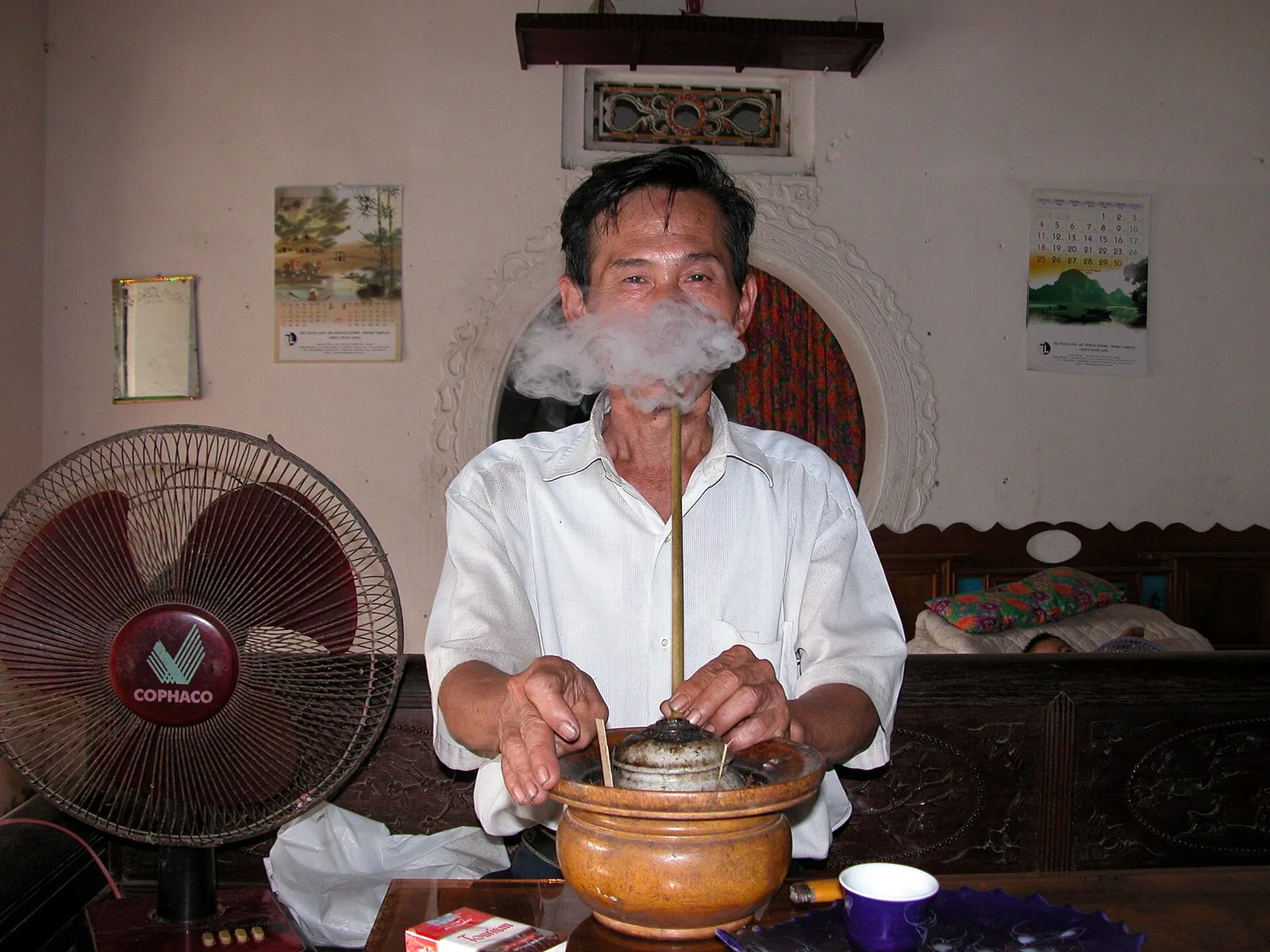
N. tabacum dominates the global cigarette and plantation economy. N. rustica persists in regional markets for Amazonian mapacho and rapé, Russian and Central Asian makhorka, Vietnamese thuốc lào, South Asian naswar, Sudanese toombak and Turkish Maraş otu, although product names are an uncertain guide to species. A newer online economy sells “hapé,” mapacho cigars, seeds, retreat treatments and ceremonial accessories across national borders. No reliable global market total isolates N. rustica from tobacco statistics, and the scale of Indigenous producer participation versus external branding remains poorly quantified.
The species has also served as a nicotine source for insecticides, a cold-tolerant crop, a trap plant and a research organism. In 2025, chemical-ecology research examined how cotton-bollworm chemosensory protein CSP1 recognises N. rustica volatiles, reflecting its continuing agricultural role beyond human consumption (Sun et al., 2025).
Law and regulatory authority
| Jurisdiction | Status relevant to the species |
|---|---|
| International | Nicotine and N. rustica are outside the UN drug conventions. Tobacco is governed through separate public-health and trade systems, centrally the WHO Framework Convention on Tobacco Control, in force since 2005. |
| United Kingdom | Tobacco products, including pipe, chewing and nasal tobacco, are regulated through tobacco-product, excise, advertising, smoke-free and age-of-sale legislation. The Tobacco and Vapes Act 2026 received Royal Assent on 29 April 2026; its generation-based sales prohibition for people born on or after 1 January 2009 begins 1 January 2027 (WHO FCTC, 2026). |
| European Union | The Tobacco Products Directive regulates manufacture, presentation and sale; national rules vary for nasal snuff, oral tobacco, cultivation and cross-border supply. |
| United States | FDA authority covers manufactured tobacco products, including smokeless and pipe tobacco. Seed and live-plant legality is distinct from sale of prepared tobacco; state, tribal and federal tax and sales regimes overlap. |
| Indigenous governance | Community protocols, territorial authority and ceremonial restrictions may govern seed, preparation and knowledge independently of state product law. They are authorities in their own right, beyond any generic religious exemption. |
Patents, science and clinical translation
- Genome and alkaloid transport · — the 5 Gb draft genome linked exceptional leaf nicotine to progenitor-genome combination, an extra active PMT copy and increased shoot transport (Sierro et al., 2018).
- Metabolomics · — comparative work now maps pyridine alkaloids, phenolics, terpenoids and volatile profiles across Nicotiana; a 2023 evolutionary metabolomics study reconstructed specialised-metabolism changes across the genus (Elser et al., 2023).
- Traditional therapy research · — a 2023 single-case mixed-method study and a 2024 qualitative study of participants in Indigenous-Amazonian tobacco therapy reported a sequence of initial physical distress followed by psychologically, existentially or spiritually significant material. These observational designs leave efficacy untested (Berlowitz et al., 2023, 2024).
- Patent field · — patents claim engineered Nicotiana nucleic acids, altered nicotine/TSNA pathways, extraction and product technologies; the species, its pre-existing landraces and documented traditional practices lie outside them. US 12,077,765 B2, for example, claims gene-edited tobacco plants with reduced nicotine and nitrosamines.
- Research gap · — high-dose ritual tobacco remains poorly represented in neuroscience. Existing receptor science explains nicotine activation, desensitisation and reinforcement more securely than it explains culturally patterned visions, song, purge, diagnosis and relational experience.
Open questions on this entry
Safety and law
07Cross-correlations
| Circum-Amazonian Snuffs | Preparation and ceremonial complex page: tobacco snuffs as independent medicines and as alkaline/ash matrices within Anadenanthera and Virola traditions. PRIMARY PREPARATION COMPLEX |
|---|---|
| Ayahuasca Complex | Mapacho smoke, prayer and cleansing frequently frame ayahuasca work, while tobacco also sustains independent tabaquero lineages. ASSOCIATED CEREMONIAL COMPLEX |
| Nicotiana tabacum | The other major cultivated tobacco: lower average nicotine, globally dominant commodity crop, and participant in many Indigenous traditions often conflated with N. rustica. SIBLING CULTIGEN |
| Anadenanthera peregrina | Yopo may be accompanied or compounded with tobacco and alkaline ash; this relation belongs to local snuff systems, each with its own formula. SNUFF-ROLE ASSOCIATE |
| Virola spp. | Epená/yãkõana traditions may use tobacco independently, sequentially or within regional preparation logics. SNUFF-ROLE ASSOCIATE |
| Banisteriopsis caapi | A co-present master plant in many western Amazonian healing systems; tobacco protects and orders work, beyond any MAOI role, and is only sometimes an ayahuasca ingredient. RITUAL ASSOCIATE |
| Vegetalismo and Pajelança | Vegetalismo and Pajelança Healing Complex: “the king of all plants” for an Iquitos vegetalista, the first plant-teacher an initiate must know; on the Pará coast the pajé smokes as the encantados arrive. HEALING COMPLEX |
| Indigenous Amazonian Shamanisms | Indigenous Amazonian Shamanisms: Yawanawa tobacco juice and snuff in initiation, Huni Kuin dume taken with nixi pae. INDIGENOUS COMPLEX |
08Bibliography
How to read the labels on each source
- Source type
- What kind of work it is: journal article, book, legislation, patent application, database record and so on. A word after the dot (ethnography, protologue, primary source) keeps the genre the entry was first filed under. “Unclassified” means the citation does not say enough to tell.
- Peer review
- Recorded for each work separately, and only where it has been confirmed for that work. It is never inferred from a DOI, a publisher or a journal, since journals also publish editorials, letters and commentaries. Where it has not been confirmed, the entry records it as not established. It does not apply to legislation, court decisions, treaties, patents, datasets, database and collection records, historical texts, films, talks, press releases or web pages.
- Check
- What was checked when the entry was added. DOI checked: the DOI’s registry record (Crossref) matched the citation’s title, first author and year. Verified: the record itself was opened and matched the citation: a library catalogue record for a book, or the page itself for a database entry, law, patent or archive document. “Verified (abstract)” and “(summary)” mean only the abstract or a summary was read. Located: a record was found but not fully matched. Bibliographic record and Stable record (in essays): a catalogue or stable web record exists; what was checked against it is not recorded. Unverified: no check is recorded. No locator found: a search found no record. Secondary: read through another source.
- What the labels do not say
- None of them means the source supports a particular sentence. Where a sentence is graded, its evidence note names its sources and whether each supports it, disputes it or gives context. Dates and reviewers of checks are not recorded for each entry; the version note at the foot of a graded page dates its last review.