Mirante, D. (ed.) (2026) Eleusinian Kykeon–Mystery Complex. Entheocene, version 1.0. Available at: https://entheocene.com/complex-eleusinian-kykeon-mystery.html (Accessed: 17 October 2026).
DOI: not yet minted.
Introduction
Eleusis was an initiatory machine extending from Athens to the Thriasian plain: proclamation, abstention, sea-purification, sacrifice, procession, obscenity, torchlight, sleeplessness, a grain-and-mint drink, and finally an encounter inside the Telesterion that initiates were forbidden to disclose. Its mythology moved through a mother’s grief, the arrested fertility of the earth, a daughter’s partial return from the dead and the establishment of rites promising a more hopeful relation to mortality. The kykeon mattered because it condensed that passage into something swallowed. Whether it also carried an entheogenic ergot derivative remains one of antiquity’s most productive—and most repeatedly overstated—hypotheses. This dossier therefore treats the drink, the sanctuary, the priestly institution, the civic pilgrimage and the phenomenology of darkness-to-light as one complex, while keeping pharmacological possibility separate from archaeological demonstration (Mylonas, 1961; Burkert, 1987; Ustinova, 2013; Mosurinjohn and Ascough, 2026; Antonopoulos et al., 2026).
Contents
01Constituents & preparation
Deep Time
Continuity disputedBronze Age Eleusis→
Cult historically visibleArchaic–Roman Mysteries→
Entheogen unprovenModern “psychedelic Eleusis”
Attested botanical centre
The Homeric Hymn supplies a literary recipe for Demeter’s drink. Historical festival batches may have varied, and the Hymn names no psychedelic additive.
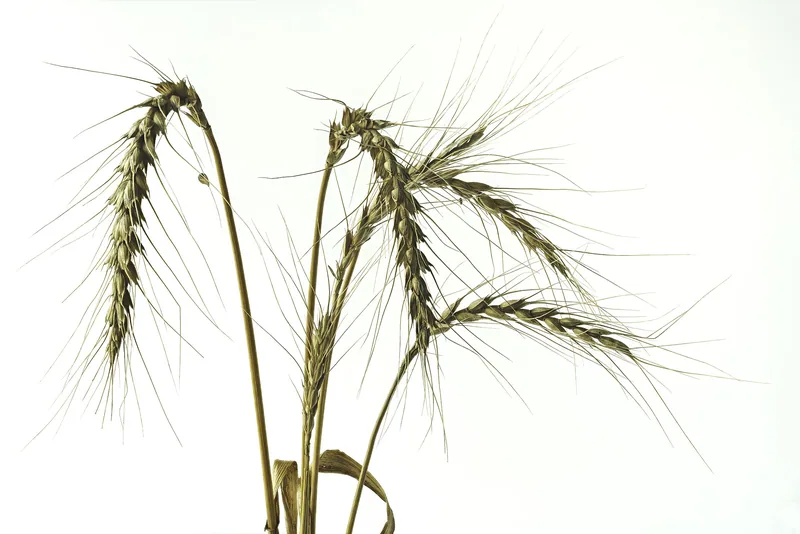
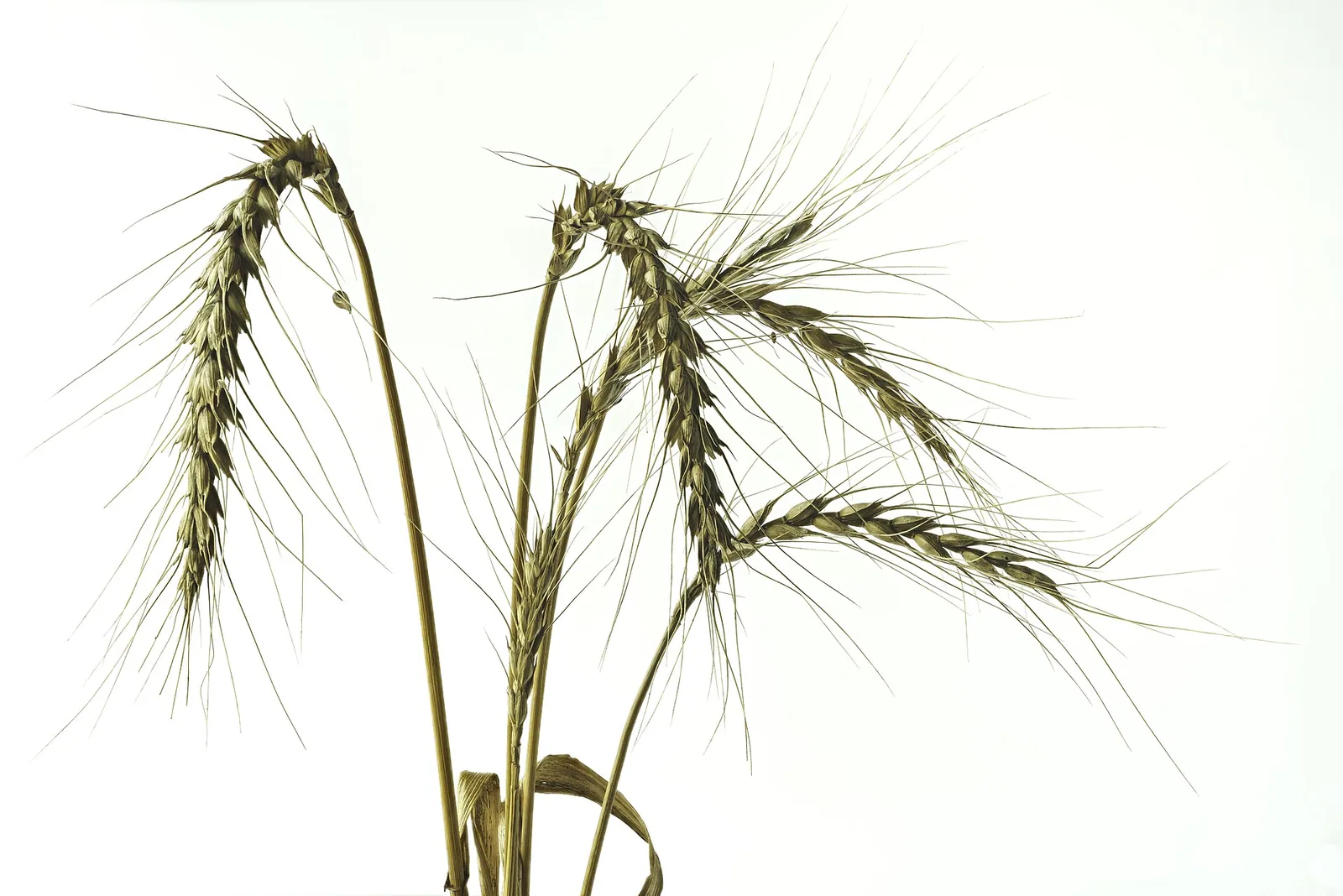
The cereal body of Demeter’s kykeon and the agricultural sign around which Eleusinian mythology, first-fruit obligations and the mission of Triptolemus converge. The Hymn names barley meal mixed with water and tender glechon; malt, fermentation and fungal contamination go unmentioned (Foley, 1994).
Family / order
Poaceae · Poales
Accepted name
Hordeum vulgare L.
Associated compounds
Starch, proteins and cereal metabolites; no inherently psychedelic constituent
Ritual function
Grain, nourishment, first fruits, Demeter’s civilising gift
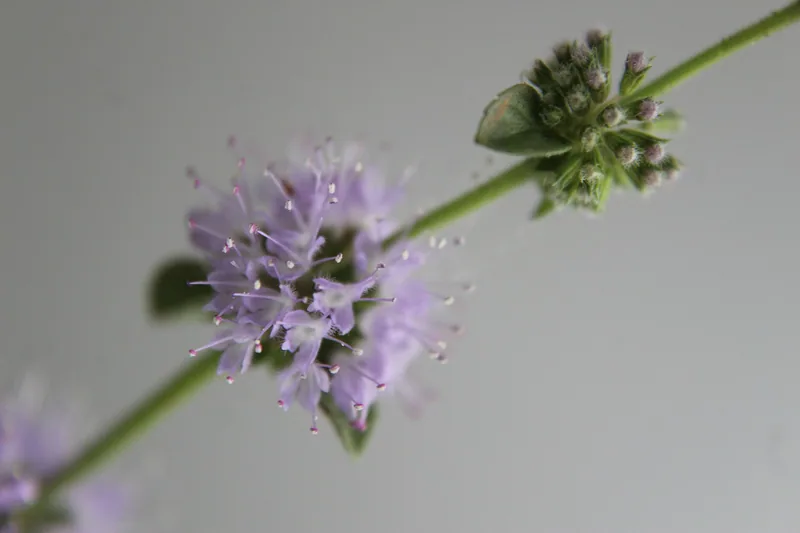
The aromatic herb usually identified with the Hymn’s “tender mint.” Its flavour, digestive associations and place in women’s medicine make it culturally resonant, but no ancient source identifies pennyroyal itself as the visionary key. Concentrated pennyroyal oil is hepatotoxic; ordinary historical herb use and modern essential-oil ingestion are different exposures (Caputo et al., 2021).
Family / order
Lamiaceae · Lamiales
Accepted name
Mentha pulegium L.
Associated compounds
Pulegone, menthone, isomenthone and volatile terpenes; chemotype varies
Ritual function
Aromatic, medicinal and mythically specified admixture
Secondary material, contextual agent and disputed pharmakon
Water and mixing
Greek kykaō · to stir or mix
Kykeon names a mixed drink, and its formula varied. Water distinguishes Demeter’s drink from the wine she refuses in the Hymn.
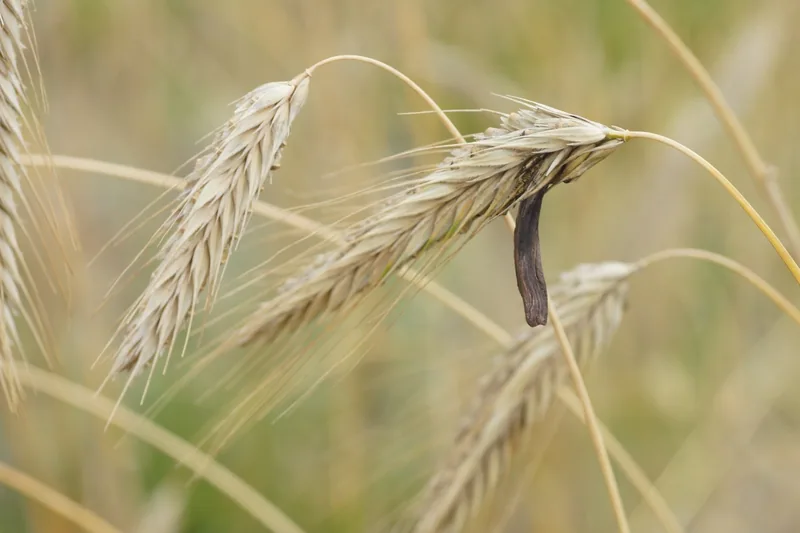
Proposed in 1978 as the hidden source of psychoactive lysergamides. No ergot residue has yet been reported from an authenticated Eleusinian kykeon vessel.
Ergotamine
C₃₃H₃₅N₅O₅
Ergopeptine · lysergic acid–tripeptide cyclol
Persistent vasoconstrictor · historic migraine drug
Ergometrine / ergonovine
C₁₉H₂₃N₃O₂
Simple lysergic acid amide
Uterotonic · central activity at sufficient exposure
Ergocristine
C₃₅H₃₉N₅O₅
Ergopeptine alkaloid
Major in some chemotypes · regulated analytical congener
Ergine / LSA
C₁₆H₁₇N₃O
Lysergic acid amide
Usually minor in raw sclerotia · central to processed-kykeon hypothesis
Fast and abstentions
Not an ingredient · part of the pharmacology of context
Fasting, exertion, expectation, sleeplessness, darkness, crowding, sound and sudden light could profoundly shape experience whether or not a psychoactive drug was present.
Wine, opium and mushrooms
Proposed in modern reconstructions
Poppy, psychoactive mushrooms and other additives have been suggested. None is securely demonstrated as the active principle of the Eleusinian kykeon.
Myrtle, torches and piglets
Processional and purificatory apparatus
Myrtle wreaths and bakchoi, fire, sacrificial animals and sacred objects belong to the ceremony; the drink itself is barley, water and mint.
Kernos and plemochoe
Ceramic forms · function debated
Vessels depicted or excavated in Eleusinian settings may or may not be kykeon cups. Identification by shape alone is insecure.
Safety note: ergot is a dangerous mycotoxin source. The historical hypothesis and recent laboratory chemistry do not constitute a safe preparation method.
Starch, proteins, phenolic acids and ordinary cereal metabolites.
Nutritional and sensory; non-psychedelic.
Documented in the Hymnic formula.
Mentha pulegium
Pulegone, menthone and related monoterpenes.
Aromatic and pharmacologically active; concentrated oil can cause severe hepatic toxicity.
Probable identification of ancient glechon.
Claviceps purpurea
Ergometrine/ergonovine, ergotamine, ergosine, ergocristine, ergocornine, ergocryptine and epimers; profiles vary by strain and host.
Mixed serotonergic, dopaminergic and adrenergic actions; vasoconstriction, uterotonic activity, convulsions and ergotism are major risks.
Unproven no authenticated Eleusinian residue.
Hypothetical processed ergot
Lysergic acid amide (LSA/ergine), iso-LSA and residual simple lysergamides.
Potential central serotonergic effects, but much less characterised in humans than LSD, and phenomenologically distinct from it.
Experimental plausibility only (Antonopoulos et al., 2026).
LSD
Lysergic acid diethylamide; semisynthetic and first prepared in the twentieth century.
Potent 5-HT2A-mediated psychedelic with broader receptor pharmacology.
Absent LSD itself was not an ancient constituent.
Traditional preparation: what the evidence permits
TEXT
In the Homeric Hymn to Demeter, Demeter refuses red wine and requests water, barley meal and tender glechon. Clement of Alexandria later preserves an initiatory password beginning, “I fasted; I drank the kykeon.” Together these sources securely connect fasting and drinking; both are silent on any hidden intoxicant (Foley, 1994; Meyer, 1999).
INFERENCE
The drink was mixed and consumed within a highly organised ritual sequence. Its precise texture, scale of production, vessel, temperature and timing remain debated. “Barley beer,” “porridge” and “potion” are interpretive translations.
ERGOT
Wasson, Hofmann and Ruck proposed that specialists separated or transformed ergot alkaloids into a psychoactive but tolerable preparation. The theory solves one puzzle—how a repeatable extraordinary state might have been induced—but creates others: dose consistency, toxicity, scale, silence in the sources and the absence of direct residue evidence from Eleusis (Wasson, Hofmann and Ruck, 1978; Mosurinjohn and Ascough, 2026).
2026 STUDY
A laboratory study demonstrated that an alkaline process available in principle to ancient crafts could hydrolyse several toxic ergopeptides in modern C. purpurea material while producing LSA and iso-LSA. This establishes chemical feasibility under tested conditions. Whether Eleusinian personnel used the method, whether the mixture resembles kykeon and whether it is safe for human consumption are all untested. The authors explicitly call for further pharmacological and toxicological evaluation (Antonopoulos et al., 2026).
The evidence ladder
Secure
Kykeon was ritually drunk; a prominent literary formula contains water, barley meal and glechon; fasting preceded the drink; grain and Demeter’s agricultural power were central to Eleusinian meaning.
Strongly inferred
The drink participated in the transition from privation and mourning to revelation and festivity. Ceremony, architecture and expectation were active determinants of experience.
Contextual support
Ergot remains were reported at Mas Castellar de Pontós in Iberia, in a Hellenistic sanctuary associated with Demeter and Kore. This demonstrates ergot in one Demetrian ritual context, far from Eleusis (Juan-Tresserras, 2002; Samorini, 2019).
Chemically possible
Modern experimentation can convert an ergot alkaloid mixture toward simpler lysergamides using historically possible technology (Antonopoulos et al., 2026).
Not demonstrated
That Eleusinian kykeon contained ergot; that it reliably produced a classic psychedelic state; that priestesses possessed a standard detoxification protocol; or that the same formulation persisted for the sanctuary’s entire history.
02Culture
Peoples and territories
Eleusis / Elefsina
Local cult community · priestly gene · sanctuary personnel
The sanctuary of Demeter and Kore stood on the Thriasian plain west of Athens. Eleusinian families, especially the Eumolpidae and Kerykes, held hereditary ritual offices within an institution that was local in ownership but eventually Mediterranean in reach (Mylonas, 1961; Clinton, 1974).
The Greater Mysteries joined civic and sacred geographies. Sacred objects travelled to Athens; initiates gathered and purified themselves; the procession then moved roughly twenty kilometres back to Eleusis, transforming road, bridge, shrines and boundary crossings into stages of initiation.
Panhellenic and Roman Mediterranean
Greek speakers · women and men · enslaved and free participants · Roman elites
Admission was unusually broad by ancient civic-religious standards, though conditional: ritual purity, intelligibility of Greek and freedom from certain forms of blood-guilt mattered. Roman patronage later monumentalised the sanctuary and widened its imperial prestige (Bowden, 2010).
Mas Castellar de Pontós
Iberian settlement in the orbit of Emporion · Demeter/Kore cult contact
The ergot find comes from a different sanctuary and society, in north-eastern Iberia. Its value is comparative: it places ergot, cereal processing and Demetrian cult in the same archaeological horizon, while rite and recipe at Eleusis remain unknown (Juan-Tresserras, 2002).
History and evidence
Ritual practice
Preliminary initiation
The Lesser Mysteries at Agrai prepared candidates. Details remain fragmentary, but purification and eligibility preceded the Greater Mysteries.
Proclamation and gathering
Sacred objects were conveyed to Athens and officials proclaimed the festival. Initiation was entered through public civic order before it became secret.
“To the sea, initiates”
Participants moved to the coast for purification, traditionally with piglets. Sea-water, sacrifice and cleansing remade bodily and moral status.
Abstention and anticipation
Dietary restrictions and fasting echoed Demeter’s grief. Expectation, fatigue and the density of a mass festival altered attention before the Telesterion was reached.
Procession on the Sacred Way
Initiates carried ritual branches, called on Iakchos and crossed a landscape of shrines and boundaries. At the bridge, ritual mockery or gephyrismoi punctured solemnity with licensed insult.
Arrival, fast broken, kykeon drunk
The grain-and-mint mixture linked each initiate to Demeter’s exemplary refusal and acceptance. Its force was alimentary, mythic and possibly, though undemonstrably, psychoactive.
Telesterion: things done, said and shown
Modern summaries speak of dromena, legomena and deiknymena. The triad is a modern analytic convenience. Darkness, torches, sacred speech, objects and epiphany are better attested than any complete script.
Pannychis, dance and return
Night-long celebration, dance and concluding libations returned initiates to collective life. Initiatory secrecy preserved the event as a shared boundary, known by participation.
Mythology and cosmology
Demeter’s withdrawal. Persephone/Kore is seized into the underworld. Demeter searches, mourns and withholds fertility, bringing divine and human economies toward collapse. Agriculture is revealed as a covenant that can be suspended.
Hospitality at Eleusis. Disguised as an old woman, Demeter enters the household of Keleos and Metaneira. Iambe’s joking interrupts her grief; the failed immortalisation of Demophon exposes the dangerous distance between gods and humans; the goddess then orders her sanctuary and rites.
Partial return. Persephone returns but, having eaten the pomegranate seed, remains divided between mother and underworld husband. Death remains. The mystery gives periodic absence, return and the buried seed a form through which mortality can be inhabited.
Grain and civilisation. Triptolemus receives grain and agricultural knowledge from Demeter and carries them outward. Eleusis thereby binds initiation to the technology of settled life: cultivation, storage, law, first fruits and the collective dependence of cities upon the earth.
Blessed is the mortal who has seen these things.Homeric Hymn to Demeter, lines 480–482, short translated sense after Foley (1994). The passage contrasts the initiate’s post-mortem lot with that of the uninitiated; it does not identify what was seen.
Priesthood, initiation and healing
Calling the Eleusinian personnel “shamans” would erase the institution’s specifically Greek civic, hereditary and initiatory form. The central figures were the hierophantēs (“shower of sacred things”), drawn from the Eumolpidae; the dadouchos or torch-bearer and sacred herald associated with the Kerykes; priestesses of Demeter and Kore; civic magistrates; and numerous subordinate officials. The initiate was a mystēs; a later or higher seeing was epopteia, and its participant an epoptēs (Clinton, 1974; Bowden, 2010).
Eleusis was primarily an initiation, and surviving evidence nowhere describes kykeon as treatment for a disorder. Yet ancient witnesses repeatedly attribute existential benefit to initiation: living more joyfully, dying with greater hope, and gaining a transformed relation to the underworld. Its “healing” was civic, theological and thanatological—the reorganisation of fear, grief and mortality through embodied participation—and only loosely comparable with psychedelic psychotherapy (Ustinova, 2013).
Art and material culture
Form
What it materialises
Interpretive caution
Telesterion and Anaktoron
A nearly square hypostyle initiation hall with inward-facing seating and a restricted central sacred structure. Architecture gathered a large plurality around a concealed centre.
The ruined building keeps the choreography and contents of the central rite hidden.
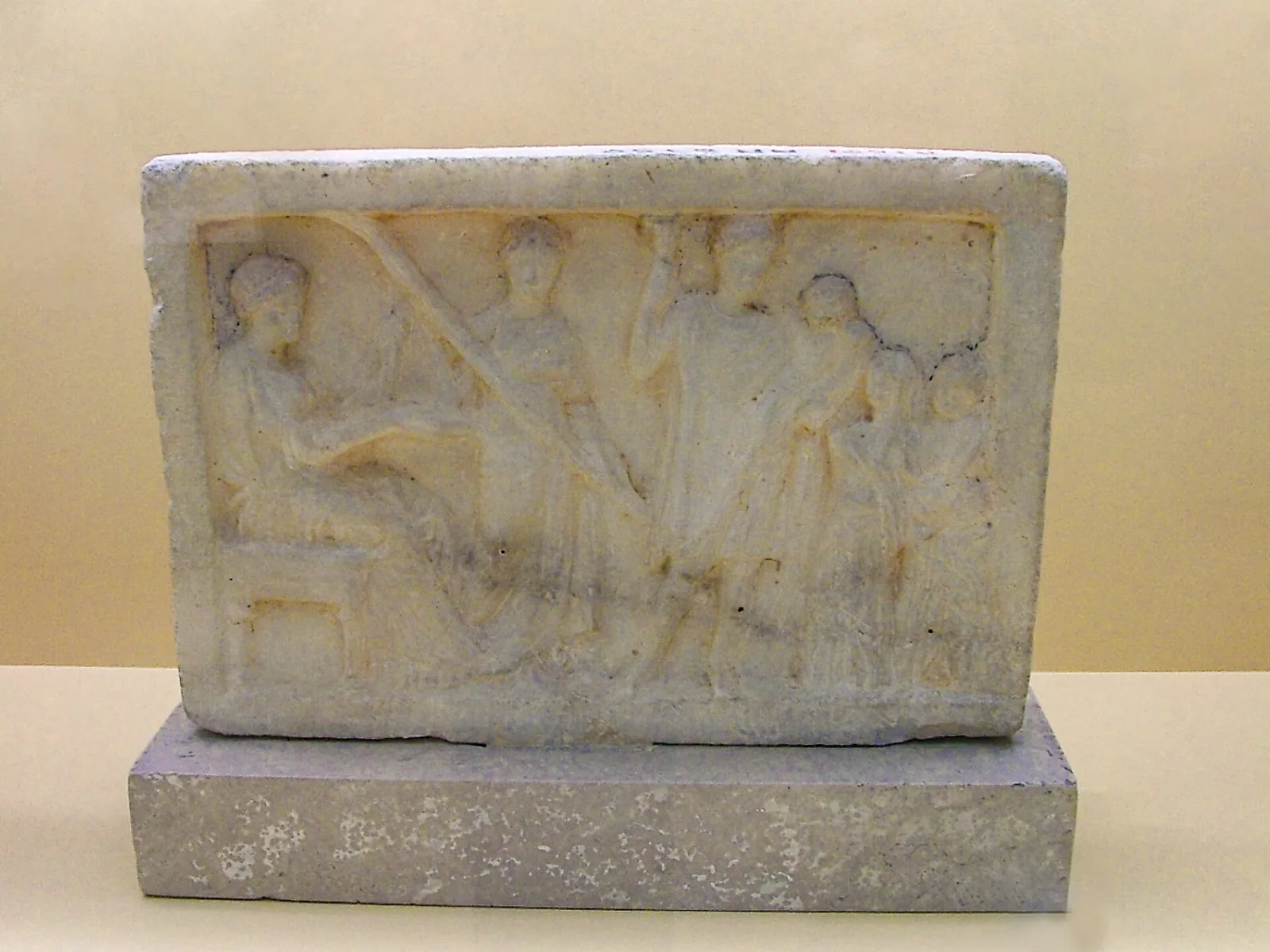
Ninnion Tablet
A fourth-century BCE votive plaque showing mortals approaching Eleusinian deities with torches, wreaths and ritual implements. It is among the most important surviving images of initiatory encounter.
Individual figures, registers, vessels and lunar signs remain contested; the image is allusive.
Great Eleusinian Relief
Demeter gives ears of grain to Triptolemus while Kore extends protection: the agricultural transmission at the heart of the sanctuary’s public theology.
Its grandeur concerns cult and civilisation; the secret rite and kykeon are absent from it.
Kernoi and plemochoai
Composite offering vessels and specialised libation forms connect grain, first fruits, procession and concluding rites.
Proposed uses as kykeon containers remain debated.
Torches, myrtle and bakchoi
Portable signs organised the crowd and linked each initiate to search, purification and nocturnal illumination.
They were sensory technologies and credentials of participation.
Votive reliefs and inscriptions
Dedications reveal families, offices, benefactors, deities and the long civic economy sustaining the cult.
The monumental archive privileges those able to commission and inscribe; enslaved, poor or foreign initiates’ experience survives in it only in part.
03Visionary phenomenology
Ritual durationApproximately nine festival daysClimactic intervalOne or more nocturnal initiatory sequencesDrug durationUnknown: active agent unestablished
What survives as an account
No authorised ancient “trip report” describes ingesting kykeon, onset, peak, visions and comedown. Secrecy filtered testimony into praise, metaphor, philosophical analogy and hostile disclosure. Phenomenology must therefore be reconstructed from recurring experiential terms—fear, wandering, sleeplessness, sound, sudden light, seeing, joy, release and changed hope—without converting each term into a drug symptom.
Aristotle · experience, not doctrine
A fragment attributed to Aristotle says initiates were required to undergo or suffer an experience and become appropriately disposed, more than to learn something. The distinction places transformation in embodied event (Ustinova, 2013).
Plutarch · ordeal into illumination
A passage comparing initiation with death moves through wanderings, fear, trembling, sweat and astonishment, then into wondrous light, pure places, voices, dances and sacred apparitions. Its precise specificity to Eleusis is debated, but its affective sequence matches a wider mystery grammar (Widzisz, 2010).
Cicero · life and death reoriented
Cicero credits the Mysteries with teaching people to live more joyfully and to die with better hope. This is retrospective elite testimony, but it names the durable after-effect claimed for initiation: an altered orientation (De legibus 2.36).
Intensity and visionary descriptions
Dimension
Historically supportable description
What cannot be concluded
Anticipatory intensity
Days of ritual obligation, travel, abstention and mass participation narrowed attention toward a single secret climax.
That fasting simply “potentiated a psychedelic”; it also enacted Demeter’s grief and produced social commitment.
Somatic ordeal
Fatigue, purification, sacrifice, long walking, crowding, nocturnal wakefulness, fear and arousal formed a strong bodily passage.
That trembling or sweat proves ergot intoxication. These are common features of initiation, exertion and anxiety.
Perceptual field
Darkness, moving torchlight, sacred voices, music or cries, concealed and revealed objects, and a dense crowd could create unstable scale, heightened salience and epiphanic perception.
The exact visual content, optical technology or pharmacological mechanism.
Affective reversal
Ancient descriptions repeatedly move from grief, confusion and terror toward light, joy, release and sacred recognition.
That this was a generic “mystical experience” separable from Demeter, Kore and the initiated community.
Ontological weight
The initiate had “seen”, beyond hearing a doctrine, and thereafter possessed a different status and expectation after death.
That all initiates interpreted the rite identically or believed in personal immortality in a modern sense.
After-effects
Hope, blessedness, memory of participation and membership in a translocal initiatory body are recurrent claims.
A clinical effect size, diagnosis-specific outcome or direct comparison with modern psychedelic therapy.
A phenomenology of passage
After this, a wondrous light met them; pure places and meadows received them, with voices, dances, sacred sounds and holy visions.Plutarch, fragment 178, abbreviated from the translation discussed by Widzisz (2010, pp. 469–471). The fragment may describe mystery initiation generically; Eleusinian reference is influential but not uncontested.
If the ergot hypothesis were true
The relevant comparison is with the ergot alkaloids themselves. LSA, iso-LSA, ergometrine and other ergot-derived compounds differ substantially from LSD in potency, receptor profile, bodily burden and human evidence. A hypothetical mixture could have produced perceptual alteration, dreamlike imagery, nausea, vasoconstriction, sedation or anxiety in proportions dependent on unstable fungal chemistry. It would then have entered an already intense ritual ecology. Because the active mixture, exposure and safety are unknown, assigning a four-to-twelve-hour psychedelic duration or a canonical visionary style to kykeon would be pseudo-precision (Nichols, 2016; Castro et al., 2025; Antonopoulos et al., 2026).
04Contemporary transformations
Contemporary expressions and transformations
Modern Eleusis has been successively classicised, psychologised and psychedelicised. Nineteenth- and twentieth-century archaeology recovered the sanctuary as national and European heritage; comparative religion made it the exemplary “mystery cult”; Jungian and archetypal writers read Demeter and Kore through maternal separation and psychic descent; and The Road to Eleusis recast kykeon as a lost entheogenic technology. Brian Muraresku’s The Immortality Key then carried that hypothesis into podcasts, conferences and the contemporary psychedelic public sphere (Wasson, Hofmann and Ruck, 1978; Muraresku, 2020; Mosurinjohn and Ascough, 2026).
These receptions are revealing. They show what different modern institutions desire from Eleusis: archaeology seeks recoverable practice; depth psychology an archetype of loss and return; psychedelic medicine an ancient pedigree for chemically occasioned transformation; revivalist religion a usable ritual past; tourism and cultural policy a civic identity capable of bridging ruins, port and industrial landscape. The danger begins when desire is converted into evidence—when “possibly psychoactive” becomes “known psychedelic,” or when a modern reconstruction claims continuity with a rite whose authority depended on institutions long gone.
The 2026 turn in the ergot debate
RESULT
Antonopoulos and colleagues chemically demonstrated conversion of modern ergot ergopeptides toward LSA and iso-LSA using an alkaline process framed as technologically possible in antiquity. This is a genuine advance over purely verbal speculation (Antonopoulos et al., 2026).
LIMIT
The study analysed modern ergot; it reconstructed no documented ancient recipe, gave nothing to humans and established no safe ceremonial dose, and no Eleusinian artefact was examined. Several authors are institutionally connected to entheogenic research organisations and Carl Ruck is a co-author; its historical framing therefore needs evaluating separately from its analytical chemistry, whatever the declared absence of competing financial interests.
DEBATE
Mosurinjohn and Ascough argue that “psychedelic Eleusis” is a modern invention shaped by twentieth-century categories of religion and psychedelic experience. The chemical experiment and historiographical critique answer different questions, and both stand (Mosurinjohn and Ascough, 2026).
Cultural and biological threat / conservation
Field
Current condition
Primary concern
Archaeological site
The Sanctuary of Eleusis is protected and interpreted by the Greek Ministry of Culture. Conservation concerns include weathering, visitor pressure, incomplete architectural legibility and the site’s relationship to the modern city.
Protect the material archive without presenting conjectural reconstructions as the recovered secret.
Industrial Elefsina
The modern city is also a port and industrial landscape. The 2023 European Capital of Culture programme foregrounded “transcendental mysteries,” labour, migration and industrial heritage alongside antiquity.
Environmental burden and redevelopment can either sever or renew relations among residents, shoreline, factories and archaeological heritage (Jones and Zhang, 2024).
Barley
Hordeum vulgare is a globally cultivated crop, secure as a species.
Conservation concerns lie in landraces, agricultural biodiversity and climate resilience; ritual harvesting exerts no pressure.
Pennyroyal
Mentha pulegium is widespread across Europe and the Mediterranean and abundant.
Misleading wellness or reconstruction markets may encourage unsafe use of concentrated essential oil.
Ergot
Claviceps purpurea is an agricultural pathogen with a broad grass-host range, and is managed as one.
Romanticised experimentation can cause poisoning. Ergotism includes vascular, neurological, reproductive and gastrointestinal harms.
Local and global economies
Historically, Eleusis sat inside a grain economy: first-fruit offerings, agricultural tribute, sanctuary estates, pilgrim expenditure and the prestige of Athenian administration. The myth of Triptolemus converted cereal agriculture into a sacred gift whose circulation helped authorise Athenian claims to civilisational leadership. In the present, value moves through archaeological tourism, museum display, the 2023 cultural-capital legacy, academic publishing, spiritual retreats, commercial “kykeon” products and the psychedelic media economy. Most modern products bearing the name are acts of branding.
Legality
Object
Status
Interpretation
Barley–mint drink
Ordinary culinary preparations of barley, water and mint are generally lawful.
The historical name kykeon has no legal standing of its own.
Pennyroyal products
Regulation varies by product category and jurisdiction.
Legally available, and toxic in concentrated form: the oil has caused severe and fatal poisoning.
Ergot and precursors
Raw fungal material, agricultural contamination, medicines and isolated alkaloids fall under different regimes. Ergometrine, ergotamine and lysergic acid are internationally monitored precursor chemicals.
Legal status is chemical- and jurisdiction-specific; collection or processing may engage poison, food-safety, medicines and precursor law.
LSD
LSD is listed in Schedule I of the 1971 UN Convention on Psychotropic Substances and is tightly controlled in most jurisdictions.
LSD’s modern legal status governs contemporary possession, supply and research, and says nothing about ancient kykeon.
Archaeological heritage
Removal, export or commercial dealing in antiquities is regulated by Greek and international cultural-property law.
Disturbance, residue sampling and private acquisition of cultural material need their own authorisation, whatever the research aim.
Patents and the ownership of analogy
The ancient Mysteries, the name of Demeter, barley as a natural organism and historical knowledge as such are beyond the reach of patents. A search of the contemporary patent landscape instead finds claims around LSD formulations, dose identification, GMP manufacturing and modified lysergic-acid derivatives—for example US11717517B2 on LSD dose identification, US20230285386A1 on immediate-release formulations, and WO2023250298A1 on modified lysergic-acid derivatives. None concerns kykeon. Their relevance is cultural: commercial medicine can appropriate the authority of “ancient psychedelic initiation” while the protectable subject matter remains a modern molecule, formulation or clinical method (Marks, 2022).
Latest research: chemistry, neuroscience and clinical translation
Kykeon chemistry. The 2026 Scientific Reports study is the most direct recent experimental intervention. Its achievement is narrow but important: one previously hypothetical transformation is chemically possible. Historical use and human safety remain open (Antonopoulos et al., 2026).
LSD neuroscience. Modern LSD is no retrospective assay of Eleusis. It does, however, show why lysergamide analogies attract attention. Human neuroimaging associates LSD with reduced default-mode-network integrity, broader communication between normally segregated networks and altered thalamic and basal-ganglia connectivity; 5-HT2A receptor distribution is strongly implicated (Preller et al., 2018; Avram et al., 2025).
Post-acute plasticity. A 2026 randomised crossover study in healthy participants found improved offline motor learning one day after LSD and changes in stress, cognitive flexibility and electrophysiological measures up to one week, without a detected BDNF change. The study supports further investigation; a general “critical period” and any bearing on ancient initiation remain unshown (Calder et al., 2026).
Clinical development. A 2025 phase 2b randomised trial of lysergide d-tartrate for generalised anxiety disorder reported dose-dependent symptom reduction after a single administration and informed phase 3 dose selection. Expectancy and functional unblinding remain central problems in psychedelic trials, and the pharmaceutical setting differs fundamentally from Eleusinian civic religion (Robison et al., 2025).
05Linked species
Hordeum vulgare
Barley. Demeter’s grain, the material basis of the Hymnic kykeon and the agricultural-symbolic centre of the complex.
Mentha pulegium
European pennyroyal, the usual botanical identification of glechon. Aromatic and medicinal; concentrated oil is toxic.
Rye, the cereal most strongly associated with later European ergotism and Saint Anthony’s Fire. The attested Eleusinian formula is of barley.
Cross-indexed compounds and complexes
Ergot / Saint Anthony’s Fire
Same fungus, radically different assemblage: agricultural contamination, epidemic poisoning, medieval hospitals and pharmaceutical alkaloids. CONTRAST
Soma–Haoma Complex
Comparative sacred-drink problem: a canonical rite, uncertain botany and modern attempts to make pharmacology carry the whole interpretation. METHODOLOGICAL PARALLEL
Ayahuasca Complex
A living ceremonial complex with observable preparation lineages, against which Eleusis exposes the limits of reconstructing a secret extinct rite. EVIDENTIAL CONTRAST
LSD / lysergamides
Modern chemical and clinical history descending from ergot chemistry; antiquity had no LSD. COMPOUND INCLUDE
Peganum harmala / Haoma
Another case in which a chemically active candidate can be culturally suggestive without resolving a disputed ancient identification. EPISTEMIC PARALLEL
06Bibliography
41 sources in 7 threads · 35 with a working locator · Harvard (Cite Them Right) · status and kind are recorded per source, not assumed
How to read the labels on each source
Source type
What kind of work it is: journal article, book, legislation, patent application, database record and so on. A word after the dot (ethnography, protologue, primary source) keeps the genre the entry was first filed under. “Unclassified” means the citation does not say enough to tell.
Peer review
Recorded for each work separately, and only where it has been confirmed for that work. It is never inferred from a DOI, a publisher or a journal, since journals also publish editorials, letters and commentaries. Where it has not been confirmed, the entry records it as not established. It does not apply to legislation, court decisions, treaties, patents, datasets, database and collection records, historical texts, films, talks, press releases or web pages.
Check
What was checked when the entry was added. DOI checked: the DOI’s registry record (Crossref) matched the citation’s title, first author and year. Verified: the record itself was opened and matched the citation: a library catalogue record for a book, or the page itself for a database entry, law, patent or archive document. “Verified (abstract)” and “(summary)” mean only the abstract or a summary was read. Located: a record was found but not fully matched. Bibliographic record and Stable record (in essays): a catalogue or stable web record exists; what was checked against it is not recorded. Unverified: no check is recorded. No locator found: a search found no record. Secondary: read through another source.
What the labels do not say
None of them means the source supports a particular sentence. Where a sentence is graded, its evidence note names its sources and whether each supports it, disputes it or gives context. Dates and reviewers of checks are not recorded for each entry; the version note at the foot of a graded page dates its last review.
Ancient sources & translations
Cicero (1928) De legibus, Book 2. Translated by C.W. Keyes. Cambridge, MA: Harvard University Press. Available at: LacusCurtius (Accessed: 29 July 2026).
UnverifiedBookPeer review not establishedOpen record ↗
Foley, H.P. (ed.) (1994) The Homeric Hymn to Demeter: Translation, Commentary, and Interpretive Essays. Princeton, NJ: Princeton University Press.
DOI checkedBookPeer review not establishedOpen record ↗cited 2× in this record
Meyer, M.W. (ed.) (1999) The Ancient Mysteries: A Sourcebook of Sacred Texts. Philadelphia: University of Pennsylvania Press.
UnverifiedBookPeer review not establishedcited 1× in this record
Religion, ritual & material culture
Bowden, H. (2010) Mystery Cults in the Ancient World. London: Thames & Hudson.
VerifiedBookPeer review not establishedOpen record ↗cited 2× in this record
Burkert, W. (1987) Ancient Mystery Cults. Cambridge, MA: Harvard University Press.
VerifiedBookPeer review not establishedOpen record ↗
Clinton, K. (1974) The Sacred Officials of the Eleusinian Mysteries. Philadelphia: American Philosophical Society.
DOI checkedBookPeer review not establishedOpen record ↗cited 2× in this record
Clinton, K. (1992) Myth and Cult: The Iconography of the Eleusinian Mysteries. Stockholm: Swedish Institute at Athens.
DOI checkedJournal articlePeer review not establishedOpen record ↗
Gagné, R. (2009) ‘Mystery inquisitors: performance, authority, and sacrilege at Eleusis’, Classical Antiquity, 28(2), pp. 211–247. Available at: https://doi.org/10.1525/ca.2009.28.2.211.
DOI checkedJournal articlePeer review not establishedOpen record ↗
Mylonas, G.E. (1961) Eleusis and the Eleusinian Mysteries. Princeton, NJ: Princeton University Press.
DOI checkedBookPeer review not establishedOpen record ↗cited 1× in this record
Archaeology & history
Cosmopoulos, M.B. (2014) ‘Cult, continuity, and social memory: Mycenaean Eleusis and the transition to the Early Iron Age’, American Journal of Archaeology, 118(3), pp. 401–427. Available at: https://doi.org/10.3764/aja.118.3.0401.
DOI checkedJournal articlePeer review not establishedOpen record ↗
Cosmopoulos, M.B. (2015) Bronze Age Eleusis and the Origins of the Eleusinian Mysteries. Cambridge: Cambridge University Press. Available at: https://doi.org/10.1017/CBO9780511820700.
DOI checkedBookPeer review not establishedOpen record ↗
Juan-Tresserras, J. (2002a) ‘Estudis dels residus orgànics per a la identificació de possibles ritus i ofrenes’, in Pons i Brun, E. (ed.) Mas Castellar de Pontós (Alt Empordà): un complex arqueològic d’època ibèrica (Excavacions 1990–1998). Girona: Museu d’Arqueologia de Catalunya, pp. 548–556.
UnverifiedBook chapterPeer review not establishedcited 2× in this record
Pons i Brun, E., Asensio, D., Fuertes, M. and Bouso, M. (2010) ‘El yacimiento del Mas Castellar de Pontós (Alt Empordà, Girona): un núcleo indígena en la órbita de la colonia focea de Emporion’, in Tréziny, H. (ed.) Grecs et indigènes de la Catalogne à la mer Noire. Aix-en-Provence: Publications du Centre Camille Jullian, pp. 105–118.
DOI checkedBook chapterPeer review not establishedOpen record ↗
Kykeon & entheogen debate
Antonopoulos, R.K., Dadiotis, E., Ioannidis, K. et al. (2026) ‘Investigating the psychedelic hypothesis of kykeon, the sacred elixir of the Eleusinian Mysteries’, Scientific Reports, 16, 8757. Available at: https://doi.org/10.1038/s41598-026-39568-3.
DOI checkedJournal articlePeer review not establishedOpen record ↗cited 6× in this record
Bizzotto, J. (2018) ‘The hypothesis on the presence of entheogens in the Eleusinian Mysteries’, Medicina Historica, 2(2), pp. 109–110.
UnverifiedJournal articlePeer review not established
Mosurinjohn, S. and Ascough, R.S. (2026) ‘Psychedelics, Eleusis, and the invention of religious experience’, Psychedelic Medicine, 4(1), pp. 35–44. Available at: https://doi.org/10.1177/28314425251361835.
DOI checkedJournal articlePeer review not establishedOpen record ↗cited 3× in this record
Muraresku, B.C. (2020) The Immortality Key: The Secret History of the Religion with No Name. New York: St Martin’s Press.
UnverifiedBookPeer review not establishedcited 1× in this record
Samorini, G. (2019) ‘The oldest archaeological data evidencing the relationship of Homo sapiens with psychoactive plants: a worldwide overview’, Journal of Psychedelic Studies, 3(2), pp. 63–80. Available at: https://doi.org/10.1556/2054.2019.008.
DOI checkedJournal articlePeer review not establishedOpen record ↗cited 1× in this record
Wasson, R.G., Hofmann, A. and Ruck, C.A.P. (1978) The Road to Eleusis: Unveiling the Secret of the Mysteries. New York: Harcourt Brace Jovanovich.
UnverifiedBookPeer review not establishedcited 2× in this record
Botany, chemistry & toxicology
Caputo, L., Cornara, L., Bazzicalupo, M. et al. (2021) ‘Mentha pulegium L.: a plant underestimated for its toxicity to be recovered from the perspective of the circular economy’, Molecules, 26(8), 2394. Available at: https://doi.org/10.3390/molecules26082394.
DOI checkedJournal articlePeer review not establishedOpen record ↗cited 1× in this record
Miedaner, T. and Geiger, H.H. (2015) ‘Biology, genetics, and management of ergot (Claviceps spp.) in rye, sorghum, and pearl millet’, Toxins, 7(3), pp. 659–678. Available at: https://doi.org/10.3390/toxins7030659.
DOI checkedJournal articlePeer review not establishedOpen record ↗
DOI checkedJournal articlePeer review not establishedOpen record ↗cited 1× in this record
Plants of the World Online (POWO) (2026a) ‘Hordeum vulgare L.’ Royal Botanic Gardens, Kew. Available at: powo.science.kew.org (Accessed: 29 July 2026).
UnverifiedDatabase recordPeer review not applicableOpen record ↗
Plants of the World Online (POWO) (2026b) ‘Mentha pulegium L.’ Royal Botanic Gardens, Kew. Available at: powo.science.kew.org (Accessed: 29 July 2026).
UnverifiedDatabase recordPeer review not applicableOpen record ↗
Jastrzębski, M.K., Kaczor, A.A. and Wróbel, T.M. (2022) ‘Methods of lysergic acid synthesis—the key ergot alkaloid’, Molecules, 27(21), 7322. Available at: https://doi.org/10.3390/molecules27217322.
DOI checkedJournal articlePeer review not establishedOpen record ↗
Phenomenology & neuroscience
Avram, M., Fortea, L., Wollner, L. et al. (2025) ‘Large-scale brain connectivity changes following the administration of lysergic acid diethylamide, d-amphetamine, and 3,4-methylenedioxyamphetamine’, Molecular Psychiatry, 30, pp. 1297–1307. Available at: https://doi.org/10.1038/s41380-024-02734-y.
DOI checkedJournal articlePeer review not establishedOpen record ↗cited 1× in this record
Calder, A.E., Diehl, V.J., Lietz, M.P. et al. (2026) ‘Acute and post-acute neurobehavioral responses to lysergic acid diethylamide in healthy subjects: a randomized controlled study’, Neuropsychopharmacology, 51, pp. 1577–1587. Available at: https://doi.org/10.1038/s41386-026-02454-7.
DOI checkedJournal articlePeer review not establishedOpen record ↗cited 1× in this record
Castro, P.S.C.C., Leopoldo, K., Pedro, M.O.P. et al. (2025) ‘Lysergic acid amide (LSA), an LSD analog: systematic review of pharmacological effects, adverse outcomes, and therapeutic potentials’, Pharmacy, 13(4), 98. Available at: https://doi.org/10.3390/pharmacy13040098.
DOI checkedJournal articlePeer review not establishedOpen record ↗cited 1× in this record
Preller, K.H., Burt, J.B., Ji, J.L. et al. (2018) ‘Changes in global and thalamic brain connectivity in LSD-induced altered states of consciousness are attributable to the 5-HT2A receptor’, eLife, 7, e35082. Available at: https://doi.org/10.7554/eLife.35082.
DOI checkedJournal articlePeer review not establishedOpen record ↗cited 1× in this record
Robison, R., Barrow, R., Conant, C. et al. (2025) ‘Single treatment with MM120 (lysergide) in generalized anxiety disorder: a randomized clinical trial’, JAMA, 334(15), pp. 1358–1372. Available at: https://doi.org/10.1001/jama.2025.13481.
DOI checkedJournal articlePeer review not establishedOpen record ↗cited 1× in this record
Ustinova, Y. (2013) ‘To live in joy and die with hope: experiential aspects of ancient Greek mystery rites’, Bulletin of the Institute of Classical Studies, 56(2), pp. 105–123. Available at: https://doi.org/10.1111/j.2041-5370.2013.00061.x.
DOI checkedJournal articlePeer review not establishedOpen record ↗cited 2× in this record
Widzisz, M. (2010) ‘The duration of darkness and the light of Eleusis in the prologue of Agamemnon’, Greek, Roman, and Byzantine Studies, 50, pp. 461–489. Available at: grbs.library.duke.edu.
UnverifiedJournal articlePeer review not establishedOpen record ↗cited 1× in this record
Heritage, law & patents
Ephorate of Antiquities of West Attica (2026) ‘Eleusis’. Available at: efada.gr (Accessed: 29 July 2026).
UnverifiedLegislation or regulationPeer review not applicableOpen record ↗
Jones, Z.M. and Zhang, X. (2024) ‘Identifying the role of industrial heritage in the European Capital of Culture programme’, Built Heritage, 8, 20. Available at: https://doi.org/10.1186/s43238-024-00133-4.
DOI checkedJournal articlePeer review not establishedOpen record ↗cited 1× in this record
Marks, M. (2022) ‘Patents on psychedelics: the next legal battlefront of drug development’, Harvard Law Review Forum, 135, pp. 212–237. Available at: harvardlawreview.org.
UnverifiedLegislation or regulationPeer review not applicableOpen record ↗cited 1× in this record
International Narcotics Control Board (INCB) (2024) Tables of the United Nations Convention against Illicit Traffic in Narcotic Drugs and Psychotropic Substances of 1988, as at 3 December 2024. Vienna: United Nations. Available at: incb.org (Accessed: 29 July 2026).
UnverifiedLegislation or regulationPeer review not applicableOpen record ↗
United Nations Office on Drugs and Crime (UNODC) (1971) Convention on Psychotropic Substances, 1971. Vienna: United Nations. Available at: unodc.org (Accessed: 29 July 2026).
UnverifiedTreaty or conventionPeer review not applicableOpen record ↗
Liechti, M.E. (2023) ‘LSD dose identification’, US Patent US11717517B2, granted 8 August. Available at: Google Patents (Accessed: 29 July 2026).
UnverifiedGranted patentPeer review not applicableOpen record ↗
Liechti, M.E. (2023) ‘Immediate release formulations of d-lysergic acid diethylamide for use in therapy’, US Patent Application US20230285386A1, published 14 September. Available at: Google Patents (Accessed: 29 July 2026).
UnverifiedPatent applicationPeer review not applicableOpen record ↗
Liechti, M.E. et al. (2023) ‘Lysergic acid derivatives with modified LSD-like action’, Patent Application WO2023250298A1, published 28 December. Available at: Google Patents (Accessed: 29 July 2026).
UnverifiedPatent applicationPeer review not applicableOpen record ↗