Introduction
Syrian rue, Peganum harmala, is a perennial herb of arid lands from North Africa to Central Asia, named by Linnaeus in 1753 and now introduced in the Americas and Australia. Its seeds hold the β-carbolines harmaline and harmine, which reversibly inhibit MAO-A; harmine was known from the plant a century before it was found in ayahuasca’s vine. In Iran and neighbouring lands the seeds are above all a household charm, burned against the evil eye, a practice widely attested in classical Persian literature. Whether harmel was a visionary ingredient of the ancient haoma is contested.
All sections
| Botanical name | Peganum harmala |
|---|---|
| Taxa | Nitrariaceae · Sapindales |
| Traditional names | Harmal · Espand · Syrian rue |
| Regions | Dry regions from the Mediterranean and North Africa through the Middle East to Central Asia; naturalised elsewhere. |
| Ethnographic entheogenic use | In Iran and neighbouring lands the seeds are above all a household charm, burned against the evil eye at births and other moments of danger (Omidsalar, 1998). Whether harmel was also a visionary ingredient of the ancient haoma remains disputed (Taillieu, 2003). |
01Ethnobotany of Peganum harmala
Botanical Info
| Accepted name | Peganum harmala L. |
|---|---|
| Family | Nitrariaceae |
| Order | Sapindales |
| Geographic range | Dry regions from the Mediterranean and North Africa through the Middle East to Central Asia; naturalised elsewhere. |
| Local names | Harmal, Espand, Syrian rue |
| Entheogenic compounds | Harmine · Harmaline · Tetrahydroharmine |
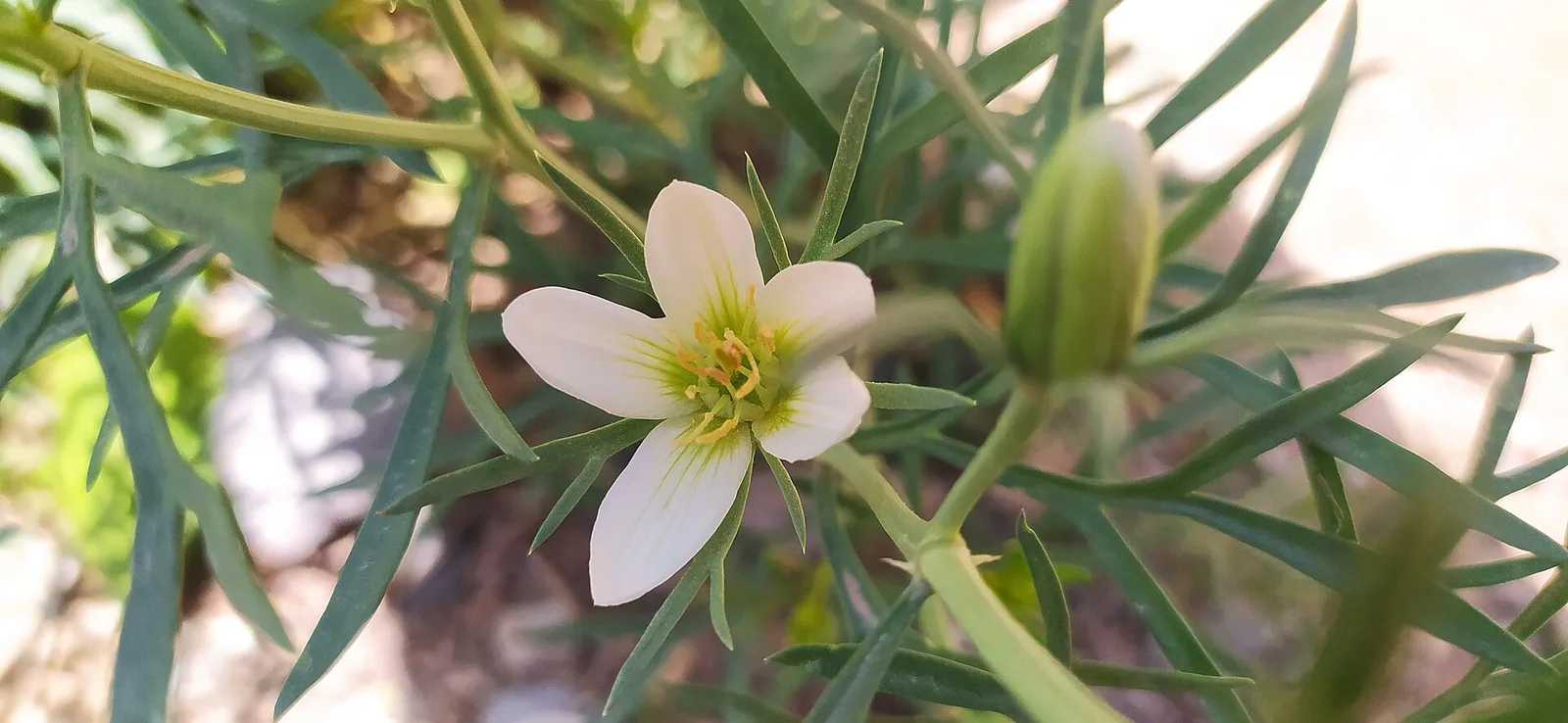
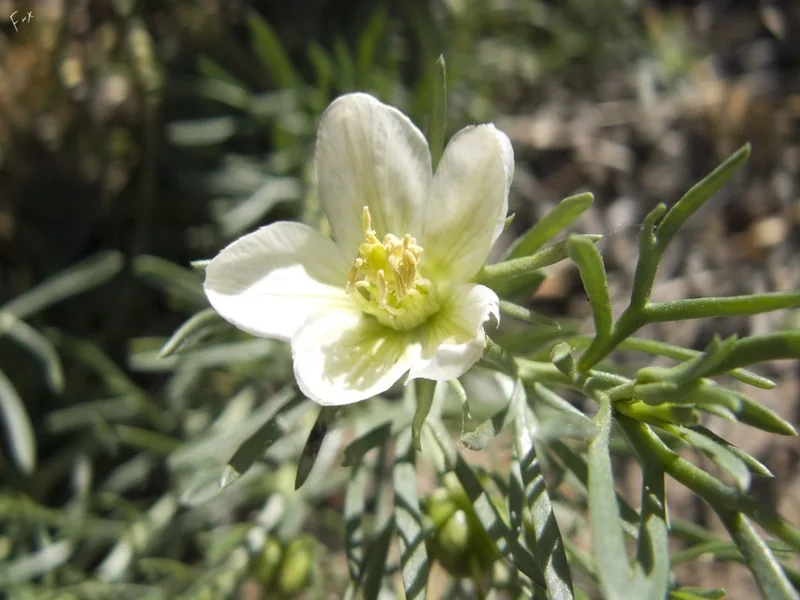
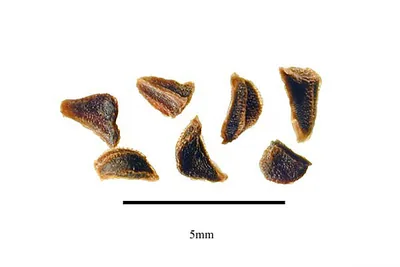
| Morphology | A bushy perennial with deeply divided narrow leaves, solitary white five-petalled flowers and rounded three-valved capsules filled with angular brown seeds.
|
| Protologue | Linnaeus, Species Plantarum 1: 444 (1753) (IPNI, 2026) |
| Family placement | Nitrariaceae in World Flora Online's 2026 classification (WFO, 2026); the GBIF taxonomic backbone files the genus under Tetradiclidaceae (GBIF.org, 2026). Older literature places it in Zygophyllaceae (Naranjo, 1967; Moloudizargari et al., 2013). |
| Names | Persian esfand, also aspand, sepand, sepanj, espanj (Omidsalar, 1998); the Iranian forms derive from Avestan spənta-, "holy" (Taillieu, 2003). Harmel in North Africa; African, Mexican or Turkish rue in the United States (Moloudizargari et al., 2013). Dioscorides' Greek is pêganon agrion; later Greek authors call it persaia botane (Omidsalar, 1998). |
| Occurrence records | 11,097 records, the most from Spain (1,940), the United States (918), Israel (737), Pakistan (723), Ukraine (596), Kazakhstan (490), China (477), Morocco (475) and Uzbekistan (427) (GBIF.org, 2026); introduced in the Americas and Australia (Moloudizargari et al., 2013) |
Territories
- 1Iran · esfand, seeds burned against the evil eye, attested in classical Persian literature, the Šāh-nāma among it (Omidsalar, 1998), and still burned today (Moloudizargari et al., 2013)
- 2Sinai and southern Israel · Shanon’s hypothesis of an ancient analogue of ayahuasca from acacia and harmel (Shanon, 2008), which finds no direct biblical evidence (Nemu, 2019)
Deep Time
- Avestan antiquity?Flattery proposes harmel as the visionary ingredient of haoma; the identification met strong objections.
- 1st century CEDioscorides gives the earliest description, as pêganon agrion.
- Classical Persian literatureSeeds burned against the evil eye, including in the Šāh-nāma.
- 1753Named by Linnaeus.
The sources read for this record give no archaeobotanical evidence for P. harmala; its deep time is textual and philological.
02Chemistry
The seeds carry beta-carboline alkaloids, principally harmine with harmaline and tetrahydroharmine; the quinazolines vasicine and vasicinone belong to the same plant but not to the same pharmacology. The beta-carbolines are reversible inhibitors of monoamine oxidase A, which is why the seed is used as the monoamine-oxidase half of an ayahuasca analogue rather than as a visionary agent in its own right.
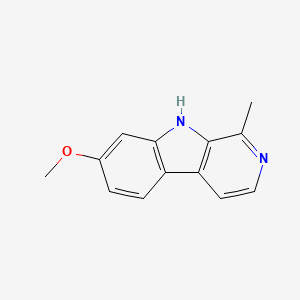
Harmine

Harmaline

Tetrahydroharmine

Vasicine
Measured content
A study quantifying the plant organ by organ found the β-carbolines concentrated in the seeds and roots, low in stems and leaves and absent from the flowers. Dry seeds held harmaline at 5.6% and harmine at 4.3% by weight, with harmalol at 0.6% and tetrahydroharmine at 0.1%; the roots held harmine (2.0%) and harmol (1.4%). Seed extracts were potent, reversible and competitive inhibitors of human MAO-A and poor inhibitors of MAO-B, an effect the authors attribute quantitatively to harmaline and harmine (Herraiz et al., 2010).
A shared alkaloid
Harmine was a Peganum alkaloid long before it was an Amazonian one. When "banisterine", isolated from Banisteriopsis caapi, was examined in the 1920s, it was found identical with harmine — "an alkaloid isolated more than a century ago from Peganum harmala" — and the structures of the Banisteriopsis bases were already known through chemists' work on the harmal alkaloids (Deulofeu, 1967).
03Tradition, ritual & cultural use
Oldest evidenced or proposed human use
Seeds and the name harmal occur in ancient and medieval medical traditions, but archaeological identifications and claims of entheogenic antiquity require caution.
Peoples & traditions
Persian, Kurdish, Afghan, Turkish, North African, Central Asian and other communities use regional forms of harmal/espand practice.
Role in shamanism
Most documented traditional use concerns fumigation against the evil eye, blessing, protection and household ritual, with visionary use only in some settings.
Role in physical healing
Used historically for diverse complaints in Unani, Persian and folk medicine. Harmala alkaloids inhibit monoamine oxidase and can be toxic; traditional use does not establish safety.
Esfand in Persian practice
In Persia the most important use of esfand has been magical, though its parts also entered the medical texts: early writers distinguished a white and a more potent black rue, classed the plant as hot by nature, and used it as a diuretic, an emetic and a remedy for amenorrhoea. The smoke of its burning seeds is believed to ward off harm from people and places, so it is burned at moments of danger — at circumcision, for a woman in childbed — with the recitation of a formula. At the presentation of a new child, each person present gives a thread from their clothing to burn with the seeds. The practice of burning esfand against the evil eye is "widely attested in early classical Persian literature", the Šāh-nāma among it, and may owe something to the plant's association with haoma (Omidsalar, 1998). Among Iranians the dried capsules, mixed with other ingredients, are still burned as a charm against the evil eye (Moloudizargari et al., 2013).
Harmel and haoma
The plant's place in Iranian religion is the subject of a long argument. In 1989 the botanist David Flattery, with linguistic support from Martin Schwartz, argued that the effects the Avestan texts attribute to haoma do not match those of ephedra, its accepted identification, and that ephedra must have been pressed with a vision-inducing plant. That plant, he proposed, was harmel — the "holy" plant of the Iranian languages — and it was the essential haoma, ephedra the lesser ingredient. The proposal met strong objections: notably that "no convincing reason can be found for an abandoning of the easily available harmel", and that Zoroastrians, who make much use of rue, neither crush it nor associate it with haoma rites (Flattery and Schwartz, 1989, cited in Taillieu, 2003). The identification remains a contested candidate alongside Wasson's fly agaric and the ephedra consensus.
Harmel and the acacia: a speculative pairing
A second speculative pairing looks south and west. Benny Shanon proposed that ancient Israelite religion was associated with entheogens, starting from the fact that two plants growing in the arid lands of Sinai and southern Israel carry the same psychoactive molecules as the plants of ayahuasca: species of Acacia, and P. harmala (Shanon, 2008). Nemu, reviewing the idea sympathetically, finds no direct evidence of such a brew in the Bible and no known reference there to P. harmala (Nemu, 2019). The acacia half of the pairing is itself unresolved: the African acacias, now Vachellia and Senegalia, have not been analysed for tryptamines by methods Sadgrove would accept, and the harmala alkaloids of this plant have not been identified in them (Sadgrove, 2022). The Acacia page sets out the question.
04Cosmology & key terms
Its smoke turns back the evil eye. Amin (1991), Iranian medicinal and ritual tradition
The name itself carries the cosmology: sepand and esfand descend from the Avestan word for "holy" (Taillieu, 2003). The continuity of Persian tradition carried the plant into Islamic sources: a Shiʿite tradition holds that there is "an angel in each of the plant’s leaves and seeds", and that the devil keeps seventy houses away from a home where it is kept (Omidsalar, 1998).
- Esfand / sepand
- The plant, and the act of burning its seeds against harm; from Avestan spənta-, "holy".
- Evil eye
- The envious gaze esfand smoke is burned to avert, at moments when a person is exposed: birth, circumcision, the presentation of a child.
- Haoma
- The Avestan sacred plant and its pressed drink, cognate with Vedic soma; its botanical identity is disputed, and harmel is one candidate.
- Bača-ye ʿaważī
- The "changeling" condition of a child under an evil influence, against which burning esfand is required (Omidsalar, 1998).
05Visionary phenomenology
Dreamlike visual effects occur at toxicologically significant exposure. Mahmoudian et al. (2002), clinical toxicology
Phenomenological profile
The profile lists effects the sources report, for each preparation separately, grouped by domain. Each row gives the grade, how often the sources say the effect occurs (only where they say so; most do not) and the kinds of source behind it. A chip naming a compound, such as “Trial · psilocybin”, means the evidence comes from studies of that compound rather than of the preparation itself; “partial” means the route, purity or dose differs from the traditional preparation, so the row cannot be graded above supported. The line under each preparation says which domains have evidence entered here. A domain with nothing entered has not yet been assessed in this profile; that is not a finding that the literature is silent, and the article may discuss it. Open a row for the note and the sources.
Seed swallowedand harmaline alone
Evidence entered for 5 of 8 domains. Not yet entered: self and unity, affect, relation to other beings.
Harmaline and harmine are the seed’s principal alkaloids (Herraiz et al., 2010). The only controlled account gave volunteers isolated harmaline (Naranjo, 1967), purer than the seed and without its harmine, so it counts at partial weight. Reports of poisoning describe the seed itself, at toxic exposure. No verified ethnography yet describes a visionary use of the seed effect by effect; fumigation with the seed is a separate practice.
Visual
Immersive realmsCoherent places or events that surround the experiencer, who seems to be located in them rather than looking at images.SupportedTrial · harmaline, partial
Whole scenes were watched beside an undistorted room, and some subjects felt they had witnessed real events in another time and place, as disembodied observers (Naranjo, 1967). Measured with isolated harmaline, so this counts at partial weight. Read about the phenomenology of immersive realms →
Other senses
Intensified hearingHeightened acuity, salience or alteration of sound.SupportedCommonTrial · harmaline, partial
More than half of 30 volunteers reported buzzing in the head (Naranjo, 1967). Measured with isolated harmaline, so this counts at partial weight.
Not establishedSound–vision coupling. Music was not enhanced and synaesthesia was not reported with harmaline (Naranjo, 1967).
Body
Nausea and purgingNausea, vomiting or diarrhoea during the acute state.SupportedCommonTrial · harmaline, partialPharmacology · harmaline, partial
Nausea was reported by 18 of 30 volunteers given harmaline (Naranjo, 1967), at partial weight. Nausea and vomiting are among the signs of poisoning by the seed itself (Ghizlane et al., 2021).
Altered bodily sensationTingling, vibration, heat, cold, heaviness, pressure or internal movement felt in the body.SupportedTrial · harmaline, partial
Tingling and then numbness of the hands, feet or face came at onset (Naranjo, 1967). Measured with isolated harmaline, so this counts at partial weight.
Tremor and motor slowingTrembling, impaired coordination or slowed movement.SupportedPharmacology
Cerebellar ataxia is among the neurological signs recorded in poisoning by the seed (Ghizlane et al., 2021). A sign of toxic exposure rather than of a visionary dose.
Not establishedRaised blood pressure. Poisoning by the seed brings bradycardia and low blood pressure instead (Ghizlane et al., 2021).
Cognition
Not establishedTime distortion. The sense of time was unaltered with harmaline (Naranjo, 1967).
States of consciousness
Dreamlike statesOneiric experience: dream formation, dreamlike sequences or a waking state resembling dreaming.SupportedTrial · harmaline, partial
Long dreamlike sequences were far more frequent than with mescaline, given to the same volunteers on another occasion; most lay still for four to eight hours, disinclined to speak (Naranjo, 1967). Measured with isolated harmaline, so this counts at partial weight.
Accounts
The clearest description of the harmala state comes from Claudio Naranjo's work in Chile in the 1960s, in which 30 volunteers each received harmaline and, on another occasion, mescaline. Every one of them, and every observer, found the two experiences different. With harmaline, tingling and then numbness of the hands, feet or face came at onset; nausea was reported by 18 of the 30; buzzing in the head by more than half. The surroundings did not distort — "the environment is essentially unchanged" — while images were superimposed on walls and ceilings or whole scenes were watched beside an undistorted room. With closed eyes the imagery was vivid and brightly coloured, often in red–green or blue–orange contrasts, and long dreamlike sequences were far more frequent than with mescaline. Music was not enhanced, synaesthesia was not reported and the sense of time was unaltered. Most subjects lay still for four to eight hours, disinclined to speak (Naranjo, 1967).
"The typical reaction to harmaline is a closed-eye contemplation of vivid imagery without much further effect than wonder and interest in its significance, which is in contrast to the ecstatic heavens or dreadful hells of other hallucinogens."Naranjo, 1967, p. 390
Naranjo called harmaline "more of a pure hallucinogen" than substances whose character lies in heightened feeling, and noted that some subjects felt they had witnessed real events in another time and place, as disembodied observers — which, he wrote, matches the experience of South American shamans who drink ayahuasca for divination. His subjects were given the isolated alkaloid; the account describes harmaline, not the plant or its ritual smoke (Naranjo, 1967). Clinical reports of seed overdose record visual hallucination among the signs of poisoning (Mahmoudian, Jalilpour and Salehian, 2002).
Recurring motifs
- Closed-eye imagery, vivid and brightly coloured
- Images laid over an unchanged room
- Long dreamlike sequences
- Recurrent themes, among them felines, eyes and flying
- Scenes felt as really witnessed, elsewhere and in another time
- Stillness, withdrawal, little wish to speak
06Contemporary status
Common and sometimes invasive outside its native range. Research concerns β-carbolines, antimicrobial and anticancer activity, while online ayahuasca-analogue culture has recast a protective fumigant as an MAOI ingredient; poisoning cases remain clinically significant.
| Conservation | Not evaluated on the IUCN Red List (GBIF.org, 2026) |
|---|
Legality
| Jurisdiction | Status |
|---|---|
| International | Neither harmine nor harmaline is among the substances the 1971 Convention on Psychotropic Substances schedules (United Nations, 1971). |
| United States | Neither is listed in federal Schedule I, 21 CFR §1308.11 (Electronic Code of Federal Regulations, 2026). |
Other jurisdictions are not summarised here because their primary texts could not be opened for this record.
Open questions on this entry
Safety and law
07Cross-correlations
| Cultural complex | Ayahuasca analog — indexed → · Fly agaric & the Soma–Haoma question — indexed → |
|---|---|
| Paired with | Acacia — the harmala half of Australian Acacia formulations, including the first clinical study; and, in Benny Shanon’s speculative hypothesis, the second plant of an ancient Sinai brew Phalaris — the canary grasses, proposed in the 1990s as the DMT half of temperate-zone anahuasca |
| Shared compound | Maoi — Banisteriopsis caapi |
| Claviceps purpurea | Species monograph: ergot, another candidate in modern reconstructions of ancient sacraments; ergoline chemistry, distinct from the β-carbolines. COMPARATIVE HYPOTHESIS |
08Bibliography
How to read the labels on each source
- Source type
- What kind of work it is: journal article, book, legislation, patent application, database record and so on. A word after the dot (ethnography, protologue, primary source) keeps the genre the entry was first filed under. “Unclassified” means the citation does not say enough to tell.
- Peer review
- Recorded for each work separately, and only where it has been confirmed for that work. It is never inferred from a DOI, a publisher or a journal, since journals also publish editorials, letters and commentaries. Where it has not been confirmed, the entry records it as not established. It does not apply to legislation, court decisions, treaties, patents, datasets, database and collection records, historical texts, films, talks, press releases or web pages.
- Check
- What was checked when the entry was added. DOI checked: the DOI’s registry record (Crossref) matched the citation’s title, first author and year. Verified: the record itself was opened and matched the citation: a library catalogue record for a book, or the page itself for a database entry, law, patent or archive document. “Verified (abstract)” and “(summary)” mean only the abstract or a summary was read. Located: a record was found but not fully matched. Bibliographic record and Stable record (in essays): a catalogue or stable web record exists; what was checked against it is not recorded. Unverified: no check is recorded. No locator found: a search found no record. Secondary: read through another source.
- What the labels do not say
- None of them means the source supports a particular sentence. Where a sentence is graded, its evidence note names its sources and whether each supports it, disputes it or gives context. Dates and reviewers of checks are not recorded for each entry; the version note at the foot of a graded page dates its last review.