Questions become scenes
Within the divinatory frame, an ordinary dream image is salient because it is read in relation to a prior question about illness, loss, distance or futurity.
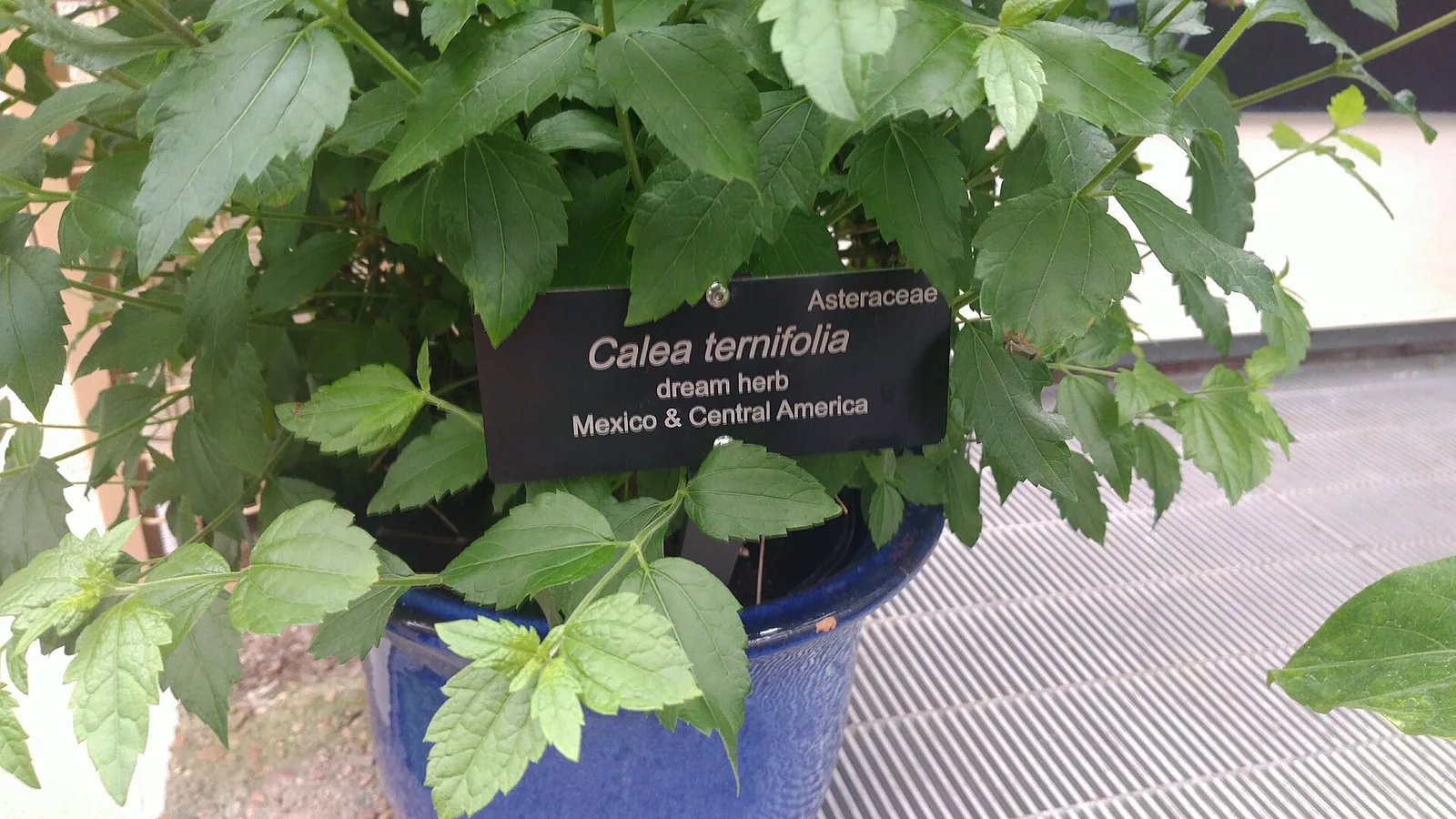
Calea zacatechichi, accepted as C. ternifolia, is a bitter shrub of Mexico and Central America whose leaves Chontal communities of Oaxaca take before sleep to receive divinatory messages in dreams. Kunth described the species in 1818, and the dream use was first described in print only in 1968. It contains no classical serotonergic psychedelic; a small double-blind study found more light sleep, more awakenings and more dream reports than placebo or diazepam. Elsewhere it is a bitter remedy for fever, appetite and stomach complaints.
| Botanical name | Calea zacatechichi |
|---|---|
| Taxa | Asteraceae · Asterales · Neurolaeneae |
| Traditional names | accepted: Calea ternifolia · zacatechichi · bitter grass · dream herb · Mexican calea |
| Regions | Native from Mexico to Colombia, recorded in Belize, Costa Rica, El Salvador, Guatemala, Honduras, Nicaragua and multiple Mexican floristic regions. |
| Ethnographic entheogenic use | Among Chontal communities of Oaxaca, speakers of Tequistlatecan languages, the bitter leaves are taken before sleep to receive divinatory messages in dreams — a small, nocturnal, diagnostic practice, first described in print only in 1968 (MacDougall, 1968; Díaz, 1979; Mayagoitia, Díaz and Contreras, 1986). |
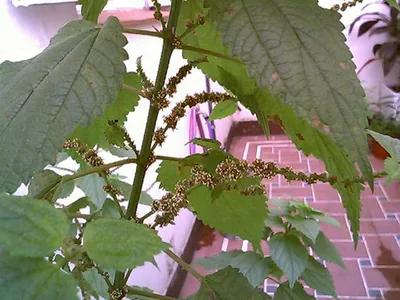
| Accepted name | Calea ternifolia Kunth. The name was published in Humboldt, Bonpland and Kunth’s Nova Genera et Species Plantarum in 1818. Calea zacatechichi Schltdl., published in 1835 and retained throughout most psychoactive-plant literature, is treated by Plants of the World Online as a heterotypic synonym (Kunth, 1818; POWO, 2026a, 2026b). |
|---|---|
| Principal synonyms | Calea zacatechichi Schltdl.; C. hypoleuca B.L.Rob. & Greenm.; C. acuminata Standl. & L.O.Williams; C. rugosa (DC.) Hemsl.; C. salmeifolia (DC.) Hemsl.; Alloispermum liebmannii (Sch.Bip. ex Klatt) H.Rob. The unusually broad synonymy reflects variable leaf indumentum and morphology across a wide Mesoamerican range (Wussow et al., 1985; POWO, 2026a). |
| Family | Asteraceae (Compositae), the daisy family; subfamily Asteroideae; tribe Neurolaeneae; subtribe Neurolaeninae. |
| Order | Asterales. |
| Geographic range | Native from Mexico to Colombia, recorded in Belize, Costa Rica, El Salvador, Guatemala, Honduras, Nicaragua and multiple Mexican floristic regions. It grows principally in seasonally dry tropical vegetation, scrub, open woodland, roadsides, disturbed slopes and secondary growth, though local populations also occur in moister sites (POWO, 2026a). |
| Local names | Zacatechichi or zacate chichic—from Nahuatl zacatl, grass, and chichic, bitter—alongside zacate amargo, pasto amargo, prodigiosa and Mexican calea. Zoque-Popoluca tam huñi and Mixe poop taam ujts are recorded in medicinal contexts. The form thle-pela-kano/thepelakano, often translated “leaf of God,” circulates as an Oaxaca Chontal name, but orthography and literal gloss should be treated cautiously because most citations return to a small secondary source chain (Díaz, 1979; Leonti et al., 2003; Mata et al., 2022). |
| Growth form | A strongly aromatic and intensely bitter perennial shrub, commonly 0.8–3 m high, with erect to spreading woody stems and dense branching. It can colonise disturbed ground and resprout after cutting. |
| Conservation | No global IUCN Red List assessment was located. POWO records a broad native range, and the species is cultivated internationally, so claims that it is globally endangered lack current support. Population condition in particular Oaxacan collecting localities, genetic diversity in traded clones and the effects of habitat conversion remain poorly quantified (POWO, 2026a). |
Stems are cylindrical, striate and pubescent when young, becoming woody with age. Leaves are opposite—occasionally appearing in short crowded groups—petiolate, ovate to elliptic or lanceolate, generally 3–10 cm long, with an acute or acuminate apex and crenate-serrate margins. The upper surface is green and roughened; the lower surface is paler, prominently veined and variably hairy. Secretory and non-glandular trichomes contribute to both taxonomic diagnosis and the characteristic bitter-aromatic profile (Wussow et al., 1985; Raman et al., 2023).
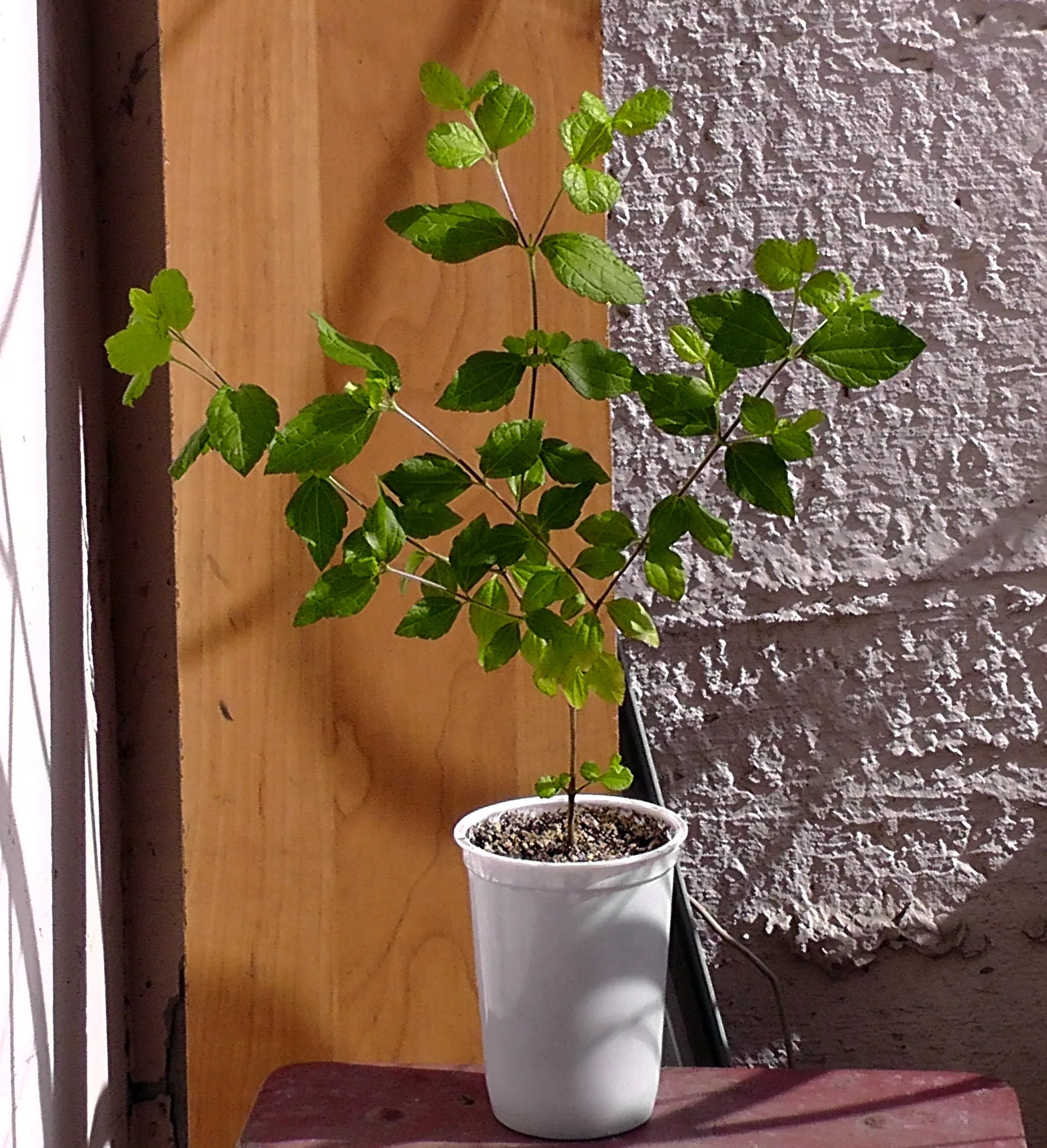
The apparent “flowers” are small composite capitula arranged in terminal or axillary corymbose clusters. Each head bears a narrow involucre of bracts and a small number of white to cream tubular disc florets; showy ray florets are absent. The corolla is five-lobed, the anthers form the syngenesious tube typical of Asteraceae, and the style divides into two branches. Fruits are slender, ribbed cypselae conventionally called achenes, crowned by a pappus of short scales that assists dispersal. Seed is produced, while cultivated material is commonly maintained clonally by cuttings (Mata et al., 2022).
The accepted species is Calea ternifolia; C. zacatechichi is a synonym for the same dream herb. Retaining the latter in the page title preserves ethnographic and pharmacological discoverability while displaying the accepted name explicitly.
The commercial phrase projects a documented twentieth-century Oaxaca Chontal report backward into an unspecified Aztec past. Nahuatl etymology demonstrates circulation of a bitter-grass name; the identity, preparation and ritual use of a particular pre-Hispanic taxon remain unknown.
Chromolaena odorata, sold as “non-bitter calea,” is morphologically and chemically distinct and may contain pyrrolizidine alkaloids. Microscopy, HPTLC and UHPLC-MS differentiate it from authentic C. ternifolia (Raman et al., 2023).
At least dozens of sesquiterpene lactones and other metabolites occur across material assigned to the species. The effects of geography, variety, season and cultivation on an oneirogenic chemical profile remain poorly mapped.
Calea ternifolia has no known classical serotonergic psychedelic such as mescaline, psilocin or DMT. Its principal specialised metabolites are germacranolide and related sesquiterpene lactones—caleins, caleicines, zexbrevin and multiple analogues—together with chromenes, coumarins, acetylenes, flavonoids, flavonoid glycosides, phenylpropanoids and quinic-acid derivatives. More than sixty named constituents had been collated by 2021; a 2023 authentication study annotated over thirty compounds and detected nineteen sesquiterpene lactones in verified samples. No compound or fixed combination has yet been demonstrated to be the human oneirogenic principle (Herz and Kumar, 1980; Mata et al., 2022; Raman et al., 2023).
Mayagoitia, Díaz and Contreras found methanolic and aqueous-related fractions more behaviourally active than a non-polar hexane fraction, directing attention toward relatively polar constituents, but their experiment did not isolate an active molecule. Later aqueous-extract profiling identified chlorogenic acid, rutin-related flavonoids, acacetin-related compounds, calealactone C and calein A. Rodent results differ with extract, dose and behavioural paradigm: one study found little central activity apart from increased immobility and peripheral antinociception; another reported anxiolytic- and antidepressant-like behaviour, increased slow-wave sleep at a high dose and greater hippocampal gamma power during REM sleep (Mayagoitia et al., 1986; Sałaga et al., 2016; Martínez-Mota et al., 2021).
Claims that “caleicine is a prodrug of eugenol” or that a single constituent acts as a proven GABAergic dream molecule are repeated online without support in the primary human literature. The known lactones are reactive bitter plant-defence compounds with multiple biological targets; the plant’s effects may arise from a chemical ensemble, altered sleep continuity, sensory expectancy and the interpretive practice surrounding dreams.
A small double-blind study found increased reaction time and time-estimation, more light sleep and spontaneous awakenings, and more dream or hypnagogic-image reports than diazepam and, for the methanol extract, placebo. Sample size and replication are limited (Mayagoitia et al., 1986).
In rats, an aqueous extract increased slow-wave-sleep episodes at 100 mg/kg and hippocampal 31–50 Hz power during REM. This is a rodent electrophysiological correlate; lucid dreaming in humans is a separate question (Martínez-Mota et al., 2021).
Animal and in-vitro studies report antidiarrhoeal, antinociceptive, anti-inflammatory, antihyperglycaemic, antiplasmodial and antileishmanial activities. These findings illuminate bitter-medicine uses; clinical efficacy is untested (Venegas-Flores et al., 2002; Sałaga et al., 2015; Escandón-Rivera et al., 2017).
Human proximal-tubule cells showed extract-associated cytotoxicity, ROS generation and mitochondrial effects; other experimental work has produced mixed liver, kidney and erythrocyte findings. A 2025 neuronal-cell study reported cholinergic and dopaminergic enzyme inhibition together with neuroglial membrane toxicity at experimental concentrations (Mossoba et al., 2016; González-Yáñez et al., 2019; Garcia et al., 2025).
| Oldest evidenced use | No securely identified archaeological residue, iconography or pre-Columbian written reference demonstrates the species’ oneirogenic use. The earliest botanical description is Kunth’s 1818 C. ternifolia; Schlechtendal named C. zacatechichi in 1835. The first specific published notice of “psychic properties” is Thomas MacDougall’s 1968 account after fieldwork among the Chontal of Oaxaca, followed by Díaz’s 1979 taxonomic-ethnopharmacological synthesis (MacDougall, 1968; Díaz, 1979; Mata et al., 2022). |
|---|---|
| Primary people | The oneirogenic record concerns Chontal communities of Oaxaca—speakers of Tequistlatecan languages in the Sierra and coastal Isthmus—not the Maya-language Yokot’an/Chontal people of Tabasco. “Chontal” is a Nahuatl-derived exonym applied historically to unrelated peoples; the phrase “Chontal Maya of Oaxaca” is therefore erroneous (Díaz, 1979; Campbell, 1997). |
| Other medicinal traditions | Mixe and Zoque-Popoluca pharmacopoeias record cognate bitter remedies for stomachache, diarrhoea, cough, asthma and fever. Wider Mexican uses include periodic fever, dysentery, poor appetite, “bile,” diabetes, skin complaints and gynaecological or respiratory conditions. Only some of these records involve dream divination (Leonti et al., 2003; Mata et al., 2022). |
| Traditional preparation | Published Chontal accounts describe dried leaves taken as a bitter infusion, smoked in a leaf cigarette, or used in both forms before sleep; leaves are also reported near or beneath the pillow. The diagnostic aim is to frame a question and attend to the dream (MacDougall, 1968; Díaz, 1979; Mayagoitia et al., 1986). |
| Ritual scale | Small, nocturnal and diagnostic. Sources refer to healers or knowledgeable persons as well as individual sleepers; none documents a centralised priesthood, pilgrimage, temple cult or standard public liturgy. |
The ethnographic proposition is concise: when ordinary perception fails to establish why someone is ill, where a person or object has gone, or what an uncertain future contains, the question is transferred to dream. The plant is said to “clarify the senses”; somnolence, calm and awareness of heartbeat mark the approach to sleep; an image, encounter or event in the ensuing dream can then be interpreted as information. This is oneiromancy in the strict sense—divination by dreaming—and only sometimes “lucid dreaming” as defined in contemporary sleep science, where the dreamer recognises the dream while it is occurring (MacDougall, 1968; Díaz, 1979; Mayagoitia et al., 1986).
The medicinal and divinatory domains overlap. A dream may disclose the social, spiritual or situational cause of illness, while the same bitter plant also addresses fever, appetite and gastrointestinal disturbance. Many uses of Calea sit outside shamanism, though. Mixe and Zoque-Popoluca stomach and respiratory remedies, for example, are important ethnomedical records without documented oneiromantic content (Leonti et al., 2003).
The plant's dream use was first described among Chontal communities of Oaxaca, who take it to obtain divinatory messages while dreaming (Mayagoitia, Díaz and Contreras, 1986; Mata et al., 2022).
Across its range, from Mexico to Costa Rica, the plant is valued for rituals and as a remedy for anorexia, upset stomach, diabetes, periodic fevers, diarrhoea, bile problems and skin diseases (Mata et al., 2022).
A laboratory study travels further than an ethnography. A 2004 US patent application on substances that enhance dream recall and lucidity cites Mayagoitia and colleagues on "Calea zacatechichi or 'Dream Weed'" as a naturally occurring substance that alters dream consciousness (LaBerge, 2004).
Díaz’s account places Calea among plants used by Chontal curers, and later summaries commonly call the operator a shaman. The more precise analytical category is a dream-diagnostic specialist or curandero: someone who integrates botanical medicine, questioning, sleep and interpretation. The plant belongs to this local practice, with no pan-Mesoamerican “Calea shamanism” behind it, and the extant literature is too thin to reconstruct apprenticeship, gender, payment, song, altar architecture or a stable sequence of ritual offices.
The documented cosmological fact is functional: dreaming can yield information unavailable to waking inquiry. Illness and absence can be approached through a dream as well as represented in it. The plant’s role is therefore mediatory. It changes the conditions of sleeping, recall and attention so that a nocturnal image may be received as an answer. This configuration belongs to a much wider human history of incubation—sleep undertaken in order to receive diagnosis or counsel—and the Chontal practice is a specific case within it (Díaz, 1979; Tedlock, 1992).
The name zacatechichi carries a sensory taxonomy: bitter grass. The reported Chontal expression thle-pela-kano is repeatedly glossed “leaf of God,” suggesting divine or more-than-human authorization, yet published orthographies vary and the primary linguistic documentation is rarely supplied. No stable corpus of named Calea deities, origin narratives or ritual chants appears in the available ethnography. Claims that the plant carried Aztec sorcerers into Tlalocan, that it was a pre-Columbian sacrament, or that it belonged to a homogeneous “Chontal Maya” religion are modern abductive elaborations, without historical evidence.
The sources read describe a plant valued for rituals and taken to receive messages in dreams (Mata et al., 2022; Mayagoitia, Díaz and Contreras, 1986). None records vessels, altars or other objects made for its use; any that exist are absent from this record.
Calea is now grouped with Silene undulata, Entada rheedei, Artemisia vulgaris, Heimia salicifolia and iboga under the modern category “dream herbs” or oneirogens. That category is useful phenomenologically but can erase radically different institutions: Xhosa initiation, African healing, European herb lore, Oaxacan diagnosis and online lucid-dream practice each have their own history. Calea is distinctive because a specific dream-divination report was followed by a rare—though very small—human sleep experiment.
The profile lists effects the sources report, for each preparation separately, grouped by domain. Each row gives the grade, how often the sources say the effect occurs (only where they say so; most do not) and the kinds of source behind it. A chip naming a compound, such as “Trial · psilocybin”, means the evidence comes from studies of that compound rather than of the preparation itself; “partial” means the route, purity or dose differs from the traditional preparation, so the row cannot be graded above supported. The line under each preparation says which domains have evidence entered here. A domain with nothing entered has not yet been assessed in this profile; that is not a finding that the literature is silent, and the article may discuss it. Open a row for the note and the sources.
Evidence entered for 2 of 8 domains. Not yet entered: visual, other senses, body, self and unity, affect, relation to other beings. Discussed in the article above but not yet entered: visual, body, affect.
The Chontal take the plant to obtain divinatory messages in dreams (Mayagoitia, Díaz and Contreras, 1986). The human study gave organic extracts of the plant by mouth, so it corresponds in full.
Low doses of the extracts, against placebo, increased time-lapse estimation (Mayagoitia, Díaz and Contreras, 1986).
In a controlled nap study the extracts increased light sleep and spontaneous awakenings, and dream reports were significantly higher than after placebo or diazepam, which the authors read as increased hypnagogic imagery (Mayagoitia, Díaz and Contreras, 1986).
Infusion produces an unusually persistent bitter taste; smoke adds a dry aromatic harshness. This first event often dominates contemporary reports and is culturally encoded in the plant’s Nahuatl name.
Accounts describe tranquillity, lassitude and drowsiness, sometimes with amplified awareness of pulse or heartbeat. Strong euphoria is rare.
Short visual scenes, faces, landscapes or auditory fragments may arise while awareness of the room is fading. Frequent light-sleep transitions can multiply opportunities to notice them.
Reports emphasise vividness, density, strangeness or apparent meaningfulness. In Chontal divination, relevance to the question matters more than spectacular imagery.
Spontaneous awakening may make a just-finished image easier to retain. Interpretation—diagnostic, divinatory or psychological—completes the experience.
Mayagoitia and colleagues compared low doses of organic extracts with placebo and diazepam in healthy volunteers. Reaction time and subjective time-lapse estimation increased. In controlled naps the extracts shifted sleep toward superficial stages and increased spontaneous awakenings; subjective dream reports were greater than after diazepam and, with the methanolic extract, significantly greater than placebo. Reports were more numerous but shorter, without clear increases in nightmare or emotional content. The authors interpreted this as enhanced hypnagogic imagery in light sleep, and claimed neither prophetic dreams nor stable lucid-dream induction (Mayagoitia et al., 1986).
increased the superficial stages of sleep and the number of spontaneous awakenings — Mayagoitia, Díaz and Contreras (1986, p. 229)
Within the divinatory frame, an ordinary dream image is salient because it is read in relation to a prior question about illness, loss, distance or futurity.
Contemporary anecdotes often describe sharper colour, lifelike people or rapid narrative shifts, but many users report little beyond sleep disruption or no discernible effect.
More awakenings can increase the chance of remembering a dream immediately after it ends. The resulting experience may feel “more dreamful” even without increased total REM time.
Preparation, expectancy, the posed question and post-waking narration organise which fragments count as meaningful; phenomenology is co-produced by plant, sleep architecture and practice.
A precise pharmacokinetic onset or elimination half-life is still unknown in humans. Oral and smoked traditions place subjective changes within the approach to sleep, while the relevant observational window is the ensuing nap or night. “Duration” therefore means the period in which sleep transitions, awakenings and recalled dreams are altered. Extract concentration, plant identity, sleep debt, expectancy and recall practice probably account for much inter-individual variation.
Since the 1990s, entheogenic seed catalogues, lucid-dream manuals and online forums have relocated Calea into a transnational oneironautic repertoire. Whole leaf is sold beside tinctures, resins, “10×” or “20×” extracts, smoking mixtures and combinations with mugwort, blue lotus, passionflower, galantamine or melatonin. The desired outcome also changes: Oaxacan diagnostic dreaming becomes dream vividness, recall, lucidity, astral travel, creativity or quantified sleep optimisation. These are contemporary cultural transformations.
No reliable global production or export series exists for Calea. Commerce is dispersed across Mexican and Central American herb supply, specialist nurseries, supplement firms and online marketplaces. Cultivated clones travel readily, while powders and extracts erase diagnostic morphology. Raman and colleagues demonstrated that commercial “non-bitter calea” may be Chromolaena odorata, a chemically distinct species with pyrrolizidine-alkaloid concerns; authentic C. ternifolia contained a much richer sesquiterpene-lactone fingerprint (Raman et al., 2023). The most immediate biocultural threat is therefore loss of species identity and of the specific people, language and diagnostic relations from which “dream herb” acquired value; global botanical scarcity is unproven.
A 2012 US patent for a dietary supplement to enhance sleep and lucid dreaming names Calea ternifolia, 5-hydroxytryptophan and vinpocetine as its primary ingredients (Luciano, 2012).
The species grows from Mexico to Costa Rica (Mata et al., 2022); no global conservation assessment was found in the sources read.
| International | Calea ternifolia, C. zacatechichi and its known constituents are absent from the 1961, 1971 and 1988 United Nations drug-control conventions. |
|---|---|
| United States | No federal Controlled Substances Act scheduling was located. Louisiana Revised Statutes §40:989 lists Calea zacatechichi among “hallucinogenic plants” whose production, manufacture, distribution or possession is prohibited when intended for human consumption; ornamental possession is treated differently (Louisiana Legislature, 2026). |
| Poland | Added in 2009 to Poland’s controlled plant list under amendments to the Act on Counteracting Drug Addiction. Polish psychiatric literature records it among the psychoactive species prohibited by that amendment (Simonienko et al., 2013). |
| United Kingdom | Absent from the Misuse of Drugs Act schedules. Supply of a product capable of producing a psychoactive effect may fall within the broad Psychoactive Substances Act 2016; status depends on statutory definitions and evidence, since Calea has no listing of its own (UK Government, 2016). |
| Elsewhere | Often unscheduled as a named species, though medicine, novel-psychoactive-substance, smoking-product, food and import law may govern particular preparations. The plant’s legal status varies by country and product. |
Patent documents illustrate the conversion of an ethnobotanical reputation into formulation claims. US8092840B2 claims a dietary supplement for sleep and lucid dreaming whose principal ingredients include Calea powder, 5-HTP and vinpocetine with melatonin and other herbs. US20040266659A1 cites Calea as prior art while claiming acetylcholinesterase-inhibitor approaches to dream recall and lucidity. Both claim specific modern formulations or methods, leaving the species and Chontal knowledge outside them. Their significance is anthropological as much as technical: a diagnostic plant becomes an ingredient in a proprietary sleep stack (LaBerge, 2004; Luciano, 2012).
Macro-microscopy, HPTLC and UHPLC-UV-MS now provide orthogonal methods for distinguishing C. ternifolia from Chromolaena odorata; this is essential for every future pharmacological or clinical claim (Raman et al., 2023).
A review of pharmacological lucid-dream induction concluded that cholinergic candidates such as galantamine have the strongest evidence; Calea remains an intriguing but weakly replicated botanical case (Oldoni et al., 2024).
Garcia and colleagues chemically characterised an extract and reported cholinesterase and monoamine-oxidase effects alongside concentration-dependent neuronal and glial toxicity in vitro. Traditional human risk remains undetermined, but the finding complicates simple “natural sleep aid” narratives (Garcia et al., 2025).
A voucher-authenticated, preregistered human polysomnography trial should separate REM time, N1/N2 fragmentation, awakenings, dream recall, vividness and verified lucidity while chemically characterising the administered material.
| Salvia divinorum | Species monograph: another Oaxacan divinatory medicine, Mazatec where Calea’s record is Chontal, whose waking visionary phenomenology and κ-opioid chemistry differ sharply. REGIONAL DIVINATORY COMPARATOR |
|---|---|
| Ipomoea corymbosa | Species monograph: a Mesoamerican divinatory seed medicine with colonial documentation and ergoline chemistry. HISTORICAL-EVIDENCE COMPARATOR |
| Heimia salicifolia | Species monograph: Mexican and Central American medicine later enrolled in global “dream herb” discourse, with a different and contested psychoactive record. ONEIROGENIC COMPARATOR |
| Nicotiana rustica | Species monograph: smoke as medicine and divinatory medium across the Americas; nicotinic pharmacology and public ritual scale differ from Calea. SMOKE-MEDICINE COMPARATOR |
| Tabernanthe iboga | Species monograph: a powerful waking oneirogenic and initiatory medicine whose visionary duration and institutions exceed the quiet sleep-threshold practice documented for Calea. ONEIRIC CONTRAST |
| Mazatec Divinatory Medicine Complex | Complex page: nearby but ethnolinguistically distinct mushroom, Salvia, tobacco and seed practices. Calea belongs to the complex only on direct Mazatec evidence, which is lacking. REGIONAL BOUNDARY |