Introduction
Iboga, Tabernanthe iboga, is a shrub of the forests of west-central Africa whose root bark is the sacrament of Bwiti and related initiatory and healing institutions in Gabon and neighbouring countries. Its principal alkaloid is ibogaine, converted in the body by CYP2D6 to the longer-lasting noribogaine; both act on many receptors and block cardiac hERG channels. The earliest clear printed notice is from 1864, and the species was named in 1888. Open-label studies of ibogaine for opioid dependence report reduced withdrawal and craving, and document the cardiac risk.
All sections
| Botanical name | Tabernanthe iboga |
|---|---|
| Taxa | Apocynaceae · Gentianales · Angiosperms |
| Traditional names | Iboga · eboka · éboga · bois sacré · sacred wood |
| Regions | West-central tropical Africa south to Angola. |
| Ethnographic entheogenic use | Iboga is the sacrament of Bwiti and related initiatory and healing institutions in Gabon and neighbouring Central Africa, through which members are believed to meet the ancestors; regional histories credit Babongo forest communities with its discovery (Fernandez, 1982; Nyongo Ndoua and Vaghar, 2018). |
01Ethnobotany of Tabernanthe iboga
Botanical Info
| Accepted name | Tabernanthe iboga Baill. Kew accepts the species; Henri Baillon published the name in Bulletin Mensuel de la Société Linnéenne de Paris 1:783 in 1888 (Baillon, 1888; POWO, 2026). |
|---|---|
| Family | Apocynaceae · subfamily Rauvolfioideae · tribe Tabernaemontaneae in current classifications. |
| Order | Gentianales. |
| Native range | West-central tropical Africa south to Angola. Kew’s broad range includes the Congo Basin and Atlantic equatorial forest; floristic and ethnobotanical records centre especially on Gabon, Cameroon, Equatorial Guinea, Republic of the Congo, Democratic Republic of the Congo and Cabinda/Angola (POWO, 2026; Pope, 1969). |
| Habitats | Moist lowland evergreen forest and secondary forest, commonly in shaded understory and forest margins. Long cultivation beside houses, villages and ritual sites complicates a strict wild/cultivated distinction. |
| Local names | Iboga, eboka/éboga and related forms occur across several regional languages; French-language sources commonly use bois sacré. Vernacular vocabularies can distinguish cultivated forms by fruit shape, potency, provenance or ritual valuation, and these names map loosely onto botanical taxa (Pope, 1969; Fernandez, 1982; Samorini, 2025a). |
| Synonymy | Historical names placed in synonymy include Iboga vateriana, Tabernanthe albiflora, T. bocca, T. mannii, T. pubescens, T. subsessilis and T. tenuiflora. Vonk’s revision retained T. iboga and T. elliptica as the genus’s two species (Vonk, 1989; POWO, 2026). |
Territories
- 1Gabon · the sacrament of Bwiti, its discovery credited to Babongo forest communities (Fernandez, 1982; Nyongo Ndoua and Vaghar, 2018)
- 2Fang · Fang tellings of the origin myth (Fernandez, 1982)
Deep Time
- 1819Bowdich describes a violent medicine, “eroga”: possibly a distorted notice of iboga.
- 1864Aubry-Lecomte describes iboga root chewed by hunters and warriors to stay awake: the earliest clear printed notice.
- 1888Baillon names Tabernanthe iboga.
- Late 19th–20th c.Bwiti forms move among southern Gabonese peoples and into Fang-speaking regions, forming many branches.
- 2019IUCN assessment: Least Concern.
Oral histories crediting Babongo forest communities with the discovery are on the page but undated; their source has no locator yet.
Morphology and life history
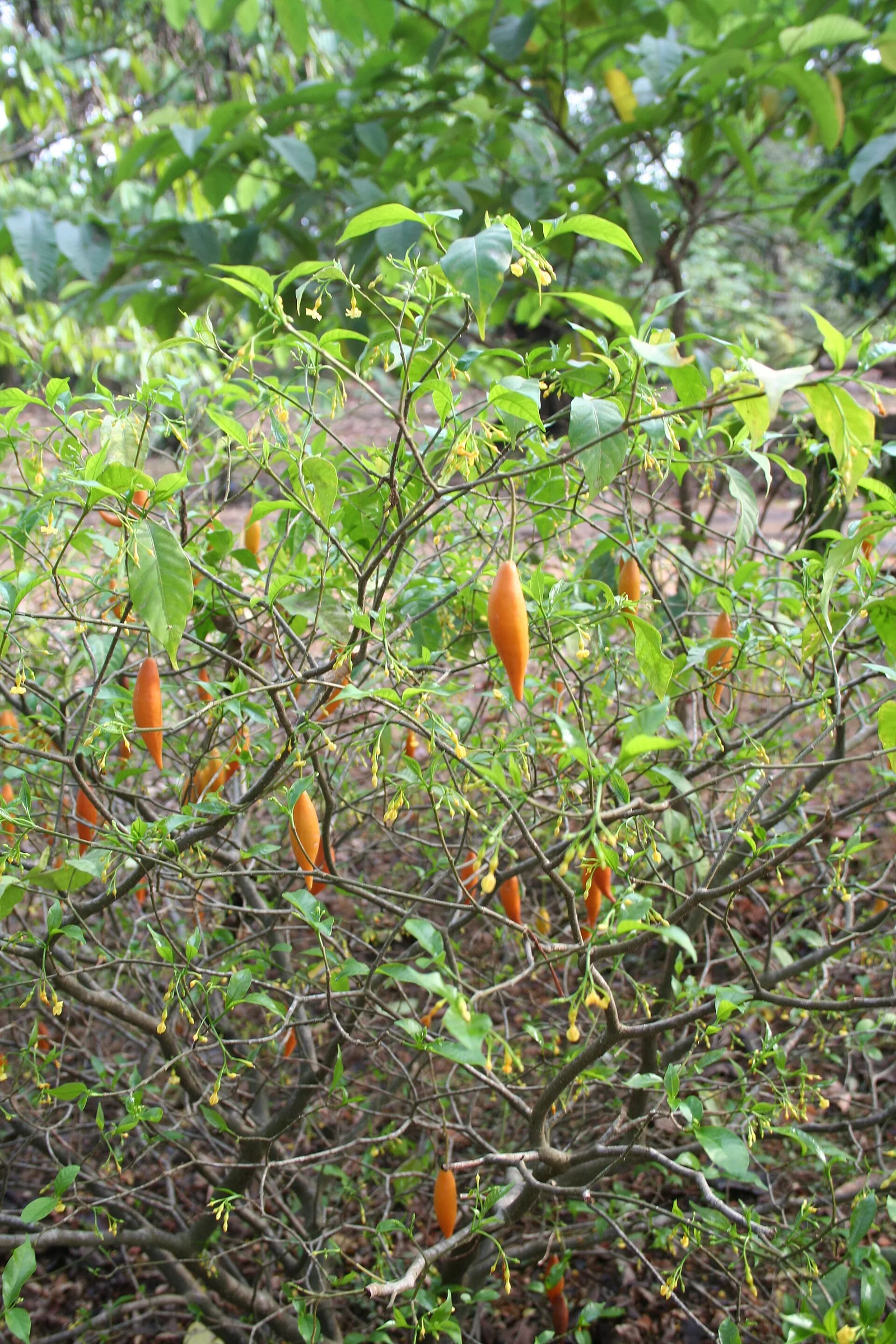
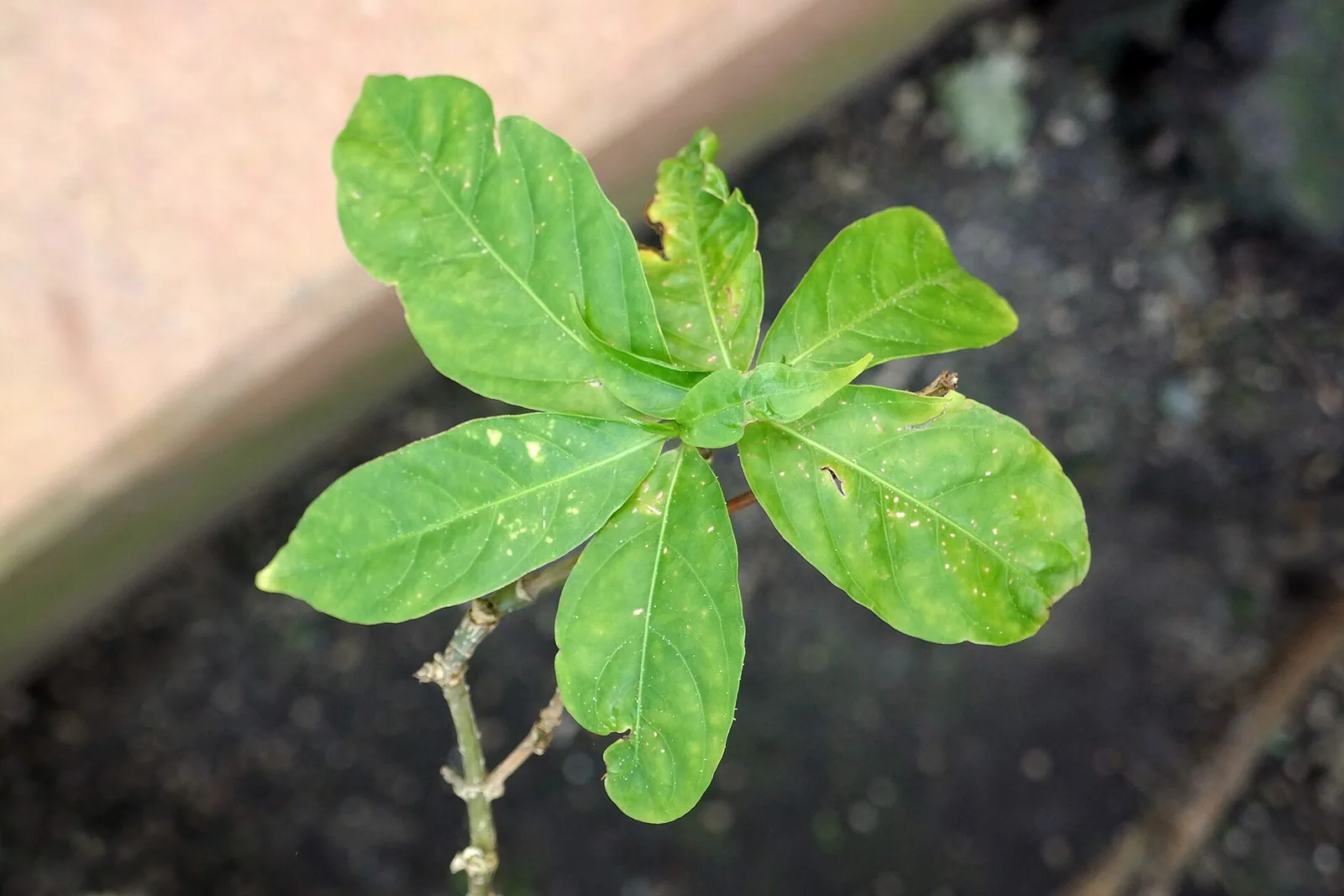
An evergreen, much-branched shrub commonly about 1–3 m tall, occasionally developing into a small tree approaching 10 m. Opposite leaves are simple, narrow-elliptic to lanceolate, glossy dark green above and paler beneath. Like many Apocynaceae it exudes milky latex when injured. Small, fragrant, tubular flowers are white to yellowish or pink-tinged and borne in compact axillary clusters. The paired fruits mature yellow to orange and range from subglobose to elongate or fusiform; their fleshy pulp encloses numerous seeds. A thick yellowish root system supports the plant, while the outer root tissues are the principal harvested alkaloid source (Schultes and Hofmann, 1980; Pope, 1969).
The concentration of valued alkaloids in root cortex creates a conservation problem unlike leaf harvest: stripping or uprooting may debilitate or kill a slow-establishing shrub. Cultivated plants can be raised from seed and propagated vegetatively, but seed viability, provenance and years to substantial root formation affect restoration and supply. Cultivation is therefore both biological management and a social question about who controls land, germplasm, labour and ceremonial access (Ermakova et al., 2025; ICEERS, 2026).
Identification and taxonomic limits
- Field useful
Opposite glossy leaves, milky latex, small salverform flowers and paired orange-yellow fruits support identification when reproductive material is available.
- Dried trade
Powdered or chipped “iboga” root is hard to authenticate by appearance. Commercial surveys have found wide alkaloid variation and substitution risks; voucher specimens and validated chemical methods are necessary (Bouso et al., 2020).
- Vernacular forms
Descriptions of “male” and “female,” round- and long-fruited, or strong and weak iboga are important ethnobotanical classifications, each with its own logic; botanical sex, species and chemotype are separate questions.
02Chemistry
Iboga contains a structurally elaborate ensemble of monoterpene indole alkaloids. Ibogaine is usually the most discussed constituent of root bark, but whole-root preparations also contain ibogamine, tabernanthine, ibogaline, iboxygaine, voacangine, coronaridine and further minor alkaloids. Abundance depends on tissue, plant, provenance, storage and method. Noribogaine matters pharmacologically as the active human metabolite, formed largely through CYP2D6 in the body (Bading-Taika et al., 2018; Iyer et al., 2021).
Ibogaine
Ibogamine
Tabernanthine
Voacangine
Distribution, biosynthesis and metabolism
One characterised powder contained 1.93% ibogaine by dry weight, with ibogaine contributing about one quarter of detected chromatographic alkaloid signal; that figure is a specimen result (Bading-Taika et al., 2018). Analysis of retail materials reported root-bark products ranging roughly 0.6–11.2% ibogaine, so labels, colour and declared mass say little about composition (Bouso et al., 2020). Enzymatic studies identified coronaridine hydroxylation and methylation steps in the plant’s route to ibogaine and later reconstructed the pathway to voacangine, opening non-extractive routes to related alkaloids (Farrow et al., 2018; 2019).
In humans, ibogaine is lipophilic and is O-demethylated principally by CYP2D6 to noribogaine. Genetic metaboliser status, liver function and interacting medicines can change exposure. Ibogaine and noribogaine have different time courses and target profiles; noribogaine persists longer and has prominent serotonin-transporter and opioid-receptor activity. Both are far broader in action than the shorthand “a 5-HT₂A psychedelic” suggests (Glue et al., 2016; Knuijver et al., 2024).
Neuropharmacology and toxicology
- Polypharmacology
Ibogaine interacts with NMDA, nicotinic acetylcholine, opioid and sigma receptors and with monoamine transporters, with affinities and functional effects varying by assay and concentration. No single target adequately explains the acute state or reported anti-addictive effects (Wasko, Witt-Enderby and Surratt, 2018; Iyer et al., 2021).
- Cardiac hazard
Ibogaine and noribogaine inhibit hERG potassium channels and can prolong ventricular repolarisation. Bradycardia, QT/QTc prolongation, ventricular arrhythmia, torsades de pointes and sudden death are documented (Koenig and Hilber, 2015; Alper, Stajić and Gill, 2012).
- Plasticity research
Animal and cell studies report neurotrophic or psychoplastogenic effects and reduced drug-seeking for some analogues. Translation to durable human benefit remains unproved, and non-hallucinogenic congeners are pharmacologically new drugs, whose safety has to be shown afresh (Cameron et al., 2021; Havel et al., 2024).
- Whole plant
No controlled trial establishes equivalence among root bark, total-alkaloid extracts, purified ibogaine hydrochloride, noribogaine or synthetic analogues. Each needs its own evidence.
03Tradition, ritual & cultural use
Oldest evidenced or proposed human use
| Before writing | Oral histories Regional accounts frequently credit forest-dwelling Babongo and related communities with discovering iboga and transmitting it to neighbouring peoples. These narratives record relations among forest specialists, migrants and ritual institutions; a datable single origin event lies beyond them (Fernandez, 1982; Samorini, 2025b). |
|---|---|
| 1819 “eroga” | Uncertain Thomas Bowdich described a violent medicine called “eroga” as a fungus growing on a decaying tree. The similar name makes this a possible distorted notice of iboga, but the organism and preparation identify T. iboga only insecurely (Bowdich, 1819; Samorini, 2024a). |
| 1864 report | Botanical / colonial Aubry-Lecomte, drawing on Griffon du Bellay’s Gabon collections, described iboga root chewed in small quantities by hunters and warriors to remain awake and identified it as an apocynaceous plant. This is the earliest clear printed notice (Aubry-Lecomte, 1864). |
| 1888 description | Taxonomy Baillon formally named Tabernanthe iboga. Botanical description made the plant legible to colonial science, long after its local history began (Baillon, 1888). |
| Late 19th–20th c. | Institutional change Bweté/Bwiti forms moved among southern Gabonese peoples and into Fang-speaking regions, where ancestor institutions, colonial disruption and Christian imagery generated new branches. Dating differs by locality; “Bwiti” has always designated many changing branches (Fernandez, 1982; Mary, 1983; Bonhomme, 2023). |
Peoples, territories and traditions
Bwiti in Gabon
Bwiti is one of several African religions through which members are believed to be connected to the world of the ancestors. Its healing ritual invites participants to take iboga; they enter a trance that in principle lasts three days, after which, the authors report, many who were sick recover (Nyongo Ndoua and Vaghar, 2018).
Initiation as travel
French visitors travel to Gabon to be initiated into bwiti with the roots of iboga — a "mystico-spiritual and therapeutic" tourism built partly on the figure of the primitive, which Chabloz follows through the routes and words of the initiates and of those who mediate it in France (Chabloz, 2009).
Ritual practice, shamanism and healing
The relevant specialists are variously nganga, lineage elders, harpists, singers, dancers, attendants and office-holders; translating every role as “shaman” erases this division of ritual labour. Initiation makes a banzi/banzie through collective supervision. Preparation can include seclusion, fasting, bathing, confession, bodily marking and instruction. During the central night or sequence of nights, the initiate commonly reclines near the ceremonial action while attendants monitor bodily condition, sustain music and ask what is being seen. The event culminates in public recognition, teaching and return to ordinary social relations (Fernandez, 1972; 1982).
| Initiation | A large, ritually judged ingestion of root material may be distributed through the night. The initiate’s passage is narrated as death, encounter and rebirth. This entry omits quantities: ethnographic authority and toxicological protocol are different things. |
|---|---|
| Nocturnal worship | Smaller amounts can sustain wakefulness during recurring ngoze services of song, dance, teaching and collective remembrance. Stimulant and visionary uses exist on a continuum but have different ritual purposes (Fernandez and Fernandez, 2001). |
| Diagnosis and healing | In healing cults, illness may involve spirits, ancestors, broken relations, envy, place or bodily disorder. Vision is tested through questions, divination and later consequences; an image becomes a diagnosis only after that testing (Bonhomme, 2005). |
| Forest and medicine | Iboga may accompany other plant medicines, baths and protective preparations. The species is a privileged sacrament within a larger pharmacopeia in every documented community. |
Fernandez described the ritual aim as a return to “the path of life and death” and “the work of the ancestors” (Fernandez and Fernandez, 2001, pp. 235–269). These compact phrases locate healing in genealogy and obligation: beyond any extraordinary private state, the initiate is re-situated between the dead and unborn, village and forest, personal biography and collective history.
04Cosmology & key terms
Plural origin narratives
There is no single canonical iboga myth. In a widely reported Mitsogo narrative cycle, a woman—named or associated with Disumba in some tellings—first consumes iboga, crosses into the world of the dead and is subsequently killed or sacrificed. Her remains become ritual instruments or founding substances; her voice becomes the ngombi harp. A male culture hero returns with knowledge, relics or the means to build the first temple. Versions redistribute agency, gender and guilt, and later Fang tellings may identify figures through Christian names or biblical history (Fernandez, 1982; Samorini, 2024b).
The plant’s downward-growing root readily participates in a vertical cosmology of earth and ancestors, while the all-night ceremony moves through darkness toward dawn. Yet “underworld,” “death” and “rebirth” are analytical translations of locally elaborated places, persons and routes. Bweté cosmology is also historical: ancestors legitimise fertility and descent, Christian symbols can articulate colonial encounter, and national or urban predicaments enter sermon, song and vision (Fernandez, 1982; Mary, 1983).
Art, sound and ceremonial space
Visions without pictures
The visions iboga brings have produced little public iconography. Chabloz traces the rarity to the many influences and chapels of bwiti with no unified church, the secrecy surrounding visions, a focus on cult objects rather than on what is seen, and the recent entry of the rite into a global market in shamanism (Chabloz, 2019).
The ngombi
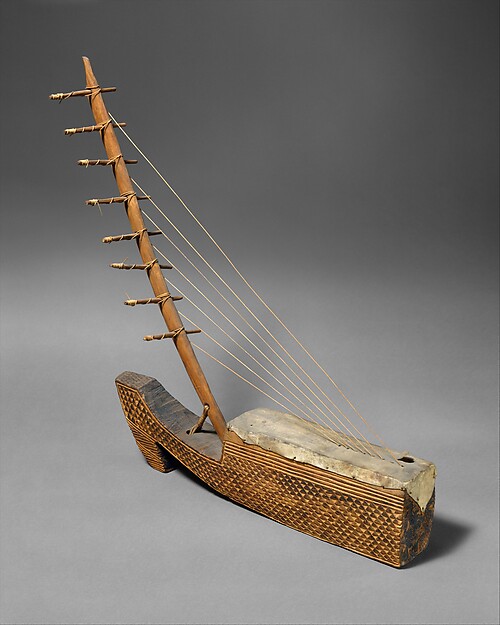
The arched harp of the Fang and Kele peoples: a nineteenth-century example, made of wood, skin, vegetable fibre and leather, is in the Metropolitan Museum of Art (Metropolitan Museum of Art, 2026).
Music as visionary technique
Music supplies pulse, direction, memory and interpersonal control across a state that can last far longer than the most image-rich phase. Repeated ostinati, accelerating dance, antiphonal singing and instrumental timbres can be heard as voices, vehicles or presences. The ensemble also keeps the surrounding community awake and able to witness the initiate. Phenomenology is therefore jointly produced by alkaloids, darkness, fatigue, sound, expectation, bodily position and questioning; the chemistry is necessary to describe the drug state but insufficient to describe the ritual world (Fernandez, 1972; Maas and Strubelt, 2003).
05Visionary phenomenology
Durations are approximate syntheses from ibogaine studies and ethnographic descriptions, and root bark may follow a different course. Plant composition, metabolism, co-administered substances, fasting and ceremonial pacing all alter it. Traditional initiations may surround the acute pharmacology with two or more days of preparation, night work and recovery (Fernandez, 1982; Kohek et al., 2020).
Phenomenological profile
The profile lists effects the sources report, for each preparation separately, grouped by domain. Each row gives the grade, how often the sources say the effect occurs (only where they say so; most do not) and the kinds of source behind it. A chip naming a compound, such as “Trial · psilocybin”, means the evidence comes from studies of that compound rather than of the preparation itself; “partial” means the route, purity or dose differs from the traditional preparation, so the row cannot be graded above supported. The line under each preparation says which domains have evidence entered here. A domain with nothing entered has not yet been assessed in this profile; that is not a finding that the literature is silent, and the article may discuss it. Open a row for the note and the sources.
Root bark and ibogaineeaten, in initiation and in treatment
Evidence entered for all 8 domains.
Ibogaine is the root bark’s most abundant alkaloid (Kohek et al., 2020), and the studies here gave ibogaine by mouth, so they correspond in full. Root-bark products and extracts vary in their alkaloid content (Bouso et al., 2020), and the studies’ settings are clinical or therapeutic, not the Bwiti initiation, whose verified ethnography does not yet describe effects one by one.
Visual
Immersive realmsCoherent places or events that surround the experiencer, who seems to be located in them rather than looking at images.SupportedExperience
In interviews with twenty people who had recently taken ibogaine, closed-eye visuals included sceneries and landscapes, and an “observer quality” (Kohek et al., 2020). Read about the phenomenology of immersive realms →
Other senses
Intensified hearingHeightened acuity, salience or alteration of sound.SupportedExperience
Auditory effects formed one of the eight categories of the ibogaine experience (Kohek et al., 2020).
Body
Nausea and purgingNausea, vomiting or diarrhoea during the acute state.SupportedOccasionalTrial · ibogaine
Vomiting was the only adverse event observed in fourteen patients given 10 mg/kg ibogaine by mouth, in two of them, although all had been given an anti-nausea drug beforehand (Knuijver et al., 2022).
Tremor and motor slowingTrembling, impaired coordination or slowed movement.SupportedCharacteristicTrial · ibogaine
Severe transient ataxia, with inability to walk without support, was seen in all fourteen patients; it peaked 2–6 hours after ingestion and remitted fully within 24 hours (Knuijver et al., 2022).
Not establishedRaised blood pressure. Heart rate and blood pressure fell after ibogaine, with marked prolongation of the QTc interval (Knuijver et al., 2022).
Self and unity
Ego dissolutionLoosening or loss of the sense of being a bounded self.SupportedExperience
Ego dissolution was a subcategory of the interviews (Kohek et al., 2020); some of thirty veterans treated with magnesium–ibogaine recounted ego death (Olash et al., 2026).
Unitive experienceThe sense that self and world, or all things, are one or interconnected.SupportedExperience
Some veterans described an overwhelming sense of interconnectedness, within a theme of altered self and mystical connectedness (Olash et al., 2026).
Death and rebirthExperiencing one’s own death, and a return or renewal.SupportedExperience
Many veterans’ accounts included symbolic death and renewal (Olash et al., 2026).
Affect
Heightened empathyAn increased sense of others’ feelings or of closeness to them.SupportedExperience
Empathy, love and prosocial behaviour formed a subcategory of the interviews (Kohek et al., 2020); veterans described surges of forgiveness and love, and overwhelming connection to family, friends and community (Olash et al., 2026).
Fear and dreadFear, panic, chaos or a sense of threat during the experience.SupportedExperience
Closed-eye visuals included horrific scenarios (Kohek et al., 2020).
Cognition
Autobiographical recallVivid re-experiencing or re-viewing of one’s own past, often recast from new positions.SupportedRecurrentExperienceTrial · ibogaine
Autobiographical memories were among the main aspects of underground treatment for addiction (Rodríguez-Cano et al., 2023); veterans described guided replay of autobiographical memories, traumatic and sometimes previously repressed, replayed with altered affect (Olash et al., 2026); patients in a clinical study reported closed-eye visuals and vivid memories (Knuijver et al., 2022).
Introspective reflectionAttention turned to one’s own life, conduct and relationships.SupportedExperience
Interviewees described an enhanced “self-psychoanalysis” (Kohek et al., 2020), and treatment narratives valuable personal insights (Rodríguez-Cano et al., 2023).
Relation to other beings
Autonomous entitiesBeings experienced as acting, communicating or observing independently of the experiencer’s will.SupportedRecurrentExperience
Closed-eye visuals included ancestors and entities (Kohek et al., 2020); veterans frequently reported dialogue with beings perceived as external to the self (Olash et al., 2026). Read about the phenomenology of autonomous entities →
States of consciousness
Dreamlike statesOneiric experience: dream formation, dreamlike sequences or a waking state resembling dreaming.SupportedRecurrentExperienceTrial · ibogaine
Veterans repeatedly likened the experience to waking dreams (Olash et al., 2026); a clinical study called its patients’ visual and memory experiences “oneirogenic” (Knuijver et al., 2022).
Recurrent experiential sequence
| Somatic threshold | Intense bitterness and oral numbness may be followed by nausea, vomiting, tremor, oscillating heat and cold, buzzing or roaring, heaviness and severe ataxia. Lying still with eyes closed often becomes necessary. Somatic distress is prominent. |
|---|---|
| Oneiric display | Rapid, film-like sequences; faces, animals, ancestors and deceased relatives; distant landscapes, processions, luminous beings and frightening scenes. Imagery is often described as representational and narrative, unlike the continuously geometric field typical of some serotonergic psychedelics (Kohek et al., 2020). |
| Autobiographical replay | Childhood episodes, trauma, relationships and morally charged decisions may be reviewed from a detached “observer” position. Scenes can feel shown by an intelligent interlocutor, ancestor or the plant, and may answer questions posed by attendants. |
| Evaluation | As images recede, prolonged wakefulness supports analytic review, remorse, forgiveness, purpose or plans for change. Contemporary treatment narratives often identify this evaluative phase as central to perceived benefit (Rodríguez-Cano et al., 2023). |
| Return | Emotional openness and cognitive clarity may coexist with exhaustion, insomnia and bodily instability. Ritual return is socially marked; clinical “integration” is a later institution with different concepts and authorities. |
Accounts and interpretation
Kohek and colleagues’ interviews with twenty ibogaine users identified physical, sensory, visual, auditory, cognitive, adverse and after-effect domains, including ancestors and entities, landscapes, horrific scenes, self-analysis, empathy, catharsis, ego dissolution and spiritual states (Kohek et al., 2020). A separate qualitative study of underground treatment emphasised autobiographical memory, interpersonal and transpersonal experience, preparation, integration and motivation for lifestyle change (Rodríguez-Cano et al., 2023). These samples are self-selected, so frequencies in users generally are unknown.
It was like watching my life as a film, but I could stop and speak to the people in it. — paraphrased composite of recurrent interview descriptions; Kohek et al. (2020), not a verbatim single-participant quotation
The composite is labelled because striking internet quotations often lose provenance. Ethnographically, an image of a dead relative may be recognised as ancestral communication; psychologically, it may be coded as autobiographical memory or grief processing; neurologically, it remains a subjective report correlated with a drug state. The descriptions can coexist as different explanatory registers without being collapsed into one another.
In 2026, analysis of post-session narratives from thirty male Special Operations veterans reported four recurring domains: dialogic trauma reappraisal and guided replay; altered self and mystical connectedness; emotional resolution through forgiveness, love and purpose; and embodied healing or clarity (Olash et al., 2026). The cohort had received magnesium–ibogaine with complementary care in Mexico. Its language belongs to that clinical setting, distinct from Bwiti phenomenology, and the study had no controls to show that a particular vision caused clinical change.
06Contemporary status
Conservation, harvest and economies
T. iboga is globally assessed as Least Concern, reflecting its broad range; abundance varies from one harvest site to another (BGCI and IUCN SSC Global Tree Specialist Group, 2019). Forest loss, destructive root harvest and international demand can nevertheless produce local scarcity. Gabonese ceremonial markets, village cultivation, cross-border wild harvest, internet retail, retreat tourism and pharmaceutical research form overlapping economies with very unequal prices and authority (Ermakova et al., 2025; INTERPOL, 2023).
- Global assessment
Least Concern describes the species’ global status; sustainable trade is a separate question. Population trend, harvest mortality, provenance and replacement rates remain poorly quantified.
- Trafficking
INTERPOL documented illicit extraction and transnational trafficking of iboga among natural psychotropics. A 2026 participatory report states that officially legal export from Gabon was again prohibited while illicit networks continued (INTERPOL, 2023; ICEERS, 2026).
- Cultivation
Community nurseries, non-destructive root management, seed provenance and benefit-sharing can reduce pressure, but sustainability claims require traceable land and harvest data.
- Alternative supply
Semisynthesis from Voacanga africana, biosynthesis and efficient total synthesis may reduce pharmaceutical demand for iboga root. Support for Gabonese cultivators and ritual access would need further measures (Farrow et al., 2019; Iyer et al., 2025).
Law, access and benefit-sharing
| International | Ibogaine is absent from the 1961 and 1971 UN drug conventions. National law therefore varies. T. iboga is absent from the CITES Appendices as of August 2026 (INCB, 2026; CITES, 2026). |
|---|---|
| Gabon | Ritual use remains culturally recognised, while access to wild populations and export are regulated. Gabon’s Nagoya Protocol framework makes prior informed consent, authorised access and benefit-sharing central to legal genetic-resource trade. Pilot Nagoya-compliant exports occurred in 2023–24; the 2026 policy report records a subsequent official export prohibition pending legal development (CBD, 2026; ICEERS, 2026). |
| United States | Ibogaine remains a federal Schedule I substance and no ibogaine medicine is FDA-approved. An executive order of 18 April 2026 directs agencies to facilitate research and a Right-to-Try pathway for eligible patients, including necessary Schedule I permissions; ibogaine stays scheduled and its efficacy unestablished (DEA, 2025; The White House, 2026). |
| France / UK | France controls iboga and ibogaine as narcotics. In the United Kingdom ibogaine is absent from the standard controlled-drugs list, but production, supply, import or export for psychoactive use may fall under the Psychoactive Substances Act 2016. Legal status depends on jurisdiction and conduct. |
| Treatment travel | Clinics and retreats operate in Mexico, Costa Rica, Brazil, South Africa, New Zealand and elsewhere under differing medical, pharmaceutical and consumer-protection rules. An unscheduled substance and a licensed therapy are different things. |
Patents and translation
Howard Lotsof’s 1985 US patent 4,499,096 claimed a method of interrupting narcotic addiction with ibogaine; later patents extended claims across cocaine, alcohol, nicotine and polysubstance dependence (Lotsof, 1985). Contemporary portfolios concern noribogaine, purified formulations, salts, analogues, methods of treatment and potentially less cardiotoxic congeners. A patent grants limited claims in a jurisdiction; safety, approval, the species T. iboga and Bwiti knowledge all lie outside it. The policy issue is how invention, prior art, genetic-resource access and benefits to source communities are documented (Bonhomme, 2023).
Clinical and neuroscience research
Open-label and observational studies in opioid-dependent participants report rapid reduction of withdrawal and craving and, in some cohorts, reduced subsequent use. They also contain selection bias, variable psychosocial care and limited controls; one New Zealand cohort included a death during treatment (Brown and Alper, 2018; Noller, Frampton and Yazar-Klosinski, 2018; Mash et al., 2018). A monitored open-label safety study documented frequent QTc prolongation and clinically important bradycardia, reinforcing the cardiac risk (Knuijver et al., 2022). The registered Phase I/IIa opioid-withdrawal study NCT05029401 has gone more than two years without a verified status and is treated by ClinicalTrials.gov as unknown/closed (ClinicalTrials.gov, 2026).
Veterans with brain injury
In an open-label observational study of 30 male special-operations veterans with mostly mild traumatic brain injury, ibogaine given with magnesium — intended to reduce cardiac risk — was followed by significant improvements in functioning, post-traumatic stress, depression and anxiety a month later, with no unexpected or serious adverse events. The authors call for controlled trials, and several declare patents or shares in an ibogaine treatment provider (Cherian et al., 2024).
Genes and the heart
In 14 patients with opioid use disorder, ibogaine's pharmacokinetics varied widely and tracked the CYP2D6 genotype. Ibogaine concentrations, but not those of its metabolite noribogaine, correlated with QTc prolongation and cerebellar effects; neither correlated with the severity of withdrawal (Knuijver et al., 2024).
The metabolite alone
In the first clinical trial of noribogaine, in 27 patients leaving methadone treatment, the metabolite was well tolerated but lengthened the QTc interval in proportion to its concentration, with only a non-significant trend toward reduced withdrawal (Glue et al., 2016).
The research frontier is active but asymmetrical: sophisticated chemistry and human neuroimaging now coexist with sparse population ecology, limited pharmacognosy of ceremonial material and relatively little funded scholarship led by Gabonese practitioners and scientists. A species monograph must keep these evidentiary scales visible.
Open questions on this entry
Safety and law
07Cross-correlations
| Bwiti–Iboga Complex | Ceremonial complex page: institutions, initiation, healing cults, regional branches, music and contemporary transformation. PRIMARY CULTURAL COMPLEX |
|---|---|
| Voacanga africana | Related Apocynaceae tree containing voacangine; an important semisynthetic source for ibogaine chemistry; the Gabonese ritual history belongs to iboga. CHEMICAL / SUPPLY RELATION |
| Rauvolfia vomitoria | West-central African medicinal relative containing different indole-alkaloid ensembles; shared family chemistry, separate uses. PHYTOCHEMICAL RELATIVE |
| Clinical Psychedelic Ritual | Modern clinics, monitoring, psychometrics and integration constitute a distinct institutional complex around purified ibogaine and analogues. CONTEMPORARY TRANSLATION |
| Tabernanthe elliptica | The other species retained in Vonk’s revision of the genus; distinct from T. iboga in pharmacognosy and ethnographic attribution. TAXONOMIC SIBLING |
08Bibliography
How to read the labels on each source
- Source type
- What kind of work it is: journal article, book, legislation, patent application, database record and so on. A word after the dot (ethnography, protologue, primary source) keeps the genre the entry was first filed under. “Unclassified” means the citation does not say enough to tell.
- Peer review
- Recorded for each work separately, and only where it has been confirmed for that work. It is never inferred from a DOI, a publisher or a journal, since journals also publish editorials, letters and commentaries. Where it has not been confirmed, the entry records it as not established. It does not apply to legislation, court decisions, treaties, patents, datasets, database and collection records, historical texts, films, talks, press releases or web pages.
- Check
- What was checked when the entry was added. DOI checked: the DOI’s registry record (Crossref) matched the citation’s title, first author and year. Verified: the record itself was opened and matched the citation: a library catalogue record for a book, or the page itself for a database entry, law, patent or archive document. “Verified (abstract)” and “(summary)” mean only the abstract or a summary was read. Located: a record was found but not fully matched. Bibliographic record and Stable record (in essays): a catalogue or stable web record exists; what was checked against it is not recorded. Unverified: no check is recorded. No locator found: a search found no record. Secondary: read through another source.
- What the labels do not say
- None of them means the source supports a particular sentence. Where a sentence is graded, its evidence note names its sources and whether each supports it, disputes it or gives context. Dates and reviewers of checks are not recorded for each entry; the version note at the foot of a graded page dates its last review.