Mirante, D. (ed.) (2026) Bwiti–Iboga Complex. Entheocene, version 1.0. Available at: https://entheocene.com/complex-bwiti-iboga.html (Accessed: 17 October 2026).
DOI: not yet minted.
Introduction
Bwiti denotes a historically changing family of initiatory, religious and therapeutic institutions centred principally in Gabon and neighbouring regions of equatorial Africa. Within these traditions, the bitter forest shrub Tabernanthe iboga participates in a larger ritual system comprising kinship, music, choreography, nocturnal vigil, chapel architecture, ancestor relations and the interpretation of visions. Southern Gabonese lineages, Fang reformulations and neighbouring healing associations vary in theology, gender, ritual office and the relative importance assigned to initiation, diagnosis, possession and Christianity. A recurrent initiatory pattern is structured as a passage towards the dead or the ancestral domain followed by return to communal life under the guidance of sponsors and ritual specialists. The twentieth-century development of ibogaine treatment constitutes a related but institutionally distinct history, proceeding through alkaloid extraction, addiction treatment networks, clinical investigation, regulation and patenting. This dossier therefore examines Bwiti and modern ibogaine medicine within one connected historical field while distinguishing their different sources, practices and evidential records (Fernandez, 1982; Fernandez and Fernandez, 2001; Bonhomme, 2006; Mary, 1999).
Contents
01Constituents & preparation
Deep Time
Oral historiesForest discovery narratives→
DocumentedSouthern Bwiti · nineteenth century→
TransformationFang Bwiti · colonial modernity→
Contested translationGlobal ibogaine field
The botanical centre—and what is not the centre
Bwiti centres on one plant. Its complexity is institutional: that plant is articulated by people, places, instruments, images and forms of care.
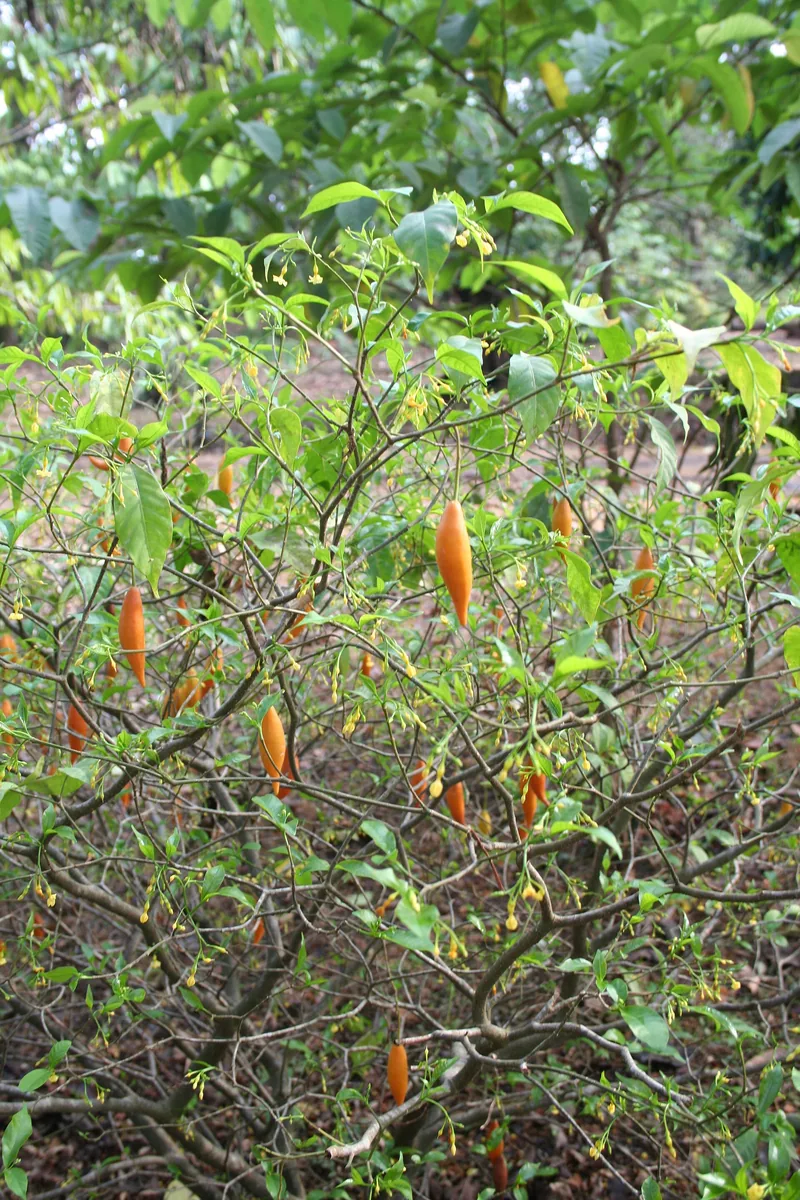
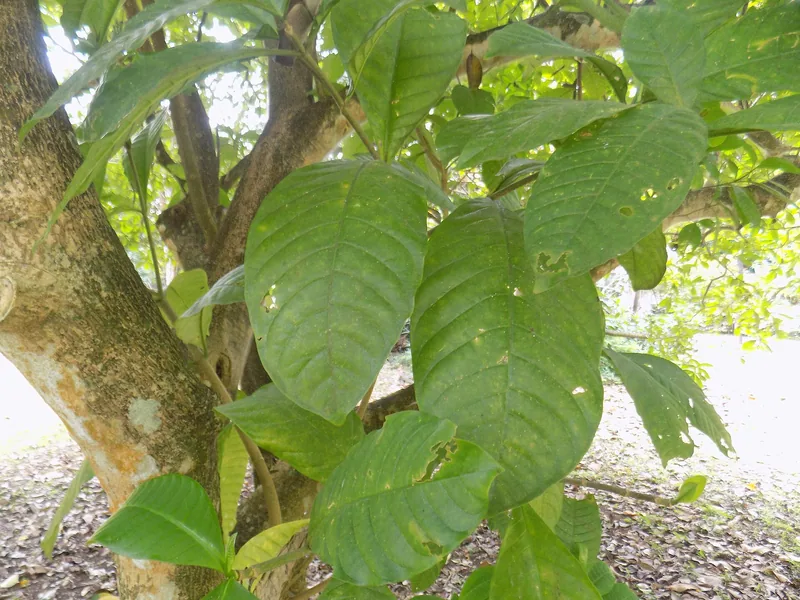
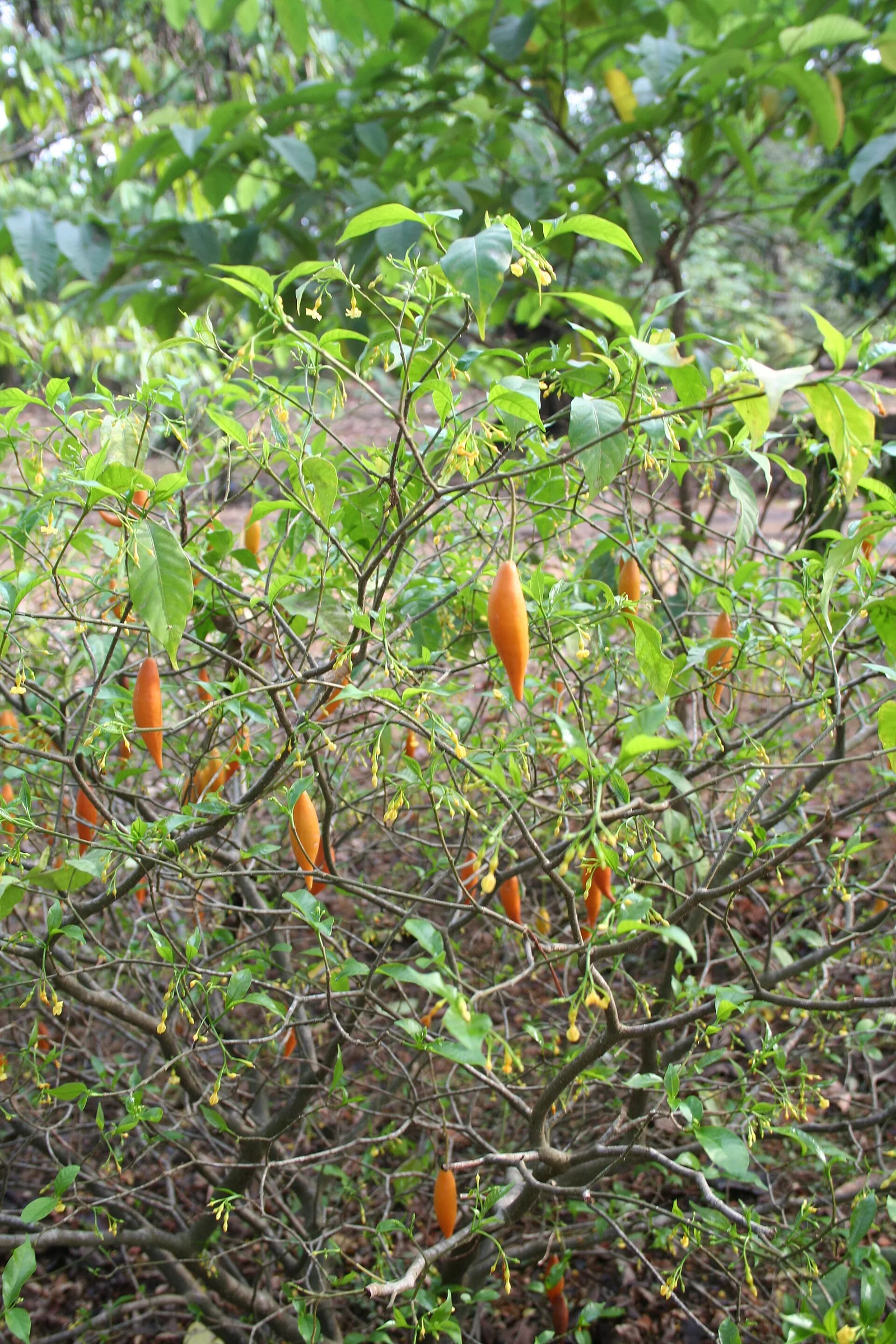
An evergreen shrub or small tree of the wet tropical forests of west-central Africa. Root bark is the principal ritual material; leaves and other parts occur in local medicinal or low-intensity uses, each with its own pharmacology. Accepted by Kew in Apocynaceae, order Gentianales, the species ranges from Cameroon and the Central African Republic through Gabon and the Congos to Cabinda and Angola (POWO, 2026; Pope, 1969).
Ibogaine; accompanied by tabernanthine, ibogaline, ibogamine, coronaridine, voacangine and related iboga alkaloids
Ritual functions
Initiation, diagnosis, healing, vigil, moral disclosure, ancestor encounter and communal renewal
Ibogaine
C₂₀H₂₆N₂O
12-methoxyibogamine
Ibogamine
C₁₉H₂₄N₂
Parent iboga alkaloid scaffold
Tabernanthine
C₂₀H₂₆N₂O
Methoxyibogamine positional isomer
Voacangine
C₂₂H₂₈N₂O₃
Carbomethoxy-methoxy iboga alkaloid
Ritual holding
Mbandja · sponsors · liturgy · music · recurrent chapel life
Sponsors commonly glossed as the mother and father of iboga accompany and monitor the banzi and subsequently incorporate the initiate into a durable relation of ritual kinship. The all-night performance, followed by weekly or periodic rites, places the initiatory ordeal within a continuing community. Fernandez and Fernandez (2001) interpret this recurrent ceremonial life as an established form of social continuity following initiation.
Container
Chapel or mbandja, domestic compound, fire, central post and consecrated threshold
Guidance
Nganga or lineage authority, experienced initiates and ritual sponsors
Temporal form
Initiatory ordeal followed by repeated nocturnal rites and ordinary obligations
Interpretive work
Vision is questioned, sung, narrated and related to ancestry, illness and conduct
Secondary plants, neighbouring sacraments and ritual media
Ethnographies describe multiple preparations and intensities, from small portions supporting vigil or labour to prolonged initiatory ingestion. This page deliberately supplies no dose or recipe.
Alchornea floribunda
Alan · historical Fang and Byeri contexts
Plate — awaiting commission
A distinct central African visionary and ritual plant associated with older Fang ancestor practices. Its proximity helps explain a regional field of transformed traditions; it keeps its own place, apart from Bwiti iboga.
Used as a feedstock for semisynthetic ibogaine. This route may reduce direct demand for wild iboga while shifting production and economic value from Gabonese root bark towards international pharmaceutical supply chains.
White, red and black
Pigments · textiles · raffia · mirrors · fire
Colour and reflective surfaces place the body within branch-specific moral and cosmological contrasts, read differently from chapel to chapel.
Ngombi and mongongo
Arched harp · mouth bow · rattle · drums · chorus
Instrumental ostinati, responsorial singing and pulse regulate attention, exhaustion and passage. Music is an active means of making the journey navigable.
Water, food and morning
Re-entry · recognition · ordinary relation
Ritual completion includes bodily care and renewed social presence. The return matters as much as the departure: revelation acquires force through obligations carried into waking life.
Safety: iboga and ibogaine can prolong the QT interval, precipitate dangerous arrhythmias and interact unpredictably with medications and drugs. Fatalities have occurred. Traditional authority does not substitute for medical screening, and an online recipe cannot make initiatory ingestion safe (Koenig and Hilber, 2015; Litjens and Brunt, 2016; Esperança et al., 2026).
Plate 01 · Tabernanthe iboga Baill. · deep view
Tabernanthe iboga, Limbe Botanical Garden, Cameroon · Marco Schmidt, 2007 · CC BY-SA 2.5 ↗
Major monoterpene indole alkaloid in iboga root bark; concentration varies among plants and preparations.
Unusually broad interactions with glutamatergic, opioid, sigma, nicotinic, serotonergic and monoamine-transporter systems; a much broader profile than a classic 5-HT2A psychedelic (Iyer et al., 2021).
The isolated molecule differs from whole root bark, and both from a Bwiti ceremony.
Noribogaine
Major active human metabolite formed principally through CYP2D6.
Longer persistence; serotonin-transporter and opioid-system activity; also implicated in cardiac repolarisation risk.
Metabolic rate, co-medications and liver function can change exposure substantially.
Total alkaloid profile
Ibogaine with tabernanthine, ibogaline, ibogamine, coronaridine, voacangine and minor congeners.
The root is a variable phytochemical ensemble.
“Whole plant” says nothing in itself about safety, gentleness or chemical standardisation.
Voacangine
Occurs in iboga and is abundant in Voacanga africana.
Semisynthetic precursor and iboga-alkaloid research scaffold.
An industrial supply solution may redistribute ecological and benefit-sharing questions while leaving them open.
TBG and oxa-iboga compounds
Synthetic analogues inspired by the iboga scaffold.
Preclinical programmes seek plasticity or anti-addictive effects with reduced hallucination or cardiac liability (Cameron et al., 2021; Havel et al., 2024).
Animal efficacy is a preclinical result; safer-by-design analogues remain biomedical inventions, separate from Bwiti sacraments.
Ibogaine
C₂₀H₂₆N₂O
12-methoxyibogamine
Voacangine
C₂₂H₂₈N₂O₃
Carbomethoxy-methoxy iboga alkaloid
Traditional preparation: ethnographic forms and variation
LOW INTENSITY
Small amounts of root material have been used in regional medicine, hunting, work and nocturnal ritual to counter fatigue and sharpen attention. Colonial labour regimes sometimes appropriated this stimulant value. Such uses belong to a different experiential register from initiation (Fernandez and Fernandez, 2001; Pope, 1969).
INITIATION
Initiatory forms involve much more sustained ingestion under lineage authority, typically across a night and into the following day. The aim is a socially consequential crossing—often narrated as seeing one’s origin, encountering the dead, undergoing judgement and returning as a recognised initiate (Fernandez, 1982; Bonhomme, 2006).
ONGOING RITE
After initiation, smaller sacramental portions can accompany weekly or periodic vigils, healing work and communal worship. This repeated scale is essential: Bwiti is a repeated practice as well as one great “flood” experience (Fernandez and Fernandez, 2001).
EVIDENTIAL LIMIT
Plant chemistry, lineage technique, participant physiology and ceremonial purpose vary substantially. Published ethnographic quantities therefore describe particular observations. This page leaves out preparation and dosing, which this literature gives no safe general basis for.
02Culture
Peoples and territories
Ngounié and Ogooué-Lolo, southern and central Gabon
Mitsogo / Tsogo · Apindji · Masango · Eshira · Punu · Ndzebi and neighbouring peoples
These forest and river territories contain several older Bwiti lineages and related therapeutic societies. “Traditional” includes change: branches have travelled, divided, borrowed and reinterpreted across settlements, ethnic boundaries and generations (Gollnhofer and Sillans, 1983; Bonhomme, 2006).
Estuaire, Woleu-Ntem and northern Gabon
Fang communities · colonial towns, labour camps and chapel networks
Fang Bwiti expanded during the twentieth century as a creative response to missionisation, taxation, labour migration, disrupted ancestor institutions and changing gender and household relations. It recomposed southern Bwiti, Fang Byeri memory and Christian narrative into a new whole (Fernandez, 1982; Mary, 1999).
Moyen-Ogooué and the urban corridor
Lambaréné · Libreville · mixed chapels · national cultural stages
Ritual lineages now inhabit rural compounds, peri-urban neighbourhoods, clinics, cultural organisations and heritage festivals. Urban contexts continue the mobility and adaptation documented throughout Bwiti’s modern history.
Equatorial Guinea, Cameroon and the wider Congo Basin
Fang and related cross-border networks · forest peoples named in origin histories
Political borders divide older linguistic and kinship geographies. Oral traditions frequently credit forest hunter-gatherer peoples—often grouped externally as Babongo or “Pygmy”—with discovering iboga. This material is oral-historical evidence, without an archaeological chronology, and the external labels encompass distinct forest communities (Samorini, 2024a).
Three ritual formations within a plural field
Disumba, Misoko and related lineages
Mitsogo, Apindji, Masango and neighbouring transmissions
Disumba is frequently described as an initiatory and cosmological trunk; Misoko/Missoko branches place stronger emphasis on divination, diagnosis and healing.
Lineage names and relations vary locally.
Initiation binds the person to ritual elders, a chapel and an account of origins, as well as to a plant experience.
Bwiti as colonial and postcolonial invention
Byeri memory · Christian scripture · village and urban chapels
Fang practitioners translated biblical people, the cross, creation and redemption through local categories of ancestry, fertility, death and social continuity.
Chapels could restore moral community amid labour migration and colonial dislocation while contesting mission claims to exclusive spiritual authority.
Women’s participation and branch structure vary across Fang Bwiti.
Ombwiri, Ombudi and possession-healing
Related ritual ecologies · not synonyms for Bwiti
Neighbouring therapeutic complexes may use iboga, music, diagnosis and spirit relations while giving possession or affliction a different ritual logic.
Women have held important roles in several healing associations, complicating older descriptions of an exclusively masculine “iboga cult.”
Analytical adjacency is useful; Gabonese iboga rites outside Bwiti keep their own names.
History and evidence
Ritual practice: an event sequence held by others
Question, illness or threshold
A person approaches initiation through vocation, misfortune, diagnosis, family relation or desire for knowledge. Motive and branch matter; there is no single universal admission story.
Sponsorship and instruction
Ritual parents and authorities establish obligations, prohibitions and a lineage of care. Their presence makes the crossing socially accountable.
Body, threshold and bitter plant
Washing, dress, pigment, confession or instruction may precede ingestion. Root bark is given within a controlled sequence.
Night work
Song, harp or mouth bow, percussion, dance, fire and continual observation pace the long ordeal. Vomiting, weakness, tremor and immobility are bodily events as well as interpretive signs.
Seeing and interrogation
Accounts may involve roads, waters, mirrors, the dead, childhood scenes, accusation or cosmic origins. Sponsors ask what was seen and whether the initiate has reached the required point.
Return and recognition
Morning, food, naming and public acknowledgement reattach the person to ordinary social time. Insight becomes obligation through later rites and relationships.
Mythology and cosmology
The dead are near. In Bwiti accounts, ancestors are moral interlocutors and conditions of living continuity. Initiation makes the border between generations experientially near, allowing the living to ask where they came from and how they should continue (Fernandez and Fernandez, 2001).
Origins are plural and branch-specific. Stories of a hunter, spouse, animal or forest being revealing the root circulate in changing versions. They locate knowledge in reciprocity, loss and non-human forest intelligence (Samorini, 2024b).
Christianity was translated. In Fang Bwiti, Adam and Eve, Christ, Mary, the cross and biblical creation may be re-sounded through ancestral and forest cosmologies. Syncretism here is intellectual and political work: a claim that imported scripture can be made answerable to African histories (Mary, 1999).
Time bends around return. The initiatory journey joins ancestry, present crisis and descendants. Its therapeutic promise is therefore relational: to recover a viable path between what has been inherited and what must still be lived.
Shamanism, diagnosis and healing
“Shaman” serves here for comparison. A nganga may be healer, diviner, ritual expert, initiator and custodian, while titles such as nima and local equivalents mark different authorities. Healing can involve identifying social conflict, spirit relations, broken obligations or bodily illness; visionary accounts are interpreted through ritual competence and their consequences within the community (Bonhomme, 2006).
The modern neurological metaphor of a “reset” describes one contemporary interpretation of ibogaine treatment. Bwiti diagnostic and therapeutic accounts employ a wider relational field involving person, kin, ancestors, place and future conduct. These explanatory systems can be compared historically without assuming that they are interchangeable; the cardiac toxicity documented for ibogaine remains relevant across settings.
Art and material culture: the vision is performed
Mbandja · ebandza
The chapel is a diagram one can enter. Posts, thresholds, painted surfaces, fire and seating make cosmology spatial. Bonhomme’s study of an incident around a ritual post shows that sacred order exists through performance, negotiation and occasional failure (Bonhomme, 2018).
Ngombi · mongongo · chorus
Sound carries agency. The arched harp and mouth bow can voice ancestral presence, while repeated songs coordinate dancers, musicians, ritual experts and an initiate whose ordinary sensorium is disintegrating. Sonic form is simultaneously aesthetic, mnemonic and protective.
Body · colour · movement
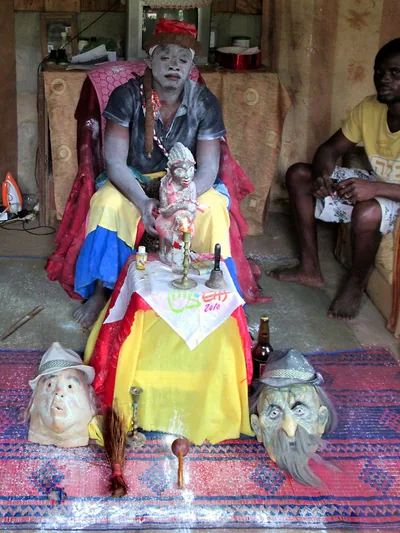
Ritual knowledge is worn. White, red and black pigments, cloth, raffia, beads, headgear, gesture and dance make affiliation visible. Their meanings are contextual.
Masks and ancestral sculpture
Objects must be attributed carefully. Ndzebi or Sango Bwiti masks and Fang Byeri reliquary figures belong to particular histories. Museum labels that present either as a generic “iboga mask” detach form from lineage and use.
National stage
Heritage creates new publics. Musicians and dancers have moved Bwiti signs from chapels into festivals, museums and national representation. This can support recognition while also exposing sacred forms to state simplification and tourist demand (Aterianus-Owanga, 2017).
The initiate’s narrative
Testimony is also an art. What was seen becomes a story shaped by questions, inherited images and later repetition. Phenomenology is learned, edited and addressed to listeners.
03Visionary phenomenology
Duration, intensity and bodily ordeal
Onset and acute field
Effects often begin within hours and may unfold through a long oneiric and introspective phase, frequently across 8–24 hours. Plant form, metabolism and ritual pattern vary too widely for one canonical clock (Schenberg et al., 2017; Kohek et al., 2020).
Residual phase
Wakefulness, ataxia, weakness, nausea, sensory sensitivity and cognitive reverberation can continue beyond the principal visions. Noribogaine’s long persistence contributes to a prolonged pharmacological tail.
Intensity
Initiatory experience is frequently described as physically punishing and existentially total. Vomiting, fear, tremor, immobility and confrontation may coexist with beauty, love and certainty.
Sensory style
The recurrent descriptor is oneiric: internally vivid, scene-like and dream-related, sometimes experienced with an observing or dialogic quality. It differs from the continuously transforming visual field commonly reported with serotonergic psychedelics.
Critical risk
The principal medical dangers are cardiac: QT prolongation, bradycardia, electrolyte disturbance, drug interactions and delayed arrhythmia, whatever the subjective intensity. A psychologically held experience can still be cardiologically unsafe.
Two phenomenological grammars
Bwiti initiatory grammar
Death-side journey; roads, rivers or thresholds; encounter with ancestors and origin; being examined or instructed; recognition of obligation; return through the sponsors’ voices and the chapel’s music. These are culturally prepared ways of perceiving what the experience is for (Fernandez, 1982).
Clinical / psychonautic grammar
Autobiographical memory review; childhood and trauma scenes; imagined futures with or without dependence; dialogic self-analysis; emotional catharsis; forgiveness, purpose and somatic repair imagery. Contemporary language often shifts the dead into “memory,” lineage into “family systems” and rebirth into “reset” (Kohek et al., 2020; Olash et al., 2026).
Convergence
Both registers report a witnessing position, compressed life review, morally charged encounter, vivid autonomous imagery and an after-effect in which previous habits feel newly visible. In both, interpretation and post-session relation influence whether insight becomes durable change.
Non-equivalence
An ancestor and a trauma metaphor are different things, and so are an addiction clinic and a chapel. Similar phenomenal motifs can sit within quite different ontologies, social obligations and therapeutic mechanisms.
Recurrent visionary descriptions
Ancestral encounter
Known or unknown dead appear as persons, judges, guides or members of a line. The experience can restore continuity, demand correction or expose unresolved obligations.
Life review
Childhood scenes and consequential relationships return with unusual vividness. Participants may feel both inside the memory and able to inspect it from outside (Schenberg et al., 2017).
Roads and thresholds
Movement through tunnels, waters, forests, houses or abstract passages provides a spatial syntax for death, transition and return.
Threat and ordeal
Horrific scenes, predatory entities, accusation, bodily fear and imagined death are salient features of the experience. Their meaning depends on the ritual and psychological frame (Kohek et al., 2020).
Dialogic intelligence
A voice, ancestor, guide, medicine or observing self may pose questions and require answers. The experience often feels instructional.
After-vision clarity
Emotional release, compassion, aversion to a former drug pattern, bodily exhaustion and a sense of beginning again can follow. None guarantees lasting remission without social and clinical support.
The path of life and death.Fang initiatory formulation recorded by Fernandez and Fernandez (2001). The brevity matters: vision is framed as a route connecting generations, not a collection of spectacular images.
Accounts and evidential limits
Clinical qualitative studies have made the acute experience more legible to psychology: Schenberg et al. (2017) found dreamlike vision, memory retrieval, danger scenarios and contrasting futures; Kohek et al. (2020) identified physical, sensory, visual, cognitive, auditory, adverse, anti-dependency and after-effect domains; González Espejito et al. (2025) converted this literature into an Ibogaine Experience Scale. These instruments are useful, but they turn narrative into research variables and mostly sample non-Bwiti settings.
Ethnography produces a different archive: accounts are elicited by sponsors, coded through lineage narratives and embedded in repeated ritual life. Both archives are mediated. Clinic reports may be shaped by therapeutic expectation and payment; ethnographic reports by secrecy, translation and the observer’s access. The strongest comparison preserves those asymmetries.
04Contemporary transformations
From sacrament to molecule—and back
Current neuroscience and clinical evidence
Programme
Finding
What it does not establish
Opioid withdrawal studies
Open-label and observational cohorts report rapid reductions in withdrawal and craving, with some sustained improvement in opioid use and mood (Brown and Alper, 2018; Mash et al., 2018; Noller et al., 2018).
No large completed randomized trial yet proves efficacy or defines a broadly safe protocol.
Veterans with traumatic brain injury
Thirty male veterans receiving magnesium–ibogaine treatment showed large one-month improvements in disability, PTSD, depression and anxiety without serious adverse events in the reported cohort (Cherian et al., 2024).
The prospective study was open-label, non-randomized and embedded in a multimodal treatment context; causality and generalisability remain unresolved.
Oscillations and complexity
Follow-up neurophysiology reported changes in cortical oscillations and neural complexity associated with treatment and subjective effects (Lissemore et al., 2025).
A neural correlate falls short of a demonstrated mechanism of lasting clinical benefit.
2026 qualitative follow-up
Veterans described dialogic trauma replay, altered selfhood, emotional resolution and embodied healing imagery after magnesium–ibogaine (Olash et al., 2026).
Rich testimony sits alongside expectancy, selection and integration effects.
Synthetic analogues
Tabernanthalog and oxa-iboga compounds show neuroplastic or anti-addictive effects with reduced liabilities in animal and cellular models (Cameron et al., 2021; Havel et al., 2024).
“Non-hallucinogenic” and “non-cardiotoxic” remain compound- and assay-specific claims; human therapeutic value is unestablished.
Efficient synthesis
Modular total synthesis can produce ibogaine and related alkaloids without harvesting root bark (Iyer et al., 2025).
This may reduce harvest demand while leaving the legal and policy status of benefit-sharing to source-country and international frameworks.
CARDIAC WARNING
Ibogaine blocks cardiac hERG channels and can prolong QT, with bradycardia, torsades de pointes, cardiac arrest and death reported. Risk may be increased by electrolyte disturbance, structural heart disease, CYP2D6 variation, opioids, stimulants and many medications. Medically screened administration still carries risk; unmonitored or self-directed use carries more (Koenig and Hilber, 2015; Litjens and Brunt, 2016; Knuijver et al., 2022; Esperança et al., 2026).
Conservation, harvest and cultural sovereignty
Red List is not a harvest certificate
IUCN · Least Concern assessment
T. iboga is globally assessed as Least Concern, but detailed population data are sparse and the category can conceal severe local depletion. Whole-root extraction usually kills a slow-maturing shrub; partial-root harvest may permit survival but requires time, skill and recovery (IUCN, 2019; Ermakova and Gandy, 2025).
Forest pressure and illicit trade
Habitat change · poaching · clinic demand
Forest loss, commercial uprooting and cross-border trade can raise local prices and make sacramental material less accessible to Gabonese communities. Conservation therefore concerns ritual continuity as much as species survival (INTERPOL, 2023).
Gabon’s 2026 legal architecture
Decree No. 0239/PR/MJSRCAVA · 22 May 2026
The decree regulates access, use, exploitation, research, processing and commercialization of iboga, derivatives and associated traditional knowledge. It places authorization, national value and benefit-sharing at the centre of the emerging economy (Journal officiel de la République Gabonaise, 2026).
Synthetic and semisynthetic supply
Voacanga conversion · total synthesis · analogues
Alternative production could reduce pressure on wild iboga while shifting economic value away from Gabonese plant supply. Its effects on cultivation, local access, intellectual property and benefit-sharing remain open policy questions.
Local and global economies
The iboga economy now joins village cultivation and ritual exchange to nurseries, exporters, anti-poaching organisations, destination initiation, high-cost foreign clinics, venture-backed drug development and patent portfolios. Value changes at each threshold: root becomes extract, extract becomes ibogaine, experience becomes treatment claim and ancestral authority becomes “set and setting.” The central political question is who controls those translations and who receives durable benefit.
Foreign participation can support practitioners, cultivation and cultural organisations while also creating incentives for abbreviated initiation, commercial intermediaries and performances adapted to visitor expectations. Current anthropological and policy debates therefore concern consent, lineage accountability, ecological traceability, compensation, medical disclosure and Gabonese participation in governance.
Law and policy as at 29 July 2026
Jurisdiction
Status and significance
Gabon
Decree No. 0239/PR/MJSRCAVA of 22 May 2026 regulates the full iboga chain, its derivatives and associated traditional knowledge. Research and commercialization are matters of sovereignty and benefit-sharing.
United States
Ibogaine remains Schedule I and lacks FDA approval. Executive Order 14401 of 17 April 2026 directed federal agencies to accelerate pathways and research for serious mental illness, including an ibogaine initiative; the substance remains scheduled and its efficacy unestablished.
Texas
State legislation created a public–private programme intended to support ibogaine clinical trials. It authorises research only.
Canada
Ibogaine, its salts, derivatives and analogues are prescription drugs; Health Canada states that no ibogaine drug product is authorised for therapeutic use.
International
Ibogaine is not uniformly scheduled under UN drug conventions, producing a patchwork of prohibitions, prescription controls and grey markets. Travellers and providers must verify current local law; this table is historical information, not legal advice.
Patents and the politics of invention
1985
Lotsof’s US 4,499,096 claimed a rapid method for interrupting narcotic addiction using ibogaine. The patent is expired, but it established a biomedical narrative in which an African sacrament became a novel anti-addiction method.
CURRENT
Patent families now cover safety systems, therapeutic indications, formulations, substituted iboga analogues and compounds such as tabernanthalog. These claims concern methods, formulations or novel compounds; Bwiti and naturally occurring iboga lie outside them, and their economic relation to traditional knowledge is addressed separately through access and benefit-sharing law.
ACCESS & BENEFIT-SHARING
Patent novelty and benefit-sharing are governed by different legal frameworks. The Nagoya framework and Gabon’s 2026 decree emphasise prior authorization, provenance, associated knowledge and negotiated benefits, including for research and commercial activity involving iboga and its derivatives.
A related apocynaceous tree whose voacangine can be converted to ibogaine; economically connected, and absent from Bwiti’s canon.
Alchornea floribunda Müll.Arg.
Alan and older Fang/Byeri ritual history; adjacent to Bwiti iboga, and sometimes combined with it.
Tabernaemontana crassa Benth.
One of several iboga-alkaloid-bearing Apocynaceae relevant to comparative chemistry and central African ethnobotany.
Cross-indexed complexes
Peyote traditions
A second case in which one principal plant becomes a complex through pilgrimage, law, music, kinship and repeated ceremonial life. STRUCTURAL PARALLEL
Ayahuasca complex
A pharmacologically composite preparation surrounded by many ritual institutions; useful contrast with Bwiti’s single canonical plant and plural social forms. PREPARATION CONTRAST
Neo-psychedelics / ketamine
Modern treatment infrastructure generating sacramental language and ritual form from a clinical molecule. Ibogaine instead moves from sacrament toward clinic. REVERSE TRANSLATION
Soma–Haoma
Sacred-plant identity, liturgy and modern pharmacological desire; unlike Soma, iboga is botanically known and ritually living. EVIDENTIAL CONTRAST
Ibogaine / noribogaine
Compound pages should retain pharmacology and clinical detail without being mistaken for a cultural history of Bwiti. COMPOUND INDEX
06Bibliography
40 sources in 6 threads · 37 with a working locator · Harvard (Cite Them Right) · status and kind are recorded per source, not assumed
How to read the labels on each source
Source type
What kind of work it is: journal article, book, legislation, patent application, database record and so on. A word after the dot (ethnography, protologue, primary source) keeps the genre the entry was first filed under. “Unclassified” means the citation does not say enough to tell.
Peer review
Recorded for each work separately, and only where it has been confirmed for that work. It is never inferred from a DOI, a publisher or a journal, since journals also publish editorials, letters and commentaries. Where it has not been confirmed, the entry records it as not established. It does not apply to legislation, court decisions, treaties, patents, datasets, database and collection records, historical texts, films, talks, press releases or web pages.
Check
What was checked when the entry was added. DOI checked: the DOI’s registry record (Crossref) matched the citation’s title, first author and year. Verified: the record itself was opened and matched the citation: a library catalogue record for a book, or the page itself for a database entry, law, patent or archive document. “Verified (abstract)” and “(summary)” mean only the abstract or a summary was read. Located: a record was found but not fully matched. Bibliographic record and Stable record (in essays): a catalogue or stable web record exists; what was checked against it is not recorded. Unverified: no check is recorded. No locator found: a search found no record. Secondary: read through another source.
What the labels do not say
None of them means the source supports a particular sentence. Where a sentence is graded, its evidence note names its sources and whether each supports it, disputes it or gives context. Dates and reviewers of checks are not recorded for each entry; the version note at the foot of a graded page dates its last review.
Ethnography & history
Fernandez, J.W. (1982) Bwiti: An Ethnography of the Religious Imagination in Africa. Princeton, NJ: Princeton University Press. Available at: JSTOR.
UnverifiedBook · ethnographyPeer review not establishedOpen record ↗cited 3× in this record
Fernandez, J.W. and Fernandez, R.L. (2001) ‘“Returning to the path”: the use of iboga[ine] in an equatorial African ritual context and the binding of time, space, and social relationships’, The Alkaloids: Chemistry and Biology, 56, pp. 235–247. Available at: https://doi.org/10.1016/S0099-9598(01)56017-4.
DOI checkedJournal articlePeer review not establishedOpen record ↗cited 3× in this record
Gollnhofer, O. and Sillans, R. (1983) Le Bwiti, société d’initiation chez les Apindji au Gabon. Paris: Office de la Recherche Scientifique et Technique Outre-Mer.
UnverifiedBook · ethnographyPeer review not establishedcited 1× in this record
Mary, A. (1999) Le défi du syncrétisme: le travail symbolique de la religion d’Eboga (Gabon). Paris: Éditions de l’École des hautes études en sciences sociales.
UnverifiedBookPeer review not establishedcited 2× in this record
Samorini, G. (2024a) ‘Studies on the iboga cults. I. The ancient documents’, Antrocom Online Journal of Anthropology, 20(1), pp. 93–114. Available at: samorini.it.
UnverifiedJournal articlePeer review not establishedOpen record ↗
Samorini, G. (2024b) ‘Studies on the iboga cults. III. Iboga and Bwiti mythology’, Antrocom Online Journal of Anthropology, 20(2). Available at: antrocom.net.
UnverifiedJournal articlePeer review not establishedOpen record ↗
Ritual, art & religion
Aterianus-Owanga, A. (2017) ‘Staging ritual music, building a national “heritage”: musicians, dancers and the heritage making of Bwiti in Gabon’, paper presented at the African Studies Association Annual Meeting. Available at: SSRN.
UnverifiedConference paperPeer review not establishedOpen record ↗cited 1× in this record
Bonhomme, J. (2006) Le miroir et le crâne: parcours initiatique du Bwete Misoko (Gabon). Paris: CNRS Éditions.
UnverifiedBook · ethnographyPeer review not establishedcited 3× in this record
Bonhomme, J. (2018) ‘Incident surrounding a post: ritual, script and performance in the Bwiti of Gabon’, L’Homme, 227–228, pp. 153–178. Available at: https://doi.org/10.4000/lhomme.32426.
DOI checkedJournal articlePeer review not establishedOpen record ↗cited 1× in this record
Havelka, O. (2022) ‘The syncretism of the Gabonese Bwiti religion and Catholic Christianity from a theological and theological-ethical perspective’, Acta Universitatis Carolinae Theologica, 12(1), pp. 143–163. Available at: karolinum.cz.
UnverifiedJournal articlePeer review not establishedOpen record ↗
Botany & chemistry
Iyer, R.N., Favela, D., Zhang, G. and Olson, D.E. (2021) ‘The iboga enigma: the chemistry and neuropharmacology of iboga alkaloids and related analogs’, Natural Product Reports, 38(2), pp. 307–329. Available at: https://doi.org/10.1039/D0NP00033G.
DOI checkedJournal articlePeer review not establishedOpen record ↗cited 1× in this record
Iyer, R.N., Zhou, X., Akins, N.S. et al. (2025) ‘Efficient and modular synthesis of ibogaine and related alkaloids’, Nature Chemistry, 17, pp. 412–420. Available at: https://doi.org/10.1038/s41557-024-01714-7.
DOI checkedJournal articlePeer review not establishedOpen record ↗cited 1× in this record
Plants of the World Online (POWO) (2026) ‘Tabernanthe iboga Baill.’ Royal Botanic Gardens, Kew. Available at: powo.science.kew.org (Accessed: 29 July 2026).
UnverifiedDatabase recordPeer review not applicableOpen record ↗cited 1× in this record
Pope, H.G. (1969) ‘Tabernanthe iboga: an African narcotic plant of social importance’, Economic Botany, 23, pp. 174–184. Available at: https://doi.org/10.1007/BF02860623.
DOI checkedJournal articlePeer review not establishedOpen record ↗cited 2× in this record
Safety & clinical evidence
Brown, T.K. and Alper, K. (2018) ‘Treatment of opioid use disorder with ibogaine: detoxification and drug use outcomes’, The American Journal of Drug and Alcohol Abuse, 44(1), pp. 24–36. Available at: https://doi.org/10.1080/00952990.2017.1320802.
DOI checkedJournal articlePeer review not establishedOpen record ↗cited 1× in this record
Esperança, M.P., Ataíde, A., Vieira-Coelho, M.A. and Borges, J.P. (2026) ‘Ibogaine: therapeutic potential, cardiac safety, and clinical considerations in substance use disorder treatment’, Molecules, 31(3), 545. Available at: https://doi.org/10.3390/molecules31030545.
DOI checkedJournal articlePeer review not establishedOpen record ↗cited 2× in this record
Knuijver, T., Schellekens, A.F.A., Belgers, M. et al. (2022) ‘Safety of ibogaine administration in detoxification of opioid-dependent individuals: a descriptive open-label observational study’, Addiction, 117(1), pp. 118–128. Available at: https://doi.org/10.1111/add.15448.
DOI checkedJournal articlePeer review not establishedOpen record ↗cited 1× in this record
Koenig, X. and Hilber, K. (2015) ‘The anti-addiction drug ibogaine and the heart: a delicate relation’, Molecules, 20(2), pp. 2208–2228. Available at: https://doi.org/10.3390/molecules20022208.
DOI checkedJournal articlePeer review not establishedOpen record ↗cited 2× in this record
DOI checkedJournal articlePeer review not establishedOpen record ↗cited 2× in this record
Mash, D.C., Duque, L., Page, B. and Allen-Ferdinand, K. (2018) ‘Ibogaine detoxification transitions opioid and cocaine abusers between dependence and abstinence: clinical observations and treatment outcomes’, Frontiers in Pharmacology, 9, 529. Available at: https://doi.org/10.3389/fphar.2018.00529.
DOI checkedJournal articlePeer review not establishedOpen record ↗cited 1× in this record
Noller, G.E., Frampton, C.M. and Yazar-Klosinski, B. (2018) ‘Ibogaine treatment outcomes for opioid dependence from a twelve-month follow-up observational study’, The American Journal of Drug and Alcohol Abuse, 44(1), pp. 37–46. Available at: https://doi.org/10.1080/00952990.2017.1310218.
DOI checkedJournal articlePeer review not establishedOpen record ↗cited 1× in this record
Phenomenology & neuroscience
Brown, T.K., Noller, G.E. and Denenberg, J.O. (2019) ‘Ibogaine and subjective experience: transformative states and psychopharmacotherapy in the treatment of opioid use disorder’, Journal of Psychoactive Drugs, 51(2), pp. 155–165. Available at: https://doi.org/10.1080/02791072.2019.1598603.
DOI checkedJournal articlePeer review not establishedOpen record ↗
Cameron, L.P., Tombari, R.J., Lu, J. et al. (2021) ‘A non-hallucinogenic psychedelic analogue with therapeutic potential’, Nature, 589, pp. 474–479. Available at: https://doi.org/10.1038/s41586-020-3008-z.
DOI checkedJournal articlePeer review not establishedOpen record ↗cited 2× in this record
Cherian, K.N., Kulas, J.A., Evans, L.K. et al. (2024) ‘Magnesium–ibogaine therapy in veterans with traumatic brain injuries’, Nature Medicine, 30, pp. 373–381. Available at: https://doi.org/10.1038/s41591-023-02705-w.
DOI checkedJournal articlePeer review not establishedOpen record ↗cited 1× in this record
Dickinson, J.E. (2023) ‘Transpersonal intersubjectivity in ibogaine experiences: three cases’, Anthropology of Consciousness, 34(1), pp. 161–180. Available at: https://doi.org/10.1111/anoc.12172.
DOI checkedJournal articlePeer review not establishedOpen record ↗
González Espejito, F., Esteban Rodríguez, L., Pedrero Pérez, E.J. et al. (2025) ‘The Ibogaine Experience Scale (IES): development and psychometric properties of a multidimensional measure of ibogaine’s subjective effects’, PLOS ONE, 20(10), e0333296. Available at: https://doi.org/10.1371/journal.pone.0333296.
DOI checkedJournal articlePeer review not establishedOpen record ↗
Havel, V., Kruegel, A.C., Bechand, B. et al. (2024) ‘Oxa-iboga alkaloids lack cardiac risk and disrupt opioid use in animal models’, Nature Communications, 15, 8118. Available at: https://doi.org/10.1038/s41467-024-51856-y.
DOI checkedJournal articlePeer review not establishedOpen record ↗cited 2× in this record
Kohek, M., Ohren, M., Hornby, P., Alcázar-Córcoles, M.Á. and Bouso, J.C. (2020) ‘The ibogaine experience: a qualitative study on the acute subjective effects of ibogaine’, Anthropology of Consciousness, 31(1), pp. 91–119. Available at: https://doi.org/10.1111/anoc.12119.
DOI checkedJournal articlePeer review not establishedOpen record ↗cited 3× in this record
Lissemore, J.I., Cao, S., Kulas, J.A. et al. (2025) ‘Magnesium–ibogaine therapy effects on cortical oscillations and neural complexity in veterans with traumatic brain injury’, Nature Mental Health, 3, pp. 918–931. Available at: https://doi.org/10.1038/s44220-025-00463-x.
DOI checkedJournal articlePeer review not establishedOpen record ↗cited 1× in this record
Olash, C., Pahngur, M., Evans, L.K. et al. (2026) ‘Accelerated recovery using magnesium ibogaine: characterizing the subjective experience of its rapid healing from neuropsychiatric disorders’, npj Mental Health Research, 5, 8. Available at: https://doi.org/10.1038/s44184-026-00185-7.
DOI checkedJournal articlePeer review not establishedOpen record ↗cited 2× in this record
Schenberg, E.E., de Castro Comis, M.A., Chaves, B.R. and da Silveira, D.X. (2017) ‘A phenomenological analysis of the subjective experience elicited by ibogaine in the context of a drug dependence treatment’, Journal of Psychedelic Studies, 1(2), pp. 74–83. Available at: https://doi.org/10.1556/2054.01.2017.007.
DOI checkedJournal articlePeer review not establishedOpen record ↗cited 2× in this record
Conservation, law & patents
Ermakova, A.O. and Gandy, S. (2025) ‘Of shrub, cactus, vine and toad: psychedelic species of conservation concern’, Frontiers in Conservation Science, 6, 1569528. Available at: https://doi.org/10.3389/fcosc.2025.1569528.
DOI checkedJournal articlePeer review not establishedOpen record ↗cited 1× in this record
Health Canada (2017) ‘Notice: prescription drug list—multiple additions’. Available at: canada.ca (Accessed: 29 July 2026).
UnverifiedLegislation or regulationPeer review not applicableOpen record ↗
INTERPOL (2023) Illicit trafficking in iboga and ibogaine. Lyon: International Criminal Police Organization. Available at: ENACT Africa.
UnverifiedLegislation or regulationPeer review not applicableOpen record ↗cited 1× in this record
International Union for Conservation of Nature (IUCN) (2019) ‘Tabernanthe iboga’, The IUCN Red List of Threatened Species. Available at: iucnredlist.org (Accessed: 29 July 2026).
UnverifiedLegislation or regulationPeer review not applicableOpen record ↗cited 1× in this record
Journal officiel de la République Gabonaise (2026) ‘Décret No. 0239/PR/MJSRCAVA du 22/05/2026 réglementant l’accès, l’utilisation, l’exploitation, la recherche, la transformation et la commercialisation de l’Iboga, de ses dérivés et des savoirs traditionnels associés’. Available at: journal-officiel.ga (Accessed: 29 July 2026).
UnverifiedLegislation or regulationPeer review not applicableOpen record ↗
Lotsof, H.S. (1985) ‘Rapid method for interrupting the narcotic addiction syndrome’, US Patent US4499096A, granted 12 February. Available at: Google Patents (Accessed: 29 July 2026).
UnverifiedGranted patentPeer review not applicableOpen record ↗
Olson, D.E. et al. (2025) ‘Substituted compounds and uses thereof’, US Patent US12325710B2, granted 10 June. Available at: Google Patents (Accessed: 29 July 2026).
UnverifiedGranted patentPeer review not applicableOpen record ↗
The White House (2026) ‘Accelerating medical treatments for serious mental illness’, Executive Order 14401, 17 April. Available at: whitehouse.gov (Accessed: 29 July 2026).
UnverifiedLegislation or regulationPeer review not applicableOpen record ↗
Texas Health and Human Services (2026) ‘Ibogaine clinical trials’. Available at: hhs.texas.gov (Accessed: 29 July 2026).
UnverifiedLegislation or regulationPeer review not applicableOpen record ↗