1.0: evidence grades, abstract, Deep Time timeline and safety box added.
Grades marked automatically follow the editor’s existing evidence labels and explicit wording. Contested, editorial, safety-critical and upgraded grades are reviewed by the editor. Automatic grades are audited by sample.
Mirante, D. (ed.) (2026) Mitragyna speciosa. Entheocene, version 1.0. Available at: https://entheocene.com/plant-mitragyna-speciosa.html (Accessed: 15 October 2026).
DOI: not yet minted.
Introduction
Kratom, Mitragyna speciosa, is a tree of the humid lowlands from southern Indochina to New Guinea, named by Korthals in 1841. In Thailand and Malaysia it belongs to village life more than to visionary practice: the fresh leaf is chewed against the fatigue of work, offered to guests, used as a remedy and taken in place of opium. Its principal alkaloid, mitragynine, and the more potent 7-hydroxymitragynine act at μ-opioid receptors; regular use brings tolerance and a withdrawal syndrome. Thailand criminalised it in 1943, and a modern market now sells extracts and semi-synthetic products far stronger than the leaf.
Native from southern Indochina to New Guinea: Cambodia, Myanmar, Thailand, Vietnam, the Malay Peninsula, Sumatra, Borneo, the Philippines and New Guinea.
Ethnographic entheogenic use
Kratom belongs to village life in Thailand and Malaysia more than to visionary practice: chewed fresh against the fatigue of work, taken in company and at village religious functions, used as a remedy and in place of opium (Suwanlert, 1975; Singh, Narayanan and Vicknasingam, 2017).
01Ethnobotany of Mitragyna speciosa
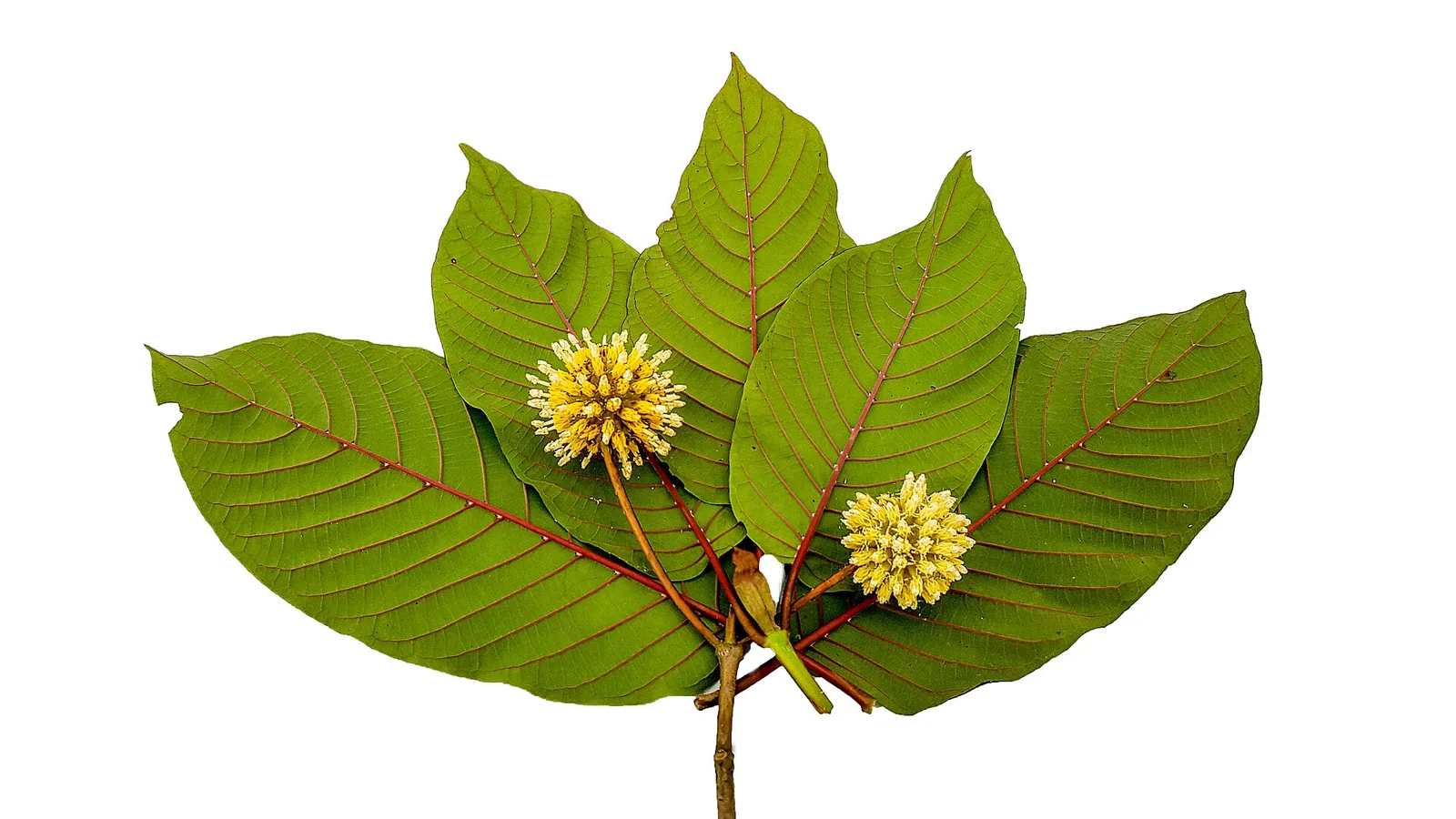
Plate 01 · specimen · deep view
Fresh leaves and flower head · Thehealingeast, 2018 · CC BY-SA 4.0 ↗
Botanical Info
Accepted name
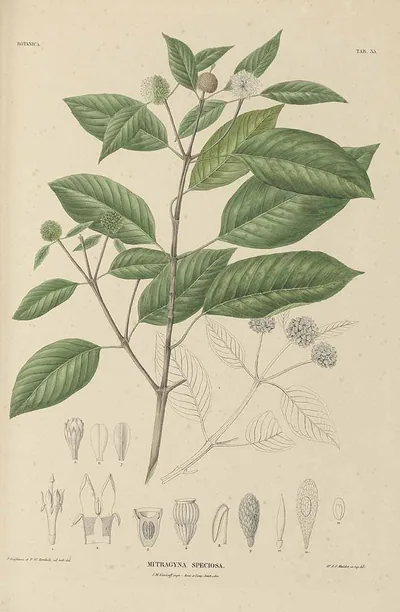
Mitragyna speciosa Korth. Pieter Willem Korthals published the name and its plate in the botanical volume of the Dutch natural-history survey of the East Indies; Plants of the World Online dates valid publication to 1841 (Korthals, 1841; POWO, 2026).
Principal synonyms
Stephegyne speciosa (Korth.) Korth.; Nauclea speciosa (Korth.) Miq.; Nauclea luzoniensis Blanco. The authority Mitragyna speciosa (Korth.) Havil. remains widespread in pharmacological literature, but the current Kew record accepts Korthals’s original combination as M. speciosa Korth. (POWO, 2026).
Family
Rubiaceae, the coffee and madder family; subfamily Cinchonoideae; tribe Naucleeae.
Order
Gentianales.
Geographic range
Native from southern Indochina to New Guinea: Cambodia, Myanmar, Thailand, Vietnam, the Malay Peninsula, Sumatra, Borneo, the Philippines and New Guinea. It is most characteristic of humid lowlands, river margins, swamp forest, seasonally flooded ground and secondary wet forest, and is widely planted in home gardens and commercial plots (Puff et al., 2021; POWO, 2026).
Local names
Thai krathom/kratom (กระท่อม), southern Thai thom, and regional ithang, kakuam; Malay ketum and biak; Indonesian and West Kalimantan purik, ketum and kratom; Philippine mambog. Spellings vary with transliteration, and several vernacular names extend to preparations as well as the tree (Suwanlert, 1975; Singh et al., 2017).
Growth form
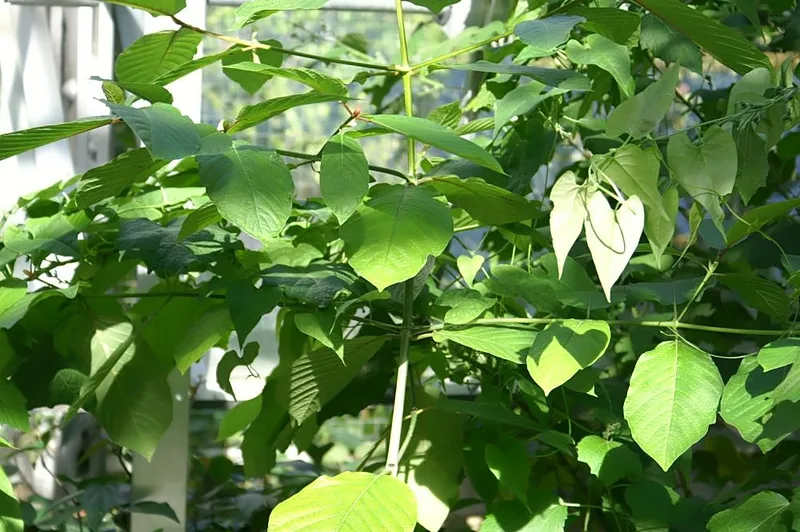
Evergreen or seasonally deciduous canopy tree, commonly 4–25 m high, sometimes taller, with a straight bole that may approach 1 m in diameter. Coppicing and repeated leaf harvest produce lower, many-branched cultivated forms.
Conservation
No current global IUCN assessment for the species was located. Its broad native distribution and extensive cultivation argue against immediate species-wide scarcity, but lowland wet-forest conversion, replacement of wild stands by narrow commercial stock and loss of locally selected lineages can reduce habitat and genetic diversity. Conservation status and biocultural continuity are therefore separate questions (POWO, 2026).
Territories
Territories · places named on this page · deep view
1Southern Thailand · a survey of three villages where chewing the leaf was traditional (Assanangkornchai et al., 2007); the community charter of Tambon Namphu (Charoenratana, Anukul and Aramrattana, 2021)
2Peninsular Malaysia · village use against the fatigue of work, and newer patterns of use (Singh, Narayanan and Vicknasingam, 2017)
1921Mitragynine isolated in European pharmacognosy.Supported · Field, 1921
1943Thailand criminalises kratom.Supported · Charoenratana et al., 2021
Village use is long-standing and locally inherited; claims of “thousands of years” have no dated textual or archaeobotanical sequence.
Morphology and reproduction
The trunk has grey to grey-brown bark, smooth when young and shallowly fissured with age. Leaves are opposite and decussate, simple, glossy, broadly elliptic to ovate, usually about 8–20 cm long, with an acute or shortly acuminate tip. Twelve to seventeen pairs of prominent lateral veins arch toward the margin. Interpetiolar stipules—paired appendages between the leaf stalks—identify the Rubiaceae architecture. Leaves may become reddish before falling during dry or cool periods.
Plate 02 · specimen · deep view
Korthals’s plate 35, Kruidkunde, 1839–1842 · public domain ↗
Numerous small, tubular, yellow to cream flowers are packed into globose terminal or axillary heads. The genus name refers to the mitre-like form of the stigma. Each fertilised flower develops into a small capsule; persistent calyces produce a bristling brown spherical fruiting head containing many minute, flattened, winged seeds. Sexual reproduction is accompanied by ready vegetative propagation from cuttings, a major route for household and commercial selection (Puff et al., 2021).
Taxonomic and commercial boundaries
Accepted species
M. speciosa is one member of an Asian–African genus whose delimitation has changed as several African species were transferred to Hallea or Fleroya. Ethnopharmacological statements about “Mitragyna” may concern other species than kratom.
Regional chemotypes
Geography, season, leaf age, environment and genotype alter alkaloid ratios. Voucher-backed sampling in Thailand finds substantial regional and seasonal variation; chemistry needs an assay, whatever the market label says (Flores-Bocanegra et al., 2020; Sukrong et al., 2023).
Red, green and white “strains”
Vein colour and commercial colour names are trade categories, separate from formal botanical varieties. They can reflect leaf maturity, drying, fermentation, blending and branding, and predict effects poorly across vendors.
Wild versus cultivated diversity
The expansion of clonal and seed-grown plantations creates large biomass without necessarily conserving the genetic range of riverine and swamp-forest populations. Population-genomic coverage across the native range remains limited.
02Chemistry
Kratom leaves contain a complex suite of monoterpenoid indole alkaloids. More than forty alkaloidal constituents have been reported, but abundance varies markedly by accession and preparation. Mitragynine is usually the dominant alkaloid in Southeast Asian leaf; speciogynine, paynantheine and speciociliatine may each make substantial contributions, while 7-hydroxymitragynine is normally a minor or trace constituent and also forms metabolically from mitragynine. Oxindoles, flavonoids, triterpenoids and phenolics enlarge the chemical ensemble. A dried leaf, a standardised extract and a tablet enriched with 7-hydroxymitragynine are pharmacologically distinct (Flores-Bocanegra et al., 2020; Chear et al., 2021; Avula et al., 2026).
Mitragynine
C₂₃H₃₀N₂O₄
Major corynanthe-type monoterpenoid indole alkaloid
Atypical partial μ-opioid agonism · adrenergic and serotonergic actions
7-Hydroxymitragynine · 7-OH
C₂₃H₃₀N₂O₅
Oxidised minor alkaloid and active mitragynine metabolite
μ-opioid partial agonism · high systemic exposure in animal studies
Paynantheine
C₂₃H₂₈N₂O₄
Corynanthe-type indole alkaloid
5-HT₁A activity · smooth-muscle and polyreceptor effects under study
A polyalkaloid pharmacology
Mitragynine and 7-hydroxymitragynine act at μ-opioid receptors, but their structures, efficacy and signalling differ from morphine. In recombinant systems mitragynine has relatively low-efficacy partial agonism at μ receptors and antagonist or very low-efficacy actions at δ and κ receptors; 7-hydroxymitragynine is much more potent. Hepatic CYP3A converts a fraction of mitragynine into 7-hydroxymitragynine, making metabolism part of mitragynine’s analgesic mechanism. Mitragynine pseudoindoxyl can arise through further metabolism or rearrangement and has mixed μ-agonist/δ-antagonist activity (Kruegel et al., 2016; Váradi et al., 2016; Kruegel et al., 2019).
The once-prominent claim that mitragynine’s apparent G-protein bias would by itself explain a safer opioid profile is now treated cautiously: measured bias depends on assay and reference ligand, while respiratory, rewarding and behavioural effects emerge from receptor efficacy, metabolites, exposure and the entire alkaloid matrix. Beyond opioid receptors, corynantheidine-related alkaloids bind α-adrenergic sites; paynantheine, speciogynine and mitragynine show distinct serotonin-receptor profiles, including 5-HT₁A agonist activity in preclinical work. Kratom is thus pharmacologically plural (Obeng et al., 2020; León et al., 2021).
Metabolism, variation and interactions
Human kinetics
Encapsulated dried leaf and concentrated extracts show median mitragynine peak plasma times around one to under two hours, but elimination can be prolonged and accumulation occurs with repeated daily administration. Preparation, food, dose, metabolic genotype and co-medication change exposure (Huestis et al., 2024; 2026).
Enzyme mediation
CYP3A is central to mitragynine clearance and 7-hydroxylation; CYP2D6 and other enzymes contribute to additional metabolites. Kratom alkaloids can also inhibit CYP2D6 and intestinal CYP3A, giving a mechanistic basis for some herb–drug interactions (Kamble et al., 2019; Tanna et al., 2023).
Product divergence
Analyses published in 2026 found commercial products with elevated 7-hydroxymitragynine inconsistent with ordinary leaf chemistry. Oxidation during processing and deliberate enrichment can move a product far beyond the Southeast Asian botanical baseline (Avula et al., 2026).
Entourage attribution
Whole-leaf effects are still to be allocated quantitatively among mitragynine, its stereoisomers, 7-hydroxymitragynine, oxindoles and non-alkaloidal constituents. Controlled comparisons of chemically complete, voucher-linked preparations remain scarce.
03Tradition, ritual & cultural use
Oldest evidenced or proposed human use
Indigenous antiquity
Undated oral practiceThai and Malay sources describe leaf use as inherited village knowledge whose beginning could not be dated. This supports pre-colonial or early modern antiquity; a prehistoric chronology is unestablished. No securely identified archaeobotanical kratom assemblage presently dates consumption (Suwanlert, 1975; Singh et al., 2017).
Botanical documentation
1841Korthals’s East Indies botanical work supplied the first valid scientific description and plate. European pharmacognosy subsequently isolated mitragynine in the 1920s; these events document colonial science, long after local use began (Korthals, 1841; Field, 1921).
Ethnographic record
Twentieth century Surveys and clinical observations in Thailand described fresh-leaf chewing among market gardeners, peasants and labourers, folk treatment of diarrhoea and use in place of opium. Later Thai and Malaysian studies documented work endurance, pain modulation, sociability and management of opiate withdrawal (Suwanlert, 1975; Vicknasingam et al., 2010; Saingam et al., 2013).
Chronological limit
Open Assertions of “thousands of years” recur in commerce and advocacy, without a dated textual or archaeobotanical sequence. The appropriate historical formulation is long-standing and locally inherited, with secure written evidence from the nineteenth and twentieth centuries.
Peoples, territories and social worlds
Southern Thai villages
In three villages of southern Thailand where chewing the leaf was traditional, a survey of 149 long-term daily users, 168 occasional users and 116 non-users found users stressing its advantages — endurance at work, medicine, and a substitute for harder substances — rather than its harms (Assanangkornchai et al., 2007).
Work, company and temple
Across rural Southeast Asia kratom has long served as a remedy for common ailments, against the fatigue of hard manual work, as a drink in social gatherings among men and in village religious functions. Two newer patterns have appeared: easing opioid withdrawal in rural areas, and adulterated kratom "cocktails" drunk by young people in towns (Singh, Narayanan and Vicknasingam, 2017).
Tambon Namphu
Local communities in southern Thailand regard kratom as a traditional remedy rather than an illicit drug, and the state's criminalisation of it in 1943 created lasting tension. In the rural sub-district of Tambon Namphu, participatory action research produced a community charter to manage it, and most of those surveyed supported decriminalisation (Charoenratana, Anukul and Aramrattana, 2021).
Traditional preparation and practice
Fresh leaf
The most characteristic Thai practice is chewing a fresh leaf after removing the tough midrib, followed by water or another drink. Leaves may be taken intermittently across a working day. The sequence belongs to habitual bodily technique and social timing (Saingam et al., 2013).
Decoction
Fresh or dried leaves are simmered as a bitter tea in Thailand and Malaysia. Household and communal decoctions permit sharing and storage; sweetness or other flavourings may be added. Powder-filled capsules and concentrated shots are primarily modern commodity formats.
Ethnomedicine
Reported uses include fatigue, muscular and joint pain, diarrhoea, cough, fever, stomach complaints, diabetes, hypertension and opiate withdrawal. These are records of therapeutic practice and local efficacy claims; the clinical evidence differs by indication (Suwanlert, 1975; Vicknasingam et al., 2010).
Hospitality
Kratom may be offered with tea or coffee to guests, and asking a neighbour for leaves is described as ordinary reciprocity in southern Thai villages. Sharing ties the plant to household reputation and neighbourliness (Charoenratana et al., 2021).
4×100 mixtures
From the late twentieth century, some southern Thai youth cultures combined kratom decoction, sweet caffeinated drinks and cough medicines or other ingredients. “4×100” became a policing and media category. Its mixed pharmacology and generational style distinguish it from fresh-leaf work practice (Singh et al., 2017).
Shamanism, healing and the problem of category
The ethnographic centre of kratom is everyday life. Healing is usually domestic, lay and pragmatic: a plant known through bodily repetition, older users, neighbours and family transmission. Its authority lies in what it permits a person to do—work, travel, endure pain, withdraw from opium, receive a guest—more than in visions interpreted by an officiant. Where leaves enter small religious ceremonies or promises to a deity, they do so within broader Buddhist, Muslim and local spirit worlds (Singh et al., 2017).
Gender is important. Thai and Malaysian studies have overwhelmingly recruited men, and female use has often been described as rare or stigmatised. This pattern reflects labour organisation, public sociability, drug law and research sampling as well as pharmacology. Women may cultivate, prepare, serve and trade leaves without appearing in user-centred surveys. The archive therefore records a masculine moral economy more clearly than the total gendered life of the plant.
“lively, relaxed, not stressed, energized, pumped, active and happy to work”
Experiential item derived from southern Thai user research in Saingam et al. (2014, p. 280)
04Cosmology & key terms
Mythic record and its limits
No securely documented, pan-Southeast Asian mythic cycle centred on M. speciosa has been published. That gap is left open here, and the plant is culturally significant all the same. Thai accounts describe leaves promised or offered to deities and ancestors in some localities, and small religious observances occur within village life; the evidence is geographically particular and less extensive than the record for work, medicine and hospitality (Saingam et al., 2013; Singh et al., 2017).
The more richly evidenced cosmology is practical and moral. The body is understood through heat, chill, energy, pain, appetite, sleep and the ability to meet obligations. Kratom can index disciplined masculinity, industriousness and household provision when leaf use remains measured and socially integrated. The same plant can index dependency, youth disorder or criminality when attached to secret mixtures, theft, idleness or police categories. These are contested classifications produced among users, families, village leaders, clinicians, monks, Muslim communities and the state (Saingam et al., 2013; Charoenratana et al., 2021).
Work, reciprocity and moral personhood
Endurance
A valued user is repeatedly described as capable of sustained labour without appearing drunk or disruptive. Energy, analgesia and composure become evidence of character because they maintain obligations to land, employer and household.
Hospitality
Offering leaves or tea places kratom beside coffee, tobacco and betel-like forms of everyday sociability. The home-yard tree becomes a small infrastructure of welcome, exchange and neighbourly access.
Offering
Some Thai accounts record leaves promised to a god when requesting help with lost objects or desired outcomes, and offered after success. Such practice indicates value and reciprocity, at a local scale.
Drug identity
The category “narcotic” was imposed through Thai and Malaysian law, clinical addiction discourse and international drug-policy vocabularies. Community studies show that villagers may instead classify fresh leaf as food-like tonic, medicine or ordinary custom while treating mixed preparations differently.
Material culture and transformed objects
Household tree
A mature tree beside house, orchard, canal or rubber plot holds practical memory: named ownership, pruning history, preferred leaf, shade and a reliable source for neighbours. Prohibition made such trees targets of felling and concealment; decriminalisation returned them to visible domestic space.
Leaf bundle
Fresh glossy leaves, selected and folded or carried to work, preserve botanical recognisability and interpersonal provenance. Their perishability keeps circulation local.
Kettle and bottle
Decoction pots, cups, recycled bottles and shared serving vessels transform leaves into a mobile social drink. In prohibition contexts the same objects could become evidence of illicit preparation.
Powder and capsule
Drying and milling stabilise kratom for export but erase leaf form, locality and many sensory cues. Green powder enters supplement jars, capsules and online “strain” taxonomies generated by global marketing.
Extract and 7-OH tablet
Shots, gummies, pressed tablets and purified or semi-synthetic alkaloid products embody industrial concentration. Their packaging invokes wellness, energy or opioid substitution while their chemistry may bear little resemblance to fresh leaf.
Colonial and regulatory remaking
Korthals’s plate translated an Indigenous and Malay-world tree into a taxonomic specimen within the Dutch East Indies. In Thailand, the 1943 Kratom Act prohibited planting and required trees to be cut. Fiscal history matters: kratom use competed with revenue from the state opium monopoly, so criminalisation was about revenue as well as pharmacological harm. Later narcotics law consolidated the plant as a controlled drug. Felling, police surveillance and the opposition between respectable leaf chewing and suspect youth mixtures became part of kratom’s material and symbolic life. The 2021–2022 Thai reforms reversed the legal category while retaining rules for sale, advertising and restricted purchasers.
05Visionary phenomenology
Onset
Fresh-leaf chewing and tea can become perceptible within roughly 10–30 minutes; swallowed dried powder commonly begins within about 30–60 minutes. Human pharmacokinetic studies place median mitragynine plasma peaks around one to under two hours, though felt onset and plasma maximum differ.
Duration
Principal subjective effects are often described over approximately 3–6 hours, with residual analgesia, calm or sleepiness extending longer. Repeated leaf chewing across a workday produces a sustained plateau; mitragynine itself has a much longer terminal elimination phase.
Intensity
Usually mild to moderate in traditional fresh-leaf use, sufficient to alter fatigue, pain and sociability while leaving coordinated labour possible. Extracts and 7-OH-enriched products can generate a more strongly opioid-like state, and say little about the intensity of village leaf practice.
Activating field
Alertness, physical stamina, willingness to begin or continue repetitive work, talkativeness, brightened mood, reduced hunger and a narrowing of attention toward the task. Users may describe being energised and relaxed at once.
Calming field
Warmth, analgesia, bodily ease, miosis, emotional quiet, slowed movement, contentment, drowsiness and dreamlike reverie become more prominent with greater exposure or after exertion. Nausea, sweating, dizziness, itching or dysphoria may interrupt this field.
Visionary salience
Low. Complex imagery, entity encounters and radical perceptual transformation are rare in documented traditional use. Hallucination and delirium appear chiefly in exceptional intoxication, mixed-drug cases or clinical reports.
A phenomenology of endurance
Kratom complicates the category “visionary plant” because its culturally salient alterations often concern capacity. Fatigue recedes; painful joints and muscles move into the background; repetitive labour acquires momentum; conversation remains easy; appetite and worry can be deferred. The perceptual world may appear largely ordinary while the relationship between intention, effort and bodily resistance changes. This is a genuine psychoactive phenomenology, but its unit of analysis is the working body in a social day (Saingam et al., 2013; Singh et al., 2017).
The widely repeated “stimulant at low dose, sedative at high dose” formula is a useful first approximation. Alkaloid profile, preparation, tolerance, food, metabolism, expectation and activity all matter. A labourer can experience calm and energy together; warmth and analgesia may facilitate work; repeated use may make withdrawal relief feel like stimulation. Qualitative accounts therefore describe overlapping activation and opioid-like comfort.
Regularity, dependence and withdrawal
Tolerance
Daily users may increase leaf frequency or feel unable to work fully with less than usual. The social usefulness of kratom and physiological adaptation can reinforce one another (Saingam et al., 2014).
Withdrawal
Reported features include craving, fatigue, irritability, restlessness, insomnia, muscular and joint pain, runny nose, diarrhoea and chills. Severity varies; dependence is well documented without implying that every regular user meets a disorder threshold (Singh et al., 2014).
Rain panic
Southern Thai users described a culturally salient cluster of chill, trembling, bone or joint pain and urgent avoidance of rain. It links withdrawal-like bodily sensitivity to monsoon work and local explanatory language (Saingam et al., 2013).
Long-term cognition
Several Malaysian studies found broadly comparable neuropsychological performance between regular users and controls; observational designs leave open the effects of lifetime use, product variation and concentrated modern preparations.
“it helps them to overcome the burden of their hard work and meager existence”
Suwanlert (1975, p. 21), summarising Thai labourers’ stated reason for leaf use within an early psychiatric study
06Contemporary status
Conservation and biocultural continuity
Kratom is now planted on a scale that makes simple species scarcity an inadequate measure. In Thailand, legal home cultivation can sustain old household trees and local exchange. In West Kalimantan, plantation expansion creates income but can favour a narrow set of fast-growing stocks and alter riverine, peatland and mixed-agroforest ecologies. Wild populations across Cambodia, Myanmar, Vietnam, the Philippines and New Guinea remain less chemically and genetically studied than commercial Thai and Indonesian material. Conservation priorities include wet lowland habitat, population-level genetic diversity, locally preferred trees and the knowledge that distinguishes leaf use from an anonymous export powder.
Local and global economies
Thailand
Decriminalisation opened visible fresh-leaf stalls, bottled drinks, foods, cosmetics, community enterprises and licensed export. The legal market reframes a formerly illicit village plant as agricultural and herbal commodity while sale and advertising remain regulated.
Indonesia
West Kalimantan is a principal source of dried leaf powder for the United States and other markets. Smallholders depend on volatile export prices, intermediary mills and regulatory decisions. Minister of Trade Regulations 20 and 21 of 2024 restricted exports to specified processed forms, quality standards and licensed channels, keeping trade open within them; revisions continued in 2025 (Ministry of Trade of Indonesia, 2024).
Malaysia
A long-standing local ketum economy persists under Poisons Act control. Informal leaf and decoction circulation coexists with enforcement, public-health debate and proposals for regulated cultivation or pharmaceutical research.
United States
Online vendors, smoke shops, “tea bars”, capsules, powders, shots and tablets have produced the largest visible consumer market outside Southeast Asia. Industry advocacy has promoted state consumer-protection acts, age limits, testing and labelling while regulators contest kratom’s lawful status as food or supplement.
Commodity differentiation
Botanical leaf powder, mitragynine-rich extracts and enhanced 7-OH products now occupy different price, potency and regulatory strata. Calling all three “kratom” obscures the economic process by which oxidation, extraction and branding create new pharmacological commodities.
Law and regulatory authority · status at 7 August 2026
International
Kratom, mitragynine and 7-hydroxymitragynine are not scheduled under the UN drug conventions. The WHO Expert Committee on Drug Dependence conducted a pre-review in 2021 and did not recommend a critical review, citing insufficient evidence for international control while retaining surveillance (WHO, 2021; 2022).
Thailand
Kratom was removed from the Narcotics Code with effect from 24 August 2021. The Kratom Plant Act B.E. 2565 (2022) governs sale, import/export, advertising and restricted purchasers while permitting cultivation and possession (Kingdom of Thailand, 2022).
Malaysia
Mitragynine is listed as a psychotropic substance under the Poisons (Psychotropic Substances) Regulations 1989 and controlled through section 30 of the Poisons Act 1952. Unauthorised possession, use, processing, sale, supply, import and export of mitragynine-containing material are offences.
Indonesia
Kratom’s regulation varies. Export is governed through trade rules introduced in 2024 and amended in 2025: raw whole leaves and certain forms are restricted, while qualifying crumbs or powder meeting contamination, particle-size and licensing standards may be exported.
United States
Mitragynine and ordinary botanical kratom were not federally scheduled on this date; several states and localities prohibit them and others regulate age, testing or labels. FDA states that kratom is not lawfully marketed as a drug, dietary supplement or conventional-food additive. DEA published July 2026 notices of intent to place 7-OH above defined thresholds, mitragynine pseudoindoxyl, MGM-15 and MGM-16 temporarily in Schedule I; no final temporary order had appeared in the Federal Register by 7 August 2026 (FDA, 2025; DEA, 2026).
United Kingdom
Kratom is not named in the Misuse of Drugs Act schedules, but production, supply, possession with intent to supply and import/export for human psychoactive use fall within the Psychoactive Substances Act 2016. Simple possession is generally not an offence outside custodial institutions.
Australia and New Zealand
Australia places M. speciosa and mitragynine in Schedule 9 of the Poisons Standard. In New Zealand mitragynine-containing kratom is treated as a prescription medicine, while unapproved therapeutic supply and import are restricted. Jurisdiction and product form remain decisive.
Patents and the partition of the plant
Patent claims increasingly isolate functions from the ethnobotanical whole: opioid-receptor-modulating mitragynine analogues, deuterated derivatives, pseudoindoxyls, purified compositions, extraction and delivery systems, and methods aimed at pain, mood or substance-use disorders. WO2017165738A1 claims mitragynine-related opioid modulators; WO2020160280A1 covers deuterated mitragynine analogues; WO2024171204A1 concerns mitragynine purification; and US20230364172A1 addresses oral and buccal delivery. These patents control particular molecules, processes, formulations and therapeutic uses; M. speciosa and Southeast Asian traditional knowledge lie outside them. The legal distinction is clear while the benefit-sharing question remains open.
Current research frontier
The largest human study
A randomised, double-blind, placebo-controlled study of encapsulated dried leaf gave the fullest human pharmacokinetic data yet: mitragynine, a partial μ-opioid agonist that does not activate the β-arrestin-2 pathway associated with respiratory depression, reached steady state in about a week and has a long elimination half-life (Huestis et al., 2024).
Abuse potential
In 116 healthy adults new to kratom, given leaf powder or placebo once or for fifteen days, subjective drug effects rose with dose, with significant differences from placebo concentrated at the highest dose (Coe et al., 2026).
Beyond the leaf
Hundreds of consumer products now carry semi-synthetic 7-hydroxymitragynine and mitragynine pseudoindoxyl, far more potent than the trace amounts in the leaf. Testing found labels inconsistent with contents and more than 98 per cent of 7-OH-labelled products of semi-synthetic origin; the US FDA has recommended placing 7-OH in Schedule I (Avula et al., 2026).
Open questions on this entry
Safety and law
07Cross-correlations
Nicotiana rustica
Species monograph: another labour-linked, socially shared plant stimulant whose ritual and toxicological histories differ sharply from kratom. ETHNOBOTANICAL COMPARATOR
Erythroxylum coca
Species monograph: Andean leaf-chewing traditions organised around work, reciprocity and endurance; a useful comparison in colonial prohibition and commodity transformation. LABOUR-PHENOMENOLOGY COMPARATOR
Tabernanthe iboga
Species monograph: an African indole-alkaloid plant with initiatory and visionary institutions absent from the documented kratom complex. INDOLE-ALKALOID CONTRAST
Peganum harmala
Species monograph: an Old World household medicine, protective fumigant and harmala-alkaloid source. Shared “traditional medicine” labels conceal distinct chemistry and social practice. HOUSEHOLD-MEDICINE COMPARATOR
Papaver somniferum
Species monograph: the opium poppy, source of morphine, the archive’s other plant whose alkaloids act at μ-opioid receptors; the two differ in structure, efficacy and signalling. OPIOID-RECEPTOR COMPARATOR
Clinical Psychedelic Ritual Complex
Contemporary clinical infrastructure for psychedelic-assisted therapy. Kratom’s emerging trials concern botanical pharmacology, pain and dependence. CLINICAL CONTRAST
Mitragyna parvifolia
South Asian congener used in regional medicine and timber economies; pharmacological statements about the genus require species-level vouchers. BOTANICAL CONGENER
08Bibliography
47 sources in 6 threads · 40 with a working locator · Harvard (Cite Them Right) · status and kind are recorded per source, not assumed
How to read the labels on each source
Source type
What kind of work it is: journal article, book, legislation, patent application, database record and so on. A word after the dot (ethnography, protologue, primary source) keeps the genre the entry was first filed under. “Unclassified” means the citation does not say enough to tell.
Peer review
Recorded for each work separately, and only where it has been confirmed for that work. It is never inferred from a DOI, a publisher or a journal, since journals also publish editorials, letters and commentaries. Where it has not been confirmed, the entry records it as not established. It does not apply to legislation, court decisions, treaties, patents, datasets, database and collection records, historical texts, films, talks, press releases or web pages.
Check
What was checked when the entry was added. DOI checked: the DOI’s registry record (Crossref) matched the citation’s title, first author and year. Verified: the record itself was opened and matched the citation: a library catalogue record for a book, or the page itself for a database entry, law, patent or archive document. “Verified (abstract)” and “(summary)” mean only the abstract or a summary was read. Located: a record was found but not fully matched. Bibliographic record and Stable record (in essays): a catalogue or stable web record exists; what was checked against it is not recorded. Unverified: no check is recorded. No locator found: a search found no record. Secondary: read through another source.
What the labels do not say
None of them means the source supports a particular sentence. Where a sentence is graded, its evidence note names its sources and whether each supports it, disputes it or gives context. Dates and reviewers of checks are not recorded for each entry; the version note at the foot of a graded page dates its last review.
Taxonomy, botany & variation
GBIF.org (2026) ‘Occurrence search: M. speciosa, records with coordinates’, Global Biodiversity Information Facility, accessed 12 October 2026.
VerifiedDatasetPeer review not applicableOpen record ↗cited 1× in this record
Korthals, P.W. (1841) ‘Mitragyna speciosa’, Verhandelingen over de natuurlijke geschiedenis der Nederlandsche overzeesche bezittingen: Botanie, plate 35. Leiden: in commission with S. and J. Luchtmans and C.C. van der Hoek.
No locator foundHistorical text · protologuePeer review not applicable
Puff, C., Chayamarit, K., Chamchumroon, V. and Esser, H.-J. (2021) Flora of Thailand, 15(1): Rubiaceae. Bangkok: Forest Herbarium, Department of National Parks, Wildlife and Plant Conservation.
No locator foundDatabase recordPeer review not applicablecited 2× in this record
Plants of the World Online (POWO) (2026) ‘Mitragyna speciosa Korth.’ Royal Botanic Gardens, Kew. Available at: powo.science.kew.org (Accessed: 7 August 2026).
UnverifiedDatabase recordPeer review not applicableOpen record ↗cited 4× in this record
Sukrong, S., Zhu, H., Rungruang, S. et al. (2023) ‘Seasonal and geographic variation in alkaloid content of kratom (Mitragyna speciosa) from Thailand’, Plants, 12(4), 949. Available at: https://doi.org/10.3390/plants12040949.
DOI checkedJournal articlePeer review not establishedOpen record ↗cited 1× in this record
Chemistry, receptor pharmacology & metabolism
Field, E. (1921) ‘Mitragynine and mitraversine, two new alkaloids from species of Mitragyna’, Journal of the Chemical Society, Transactions, 119, pp. 887–891.
DOI checkedJournal articlePeer review not establishedOpen record ↗cited 1× in this record
Kruegel, A.C., Gassaway, M.M., Kapoor, A. et al. (2016) ‘Synthetic and receptor signaling explorations of the Mitragyna alkaloids: mitragynine as an atypical molecular framework for opioid receptor modulators’, Journal of the American Chemical Society, 138(21), pp. 6754–6764. Available at: https://doi.org/10.1021/jacs.6b00360.
DOI checkedJournal articlePeer review not establishedOpen record ↗cited 1× in this record
Váradi, A., Marrone, G.F., Palmer, T.C. et al. (2016) ‘Mitragynine/corynantheidine pseudoindoxyls as opioid analgesics with mu agonism and delta antagonism, which do not recruit β-arrestin-2’, Journal of Medicinal Chemistry, 59(18), pp. 8381–8397. Available at: https://doi.org/10.1021/acs.jmedchem.6b00748.
DOI checkedJournal articlePeer review not establishedOpen record ↗cited 1× in this record
Kruegel, A.C. and Grundmann, O. (2018) ‘The medicinal chemistry and neuropharmacology of kratom: a preliminary discussion of a promising medicinal plant and analysis of its potential for abuse’, Neuropharmacology, 134, pp. 108–120. Available at: https://doi.org/10.1016/j.neuropharm.2017.08.026.
DOI checkedJournal articlePeer review not establishedOpen record ↗
Kamble, S.H., Sharma, A., King, T.I. et al. (2019) ‘Metabolite profiling and identification of enzymes responsible for the metabolism of mitragynine, the major alkaloid of Mitragyna speciosa (kratom)’, Xenobiotica, 49(11), pp. 1279–1288. Available at: https://doi.org/10.1080/00498254.2018.1554019.
DOI checkedJournal articlePeer review not establishedOpen record ↗cited 1× in this record
Kruegel, A.C., Uprety, R., Grinnell, S.G. et al. (2019) ‘7-Hydroxymitragynine is an active metabolite of mitragynine and a key mediator of its analgesic effects’, ACS Central Science, 5(6), pp. 992–1001. Available at: https://doi.org/10.1021/acscentsci.9b00141.
DOI checkedJournal articlePeer review not establishedOpen record ↗cited 1× in this record
Flores-Bocanegra, L., Raja, H.A., Graf, T.N. et al. (2020) ‘The chemistry of kratom [Mitragyna speciosa]: updated characterization data and methods to elucidate indole and oxindole alkaloids’, Journal of Natural Products, 83(7), pp. 2165–2177. Available at: https://doi.org/10.1021/acs.jnatprod.0c00257.
DOI checkedJournal articlePeer review not establishedOpen record ↗cited 2× in this record
Obeng, S., Kamble, S.H., Reeves, M.E. et al. (2020) ‘Investigation of the adrenergic and opioid binding affinities, metabolic stability, plasma protein binding properties, and functional effects of selected indole-based kratom alkaloids’, Journal of Medicinal Chemistry, 63(1), pp. 433–439. Available at: https://doi.org/10.1021/acs.jmedchem.9b01583.
DOI checkedJournal articlePeer review not establishedOpen record ↗cited 1× in this record
Chear, N.J.-Y., León, F., Sharma, A. et al. (2021) ‘Exploring the chemistry of alkaloids from Malaysian Mitragyna speciosa (kratom) and the role of oxindoles on human opioid receptors’, Journal of Natural Products, 84(4), pp. 1034–1043. Available at: https://doi.org/10.1021/acs.jnatprod.0c01055.
DOI checkedJournal articlePeer review not establishedOpen record ↗cited 1× in this record
León, F., Obeng, S., Mottinelli, M. et al. (2021) ‘Activity of Mitragyna speciosa (“kratom”) alkaloids at serotonin receptors’, Journal of Medicinal Chemistry, 64(18), pp. 13510–13523. Available at: https://doi.org/10.1021/acs.jmedchem.1c00726.
DOI checkedJournal articlePeer review not establishedOpen record ↗cited 1× in this record
Karunakaran, T., Ngew, K.Z., Zailan, A.A.D. et al. (2022) ‘The chemical and pharmacological properties of mitragynine and its diastereomers: an insight review’, Frontiers in Pharmacology, 13, 805986. Available at: https://doi.org/10.3389/fphar.2022.805986.
DOI checkedJournal articlePeer review not establishedOpen record ↗
Avula, B., Sagi, S., Wang, Y.-H. et al. (2026) ‘Quantitative analysis of 7-hydroxymitragynine in commercial kratom products and its stability under chemical and physiological conditions’, Phytochemistry, 247, 114871. Available at: https://doi.org/10.1016/j.phytochem.2026.114871.
DOI checkedJournal articlePeer review not establishedOpen record ↗cited 3× in this record
History, ethnobotany & social worlds
Suwanlert, S. (1975) ‘A study of kratom eaters in Thailand’, Bulletin on Narcotics, 27(3), pp. 21–27. Available at: unodc.org.
No locator foundJournal articlePeer review not establishedOpen record ↗cited 5× in this record
Assanangkornchai, S., Muekthong, A., Sam-Angsri, N. and Pattanasattayawong, U. (2007) ‘The use of mitragynine speciosa (“krathom”), an addictive plant, in Thailand’, Substance Use & Misuse, 42(14), pp. 2145–2157. Available at: https://doi.org/10.1080/10826080701205869.
DOI checkedJournal articlePeer review not establishedOpen record ↗cited 2× in this record
Vicknasingam, B., Narayanan, S., Beng, G.T. and Mansor, S.M. (2010) ‘The informal use of ketum (Mitragyna speciosa) for opioid withdrawal in the northern states of peninsular Malaysia and implications for drug substitution therapy research’, International Journal of Drug Policy, 21(4), pp. 283–288. Available at: https://doi.org/10.1016/j.drugpo.2009.12.003.
DOI checkedJournal articlePeer review not establishedOpen record ↗cited 2× in this record
Ahmad, K. and Aziz, Z. (2012) ‘Mitragyna speciosa use in the northern states of Malaysia: a cross-sectional study’, Journal of Ethnopharmacology, 141(1), pp. 446–450. Available at: https://doi.org/10.1016/j.jep.2012.03.009.
DOI checkedJournal articlePeer review not establishedOpen record ↗
Saingam, D., Assanangkornchai, S., Geater, A.F. and Balthip, Q. (2013) ‘Pattern and consequences of krathom (Mitragyna speciosa Korth.) use among male villagers in southern Thailand: a qualitative study’, International Journal of Drug Policy, 24(4), pp. 351–358. Available at: https://doi.org/10.1016/j.drugpo.2012.09.004.
DOI checkedJournal articlePeer review not establishedOpen record ↗cited 6× in this record
Saingam, D., Assanangkornchai, S., Geater, A.F. and Lerkiatbundit, S. (2014) ‘Validation of Krathom (Mitragyna speciosa Korth.) Dependence Scale (KDS): a dependence screen for internationally emerging psychoactive substance’, Substance Abuse, 35(3), pp. 276–283. Available at: https://doi.org/10.1080/08897077.2014.924464.
DOI checkedJournal articlePeer review not establishedOpen record ↗cited 1× in this record
Singh, D., Narayanan, S. and Vicknasingam, B. (2017) ‘Changing trends in the use of kratom (Mitragyna speciosa) in Southeast Asia’, Human Psychopharmacology, 32(3), e2582. Available at: https://doi.org/10.1002/hup.2582.
DOI checkedJournal articlePeer review not establishedOpen record ↗cited 9× in this record
Charoenratana, S., Anukul, C. and Aramrattana, A. (2021) ‘Attitudes towards kratom use, decriminalization and the development of a community-based kratom control mechanism in Southern Thailand’, International Journal of Drug Policy, 95, 103197. Available at: https://doi.org/10.1016/j.drugpo.2021.103197.
DOI checkedJournal articlePeer review not establishedOpen record ↗cited 4× in this record
Phenomenology, dependence & human pharmacology
Singh, D., Müller, C.P. and Vicknasingam, B.K. (2014) ‘Kratom (Mitragyna speciosa) dependence, withdrawal symptoms and craving in regular users’, Drug and Alcohol Dependence, 139, pp. 132–137. Available at: https://doi.org/10.1016/j.drugalcdep.2014.03.017.
DOI checkedJournal articlePeer review not establishedOpen record ↗cited 1× in this record
Trakulsrichai, S., Sathirakul, K., Auparakkitanon, S. et al. (2015) ‘Pharmacokinetics of mitragynine in man’, Drug Design, Development and Therapy, 9, pp. 2421–2429. Available at: https://doi.org/10.2147/DDDT.S79658.
DOI checkedJournal articlePeer review not establishedOpen record ↗
Huestis, M.A., Brett, M.A., Bothmer, J. et al. (2024) ‘Human mitragynine and 7-hydroxymitragynine pharmacokinetics after single and multiple daily doses of oral encapsulated dried kratom leaf powder’, Molecules, 29(5), 984. Available at: https://doi.org/10.3390/molecules29050984.
DOI checkedJournal articlePeer review not establishedOpen record ↗cited 2× in this record
Reissig, C.J., Chen, L., Nallani, S.C. et al. (2026) ‘A pilot, dose-finding, pharmacodynamic and pharmacokinetic study of orally administered botanical kratom’, Journal of Clinical Psychopharmacology, 46(4), pp. 386–398. Available at: https://doi.org/10.1097/JCP.0000000000002158.
DOI checkedJournal articlePeer review not establishedOpen record ↗
Coe, M., Huestis, M.A., Wang, D.W. et al. (2026) ‘Assessment of abuse potential-related effects of oral dried kratom leaf powder in healthy normal participants following single and multiple daily doses’, Drug Testing and Analysis, 18(7), pp. 922–932. Available at: https://doi.org/10.1002/dta.70089.
DOI checkedJournal articlePeer review not establishedOpen record ↗cited 1× in this record
Huestis, M.A., Brett, M.A., Bothmer, J. et al. (2026) ‘Mitragynine and 7-hydroxymitragynine plasma pharmacokinetics in humans after single and 15 multiple oral kratom extract doses’, Journal of Analytical Toxicology, 50(6), bkag042. Available at: https://doi.org/10.1093/jat/bkag042.
DOI checkedJournal articlePeer review not establishedOpen record ↗
Law, political economy & patents
World Health Organization (WHO) (2021) Kratom, mitragynine, 7-hydroxymitragynine: pre-review report. 44th Expert Committee on Drug Dependence. Available at: who.int.
UnverifiedInstitutional report or publicationPeer review not establishedOpen record ↗cited 1× in this record
World Health Organization (WHO) (2022) WHO Expert Committee on Drug Dependence: forty-fourth report. WHO Technical Report Series 1037. Geneva: WHO.
VerifiedBookPeer review not establishedOpen record ↗
Kingdom of Thailand (2022) Kratom Plant Act, B.E. 2565 (2022). Government Gazette, 139. Unofficial English translation available at: moleg.go.kr.
UnverifiedLegislation or regulationPeer review not applicableOpen record ↗
Ministry of Trade of Indonesia (2024) Regulation No. 20 of 2024 concerning amendments to prohibited export goods and Regulation No. 21 of 2024 concerning kratom export policy. Jakarta: Republic of Indonesia.
UnverifiedLegislation or regulationPeer review not applicable
U.S. Food and Drug Administration (FDA) (2025) ‘FDA and kratom’. Updated 2 December 2025. Available at: fda.gov (Accessed: 7 August 2026).
UnverifiedInstitutional report or publicationPeer review not establishedOpen record ↗
Drug Enforcement Administration (DEA) (2026) ‘Schedules of controlled substance: temporary placement of 7-hydroxymitragynine above a specified threshold in Schedule I’, Federal Register, 91, pp. 40917–40924. Available at: federalregister.gov.
UnverifiedJournal articlePeer review not establishedOpen record ↗cited 1× in this record
UK Government (2016) Psychoactive Substances Act 2016. London: The Stationery Office. Available at: legislation.gov.uk.
UnverifiedLegislation or regulationPeer review not applicableOpen record ↗
Malaysia (1952, as amended) Poisons Act 1952 (Act 366) and Poisons (Psychotropic Substances) Regulations 1989. Kuala Lumpur: Government of Malaysia.
UnverifiedLegislation or regulationPeer review not applicable
Commonwealth of Australia (2026) Therapeutic Goods (Poisons Standard—June 2026) Instrument 2026, F2026L00633. Available at: legislation.gov.au.
UnverifiedLegislation or regulationPeer review not applicableOpen record ↗
Medsafe (2021) ‘Kratom—not such a nice cup of tea’, Prescriber Update, 42(4). Available at: medsafe.govt.nz (Accessed: 7 August 2026).
UnverifiedLegislation or regulationPeer review not applicableOpen record ↗
WO2017165738A1 (2017) ‘Mitragynine alkaloids as opioid receptor modulators’. International patent application. Available at: Google Patents.
UnverifiedPatent applicationPeer review not applicableOpen record ↗
WO2020160280A1 (2020) ‘Deuterated mitragynine analogs as safer opioid analgesics’. International patent application. Available at: Google Patents.
UnverifiedPatent applicationPeer review not applicableOpen record ↗
WO2024171204A1 (2024) ‘Process for purification of mitragynine’. International patent application. Available at: Google Patents.
UnverifiedPatent applicationPeer review not applicableOpen record ↗
Nomenclatural and image records
Stang, D.J. (2005) ‘Mitragyna speciosa’, photograph at the United States Botanic Garden, via Wikimedia Commons. CC BY-SA 4.0.
UnverifiedImage or photographPeer review not applicable
Thehealingeast (2018) ‘Kratom leaves’, photograph via Wikimedia Commons. CC BY-SA 4.0.
UnverifiedImage or photographPeer review not applicable
Korthals, P.W. (1839–1842) ‘Mitragyna speciosa’, botanical plate 35 in Kruidkunde, via Wikimedia Commons. Public domain.
UnverifiedHistorical textPeer review not applicable