1.0: evidence grades, abstract, Deep Time timeline and safety box added.
Grades marked automatically follow the editor’s existing evidence labels and explicit wording. Contested, editorial, safety-critical and upgraded grades are reviewed by the editor. Automatic grades are audited by sample.
Mirante, D. (ed.) (2026) Erythroxylum coca. Entheocene, version 1.0. Available at: https://entheocene.com/plant-erythroxylum-coca.html (Accessed: 15 October 2026).
DOI: not yet minted.
Introduction
Coca, Erythroxylum coca, is a cultivated shrub of western tropical South America, with an Andean variety, var. coca, and an Amazonian one, var. ipadu; two further cultivated cocas belong to E. novogranatense. It has been chewed with lime for at least eight thousand years: leaves and calcite lie on house floors of that age in the Nanchoc Valley of northern Peru. Chewed leaf releases cocaine slowly, a lower and longer exposure than purified cocaine, isolated in 1860. In Quechua communities the shared leaf still binds people to one another and to sacred places, and in December 2025 the WHO recommended no change to its international control.
All sections
Botanical name
Erythroxylum coca
Taxa
Erythroxylaceae · Malpighiales · Magnoliopsida
Traditional names
coca · kuka · khoka · mama coca · ipadu · jiibie
Regions
Native to western tropical South America and known principally as a cultivated shrub.
Ethnographic entheogenic use
Coca has been chewed with lime for at least eight thousand years. It passed through Inka state economy, colonial mining and the global cocaine century; in Quechua communities the shared leaf still binds people to one another and to sacred places, and Amazonian peoples keep their own variety, ipadu (Dillehay et al., 2010; Gootenberg, 2008; Allen, 1981; Plowman, 1981).
01Ethnobotany of Erythroxylum coca
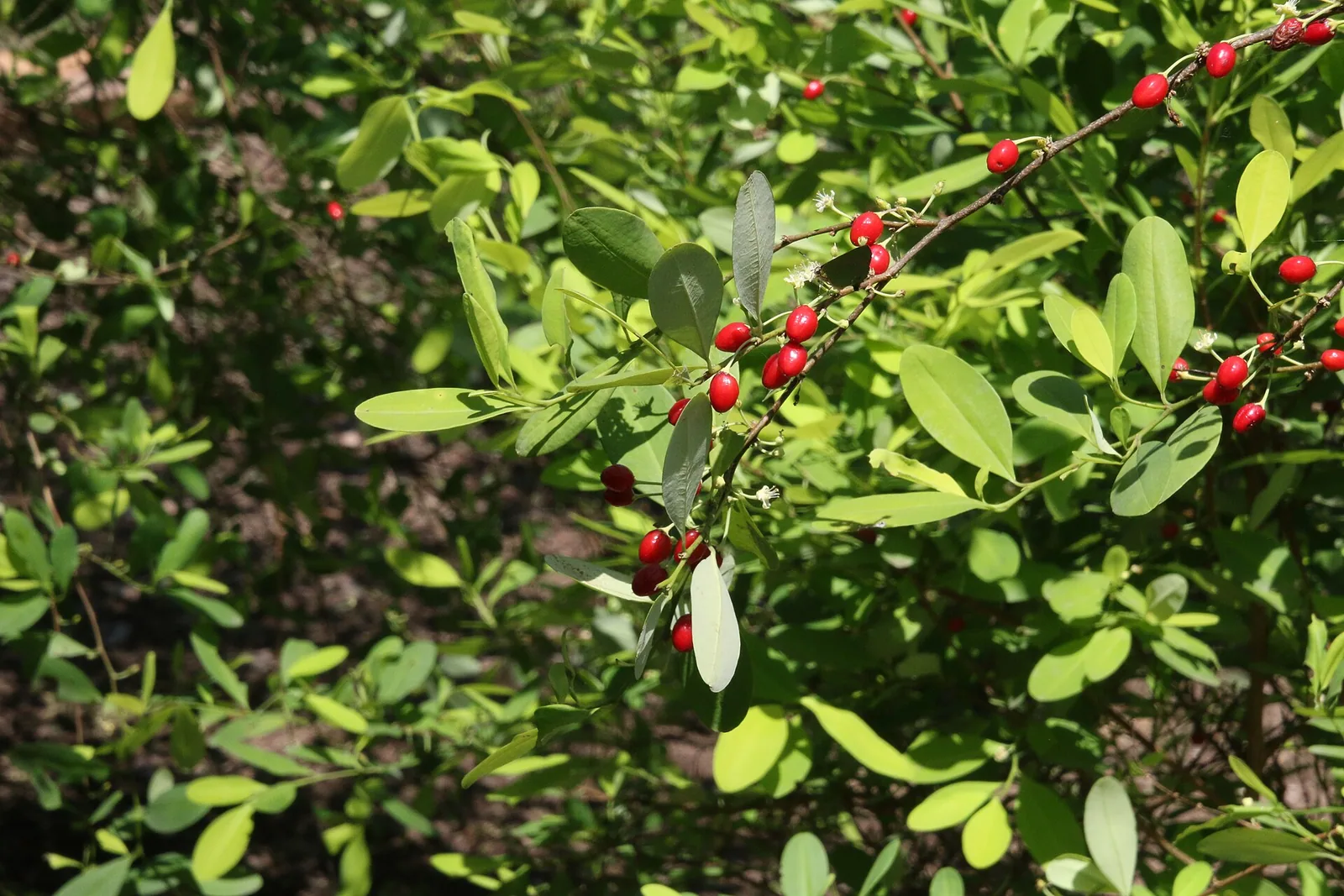
Plate 01 · specimen · deep view
Erythroxylum coca, leaves and fruit · Mike Krüger, 2024 · CC BY 4.0 ↗
Botanical Info
Accepted name
Erythroxylum coca Lam. Jean-Baptiste Lamarck published the name in 1786; it is accepted in current global plant databases. The cultivated species contains two accepted varieties, var. coca and var. ipadu Plowman (Lamarck, 1786; POWO, 2026).
Family
Erythroxylaceae.
Order
Malpighiales.
Geographic range
Native to western tropical South America and known principally as a cultivated shrub. Var. coca is centred on humid eastern Andean valleys and montane forest margins of Peru and Bolivia, with cultivation elsewhere; var. ipadu belongs to the western and north-western Amazon, especially Colombia, Peru and adjacent Brazil. Cultivation, exchange and feral occurrence make a simple “wild range” misleading (Plowman, 1984; POWO, 2026).
Cultivated varieties
E. coca var. coca—often called Huánuco or Bolivian coca—is the principal humid-Andean form. E. coca var. ipadu—Amazonian coca—is a lowland, frequently clonal form with softer, larger leaves and reduced fruiting in cultivation. Two other cultivated cocas belong to the separate species E. novogranatense: var. novogranatense and var. truxillense (Plowman, 1979; White et al., 2021).
Local names
Coca; Quechua kuka, regional koka and khoka; Mama Coca or Cocamama as relational and personified terms; ipadu/ypadu for the Amazonian variety or its powder; mambe as a regional Spanish noun and verb; Murui-Muinaɨ jiibie. Hayo in the Sierra Nevada de Santa Marta usually refers to cultivated E. novogranatense.
Growth form
Evergreen, much-branched shrub, commonly 1–3 m under cultivation and repeatedly pruned or coppiced to produce accessible leaf flushes. Older shrubs may grow taller if unmanaged.
Conservation
No global IUCN assessment. The crop is abundant, but particular landraces, Amazonian clones, wild relatives and the knowledge systems that maintain them can be at risk all the same. Eradication, replacement by narrow high-yield stocks, habitat conversion and breaks in intergenerational transmission can reduce biocultural diversity while total cultivated area rises.
Territories
Territories · places named on this page · deep view
1Nanchoc Valley, northern Peru · coca leaves and lime in house floors, at least 8,000 years ago (Dillehay et al., 2010)
2Sierra Nevada de Santa Marta · Kogi, Iku, Wiwa and Kankuamo: the poporo (Reichel-Dolmatoff, 1950; Mogollón-González, Maldonado-Serrano and Angarita-Cáceres, 2024)
3Paucartambo, Cuzco · Quechua hallpay, coca shared with prescribed words (Allen, 1981)
4Potosí · colonial mining centre around which demand for the leaf expanded (Gagliano, 1994; Gootenberg, 2008)
5Upper Amazon · ipadu, Amazonian coca (Plowman, 1981); the coca and tobacco of the People of the Centre (Echeverri, 2015)
1860Niemann isolates and names cocaine; Koller demonstrates local anaesthesia in 1884.Supported · Gootenberg, 2008
2025The WHO Expert Committee recommends no scheduling change after a critical review of the leaf.Supported · WHO, 2025
Morphology, reproduction and cultivation
Leaves are alternate, simple and entire, usually elliptic to obovate, thin but resilient, with a short petiole and a diagnostic pair of faint curved longitudinal lines beside the midrib. These “areolation” lines arise from the leaf’s folded development in the bud; their visibility varies, and they separate only some cultivated cocas. Small axillary flowers are creamy white to yellow-green, five-merous and fragrant, with ten stamens joined near the base. The fruit is an ovoid red drupe, commonly about one centimetre long, containing a single seed. Distyly—long- and short-styled floral morphs—promotes outcrossing, although cultivated populations differ in fertility and management (Plowman, 1979; Restrepo et al., 2019).
Var. coca is ordinarily raised from seed or cuttings and harvested by hand several times a year, according to region and rainfall. Var. ipadu is commonly propagated vegetatively, a practice consistent with its low seed set and the maintenance of named or locally preferred clones. Human pruning, harvest selection, transplanting and exchange are therefore part of coca’s morphology in practice: the cultivated bush is a long-lived artefact of repeated social attention (Plowman, 1981; 1984).
The cultivated-coca boundary
Four cultigens
Botanical coca comprises four cultivated varieties distributed across two species: E. coca var. coca, E. coca var. ipadu, E. novogranatense var. novogranatense and E. novogranatense var. truxillense. Cultural names and market categories map onto this taxonomy only loosely (Plowman, 1979; White et al., 2025).
Multiple domestications
Phylogenomic data support more than one domestication trajectory from the widespread wild species E. gracilipes. The close relationship also explains why short barcode regions and herbarium morphology can be ambiguous (White et al., 2021).
Morphometric overlap
Two-dimensional leaf-shape analysis improves discrimination but confirms extensive overlap. Dry-adapted E. novogranatense can be confused with E. coca in archaeological, police and commercial samples; species claims require vouchers or genetic evidence where the distinction matters (Przelomska et al., 2024).
Archaeological lineage
Ancient leaves can demonstrate coca use without securely identifying a modern cultivated variety. Domestication names derived from living plants apply to early Holocene remains only with further evidence.
02Chemistry
Coca leaves contain a variable ensemble of tropane alkaloids, phenolics, flavonoids, volatile compounds and ordinary plant nutrients. Cocaine is usually the most abundant alkaloid in cultivated leaves, but reported dry-weight concentrations—often roughly 0.2–1.0%—vary with lineage, environment, leaf age, storage and analytical method. Cinnamoylcocaines, tropacocaine, hygrine, cuscohygrine and truxillines provide chemical context and sometimes chemotaxonomic signal. The whole leaf therefore contains alkaloids, and differs pharmacologically from purified cocaine (Rivier, 1981; Restrepo et al., 2019).
Characteristic minor-to-major coca alkaloid · content varies by lineage
Tropacocaine
C₁₅H₁₉NO₂
Benzoyltropine · tropane ester
Local-anaesthetic alkaloid · usually minor
Hygrine
C₈H₁₅NO
N-methylpyrrolidinyl ketone
Volatile pyrrolidine alkaloid · biosynthetic and forensic marker
Biosynthesis and plant evolution
The pathway begins in amino-acid metabolism: arginine- and ornithine-derived putrescine is methylated and oxidised to the N-methyl-Δ¹-pyrrolinium cation, a common precursor to the tropane ring. In Erythroxylum, polyketide-associated steps, cyclisation, methylecgonone reduction and esterification assemble methylecgonine and cocaine. A BAHD acyltransferase commonly called cocaine synthase transfers the benzoyl group from benzoyl-CoA. Reconstitution in yeast resolved long-missing steps and demonstrated that the coca pathway is chemically convergent with, but evolutionarily independent from, tropane biosynthesis in Solanaceae such as Atropa and Brugmansia (Jirschitzka et al., 2012; Chavez et al., 2022).
For the shrub, these compounds are ecological agents. Cocaine interferes with insect nervous systems and can deter herbivory; field concentration, tissue distribution and the wider alkaloid mixture matter more than the human category “drug” in interpreting that function (Nathanson et al., 1993).
Pharmacology of leaf use
Transporters
Cocaine inhibits dopamine, noradrenaline and serotonin transporters, increasing extracellular monoamine signalling. Its separate blockade of voltage-gated sodium channels accounts for local oral numbness and its continuing pharmaceutical role as a topical local anaesthetic.
Alkaline companion
Mineral lime or plant ash raises the pH of saliva and the leaf bolus, increasing the un-ionised fraction available for buccal absorption. Andean llipta/llujta, Amazonian ash and Colombian poporo lime are materially and symbolically distinct technologies (Holmstedt et al., 1979; Plowman, 1981).
Kinetic distinction
In a classic field study of traditional chewers, plasma cocaine rose slowly and variably, with peak concentrations between approximately 0.38 and 1.95 hours. Buccal leaf use therefore produces a lower, more prolonged exposure than rapid delivery of purified cocaine; route, matrix and social pacing change the experienced drug (Holmstedt et al., 1979).
Whole-leaf ensemble
Other alkaloids and polyphenols may contribute to sensory or physiological effects, but human interaction studies remain sparse. Claims that vitamins or minerals alone explain coca’s effects, or that chewing supplies nutritionally decisive quantities, exceed the available bioavailability evidence (Weil, 1981; Restrepo et al., 2019).
03Tradition, ritual & cultural use
Oldest evidenced human use
Nanchoc Valley
Early Holocene House-floor deposits in northern Peru yielded coca leaves and calcite fragments dated to at least 8,000 calibrated years before present. Calcite occurred in settings suggesting production and exchange as well as consumption, making this the earliest secure association of coca with an alkaline companion. The remains demonstrate coca practice; variety and ritual are unknown (Dillehay et al., 2010).
Later archaeology
Long continuity Nasal/oral calculus, leaf bundles, coca bags, lime gourds and figurines with characteristic cheek bulges document broad pre-Columbian use. Moche ceramics, Wari and Tiwanaku contexts, coastal burials and Colombian gold poporos show coca travelling through multiple political and ritual economies (Indriati and Buikstra, 2001; Plowman, 1984).
Inka institutions
State and vernacular Inka estates and administrators organised coca-growing zones, tribute and distribution; leaves entered diplomacy, labour, sacrifice, divination and funerary offerings. Older claims that coca was reserved exclusively for rulers and priests are too absolute: access was stratified, but local, occupational and ceremonial use extended beyond an elite monopoly (Murra, 1986; Gagliano, 1994).
Colonial transformation
Condemnation and taxation Clerics attacked coca offerings and divination as idolatry, while colonial government, mine owners and merchants depended on the taxed leaf trade. Demand expanded around Potosí and other labour centres, joining Indigenous practice to mita coercion, transport networks and silver capitalism (Gagliano, 1994; Gootenberg, 2008).
Cocaine century
New global objectAlbert Niemann isolated and named cocaine in 1860; Carl Koller demonstrated ophthalmic local anaesthesia in 1884. Vin Mariani, pharmaceutical preparations and early Coca-Cola globalised extracts before national and international controls increasingly collapsed coca leaf into the legal category built around cocaine (Gootenberg, 2008; Biondich and Joslin, 2016).
Peoples, territories and ritual formations
Quechua highlands: hallpay
In a Quechua-speaking community of Paucartambo, Cuzco, coca chewing (hallpay) is a ceremony of reciprocal sharing among two or more people, with prescribed phrases of invitation and thanks and an invocation of three classes of spiritual beings. Its etiquette expresses the ayllu, a community rooted in common origin in, and orientation toward, sacred places (Allen, 1981).
Upper Amazon: ipadu
Amazonian coca, Erythroxylum coca var. ipadu, is a distinct variety developed in cultivation in the upper Amazon basin. It differs from Andean coca in form, physiology and chemistry, and in how Amazonian peoples prepare and use it (Plowman, 1981).
People of the Centre
Among the Uitoto-speaking People of the Centre, who lick rather than smoke tobacco, the breath of "cooling down" tobacco and coca is received in the heart as a healing spell — breath of tobacco, breath of coca (Echeverri, 2015).
The Sierra Nevada de Santa Marta: the poporo
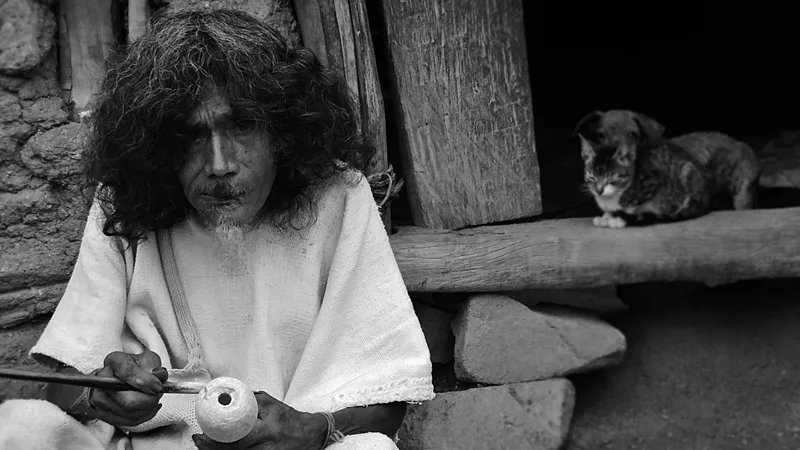
On the mountain massif of the Sierra Nevada de Santa Marta in northern Colombia live four peoples, the Kogi, Iku (Arhuaco), Wiwa and Kankuamo, who consider themselves heirs of the ancient Tairona and hold their territory sacred. They are now the only peoples in Colombia for whom the poporo, the lime gourd used with coca, remains part of daily and ritual life. Each has its own name for it: sugi among the Kogi, yo’buru among the Iku, dumburru among the Wiwa (Mogollón-González, Maldonado-Serrano and Angarita-Cáceres, 2024, pp. 1–3).
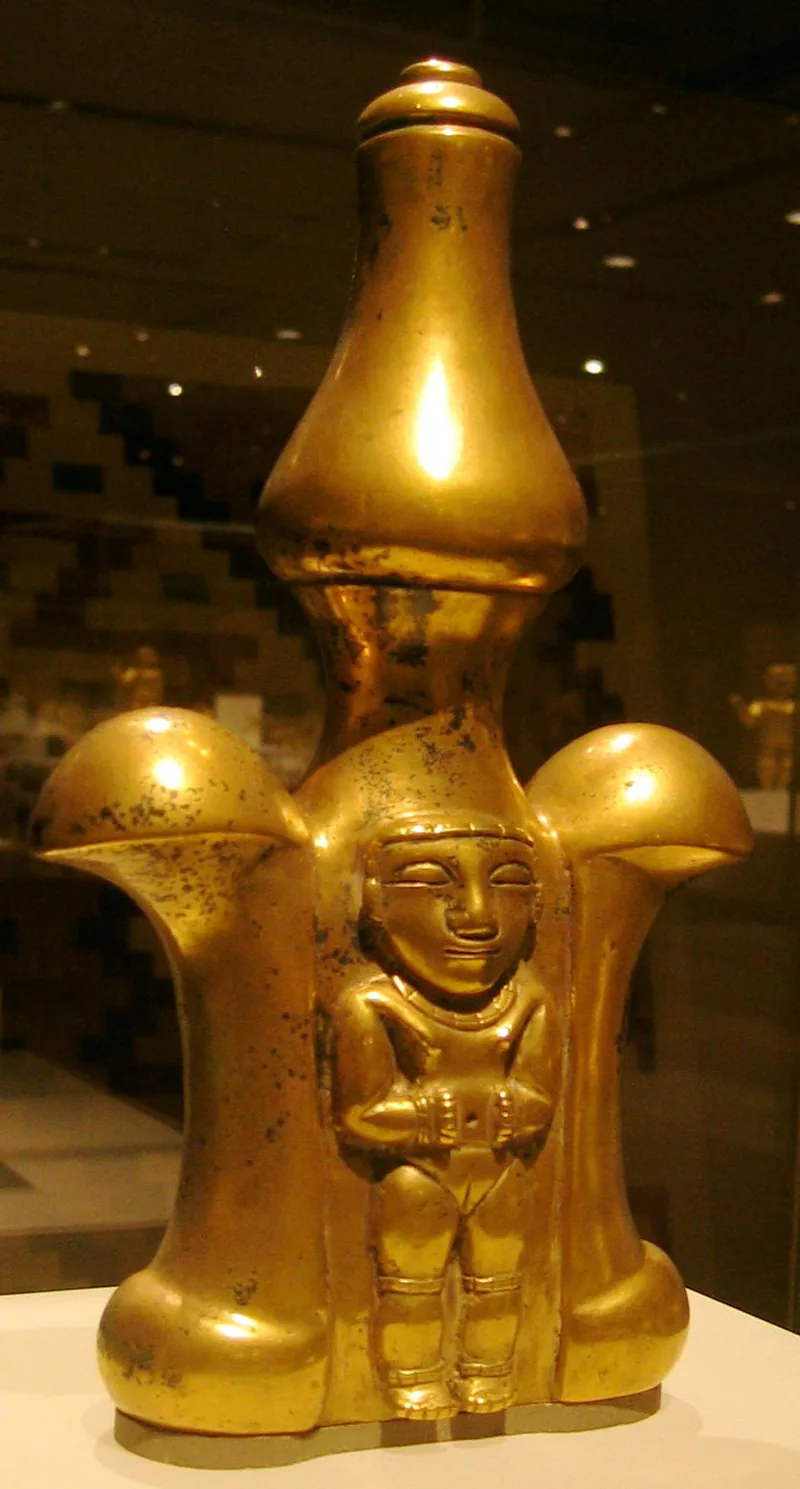
Plate 02 · specimen · deep view
Quimbaya gold poporo, Colombia, 1st–7th century CE · Xuan Che / Met · CC BY 2.0 ↗
Among the Kogi in the late 1940s, Gerardo Reichel-Dolmatoff found that every initiated adult man chewed coca, and that coca plots stood beside every house and settlement, taking up as much space as they could (Reichel-Dolmatoff, 1950, p. 75); around San Miguel, Santa Rosa and San Francisco, coca and cane filled most of the land next to the villages (Reichel-Dolmatoff, 1950, pp. 104–105). He was told of three kinds of coca that “belonged” to different peoples: a long-leaved kind to the Kankuamo, small-leaved kinds to the Ika and to the Kogi. High in the páramo grew a tall tree with coca-like leaves, guanguára, of which people said, “Los Antiguos tenían esta coca”, “the Ancients had this coca” (Reichel-Dolmatoff, 1950, p. 76).
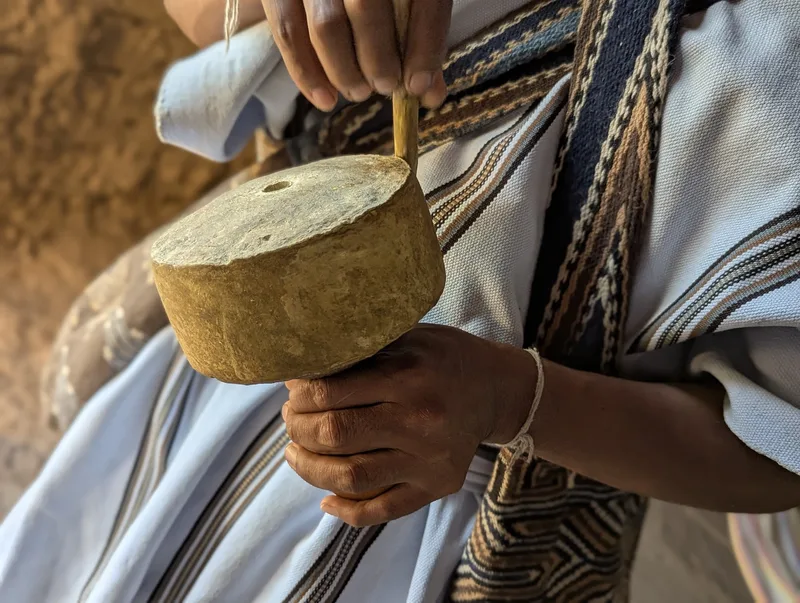
A man who wished to plant coca had first to obtain “permits” from the máma, the priest. Tending the plants was men’s work and picking the leaves women’s. The men toasted the leaves slowly, in a pot kept for that purpose, inside the ceremonial house, until they were half dry and a light golden green. Lime was made by burning small seashells on a little pyramid of grass stems and kept in a bottle-shaped gourd 10–15 cm high, from which it was taken with a stick of hardwood. A man put about fifty leaves in his mouth, chewed for some minutes, then sucked the lime from the stick and rubbed its wet end around the gourd’s mouth, turning the gourd slowly in his left hand. Over time a hard yellow crust of lime built up around the opening, trimmed now and then with a knife into a cylinder or disc; gourds used for years without breaking carried a thick, broad disc (Reichel-Dolmatoff, 1950, pp. 76–77). Women were absolutely forbidden to chew coca, and for a man its use began, as an obligation, only after initiation (Reichel-Dolmatoff, 1950, p. 77).
The Kogi told Reichel-Dolmatoff that coca brings a mental clarity to be spent on ceremonial gatherings and religious life, makes a man talkative and refreshes his memory, so that he can talk, sing and recite for hours. It quiets hunger too, but that, they said, was not its purpose: coca is taken to be better able to “hablar de los Antiguos”, to speak of the Ancestors. Sleeplessness also counted as a gift, since ceremonial conversations are held at night. The Kogi ideal, as he summarised it, would be to eat nothing but coca, abstain from sex, never sleep, and spend one’s life speaking of the Ancestors, singing, dancing and reciting (Reichel-Dolmatoff, 1950, pp. 77–78).
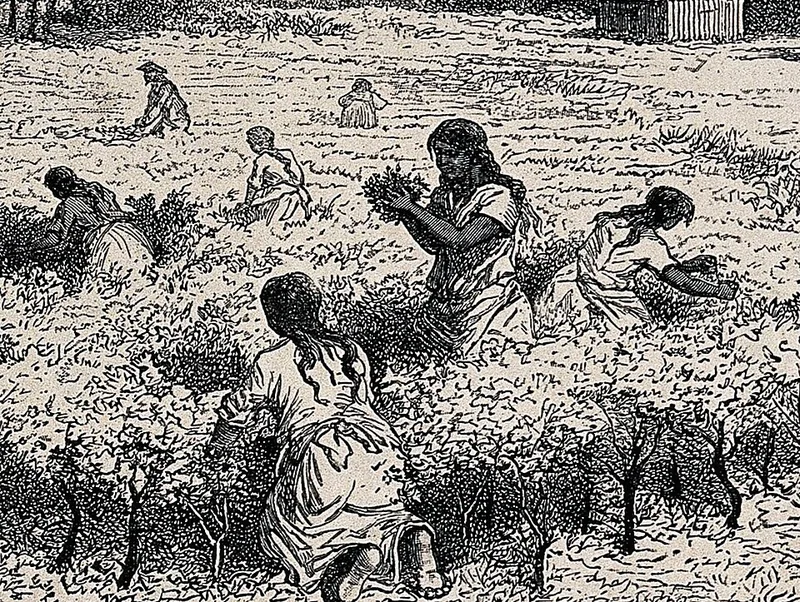
Plate 03 · specimen · deep view
Women gathering coca in Bolivia, wood engraving, c. 1867 · Wellcome Collection · CC BY 4.0 ↗
The gourd is given to a young man at his initiation, and he is told that it represents a woman. He “marries” her in the ceremony and pierces the gourd in imitation of ritual defloration; the stick is the male organ, and its movement in and around the opening is understood as coitus. For a Kogi man, Reichel-Dolmatoff wrote, the little instrument means “comida”, “mujer” and “memoria”: food, woman and memory. He is seldom without it (Reichel-Dolmatoff, 1950, pp. 78–79). Reichel-Dolmatoff also recorded the tensions: women disapproved of their husbands’ coca, and young men sometimes resolved to take less, until the criticism of the other men, above all the priest’s, and the contest for prestige brought them back (Reichel-Dolmatoff, 1950, p. 78).
Plate 04 · poporo, Iku (Arhuaco) · deep view
A poporo held by an Arhuaco man, the crust of lime built up around its mouth over months of use · Taygreenus · CC BY-SA 4.0 · Wikimedia Commons ↗
Some seventy years later the four peoples describe the same act, poporear, as a practice of knowledge. The mamo directs the giving of the poporo, at between about thirteen and eighteen years of age, in a rite of four days and nights without sleep. By day the young man works; by night he is taught to use the poporo and begins a conversation with it, telling it his life, his aims and his dreams, and asking it to show him whatever he will come to seek. Though the mamo hands it over, it is held to be the Universal Mother herself who gives it (Mogollón-González, Maldonado-Serrano and Angarita-Cáceres, 2024, p. 4). A large crust is a sign of great power of thought. Men, it is said, give their thought form on the poporo and women in weaving the mochila: both are “tejer el pensamiento”, weaving thought (Mogollón-González, Maldonado-Serrano and Angarita-Cáceres, 2024, p. 3).
Among the Kogi the poporo has four parts: sugi, the gourd; sukalda, the stick; nugi, the lime; and jañú, the coca leaf. A man chooses the size of his gourd and how his leaf is toasted, but the wood of his stick, and whether his lime is cured with cold water or hot, are prescribed by the mama, who consults a sacred vessel of water at the first giving. In a Kogi myth the gourd is Seinake, the first woman, who is black earth and water; the lime grows inside her like a seed and becomes thought in the crust outside (Mogollón-González, Maldonado-Serrano and Angarita-Cáceres, 2024, p. 5).
For the Iku, yo’buru was created before the dawn of the world, chosen by the primordial Mothers and Fathers as the representation of the feminine. Giving it seals a young man’s marriage, after which his wife may pick the áyu leaves for toasting. In Wiwa tradition the first Fathers cooked thought in a clay pot, and from it came both the Wiwa and the dumburru. The Kankuamo, whose language and dress have largely given way, treat the recovery of the poporo as part of rebuilding their identity, often learning from whichever neighbouring people they live closest to (Mogollón-González, Maldonado-Serrano and Angarita-Cáceres, 2024, pp. 6–9).
Plate 05 · poporear, Sierra Nevada · deep view
Emilio Unti Yunyu with his poporo, Sierra Nevada de Santa Marta, 2015 · Jusezam · CC BY-SA 3.0 · Wikimedia Commons ↗
04Cosmology & key terms
Coca mythologies are many. Narratives and ritual grammars vary among Andean ayllus, Amazonian clans and historical states. What recurs is coca’s capacity to mediate: between persons, between humans and earth-beings, between ordinary talk and authorised word, and between an uncertain event and a readable sign.
Mama Coca / Cocamama
A personifying and honorific register for the plant, sometimes rendered as a female owner or mother. Local stories differ. In Allen’s Quechua ethnography, coca is remembered as relief for grief and the pain of living, one local biography among many (Allen, 2002).
Pachamama and apus
Earth, places and mountain powers receive selected leaves, breath, alcohol and composite offerings within reciprocal relations often glossed as ayni. Selection, direction and address recognise the recipient’s personhood and the giver’s dependence.
K’intu
A small ordered fan, commonly of three whole leaves. Number and terminology vary regionally. Its beauty, intact form and orientation are part of an offering’s adequacy and can also carry diagnostic meaning.
Jiibie and dɨona
In Murui-Muinaɨ thought, coca and tobacco are complementary substances of disciplined speech, memory and social reproduction. The “Word” is at once ancestral teaching, embodied capacity and a standard by which speech can heal or organise (Candre Kinerai and Echeverri, 2008; Garcia Rodriguez, 2026).
Poporo
A lime container and applicator, especially elaborated in Colombia. Ancient Quimbaya gold vessels, archaeological gourds and living Sierra Nevada objects connect the chemistry of alkalinity to rank, adulthood, gender and accumulated biography.
Chuspa
A woven coca bag worn and exchanged in the Andes. Fibre, pattern and carrying practice place the leaf in textile systems of identity and status; the bag keeps a social substance ready for offer.
Coca as speech, sign and gift
A leaf’s efficacy is partly relational. To offer coca before asking a favour changes the moral form of the request; to omit it can announce distance or disrespect. In divination, leaves disclose by their fall, surface, colour and damage, interpreted through a specialist’s question, invocation and accumulated knowledge. The event is a communication whose authority depends on ritual office and cosmological premises (Allen, 1981; Bastien, 1987).
Northwest Amazonian “sweet” coca is similarly more than a stimulant. The paired substances of coca and tobacco constitute a technology of the ethical voice. During long night conversations, powder is shared while senior speakers narrate origins, review conduct, arrange collective work and cool anger. The bodily act supports wakefulness, but the desired result is properly weighted language—speech capable of becoming action without becoming violence (Candre Kinerai and Echeverri, 2008).
Art and material culture
House floors at Nanchoc
Coca leaves dated to about 8,000 calibrated years before present lay on house floors in the Nanchoc Valley of northern Peru, with pieces of calcite, the alkali chewers use to release the alkaloids. Neighbouring sites suggest specialists were already extracting and supplying lime as a community activity (Dillehay et al., 2010).
Seventeen alkalis
Seventeen alkaline substances traditionally chewed with coca, dissolved in water, measured between pH 10.1 and 12.8; their role is mainly to turn the leaf's alkaloids into free bases (Rivier, 1981).
The quid in the teeth
On the southern coast of Peru, a repeated pattern of root caries on the cheek side of the back teeth, where the quid sits, identifies habitual coca chewers in ancient skeletons; the dental method agreed with hair tests in 85.7 per cent of cases (Indriati and Buikstra, 2001).
“a balm for the pain of living”
Allen’s concise rendering of a Quechua understanding of coca’s consoling power (Allen, 2002).
05Visionary phenomenology
Ordinary coca-leaf use is psychoactive and seldom visionary in the classic hallucinogenic sense. Its salient field is tonic and relational: wakefulness without a sudden threshold, diminished fatigue and hunger, oral numbness, warmth, conversational continuity and a sharpened capacity to persist. The strongest “visions” in coca traditions belong to divination, dreaming, diagnosis and cosmological communication, where the leaf is an agent and sign within ritual expertise.
OnsetSubtle effects generally emerge within minutes as leaf and alkali are held in the cheek; plasma peaks are delayed and variable.
PeakClassic field pharmacokinetics found peak cocaine concentrations roughly 0.38–1.95 hours after chewing began.
DurationA single quid commonly supports one to several hours; work and ritual sessions often renew leaves across a day or night.
IntensityUsually mild to moderate and cumulative: alerting, appetite-suppressing and locally anaesthetic rather than abruptly ecstatic.
Andean accounts
Steadiness, warmth and companionship
Ethnographies repeatedly describe strength for climbing or work, diminished cold and hunger, calm sociability and a sense that coca accompanies the person. “Energy” is inseparable from the pause, the shared bag, the mountain addressed and the obligation acknowledged (Allen, 1981; 2002).
Amazonian accounts
Alert calm and the sweet word
Mambe supports sustained nocturnal attention, memory and measured speech. The desirable state is composure: the capacity to listen, narrate, counsel and keep words from becoming socially “hot” (Candre Kinerai and Echeverri, 2008).
Divinatory perception
Leaves that disclose
Specialists may report that coca “speaks”. Knowledge arrives through the cast and arrangement of leaves, bodily intuition, dream and invocation. This is visionary in a divinatory-semiotic register, distinct from pharmacological hallucination.
Purified cocaine
A separate experiential regime
Rapidly delivered purified cocaine can produce brief intense euphoria, confidence, motor activation and a stronger impulse to repeat dosing. The slow buccal pharmacology of whole leaves follows a different course, at lower intensity and within different social rituals (Holmstedt et al., 1979; Weil, 1981).
Accounts and interpretive limits
Physiological descriptions alone miss the experience’s grammar. A novice may register bitterness and numbness; an experienced chewer attends to leaf quality, a correct bolus, the timing of alkali, the presence of companions and the direction in which an offering is blown. In Murui contexts, attentional clarity is evaluated by the quality of the word it enables. In Andean divination, perception is evaluated by whether a reading proves responsive to illness, weather, travel or social uncertainty. The phenomenological unit is therefore person–leaf–alkali–place–speech over time.
A 2025 observational study among high-altitude Peruvian miners associated habitual traditional chewing with lower salivary cortisol at morning and afternoon sampling, especially in night-shift workers. The finding is consistent with reports of stress modulation; causation and generality are unshown, and work schedule, altitude, diet and self-selection remain possible influences (Lopez-Chau et al., 2026).
The poporo in dreams
Kogi dream interpretation, as Reichel-Dolmatoff recorded it, reads coca and the poporo as omens. To dream of an old poporo meant “I will marry a widow with two children”; of a broken poporo, “my wife will die”; of picking coca, that there would be much rain; of toasting coca, a long dry season (Reichel-Dolmatoff, 1950, p. 290).
06Contemporary status
Biocultural conservation and economies
Coca exists simultaneously in household gardens, Indigenous territories, legal regional markets, state purchasing systems, licensed pharmaceutical chains and illicit cocaine economies. These systems overlap geographically and remain distinct. Fresh and dried leaves, tea, flour, sweets, ritual bundles and medicines circulate legally within parts of Bolivia, Peru and Colombia; cocalero unions have become major political institutions. In the illicit chain, small cultivators usually receive a minor share of final value while armed control, interdiction, processing and transnational distribution capture the largest margins and generate violence and environmental damage (Gootenberg, 2008; UNODC, 2024).
Treaty returns illuminate a much narrower licit international channel. The INCB recorded national reports of 25,728 tonnes of coca leaf produced in Bolivia and 1,259.3 tonnes in Peru in 2024. Peru reported 150.3 tonnes exported, principally into the licensed United States flavouring and pharmaceutical stream. Different national reporting systems and the large informal market prevent these figures from serving as direct estimates of total traditional demand (INCB, 2026).
Total area is a poor conservation proxy. Cultivated coca is abundant, yet clonal ipadu, named local stocks and wild Erythroxylum relatives can be lost through displacement, eradication, commercial replacement and habitat conversion. The biocultural unit includes seed or cutting, soil knowledge, pruning, women’s processing labour, ritual vocabulary and the institutions through which leaves are exchanged. Conservation of that unit differs from maximising hectares (Plowman, 1981; Garcia Rodriguez, 2026).
Law and international scheduling
United Nations
Coca leaf remains in Schedule I of the 1961 Single Convention. Article 49 originally required transitional abolition of coca chewing within twenty-five years. The 1988 Convention later required eradication measures to respect fundamental human rights and to take due account of traditional licit uses supported by historic evidence (United Nations, 1961; 1988).
WHO review, 2025
Following Bolivia’s request and a two-year critical review, the WHO Expert Committee on Drug Dependence recommended no scheduling change in December 2025. It found that traditional chewing and tea did not pose major public-health risks, recognised cultural and therapeutic significance, but retained control because the leaf is convertible to cocaine and because evidence on dependence, long-term safety and therapeutic applications remained limited (WHO, 2025).
Bolivia
Bolivia denounced the Convention and re-acceded in 2013 with a reservation permitting traditional chewing and domestic traditional uses within its territory. Law No. 906 (2017) recognises coca as cultural patrimony and authorises up to 22,000 hectares divided principally between La Paz and Cochabamba production zones (Estado Plurinacional de Bolivia, 2017).
Peru
Traditional possession and use are legal within a state-controlled framework; the Empresa Nacional de la Coca (ENACO) holds the formal purchasing and commercial monopoly established under Decree Law No. 22095. A large parallel market and cultivation outside the registered system make the licit/illicit boundary politically and empirically contested (Republic of Peru, 1978).
Colombia
National drug law controls coca cultivation and cocaine production while Article 7 of Law 30 (1986), constitutional jurisprudence and Indigenous jurisdiction preserve space for ancestral use in recognised communities. The resulting dual status distinguishes cultural leaf practice from illicit commodity production but produces recurrent conflict over policing, food products and market access (Republic of Colombia, 1986).
United Kingdom / US
The United Kingdom lists coca leaf as a Class A, Schedule 1 controlled drug. In the United States coca leaves and cocaine are Schedule II, with a statutory exception for decocainised coca leaves or extracts; licensed medical and flavouring channels are narrow exceptions to general control (Home Office, 2025; eCFR, 2026).
Cultivation metrics and environmental politics
UNODC estimated 253,000 hectares of coca cultivation in Colombia in 2023, ten per cent above 2022, and a 53% rise in potential cocaine production to 2,664 metric tonnes. These are monitoring categories for an illicit economy: they say little about botanical varieties or traditional leaf markets, and plots differ in yield. Coca expansion can accompany deforestation and chemical contamination, yet regional forest loss also involves cattle, roads, land speculation, mining and armed governance. Forced eradication and aerial glyphosate have themselves damaged crops, displaced cultivation and intensified distrust. A botanical monograph must therefore keep plant ecology distinct from the political ecology of prohibition while analysing their contact (UNODC, 2024; White et al., 2025).
Patents and intellectual property
Extract processes
Patents including US4956429A and US4696819A claim processes or compositions for reducing cocaine/ecgonine in coca flavour extracts or using water-soluble coca fractions; EP1688048A1 concerns a coca-leaf beverage/extract process. Such claims attach to methods and formulated products; E. coca, coca leaves in nature and ancestral ritual systems lie outside them.
Pharmaceutical cocaine
Patents around purified cocaine formulations, delivery devices and analytical standards belong to pharmaceutical or forensic innovation. Indigenous leaf use is prior to them, and the pharmacology of a quid or mambe is its own.
Disclosure regime
The 2024 WIPO Treaty on Intellectual Property, Genetic Resources and Associated Traditional Knowledge creates a disclosure requirement for patent inventions based on genetic resources or associated Indigenous knowledge once the treaty is in force for relevant parties. It is a patent-transparency mechanism; ownership, benefit sharing and retroactive invalidation lie outside it (WIPO, 2024).
Latest research
2026
Ritual knowledge under social fracture
Murui-Muinaɨ ethnography shows women and affinal kin creating new paths for coca–tobacco knowledge when violence and kinship disruption interrupt idealised male primogeniture (Garcia Rodriguez, 2026).
2025–26
International review and human physiology
WHO completed the first coca-leaf critical review in decades and retained Schedule I while explicitly distinguishing low-risk traditional chewing and tea from cocaine production. A Peruvian observational study reported an association between habitual chewing and lower salivary cortisol among high-altitude miners (WHO, 2025; Lopez-Chau et al., 2026).
2025
Coca–cocaine policy distinction
An interdisciplinary Science policy analysis joined taxonomy, pharmacology and cultural history to argue that the four cultivated cocas and traditional leaf practices require categories distinct from purified cocaine (White et al., 2025).
2024
Leaf morphometrics and phylogenomics
Geometric morphometrics and DNA data refined identification across cultivated coca varieties while showing why leaves alone remain unreliable in archaeological and forensic classification (Przelomska et al., 2024).
2022
Complete cocaine biosynthetic pathway
Yeast-based pathway discovery identified missing enzymes and reconstructed coca tropane-alkaloid biosynthesis, consolidating evidence for its independent evolution from Solanaceae pathways (Chavez et al., 2022).
Open questions on this entry
Safety and law
07Cross-correlations
Coca–llipta Complex
Preparation and cultural complex page: Andean leaf selection, alkali technologies, chuspas, hallpay, labour, exchange and offering. PRIMARY PREPARATION COMPLEX
Erythroxylum novogranatense
Companion species comprising Colombian coca and Trujillo coca; frequently involved in Sierra Nevada hayo, dry-valley cultivation and commercial leaf histories attributed generically to “coca”. SISTER CULTIGEN
Nicotiana rustica
Species monograph: Amazonian tobacco paired with coca in maloca speech, healing and the “word of coca and tobacco”. RITUAL COMPLEMENT
Amazonian coca–tobacco traditions
Murui-Muinaɨ, Bora, Muinane, Ocaina, Nonuya and neighbouring knowledge systems organised around mambe/jiibie, tobacco paste, maloca counsel and moral speech. CEREMONIAL COMPLEX
Andean Huachuma–Mesa Complex
Coca leaves enter northern and central Andean curing mesas, offerings and divinatory practice beside huachuma, perfumes, staffs, stones and Catholic sacred media. ASSOCIATED RITUAL COMPLEX
Banisteriopsis caapi
Species monograph: another South American master plant with major regional speech, healing and exchange traditions, but unrelated chemistry and preparation. COMPARATIVE MASTER PLANT
Papaver somniferum
Species monograph: the opium poppy, whose licensing system under the 1961 Single Convention is the one the Convention applies to permitted coca cultivation. SINGLE CONVENTION PLANT
Anadenanthera colubrina
Species monograph: vilca shares Andean routes, markets, offerings and ritual bundles with coca, with distinct preparations and pharmacology. ANDEAN MATERIAL-CULTURE ALLY
Coffea arabica
Comparative stimulant crop whose caffeine, colonial plantation history and café institutions offer a distinct global relation among alkaloid, labour and sociability. COMPARATIVE STIMULANT
08Bibliography
49 sources in 6 threads · 39 with a working locator · Harvard (Cite Them Right) · status and kind are recorded per source, not assumed
How to read the labels on each source
Source type
What kind of work it is: journal article, book, legislation, patent application, database record and so on. A word after the dot (ethnography, protologue, primary source) keeps the genre the entry was first filed under. “Unclassified” means the citation does not say enough to tell.
Peer review
Recorded for each work separately, and only where it has been confirmed for that work. It is never inferred from a DOI, a publisher or a journal, since journals also publish editorials, letters and commentaries. Where it has not been confirmed, the entry records it as not established. It does not apply to legislation, court decisions, treaties, patents, datasets, database and collection records, historical texts, films, talks, press releases or web pages.
Check
What was checked when the entry was added. DOI checked: the DOI’s registry record (Crossref) matched the citation’s title, first author and year. Verified: the record itself was opened and matched the citation: a library catalogue record for a book, or the page itself for a database entry, law, patent or archive document. “Verified (abstract)” and “(summary)” mean only the abstract or a summary was read. Located: a record was found but not fully matched. Bibliographic record and Stable record (in essays): a catalogue or stable web record exists; what was checked against it is not recorded. Unverified: no check is recorded. No locator found: a search found no record. Secondary: read through another source.
What the labels do not say
None of them means the source supports a particular sentence. Where a sentence is graded, its evidence note names its sources and whether each supports it, disputes it or gives context. Dates and reviewers of checks are not recorded for each entry; the version note at the foot of a graded page dates its last review.
DOI checkedJournal articlePeer review not establishedOpen record ↗cited 6× in this record
Plowman, T. (1984) ‘The ethnobotany of coca (Erythroxylum spp., Erythroxylaceae)’, Advances in Economic Botany, 1, pp. 62–111.
No locator foundJournal articlePeer review not establishedcited 2× in this record
Przelomska, N.A.S., Diaz, R.A., Ávila, F.A., Ballen, G.A., Cortés-B., R., Kistler, L., Chitwood, D.H., Charitonidou, M., Renner, S.S., Pérez-Escobar, O.A. and Antonelli, A. (2024) ‘Morphometrics and phylogenomics of coca (Erythroxylum spp.) illuminate its reticulate evolution, with implications for taxonomy’, Molecular Biology and Evolution, 41(7), msae114. Available at: https://doi.org/10.1093/molbev/msae114.
DOI checkedJournal articlePeer review not establishedOpen record ↗cited 2× in this record
Restrepo, D.A., Saenz, E., Jara-Muñoz, O.A., Calixto-Botía, I.F., Rodríguez-Suárez, S., Zuleta, P., Chavez, B.G. and Sanchez, J.A. (2019) ‘Erythroxylum in focus: an interdisciplinary review of an overlooked genus’, Molecules, 24(20), 3788. Available at: https://doi.org/10.3390/molecules24203788.
DOI checkedJournal articlePeer review not establishedOpen record ↗cited 3× in this record
White, D.M., Huang, J.-P., Jara-Muñoz, O.A., Madriñán, S., Ree, R.H. and Mason-Gamer, R.J. (2021) ‘The origins of coca: museum genomics reveals multiple independent domestications from progenitor Erythroxylum gracilipes’, Systematic Biology, 70(1), pp. 1–13. Available at: https://doi.org/10.1093/sysbio/syaa074.
DOI checkedJournal articlePeer review not establishedOpen record ↗cited 2× in this record
Chemistry, biosynthesis & pharmacology
Chavez, B.G. et al. (2022) ‘Elucidation of tropane alkaloid biosynthesis in Erythroxylum coca using a microbial pathway discovery platform’, Proceedings of the National Academy of Sciences, 119(49), e2215372119. Available at: https://doi.org/10.1073/pnas.2215372119.
DOI checkedJournal articlePeer review not establishedOpen record ↗cited 2× in this record
Holmstedt, B., Lindgren, J.-E., Rivier, L. and Plowman, T. (1979) ‘Cocaine in blood of coca chewers’, Journal of Ethnopharmacology, 1(1), pp. 69–78. Available at: https://doi.org/10.1016/0378-8741(79)90017-5.
DOI checkedJournal articlePeer review not establishedOpen record ↗cited 3× in this record
Jirschitzka, J., Schmidt, G.W., Reichelt, M., Schneider, B., Gershenzon, J. and D’Auria, J.C. (2012) ‘Plant tropane alkaloid biosynthesis evolved independently in the Solanaceae and Erythroxylaceae’, Proceedings of the National Academy of Sciences, 109(26), pp. 10304–10309. Available at: https://doi.org/10.1073/pnas.1200473109.
DOI checkedJournal articlePeer review not establishedOpen record ↗cited 1× in this record
Nathanson, J.A., Hunnicutt, E.J., Kantham, L. and Scavone, C. (1993) ‘Cocaine as a naturally occurring insecticide’, Proceedings of the National Academy of Sciences, 90(20), pp. 9645–9648. Available at: https://doi.org/10.1073/pnas.90.20.9645.
DOI checkedJournal articlePeer review not establishedOpen record ↗cited 1× in this record
Rivier, L. (1981) ‘Analysis of alkaloids in leaves of cultivated Erythroxylum and characterization of alkaline substances used during coca chewing’, Journal of Ethnopharmacology, 3(2–3), pp. 313–335. Available at: https://doi.org/10.1016/0378-8741(81)90061-1.
DOI checkedJournal articlePeer review not establishedOpen record ↗cited 2× in this record
Weil, A.T. (1981) ‘The therapeutic value of coca in contemporary medicine’, Journal of Ethnopharmacology, 3(2–3), pp. 367–376. Available at: https://doi.org/10.1016/0378-8741(81)90064-7.
DOI checkedJournal articlePeer review not establishedOpen record ↗cited 2× in this record
Archaeology and historical transformation
Biondich, A.S. and Joslin, J.D. (2016) ‘Coca: the history and medical significance of an ancient Andean tradition’, Emergency Medicine International, 2016, 4048764. Available at: https://doi.org/10.1155/2016/4048764.
DOI checkedJournal articlePeer review not establishedOpen record ↗cited 1× in this record
Dillehay, T.D., Rossen, J., Ugent, D., Karathanasis, A., Vásquez, V. and Netherly, P.J. (2010) ‘Early Holocene coca chewing in northern Peru’, Antiquity, 84(326), pp. 939–953. Available at: https://doi.org/10.1017/S0003598X00067004.
DOI checkedJournal articlePeer review not establishedOpen record ↗cited 4× in this record
Gagliano, J.A. (1994) Coca Prohibition in Peru: The Historical Debates. Tucson: University of Arizona Press.
VerifiedBookPeer review not establishedOpen record ↗cited 3× in this record
DOI checkedJournal articlePeer review not establishedOpen record ↗cited 2× in this record
Murra, J.V. (1986) ‘Notes on pre-Columbian cultivation of coca leaf’, in Pacini, D. and Franquemont, C. (eds) Coca and Cocaine: Effects on People and Policy in Latin America. Cambridge, MA: Cultural Survival, pp. 49–53.
No locator foundBook chapter · ethnographyPeer review not establishedcited 1× in this record
Ethnography, cosmology & phenomenology
Allen, C.J. (1981) ‘To be Quechua: the symbolism of coca chewing in highland Peru’, American Ethnologist, 8(1), pp. 157–171. Available at: https://doi.org/10.1525/ae.1981.8.1.02a00100.
DOI checkedJournal articlePeer review not establishedOpen record ↗cited 5× in this record
Allen, C.J. (2002) The Hold Life Has: Coca and Cultural Identity in an Andean Community, 2nd edn. Washington, DC: Smithsonian Institution Press.
No locator foundBook · ethnographyPeer review not establishedcited 2× in this record
Bastien, J.W. (1987) Healers of the Andes: Kallawaya Herbalists and Their Medicinal Plants. Salt Lake City: University of Utah Press.
No locator foundBook · ethnographyPeer review not establishedcited 1× in this record
Candre Kinerai, H. and Echeverri, J.A. (2008) Tabaco frío, coca dulce: palabras del anciano Kinerai de la Tribu Cananguchal para sanar y alegrar el corazón de sus huérfanos. Bogotá: Universidad Nacional de Colombia.
No locator foundBook · ethnographyPeer review not established
Echeverri, J.A. (2015) ‘Cool tobacco breath: the uses and meanings of tobacco among the People of the Centre’, in Russell, A. and Rahman, E. (eds) The Master Plant: Tobacco in Lowland South America. London: Bloomsbury, pp. 107–129.
DOI checkedBook chapterPeer review not establishedOpen record ↗cited 2× in this record
Garcia Rodriguez, O.I. (2026) ‘Blood, semen, coca, and tobacco: the transmission of ritual knowledge among the Murui-Muinaɨ Indigenous people of the Amazon’, HAU: Journal of Ethnographic Theory, 16(1). Available at: https://doi.org/10.1086/740596.
DOI checkedJournal articlePeer review not establishedOpen record ↗
Lopez-Chau, L.A. et al. (2026) ‘Traditional coca chewing and cortisol modulation in Andean miners: a pilot quasi-experimental repeated-measures study on stress physiology at high altitude’, Journal of Ethnopharmacology, 120630. Available at: https://doi.org/10.1016/j.jep.2025.120630.
DOI checkedJournal articlePeer review not establishedOpen record ↗cited 2× in this record
Mogollón-González, D.-R., Maldonado-Serrano, J.F. and Angarita-Cáceres, R.-G. (2024) ‘Creación y pensamiento en la Sierra Nevada de Santa Marta. Aproximaciones filosóficas a los poporos’, Entramado, 20(1), e-10230, pp. 1–13.
DOI checkedJournal articlePeer review not establishedOpen record ↗cited 6× in this record
Reichel-Dolmatoff, G. (1950) ‘Los Kogi: una tribu de la Sierra Nevada de Santa Marta, Colombia. Tomo I’, Revista del Instituto Etnológico Nacional, 4(1–2), pp. 1–319.
VerifiedJournal article · ethnographyPeer review not establishedOpen record ↗cited 10× in this record
Reichel-Dolmatoff, G. (1978) The Loom of Life: A Kogi Principle of Integration. Philadelphia: University of Pennsylvania, Department of Anthropology.
No locator foundBook · ethnographyPeer review not established
Contemporary policy, law & intellectual property
White, D.M., Soberón Garrido, R., Conzelman, C.S. et al. (2025) ‘Scientific distinctions between coca and cocaine support policy reform’, Science, 390(6775), eaeb2948. Available at: https://doi.org/10.1126/science.aeb2948.
DOI checkedJournal articlePeer review not establishedOpen record ↗cited 3× in this record
World Health Organization (WHO) (2025) ‘WHO Expert Committee concludes critical review of coca leaf, recommends maintaining current controls’, 10 December. Available at: who.int (Accessed: 7 August 2026).
UnverifiedLegislation or regulationPeer review not applicableOpen record ↗cited 2× in this record
United Nations (1961) Single Convention on Narcotic Drugs, 1961, as amended by the 1972 Protocol. New York: United Nations. Available at: incb.org.
UnverifiedTreaty or conventionPeer review not applicableOpen record ↗
United Nations (1988) Convention against Illicit Traffic in Narcotic Drugs and Psychotropic Substances. Vienna: United Nations. Available at: incb.org.
UnverifiedTreaty or conventionPeer review not applicableOpen record ↗
United Nations Office on Drugs and Crime (UNODC) (2024) Monitoring of Territories with Presence of Coca Cultivation 2023. Bogotá: UNODC and Government of Colombia. Available at: unodc.org.
UnverifiedLegislation or regulationPeer review not applicableOpen record ↗
International Narcotics Control Board (INCB) (2026) Narcotic Drugs 2025: Estimated World Requirements for 2026; Statistics for 2024. Vienna: United Nations. Available at: incb.org.
UnverifiedLegislation or regulationPeer review not applicableOpen record ↗cited 1× in this record
Estado Plurinacional de Bolivia (2017) Ley No. 906, Ley General de la Coca, 8 March. Available at: lexivox.org (Accessed: 7 August 2026).
UnverifiedLegislation or regulationPeer review not applicableOpen record ↗
Republic of Peru (1978) Decreto Ley No. 22095, Ley de Represión del Tráfico Ilícito de Drogas, 21 February. Available at: gob.pe (Accessed: 7 August 2026).
UnverifiedLegislation or regulationPeer review not applicableOpen record ↗
Republic of Colombia (1986) Ley 30 de 1986, Estatuto Nacional de Estupefacientes, 31 January. Available at: funcionpublica.gov.co (Accessed: 7 August 2026).
UnverifiedLegislation or regulationPeer review not applicableOpen record ↗
World Intellectual Property Organization (WIPO) (2024) WIPO Treaty on Intellectual Property, Genetic Resources and Associated Traditional Knowledge. Geneva: WIPO. Available at: wipo.int (Accessed: 7 August 2026).
UnverifiedTreaty or conventionPeer review not applicableOpen record ↗cited 1× in this record
Home Office (2025) ‘Controlled drugs list’. London: UK Government. Available at: gov.uk (Accessed: 7 August 2026).
UnverifiedLegislation or regulationPeer review not applicableOpen record ↗
Electronic Code of Federal Regulations (eCFR) (2026) ‘21 CFR §1308.12: Schedule II’. Available at: ecfr.gov (Accessed: 7 August 2026).
UnverifiedLegislation or regulationPeer review not applicableOpen record ↗cited 1× in this record
Nomenclatural, patent & image records
GBIF.org (2026) ‘Occurrence search: Erythroxylum coca Lam., records with coordinates’, Global Biodiversity Information Facility, accessed 12 October 2026.
VerifiedDatasetPeer review not applicableOpen record ↗cited 1× in this record
Lamarck, J.-B. (1786) ‘Coca’, Encyclopédie Méthodique, Botanique, 2, p. 393.
No locator foundReference work · protologuePeer review not established
Plants of the World Online (POWO) (2026) ‘Erythroxylum coca Lam.’ Royal Botanic Gardens, Kew. Available at: powo.science.kew.org (Accessed: 7 August 2026).
UnverifiedDatabase recordPeer review not applicableOpen record ↗cited 2× in this record
US4956429A (1990) ‘Method of making a coca leaf flavor extract’. United States patent. Available at: Google Patents.
UnverifiedGranted patentPeer review not applicableOpen record ↗
US4696819A (1987) ‘Non-cocaine containing coca leaf extract’. United States patent. Available at: Google Patents.
UnverifiedGranted patentPeer review not applicableOpen record ↗
EP1688048A1 (2006) ‘Coca leaf-based beverage and process for obtaining coca leaf extract’. European patent application. Available at: Google Patents.
UnverifiedPatent applicationPeer review not applicableOpen record ↗
Krüger, M. (2024) ‘Erythroxylum coca with fruits and leaves’, photograph via Wikimedia Commons. CC BY 4.0.
UnverifiedImage or photographPeer review not applicable
Metropolitan Museum of Art (n.d.) ‘Lime container (poporo), Quimbaya, 1st–7th century CE’, photograph by Xuan Che via Wikimedia Commons. CC BY 2.0.
UnverifiedImage or photographPeer review not applicable
Wellcome Collection (c. 1867) ‘Women gathering leaves of the coca plant in Bolivia’, wood engraving after Henry Walter Bates. CC BY 4.0.
UnverifiedMuseum or collection recordPeer review not applicable